SEARCH


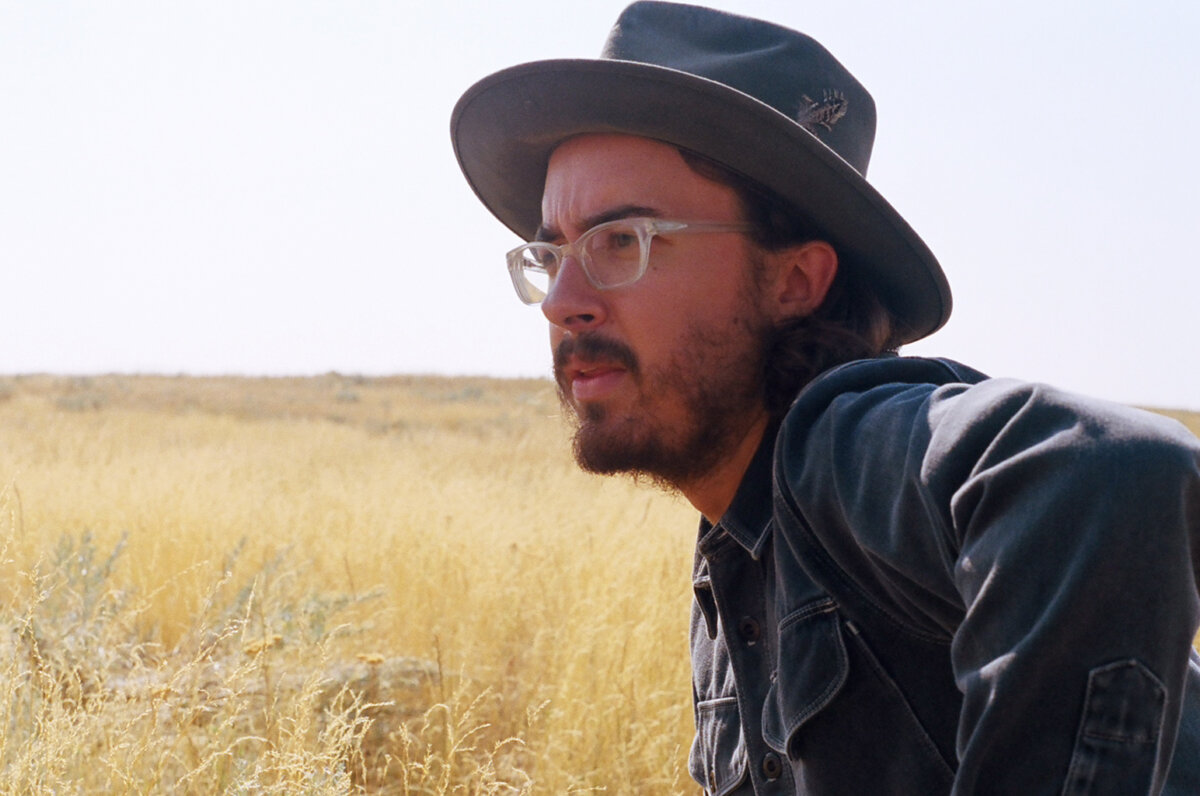
Describing what might be the most American of plains, an explorer’s 1805 journal entry reads, “The bald Eagle are more abundant here than I ever observed them in any part of the country.”
Guess where that archaic language is from? It’s from Capt. Meriwether Lewis’s journal, from the pioneering Lewis and Clark Expedition, capturing the first recorded descriptions of Montana.
For one who saw so much of The Great Plains, and couldn’t possibly be easily impressed, Lewis calls Montana one of “the hadsomest [sic] plains,” he’d ever seen.
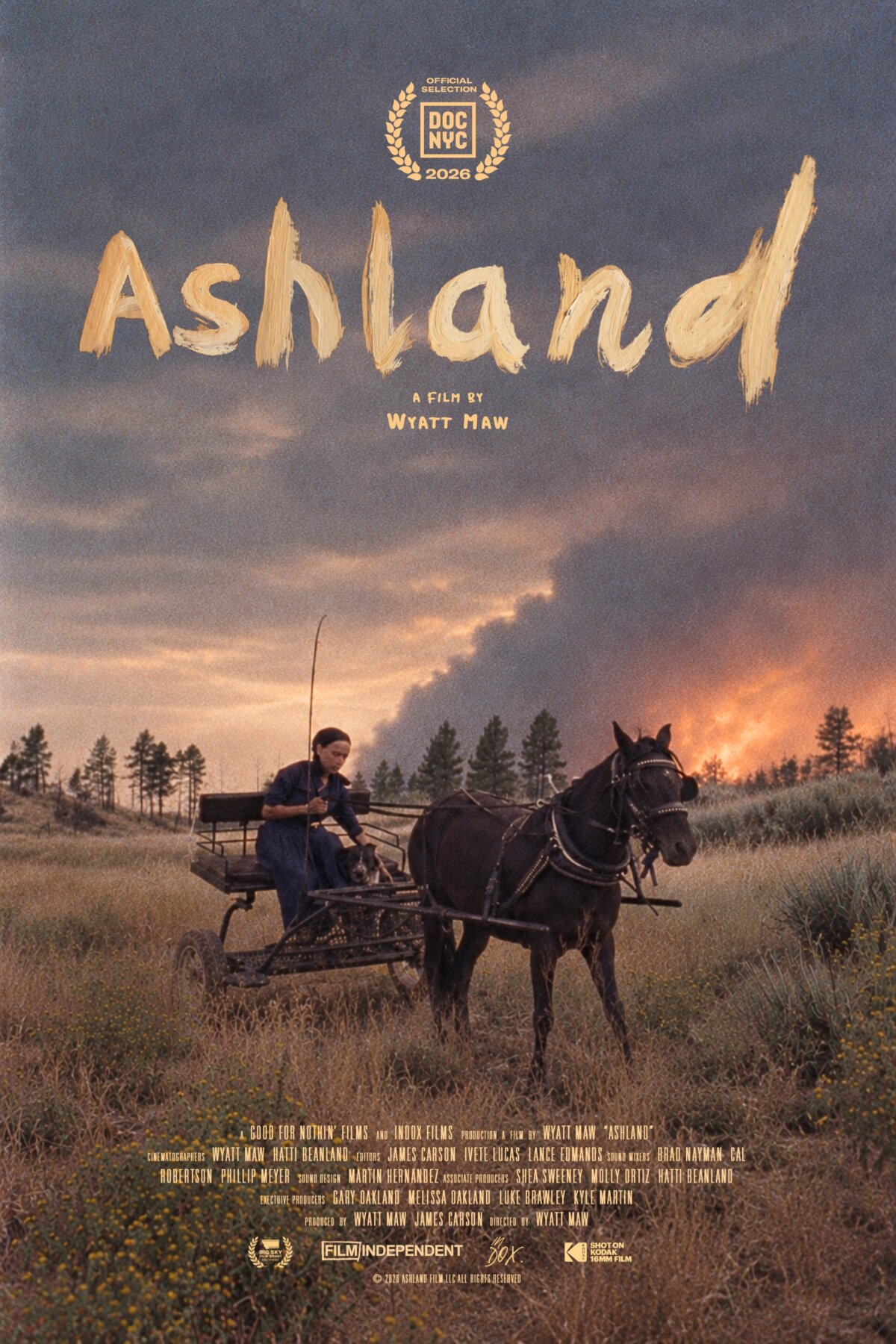
A new documentary, “Ashland,” shot on Super 16mm film, paints an engrossing portrait of Ashland, in southeast Montana, near the site of the Battle of Little Big Horn. Not to be confused with the city of the same name in Wisconsin, the Ashland here nestles at a height of nearly 3,000 feet above sea level, in Rosebud County, Montana.
This film is producer-director-cinematographer Wyatt Maw’s reflective and respectful feature directorial debut. It salutes the staggering beauty and resilience of the two- and four-legged inhabitants of Montana, and the spirit that guides the Northern Cheyenne Reservation.
Magical Prairie
Maw’s probing camera nods to the spiritual, often magical nature of Ashland’s prairie, by following the livelihoods, laughter, longings, and losses of its people, for as many as eight years. Very much an old soul, Maw grew up in Montana; naturally, his film is more than a labor, it’s a labor of love.
If Kevin Costner’s and Taylor Sheridan’s “Yellowstone” series is a gritty, typically entertaining tribute to ranchers and ranching, Maw’s film is a love letter to Montana—a poetic, almost prayerful tribute to ranch country.
One resident clarifies that the Cheyenne people are spirit seekers: “This is not our home. We were brought here to protect this place.” Another resident compares it to Mother Earth: “We have to stay connected to that understanding that our mother, our creator, blessed us with life.”
One Big Family
Producer-editor James Carson and his fellow editors use a montage of cuts to make it seem like their primary cast of disparate characters are one big family.
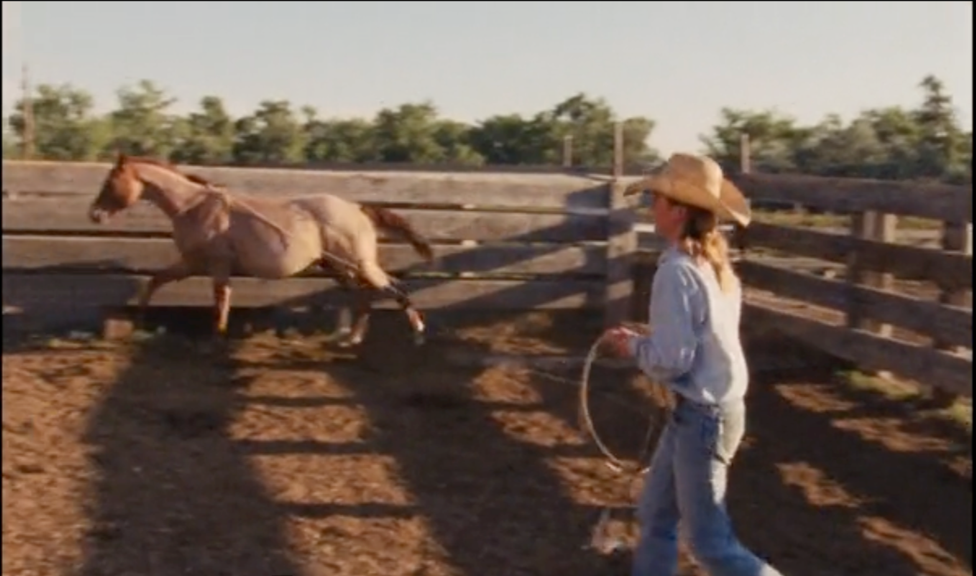
Some of these characters are children. School-going Laney Olivia can ride horseback as well as some veteran horseback riders. Stetson Brendt is a high-school bronc- and steer-riding champ. Nineteen-year-old Bekah Jo is one of 12 siblings.
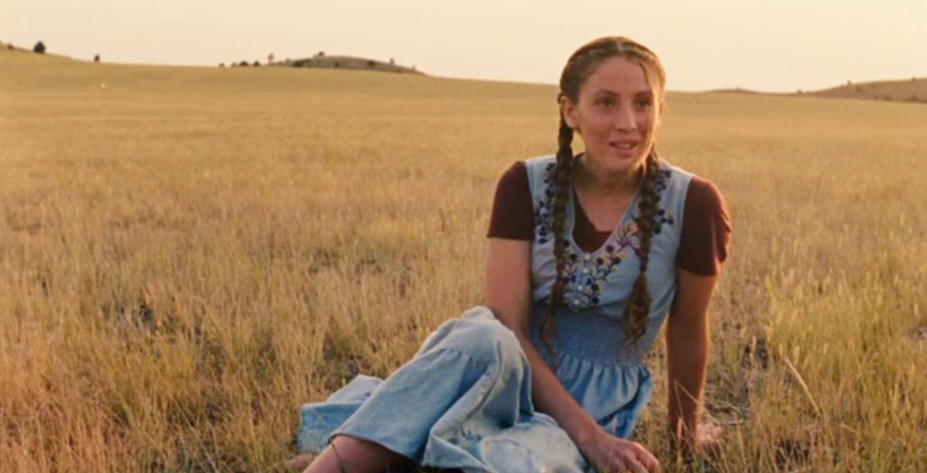
Others are older. Cheyenne Robbie started training horses as a 5-year-old and has since trained 5,000 horses. Octogenarian Swede grew up on the over 10,000-foot-high Bighorn Mountains. There’s also widowed Mary, who just lost Ken, her husband of 30 years, and now runs their ranch alone, amid the local Amish community.
Prodded gently by the off-camera Maw, these Ashlanders are spontaneous yet profound; they meet Maw’s questions with distinct yet similar answers.
Both Robbie and Stetson say that the wisest trainers treat horses as they’d prefer to be treated—with love, understanding, and trust. Both Swede and Mary insist that Ashland’s magnificence lies in its ability to confer on its inhabitants a quiet, comforting solitude that’s also one with nature.
Bekah and her family lost their house in a sudden forest fire, and she fears that one of her twin ponies that went missing was killed by a mountain lion. Still, all she can talk about is gratitude for the “little” things that she feels matter most: unfailingly green grass, rain, and playtime with her siblings. Also, the blessing of a stay-at-home mom.
Laney laments Ashland’s steadily shrinking streams and lakes, but echoes Bekah’s spirit of gratitude, explaining how she appreciates everything she has.
Maw’s snippets of his other characters, wildlife, and livestock, are no less arresting than his scenes of cowboys saddling up before sunrise, or of their children learning to lasso, feed, or milk cattle.
Music of the West
If the film’s background music features a comforting banjo, fiddle, or slide guitar at some points, other sound recordings capture chirping birds or buzzing crickets. At other times it’s Cheyenne, Crow, or Amish singers, accompanied by beating drums, and trembling tambourines.
Maw, no slouch on the fiddle, performs four of the traditional numbers himself: “Jump that Log,” “Glory in the Meeting House,” “Down in the Willow Garden,” and “Lazy John.” Bluegrass purists will, no doubt, recognize “Orange Blossom Special” by the inimitable Lester Flatt and Earl Scruggs.
Maw and his fellow cinematographer Hatti Beanland, keep finding moments of magic. Their long shots from a speeding vehicle look out at miles of open country, dotted by grazing bison. In a round pen for training horses, camera spinning, Maw goes for a close-up of a horse’s eyes as it frantically circles the pen. Then Maw pivots for a close-up of young Stetson, revolving at the center of the pen, his eyes locked on the horse’s, waiting for the horse to calm down.
In another, separate moment, the camera observes Stetson as he practices bronc-riding on a spur board. And one breathtaking extreme wide shot catches a rainbow slicing the sky in the foreground, while a curtain of rain darkens the distant horizon.
Bringing the Old West to life, Maw’s 21st-century images of Ashland show a land that’s grown without losing its grace; some shots here resemble archival photographs of these very plains from over 100 years ago.
As if on cue, the improbably serene Bekah muses that, as the Bible says, nothing lasts forever, not people, not animals. But she’s grateful that God keeps breathing life into everything. Meditatively, as if not a year younger than 100 herself, she recites from American poet Richard Brautigan’s poem of renewal, The Return of the Rivers:
“A slow rain sizzles on the river, like a pan full of frying flowers,
And with each drop of rain, the ocean begins again.”
“Ashland” is currently screening virtually across the U.S. on DOC NYC through Nov. 29, with other festival screenings to be announced.
‘Ashland’
Documentary
Director: Wyatt Maw
Running Time: 1 hour, 31 minutes
Release Date: Nov. 14, 2026
Rated: 5 stars out of 5
What arts and culture topics would you like us to cover? Please email ideas or feedback to features@epochtimes.nyc