SEARCH


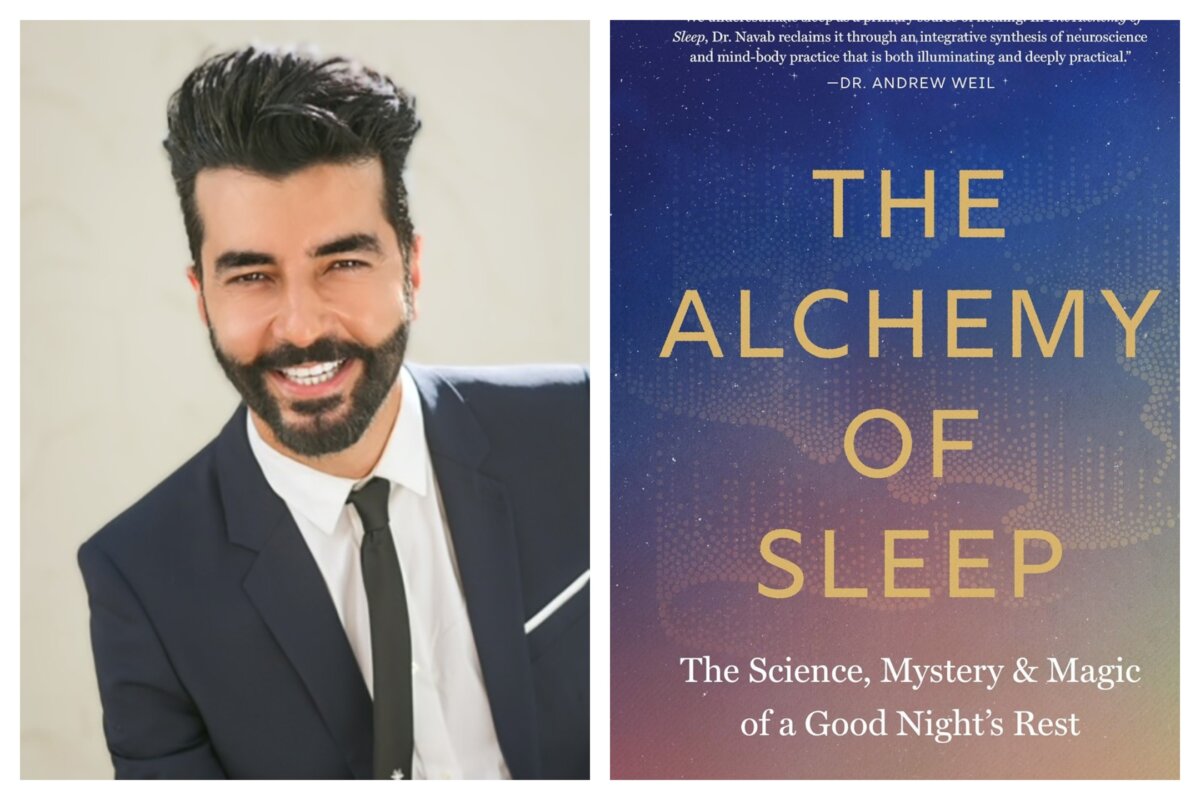
We’ve become a society that tracks our sleep like it’s a performance goal. In his new book, “The Alchemy of Sleep: The Science, Mystery & Magic of a Good Night’s Rest,” Dr. Pedram Navab, Fellow of the American Academy of Sleep Medicine, questions whether we’re headed in the right direction, viewing sleep as another task to record and document.
“Sleep,” he wrote, “is not merely a process to be measured,” calling it “a rhythm, a ritual, a return.”
The author is a highly respected neurologist and sleep medicine specialist, educated at Brown and trained at the Stanford Sleep Medicine Center. With that said, he wants us to not only view sleep as a biological need but a “nightly journey into creativity and renewal.”
Sacred Practice
Navab’s advanced medical training stands side by side with a spiritual approach to sleep and a conviction that it’s a “mystical” space between the conscious and the unconscious. The word “alchemy” was carefully chosen for its reference to the “transformative power of sleep.” The term supports his intent to elevate our understanding of sleep from a biological need to an “essential and sacred practice for overall well-being.”
Dr. Navab comes to this conclusion, in part, because of his own personal experience with sleep deprivation. While driving home after a 30-hour shift, his eyelids grew heavy as he fought off increasing drowsiness but pushed through it like he always had.
He doesn’t remember the impact of the accident, only drifting in and out of consciousness during the airlift to the hospital. For the next three months, he had to fight back and receive “what I had spent a portion of my life running from”: a good night’s sleep.
That was 2002. Since then, the author’s dedicated his life to educating his patients and the public about sleep and the devastating consequences when we don’t get enough. He’s also been featured on The Today Show, CBS, NBC, and other news outlets as an expert on sleep health and what he refers to as a “public health hazard.”
Where We Go
Dr. Navab’s writing is sometimes poetic and rhythmical; it’s expressive and entertaining and, unlike medical books, carries a light-hearted tone. His definitions and examples are easy to follow, and some are instantly relatable. Overall, it’s a well-rounded exploration of the place we go when our head hits the pillow and we give up control.
Divided into two parts, Dr. Navab’s book first covers the need for sleep and what scientists believe is happening during its varying phases. The author mentions common disorders like insomnia, adding in his own episodes of lying awake and waiting for sleep to come.
A new habit, which has been coined Revenge Bedtime Procrastination, is when we put off sleep to get back time in our day for hobbies or binge-watching, something which wreaks havoc on our sleeping patterns. At the end of the day, a person needs to wind down and prepare for sleep.
He shifts into a profound and philosophical study in the second part, “Transformative Sleep Practices.” These chapters contain concepts about “building a mindful awareness”; this translates into shifting negative or defeating thoughts into ones that relax the body.
A suggested practice called Cognitive Restructuring means switching the thought that you’ll never get to sleep to a reminder that resting alone is enough for now and that sleep will come. Done regularly, this teaches the body to trust and find its internal feeling of well-being.
Sleep and Dreaming
Moving deeper into the nature of sleep, Dr. Navab takes readers into questions like why we dream. He alludes to theories from Sigmund Freud, Carl Jung, and Antti Revonsuo, a Finnish psychologist who in 2000 said that dreams and nightmares may be a way to prepare for the real thing.
The author further leads us into recent studies that give credibility to that hypothesis, providing suggestions for readers on improving their dream-recall to find patterns which may help “extract deeper insights and process emotions tied to the dream.”
His take on the power of the breath is refreshing. He chides his fellow physicians and their dismissal of breath as “a second-class citizen—not real medicine because it’s simple, free, devoid of technology, and can be conducted anywhere.”
When performing mindful breathing, the brain’s focus is there and not on the ruminations going around in our heads; relaxing becomes easier and the potential for falling asleep faster and more probable.
Alternative Remedies
In that same vein, he discusses the most prescribed medications for insomnia but cautions about their side effects and the risk of tolerance, which makes users require stronger dosages over time. What follows are descriptions of alternative methods, such as herbal remedies, acupuncture, bright light therapy, and hypnotherapy, with his considerations on trying each of them out.
Of course, an exploration into sleep wouldn’t be complete without mentioning the yearly ritual of daylight-saving time and its effect on our circadian rhythm. Though it takes up little room in the brain, this rhythm controls melatonin, which tells the body when to sleep and when to wake.
“When we throw daylight saving time into the mix,” says Dr. Navab, “things get more problematic.” Though it’s only a one-hour shift, it disrupts this rhythm, throwing off the body’s internal clock. Results have shown an increase in heart attacks and strokes in the days following the time-change. As a neurology resident, he would prepare for the onslaught of patients like he would a “disaster drill.”
There are so many takeaways from this book on many fronts, whether there’s an interest in the mystery of sleep, how to make improvements, the experiments being conducted on dreams, or why some are night owls and others are early birds.
Part of his concluding message is to remind us that, while technology is ushering in a “sleep revolution” of discovery, let’s not forget that it isn’t a task to measure “but a quiet space where you return to yourself, night after night.”
This book may be a game changer for those searching for a better night’s sleep or a medical perspective that pairs science and spirit. It’s a worthy read and something to be considered for a place on your nightstand.
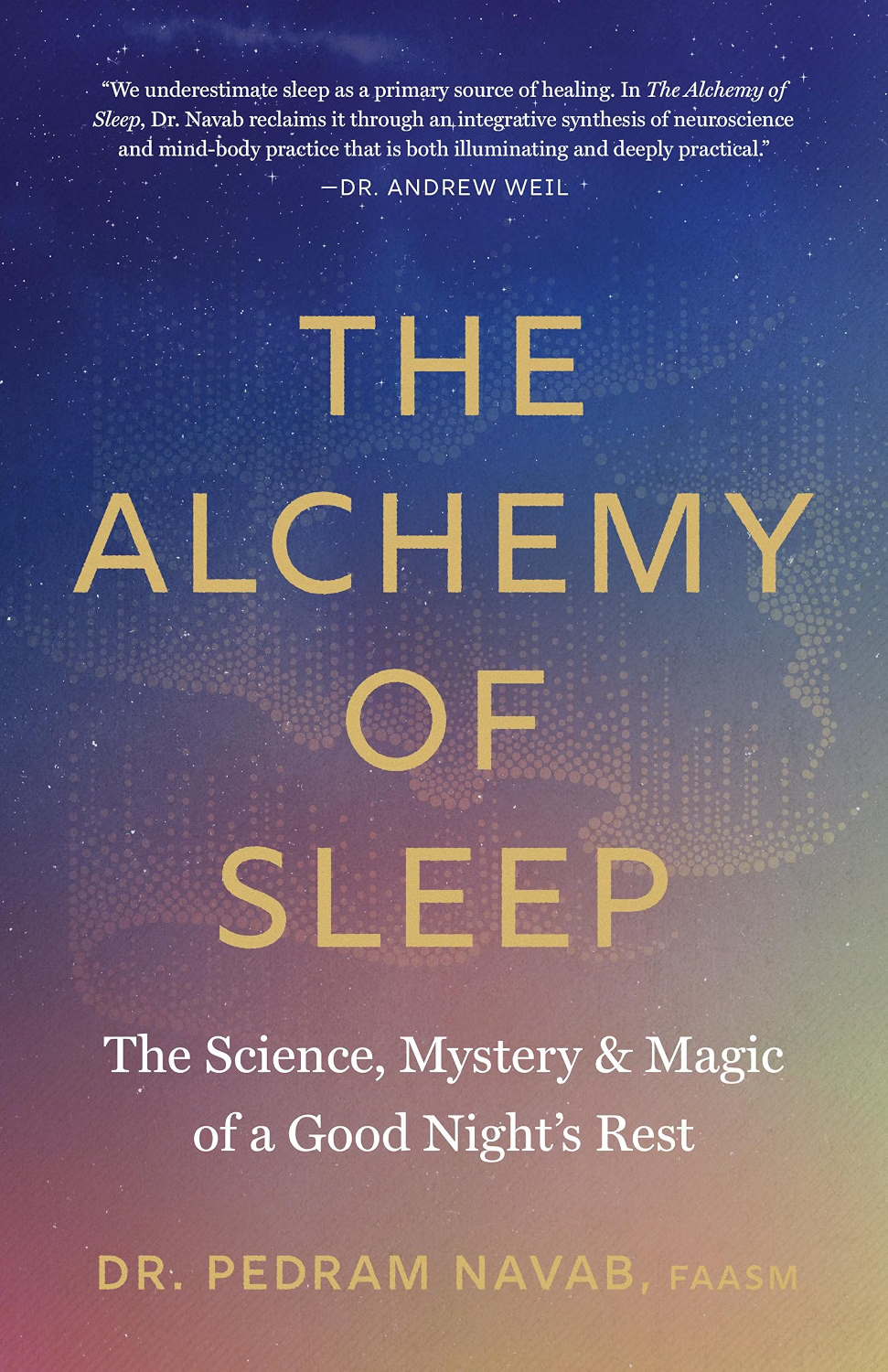
‘The Alchemy of Sleep: The Science, Mystery & Magic of a Good Night’s Rest’
By Dr. Pedram Navab, FAASM
Shambhala: Oct. 27, 2026
Paperback, 272 pages
What arts and culture topics would you like us to cover? Please email ideas or feedback to features@epochtimes.nyc.