SEARCH


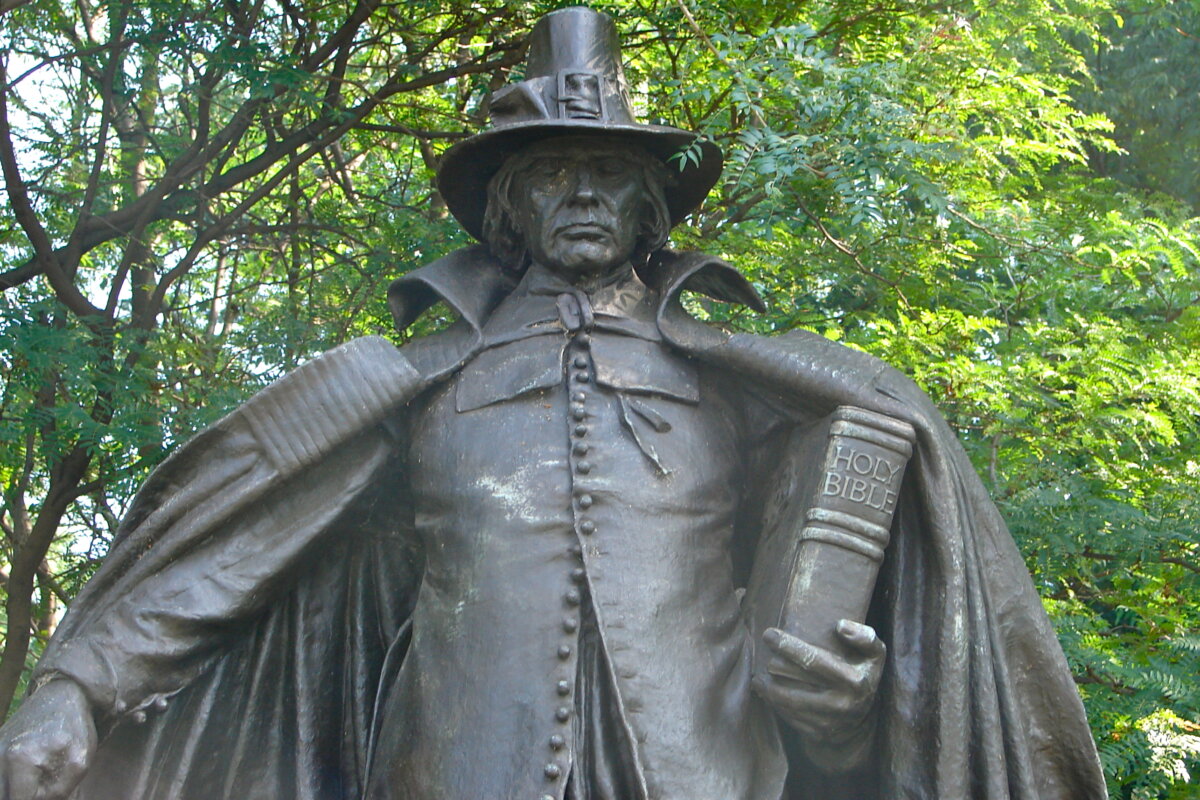
On Thanksgiving Day, 1887, Augustus Saint-Gaudens’ celebrated bronze statue “The Puritan” was unveiled in Springfield, Massachusetts. Railroad tycoon and congressman Chester W. Chapin commissioned the statue as a tribute to his ancestor, Deacon Samuel Chapin, an early settler of the city. On the base of the statue, Saint-Gaudens inscribed: “1595 Anno Domini 1675 / Deacon Samuel Chapin / One Of The Founders Of Springfield.”
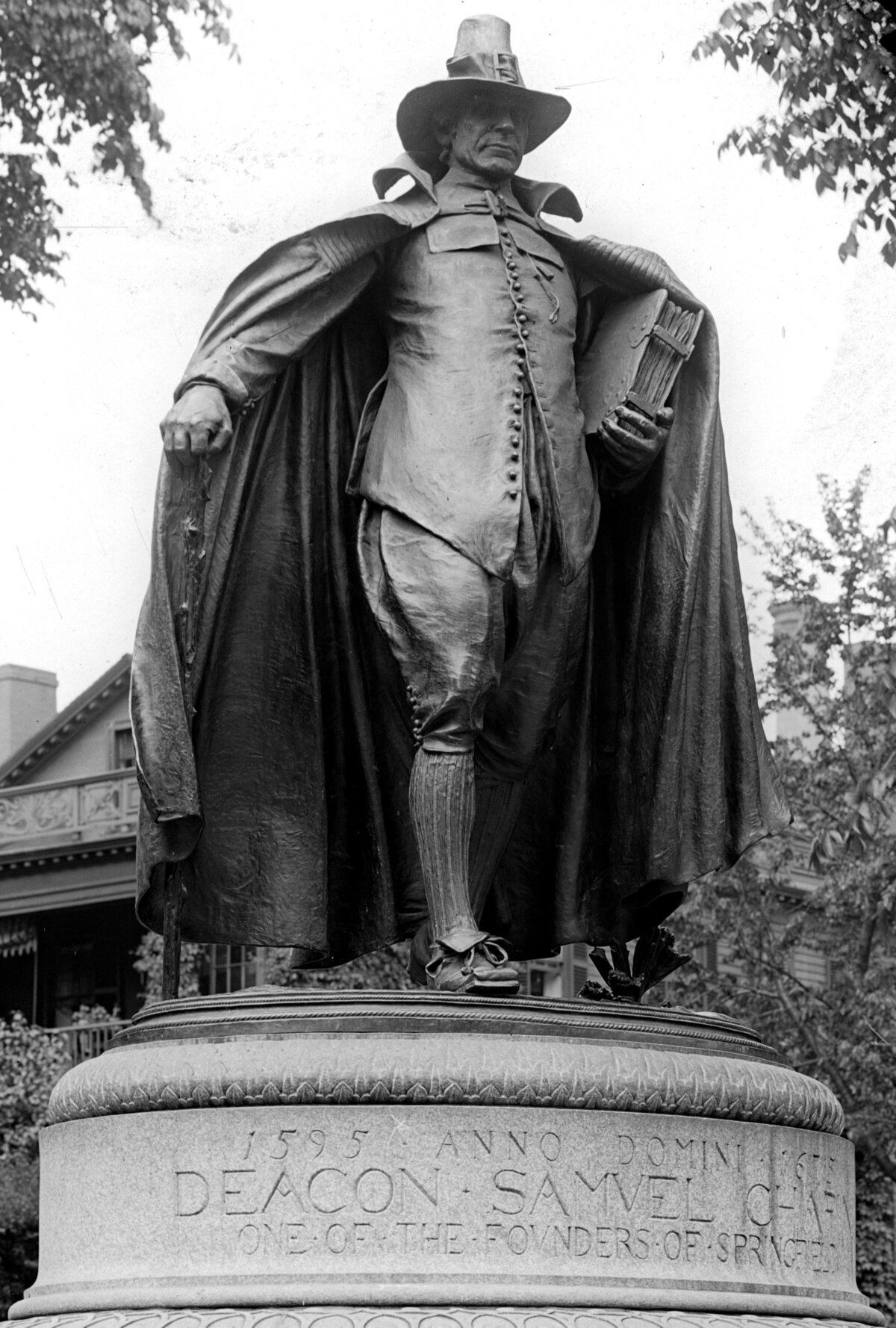
Saint-Gaudens created more than 40 iterations of the figure, which appear in prominent museums across the nation. His Puritan figure proved so popular that it frequently appeared in railway, hotel, and restaurant advertisements.
The Puritan Inspires the Pilgrim
Saint-Gaudens based “The Puritan” on a bust of Congressman Chapin, the Deacon’s direct descendant. But when the New England Society of Pennsylvania commissioned “The Pilgrim,” Saint-Gaudens adapted his puritan figure. He said:
“Mr. Chapin’s face is round and Gaelic in character, so in the Philadelphia work, I changed the features completely, giving them the long, New England type, besides altering the folds of the cloak in many respects, the legs, the left hand, and the Bible.”
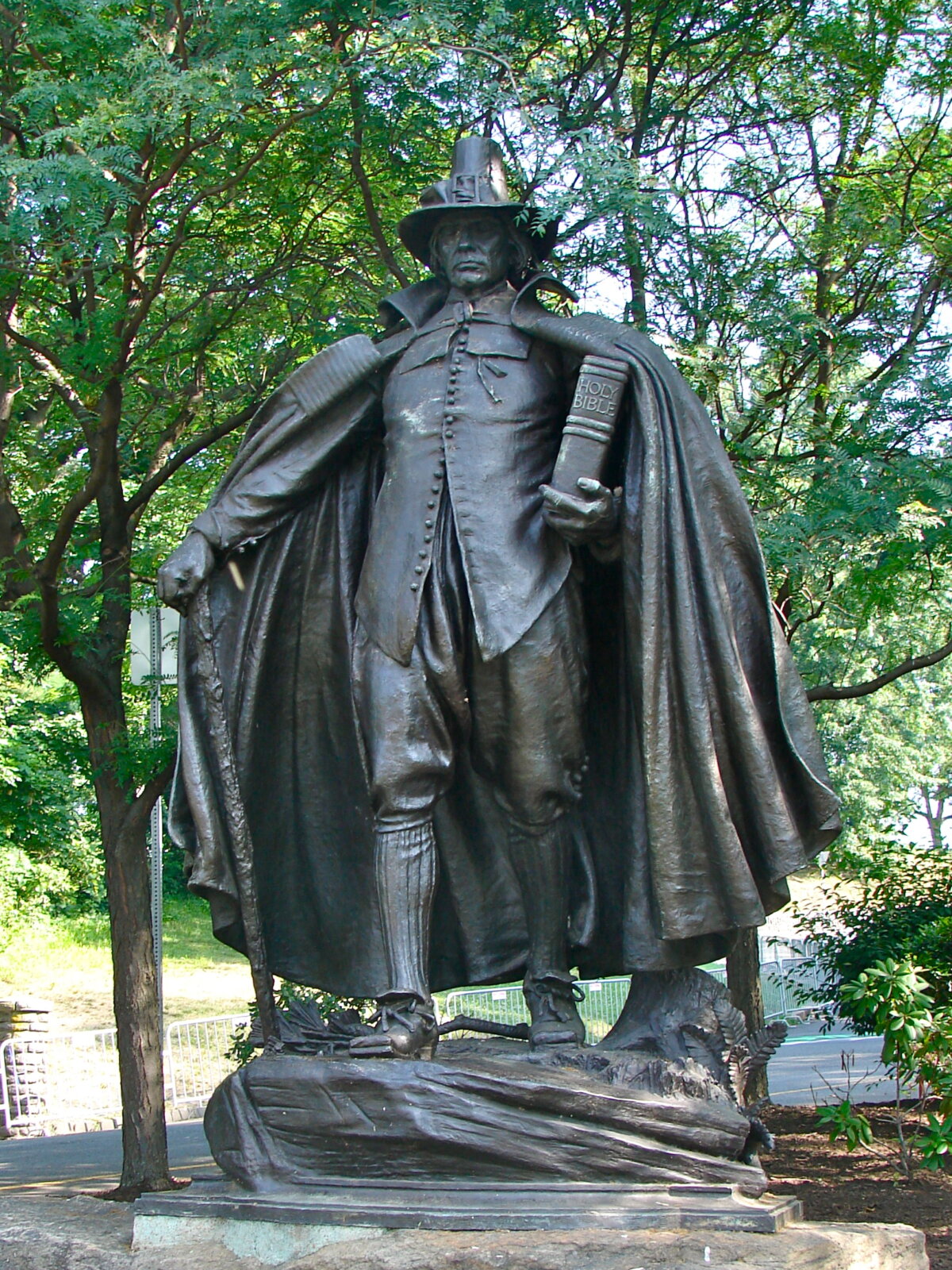
Saint-Gaudens’s ability to adapt the figure in this manner was due to his extensive European art training that included sculpting from life models. After training at the Ecole des Beaux-Arts in Paris and then five years in Rome, Saint-Gaudens brought European flair and classical heroism to monumental sculptures in America.
Many are likely familiar with his work, such as the Gen. William Tecumseh Sherman Monument in New York City and the Robert Gould Shaw and Massachusetts 54th Regiment Memorial in Boston. Saint-Gaudens made a lasting impact on American sculpture; he helped found the National Sculpture Society and the American Academy in Rome.
“The Puritan” and “The Pilgrim” stand as enduring testaments to Saint-Gaudens’ skill, reminding Americans of their roots every Thanksgiving and beyond.
What arts and culture topics would you like us to cover? Please email ideas or feedback to features@epochtimes.nyc.