SEARCH


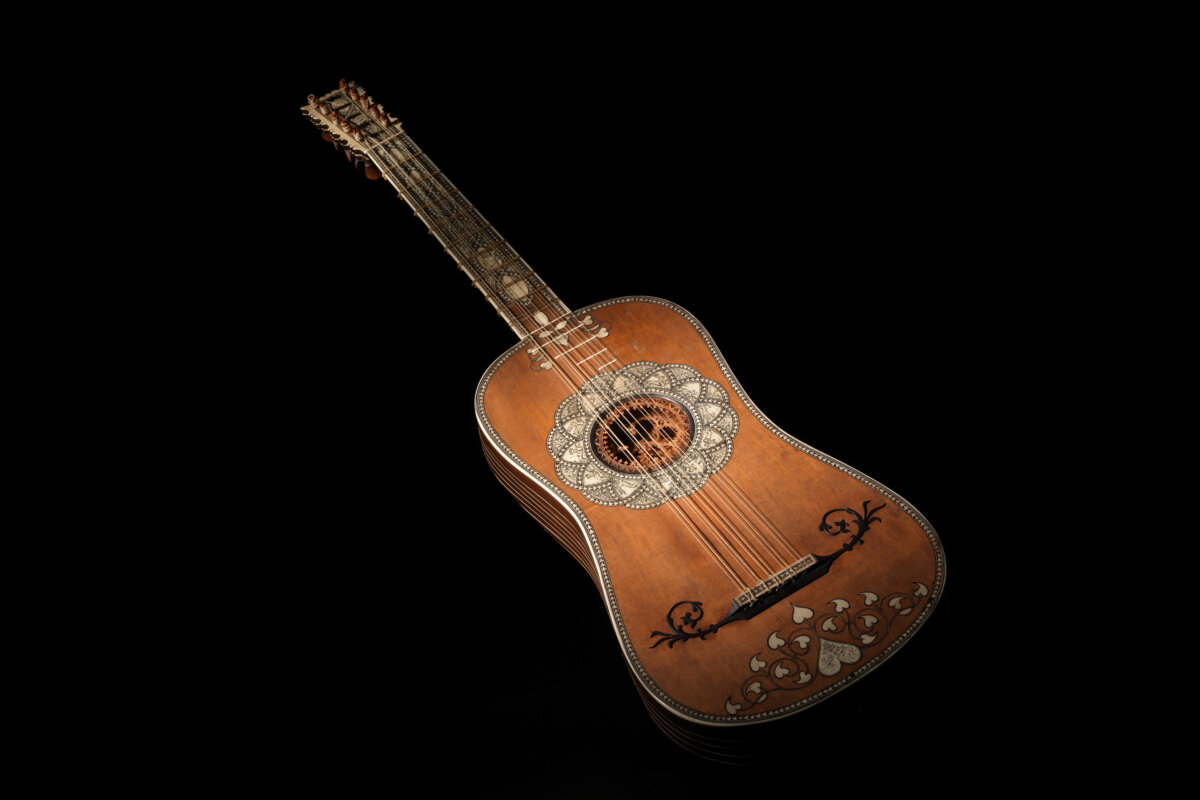
Before becoming King of England, Charles II was living in exile in Europe. He had been ousted as king of Scotland due to shifting alliances and Oliver Cromwell’s rise to power. It was during exile that he became acquainted with the Baroque guitar when he saw Italian guitarist and composer Francesco Corbetta play it.
After the restoration of the English monarchy in 1660, King Charles II brought Corbetta to the Palace of Whitehall in London. He was there to teach the newly appointed ruler how to play the Baroque guitar. He would also teach the instrument to other royalty who walked the sprawling grounds of Whitehall, including the future Queen Anne.
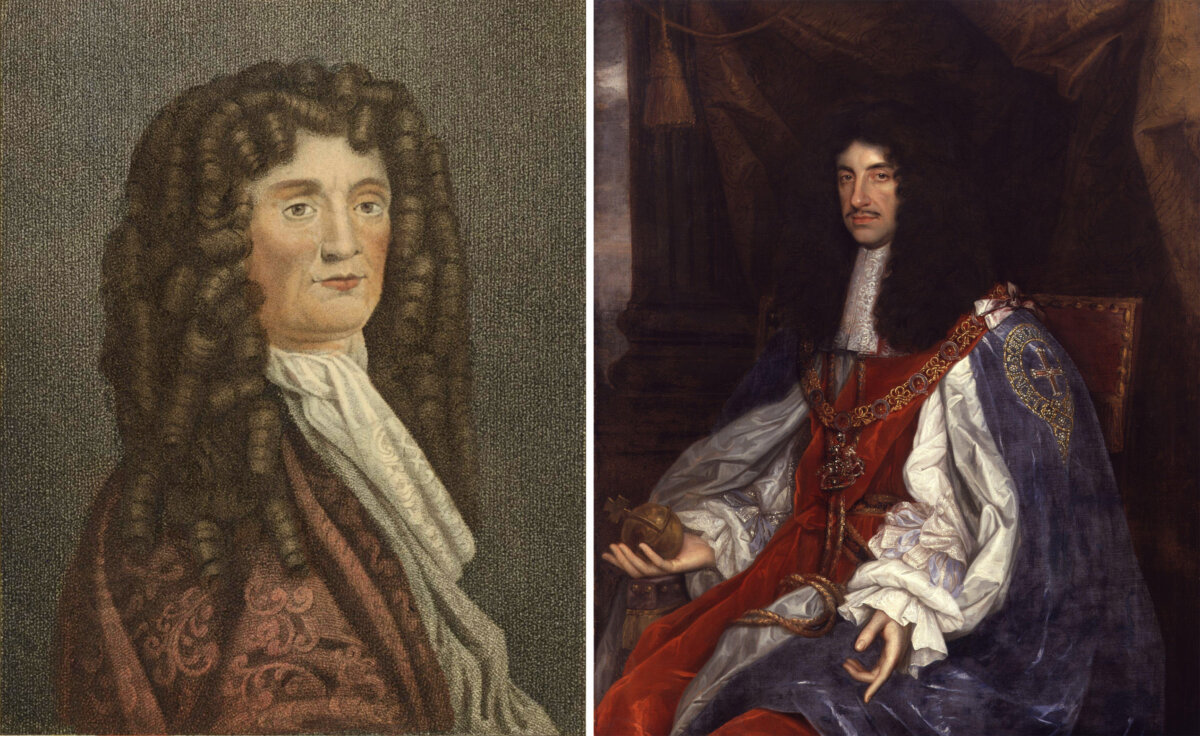
Across the English Channel, Corbetta also spent time in France with King Louis XIV, who began taking Baroque guitar lessons at the age of 12. He was under the tutelage of respected teachers such as Bernard Jourdan de La Salle and Robert de Visée. Corbetta dedicated his 1674 collection of compositions, “La Guitarre Royalle,” to Louis XIV, in honor of the young king’s love of the Baroque guitar.
Both King Louis XIV and King Charles II had an affinity for the Baroque guitar, and Corbetta’s instruction, music books, and presence in France and England in the mid-to-late 17th century helped usher in an arts boom with the stringed instrument as one of its stars.
Diplomat Samuel Pepys wrote in his historic diary about Charles II’s love of the instrument and how it influenced others at Whitehall to try their hand at it as well. Pepys himself developed an attachment to it the more he heard its timbre. At first, he described the guitar instrument as a “bauble,” a novelty or toy of sorts. But by the 1670s, he had hired his own Baroque guitar teacher, Cesare Morelli, so he could learn how to pluck and strum its brightly toned strings.
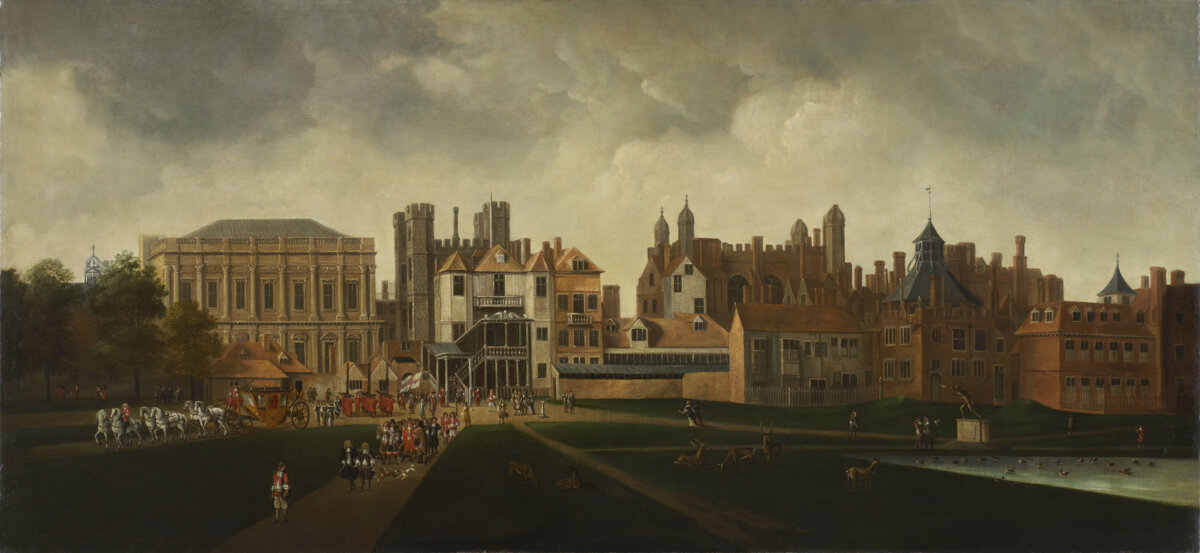
The two kings reigned during times of political upheaval and shifting power dynamics, but their love of music and the arts gave rise to a vibrant cultural landscape. During the 17th century, the sounds of the Baroque guitar were embraced by both street musicians and royal performers alike. Its unique tone and updated design made it an ideal instrument for the lively atmosphere of its namesake, the Baroque period.
Opening the Door to Fresh Musicality
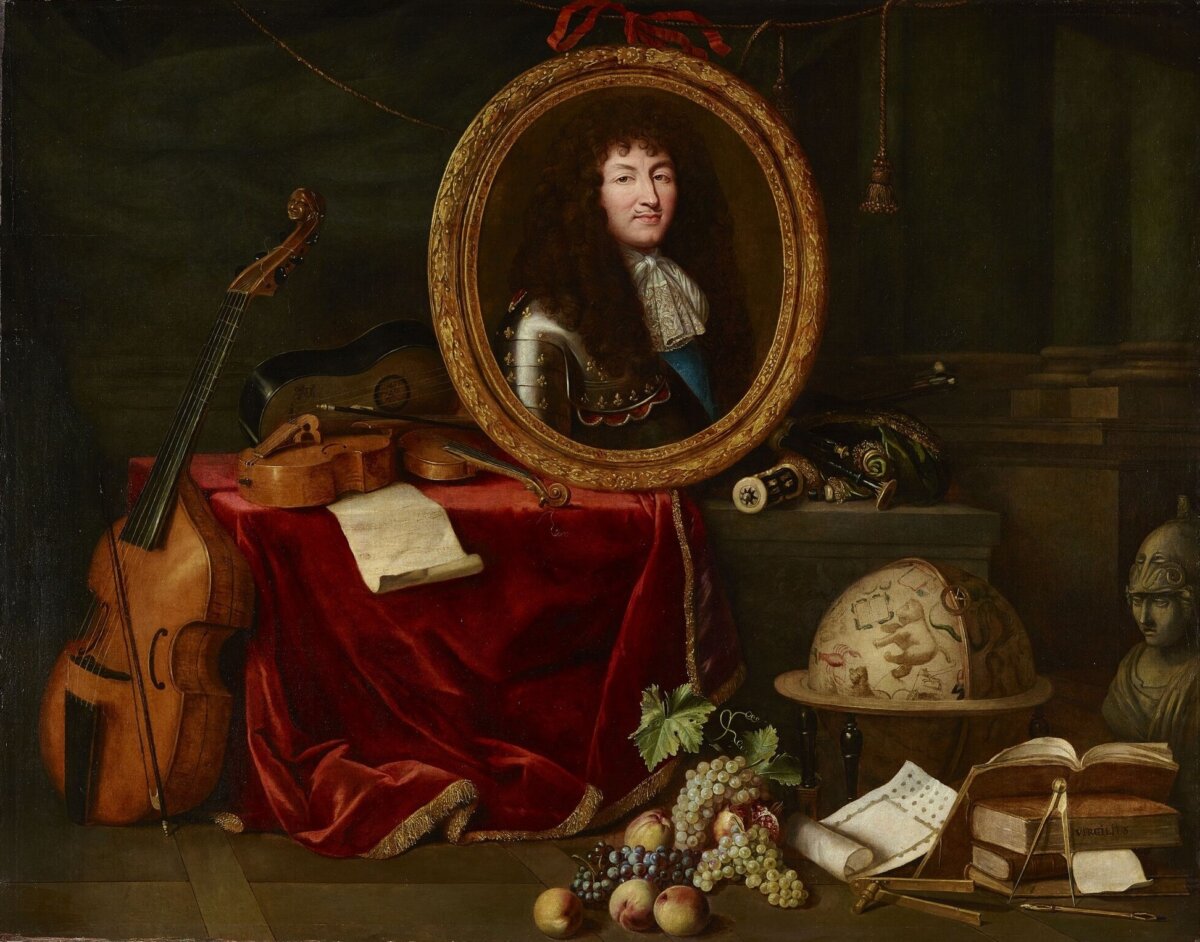
When Louis XIV began learning how to play the Baroque guitar as a boy, it quickly became his favorite instrument. Music scholar Robert Strizich wrote in his collection, “Guitar Music From the Court of Louis XIV,” that the king developed a “lifelong attachment to his chosen instrument.”
The Baroque guitar became a widely favored instrument in part because of its expressive tone. Instruments like the Baroque guitar had “a tone that was softer and less focused than the modern guitar tone, but which was at the same time fuller, more intimate and sensitive in character—indeed, a tone more akin to that of the harpsichord than the piano,” Strizich wrote.
It also became highly favored because of its versatility. Other stringed instruments of the Renaissance period, like the Renaissance guitar and the enduring lute, had four courses, or sets, of strings. The Baroque guitar, which had a slightly bigger body than its Renaissance counterpart, not only had longer strings, but more strings, with five courses instead of four. This addition opened the door to layers of fresh musicality.
The guitar became the central instrument in the basso continuo method, wherein the guitar provided the rhythmic pulse when paired with other instruments. Players were able to command a bass line while adding and changing chords at the same time. While the lute and Renaissance guitar were generally plucked with fingers, the Baroque guitar could be plucked or strummed. This paved the way for soloing and improvisation, two popular techniques among today’s guitarists.
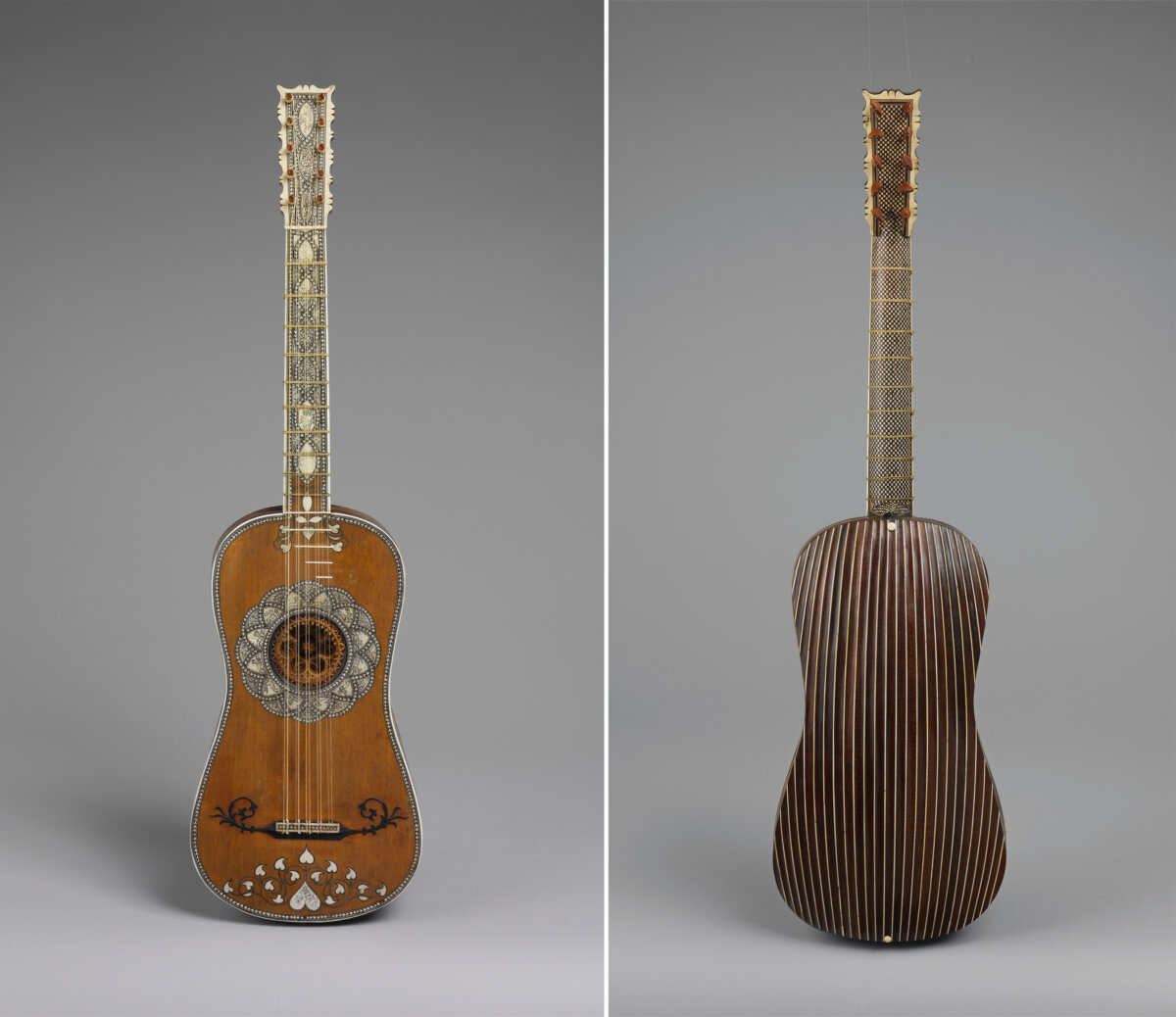
Baroque guitars typically have upwards of nine or 10 strings, with most of them grouped in pairs of two. Generally, the highest string, like the high E string on a modern guitar, is the only single string. Its capacity for sound projection pairs well with a player’s steady strumming, making it an ideal instrument for dance accompaniment. In casual settings during the 17th century, the Baroque guitar accompanied folk dances. In small, formal, royal gatherings, the instrument provided the rhythm for courtly dance.
Shaped by the Lute and Vihuela
Another appealing feature of the Baroque guitar doesn’t deal with the instrument itself, but with its notation system, alfabeto, that helped players learn music. “The alfabeto was essentially a shorthand method of notating chords without the need for actually spelling each note of the chord on a staff, as with lute tablature,” wrote Victor Coelho, a professor of music, in his work “The Baroque Guitar: Players, Paintings, Patrons, and the Public.”
The alfabeto notation system was developed with the Baroque guitar in mind and used letters and select symbols to represent chords, making it easy for amateur musicians to learn music for the instrument.
Perhaps one of the instrument’s most unique features involves its reentrant tuning structure. This means that certain pitches within the tuning will be higher or lower than usual. For the Baroque guitar, the lower strings are tuned to a higher pitch, resulting in the middle strings having a bass-like feel. This type of tuning created the opportunity for cascading notes that could ring out like bells and harps, a signature sound of the Baroque period.
The Baroque guitar is not a standalone instrument, but an iteration—a leaf on the highly populated family tree of the guitar as a general musical instrument. Like the Renaissance guitar, the larger Baroque guitar also dons a figure-eight shape. And like other stringed instruments, such as the lute from this period, the Baroque guitar also once sported gut strings made from animal intestines, rather than today’s nylon or steel strings.
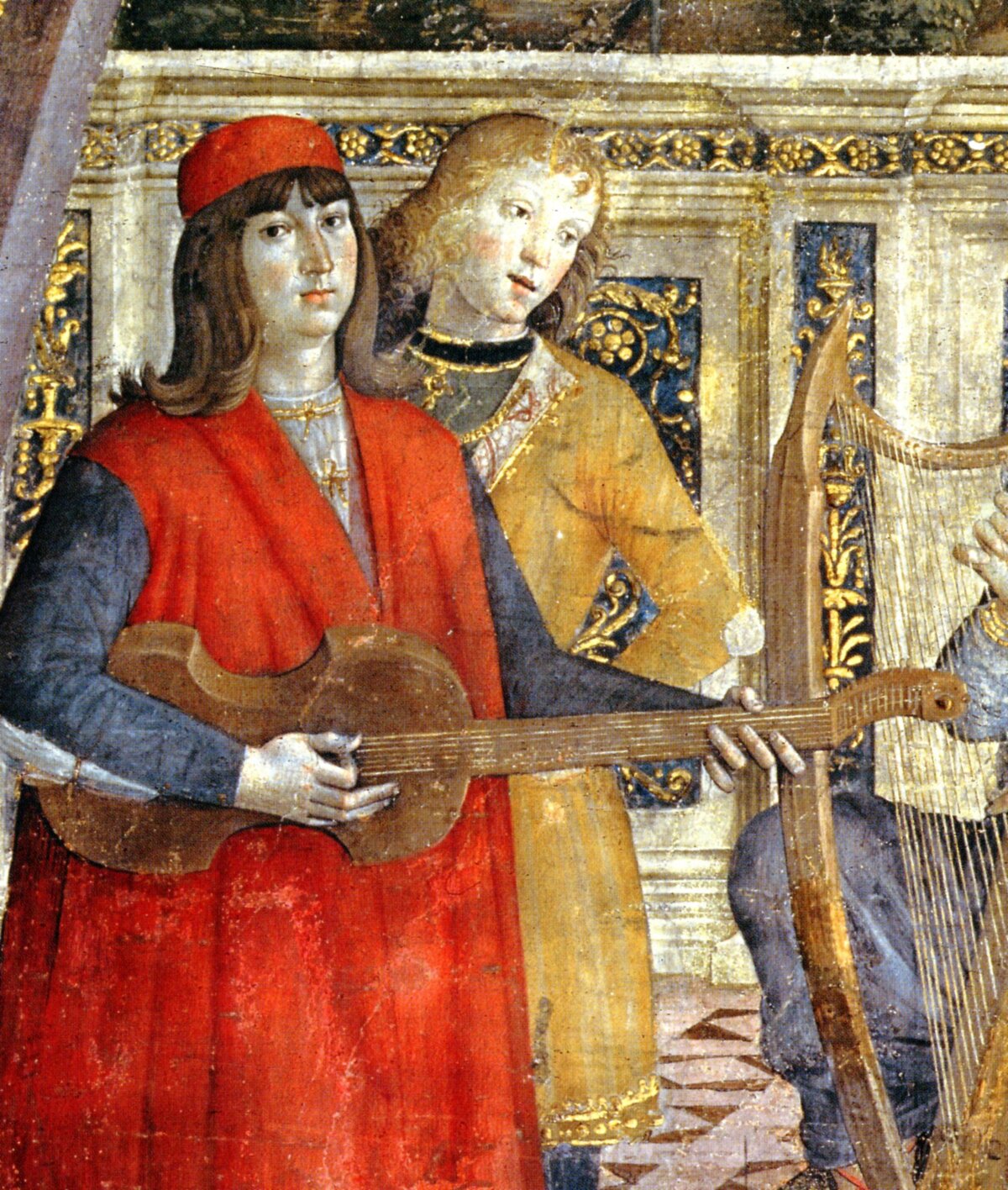
Another of its key predecessors, the Spanish vihuela, is a guitar variation that was prominent throughout the 15th and 16th centuries. With six string courses, the vihuela is larger than the Baroque guitar. Both look similar in shape and are often adorned with intricate decorative detail. Both the lute and vihuela shaped the Baroque guitar’s design and sound.
A Legacy of Merriment
Though the popularity of the Baroque guitar waned as the Classical period gained momentum during the mid-18th century, it did not completely lose its place among shifting tides of preferences. Compositions and musical collections focusing on the Baroque guitar, such as those of instructors Corbetta and Visée, were essential to its continued influence.
“The thousands of pieces that survive for the Baroque guitar (which nevertheless probably represent only a fraction of the original repertory) reflect the musical contributions and taste of a broad range of personalities,” Coelho wrote. “From short, strummed dances on simple chord changes to complex, grandiose variations, this vast body of work reveals that Baroque guitarists, like their modern counterparts in popular music today, absorbed influences of many kinds.”
From kings and queens to artists and children, the expressive and versatile Baroque guitar became a staple in social settings and reached widespread popularity. It remains a historical highlight of the colorful era and is remembered for its full yet gentle tone and the joy and merriment it brought listeners who celebrated and danced to its flowing melodies.
What arts and culture topics would you like us to cover? Please email ideas or feedback to features@epochtimes.nyc.