SEARCH


*‘Against the Wind:’: Volunteers for Dangerous Duty
NR | 1h 36m | Action, Drama, War | 1948
By 1947, World War II had only recently ended, and much of Europe still bore the tender scars from six years of hard fighting.
Numerous bombed-out buildings remained across British cities; rationing continued, and families were still trying to recover from the enormous losses they’d suffered. The war had indeed ended on paper, but its aftermath would occupy the lives of millions of Europeans for years to come.
British filmmaker Charles Crichton had little enthusiasm for making another war picture during this period. In an interview, he recalled being opposed to the idea. He felt that glorifying warfare so soon after the conflict was a poor choice.
It’s an interesting admission from a director who was working on 1948’s “Against the Wind,” a story centered on Britain’s clandestine campaign against Nazi Germany.
The film was produced by Ealing Studios. The venerable London production company had become famous for comedies such as “The Lavender Hill Mob” (1951).
However, this assignment took Crichton into considerably grimmer territory, with part of the production filmed in Belgium, where the German occupation was still a recent memory.
Screenwriter T.E.B. Clarke had participated in the Belgian resistance. He brought his personal experience to this story about agents operating behind enemy lines.
The cast included Canadian actor Robert Beatty and French actress Simone Signoret, appearing in her first English-language film. With that combination of exceptional talent and firsthand knowledge, Crichton had a good deal of material to work with, despite his reservations about revisiting the recent conflict.
A Dangerous Assignment
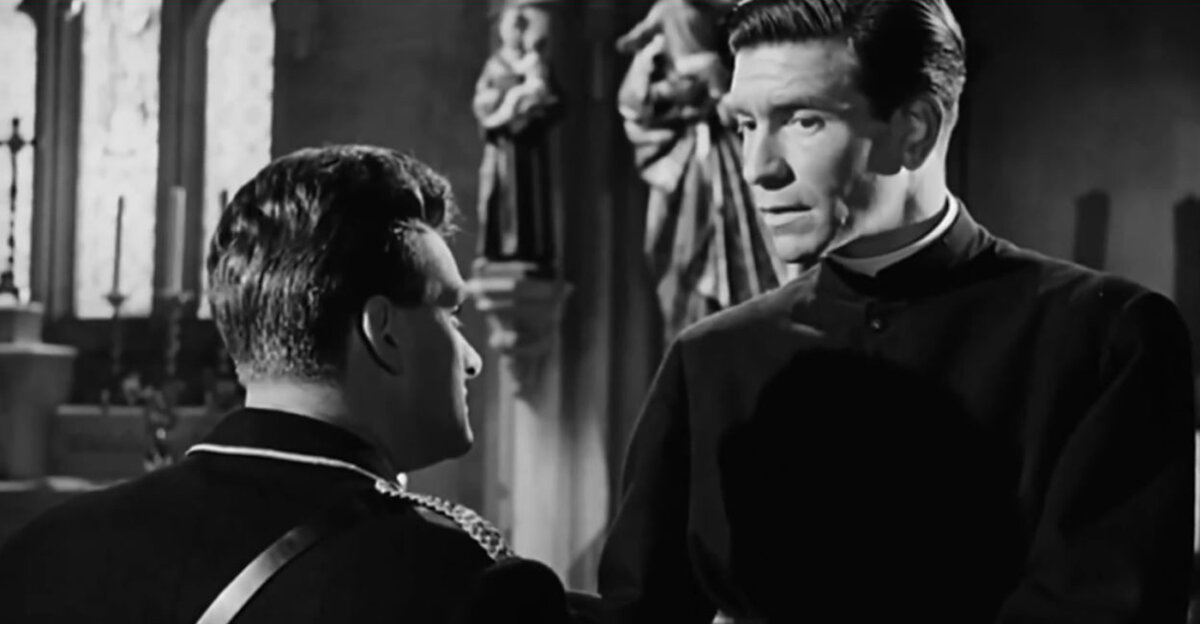
Father Philip Elliot (Beatty), a Belgian priest living in London, arrives at the Natural History Museum for a rather peculiar appointment. Behind a room supposedly closed for renovations, he encounters Ackerman (James Robertson Justice).
Ackerman oversees a secret British organization that recruits and trains agents for missions in Nazi-occupied Europe. Philip agrees to join. He soon finds himself in the company of people preparing to take up some decidedly unpriestly activities.
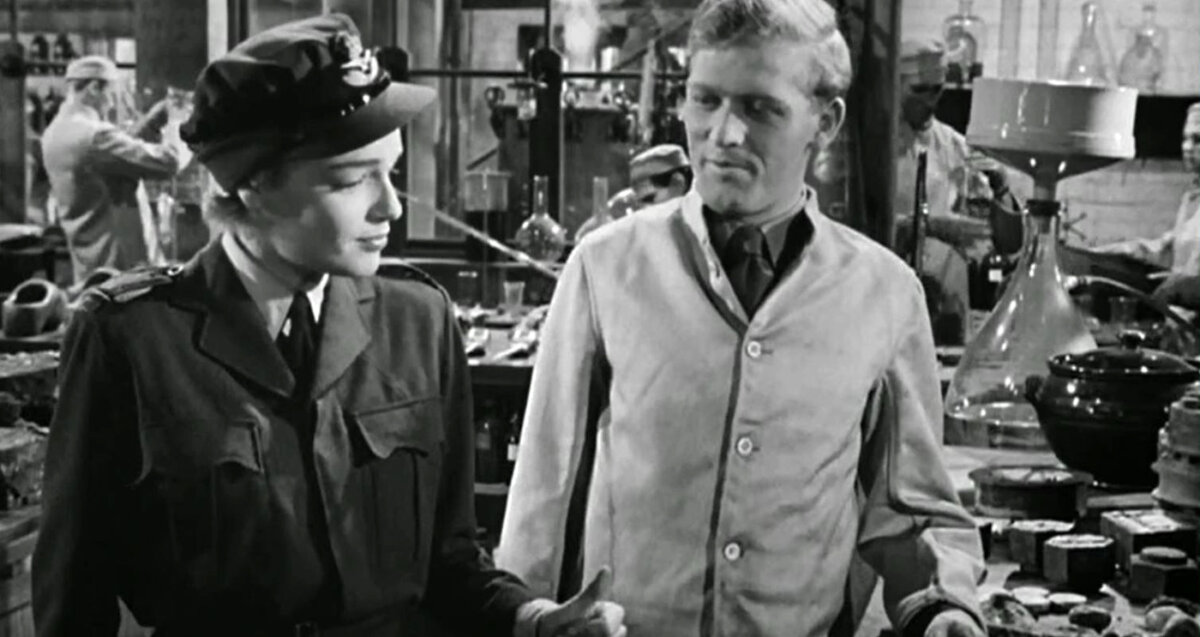
Among the other recruits are Michèle Denis (Signoret), a Belgian refugee desperate to return to her homeland; John Duncan (Gordon Jackson), a young Scotsman with a talent for explosives; and Julie (Gisèle Préville), a former dancer training as a wireless operator.
Their instruction includes handling weapons, communicating secretly, and learning how to move around enemy territory without arousing suspicion. Everyone has reasons for volunteering, although some are more personal than others.
After training, Philip heads to German-occupied Belgium to help destroy Nazi records in Brussels. When British agent Andrew (Peter Illing) is captured, the mission grows more complicated; the group attempts to rescue him without exposing themselves to the Germans.
A War Film Reconsidered
The opening section takes its time introducing the various recruits, occasionally to the point of becoming cumbersome. Having reviewed ensemble films such as “The Magnificent Seven” (1960) and “The Longest Day” (1962), I’ve never had a problem following a large cast of characters.
However, here there are so many personal complications and bits of training that keeping track of everyone requires a little extra concentration.
Some of the conversations are unnecessarily drawn out, although the instruction scenes offer an interesting look at how British intelligence prepared civilians for such dangerous assignments.
The whole operation has the atmosphere of a rather peculiar government department; learning to blow things up is apparently part of the daily routine.
Beatty is convincing as Father Philip. He’s a priest who must reconcile his religious calling with his new occupation of deception and sabotage.
Signoret gives Michèle a spirited personality, a woman whose eagerness to return to Belgium sometimes clouds her judgment. Justice also brings a commanding presence to Ackerman, the officer responsible for sending these volunteers into danger.
The supporting cast is capable, although several characters receive so little screen time that viewers barely get to know them.
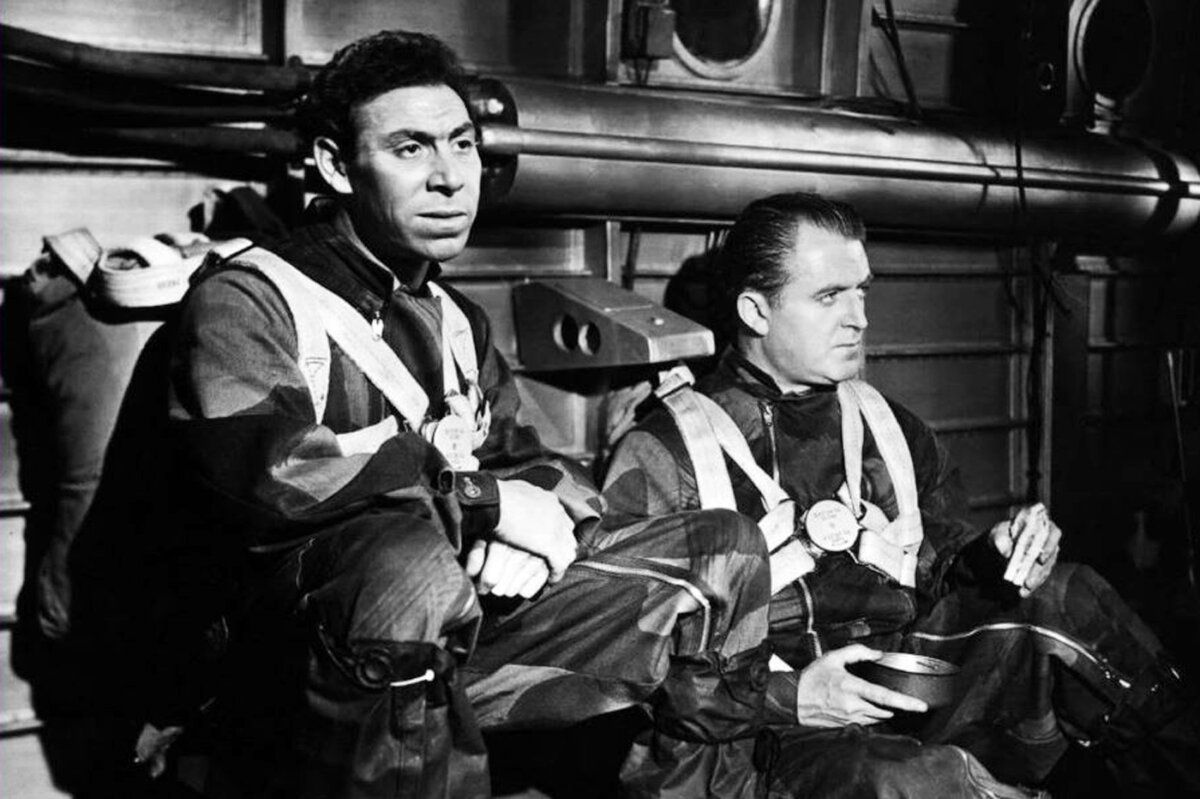
Crichton’s direction improves considerably once the story moves to Belgium. The location photography works particularly well around the streets and railway facilities, while the later sequences feature some impressive physical work involving moving trains and narrow escapes.
The black-and-white cinematography suits the material, and the clear editing keeps the more complicated operations easier to follow. These passages are among the film’s most entertaining.
The agents have recognizable weaknesses and occasionally make poor decisions, which helps keep them realistic and interesting. Also, their willingness to risk their lives for their countries is admirable, especially considering how easily their assignments could go sideways.
Despite its shortcomings, “Against the Wind” offers a capable international cast, some exciting action, and a worthwhile glimpse into the dangerous work of wartime resistance agents.
“Against the Wind” is available on GanJingWorld (GJW). GJW is a U.S.-based digital platform dedicated to revitalizing traditional connections.
‘Against the Wind’
Director: Charles Crichton
Starring: Robert Beatty, Simone Signoret, Jack Warner
Not Rated
Running time: 1 hour, 36 minutes
Release Date: June 26, 1949
Rated: 3 1/2 stars out of 5
What arts and culture topics would you like us to cover? Please email ideas or feedback to features@epochtimes.nyc