SEARCH


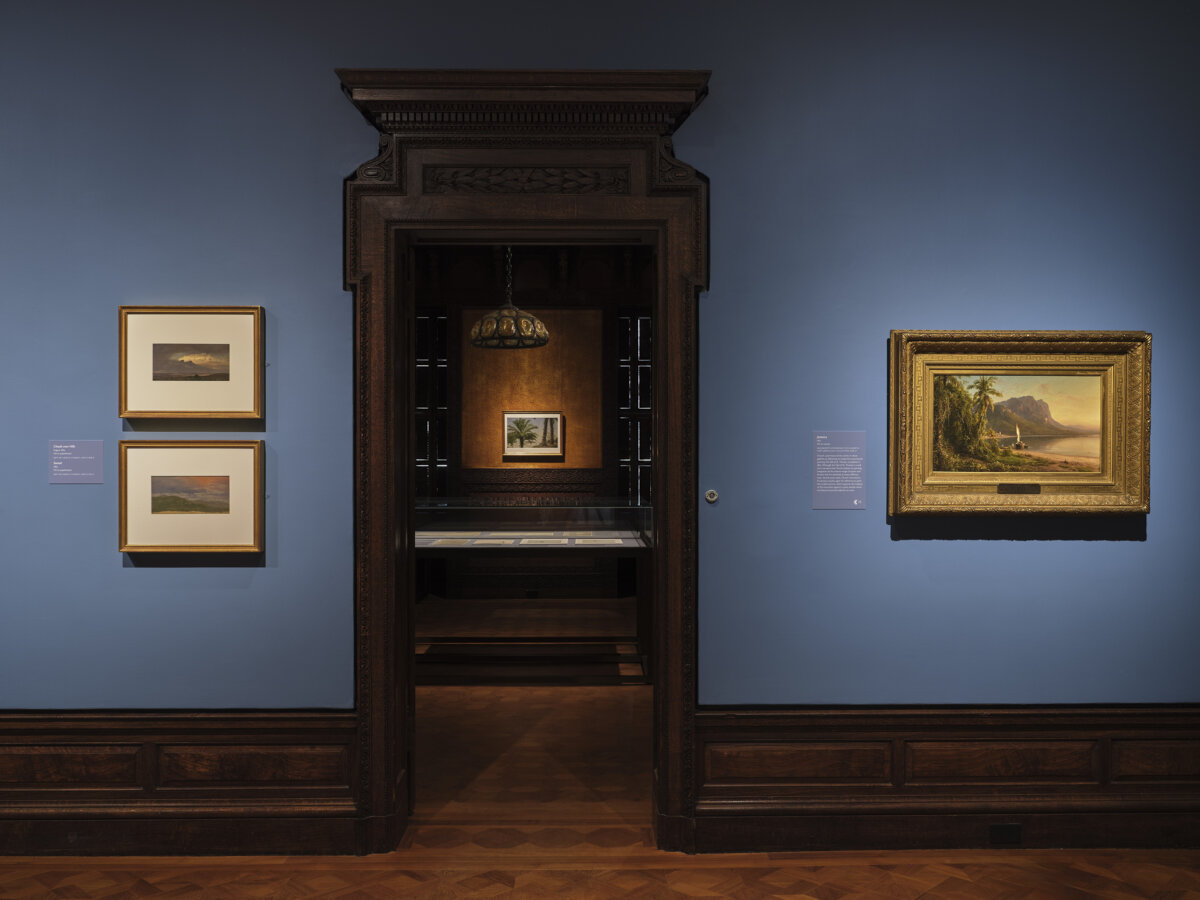
NEW YORK CITY—This year marks the 200th anniversary of the birth of visionary American landscape painter Frederic Edwin Church (1826–1900), a leading figure of the Hudson River School. In honor of this occasion, the Cooper Hewitt, Smithsonian Design Museum has just opened “Frederic Church in Jamaica.”
On view through Feb. 15, 2027, this exhibit of over 60 works features infrequently displayed sketches from the artist’s travels to Jamaica in 1865. These are drawn from the institution’s collection. Cooper Hewitt’s holdings include more than 2,000 Church oil studies and graphite sketches, which is the largest assemblage of the artist’s work in the world.
Church was an avid and adventurous world traveler. His famous monumental works include such varied sights as stunning vistas of South America and thrilling depictions of icebergs, all of which he saw in person.
Alas, the reason for his April 1865 trip to Jamaica with his wife, Isabel, was occasioned by tragedy. Their two young children, infant Emma and 2-year-old Herbert, had recently died from diphtheria. The Churches sought respite on the Caribbean island, looking to replenish emotionally and spiritually.
Recording Natural Wonders
Over the course of five months, Church explored the island daily, venturing both on foot and by horse. A map in the exhibit explains that of the island’s 22 administrative parishes, Church is known to have visited at least six: Saint John, Saint Thomas in the Vale, Saint Catherine, Saint Andrew, Port Royal, and Saint Ann.
Horace Robbins, a fellow American artist who traveled with Church, observed empathetically, “He works aways as if for dear life—& seems to be trying to forget his trouble by always keeping himself occupied.”
Despite his deep personal anguish, Church’s art making while in Jamaica focused on recording the wonders of nature. The exhibit “offers a window into the creative process of one of America’s most influential artists through oil studies and ‘en plein air’ sketches, which have rarely—if ever—been publicly exhibited,” Cooper Hewitt curator Caitlin Condell says.
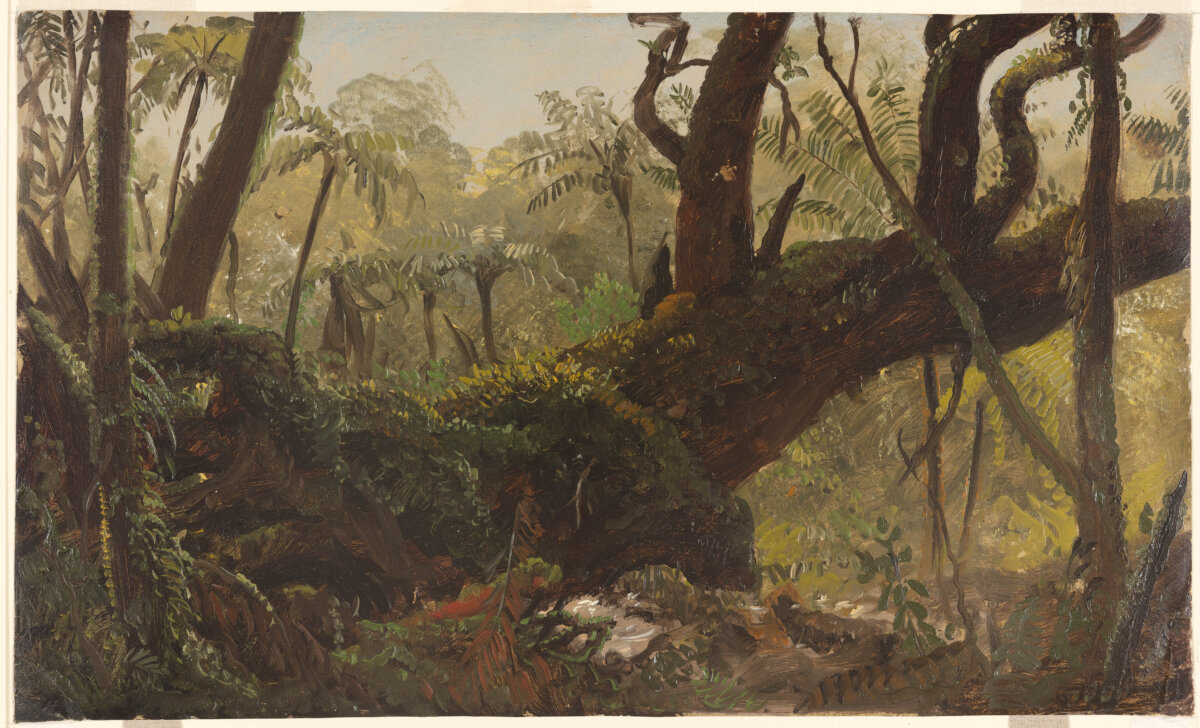
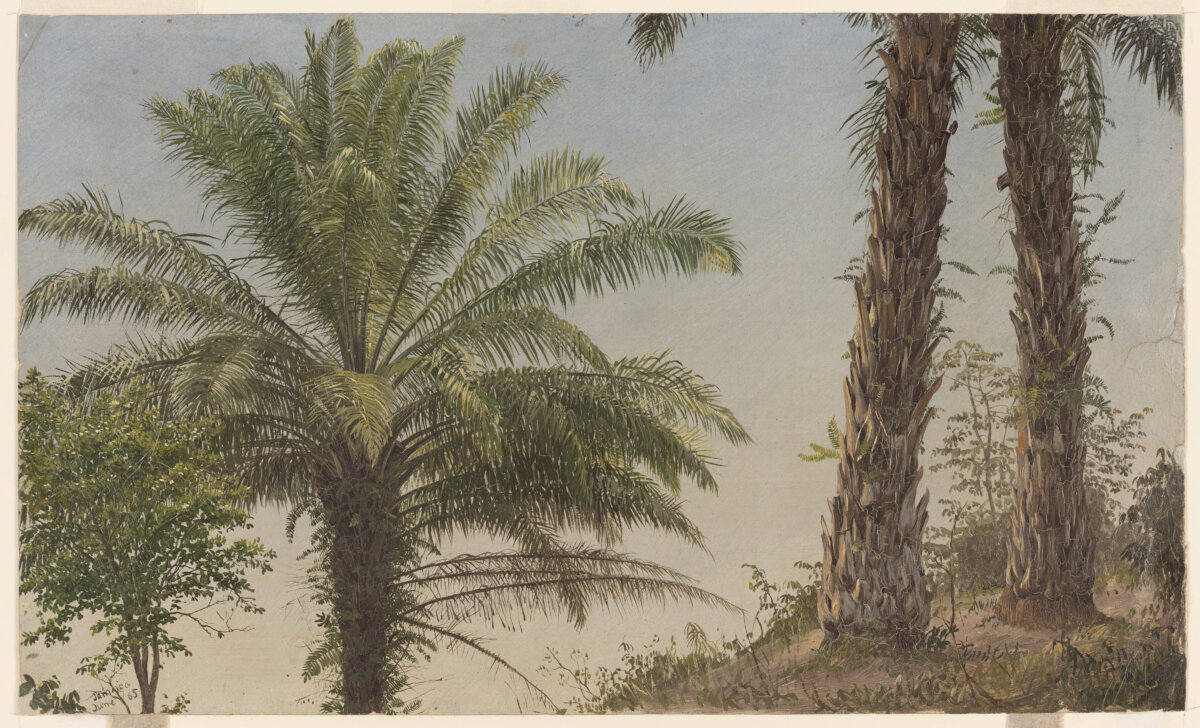
The subjects of the Jamaica studies and sketches include meticulously detailed and accurate botanical studies of indigenous vegetation, woodland, mountains, coastlines, jungle, and sunsets. Indeed, regarding the sunsets, Church wrote to his father that they were “so extraordinary that I might not see similar again.” While much of the indigenous island landscape had been supplanted by sugarcane plantations developed under British rule, Church found beauty in the wild sugarcane grasses.
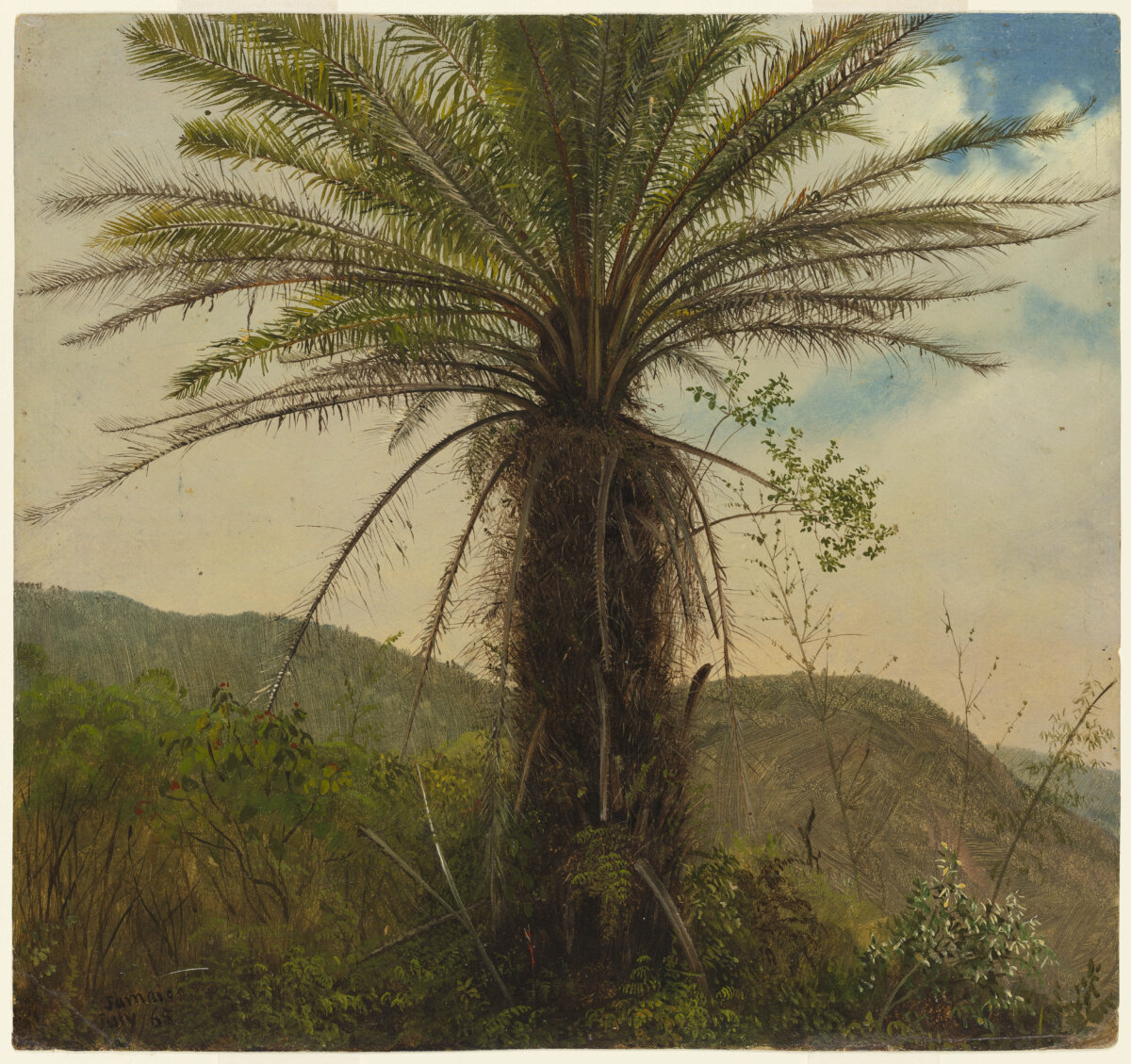
The exhibit informs visitors that Church did not depict the political and social climates of the island. During this period, Jamaica was under British colonial rule, and black Jamaicans lived in extreme poverty. Cooper Hewitt’s exhibition texts provide historical context about this. (why mention this if none is included?)
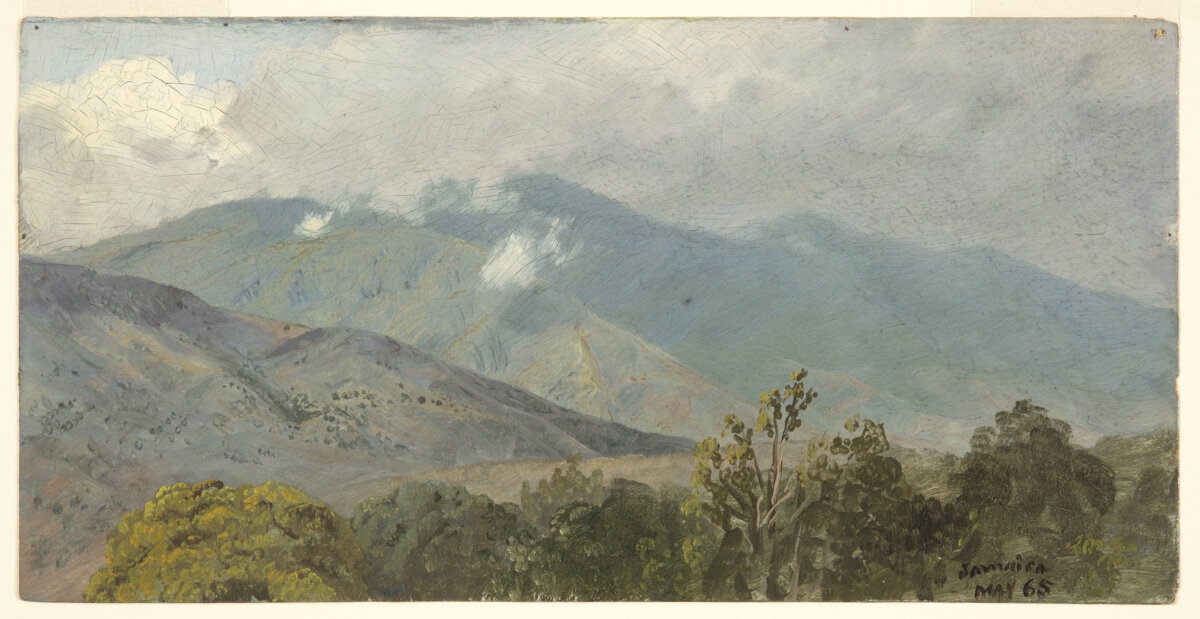
As a landscape painter, Church did record the literal climate. He enjoyed the constantly changing weather that afforded the opportunity to paint a range of atmospheric effects. Robbins reported in a letter that Church was seemingly unbothered by the constant swarms of mosquitos while working outside.
A Window Into Church’s Process
When Church arrived in Jamaica, the island was experiencing a historic drought. This is reflected in both his writings and art, where he recorded the stark differences in areas that had verdant passages alongside parched ground.
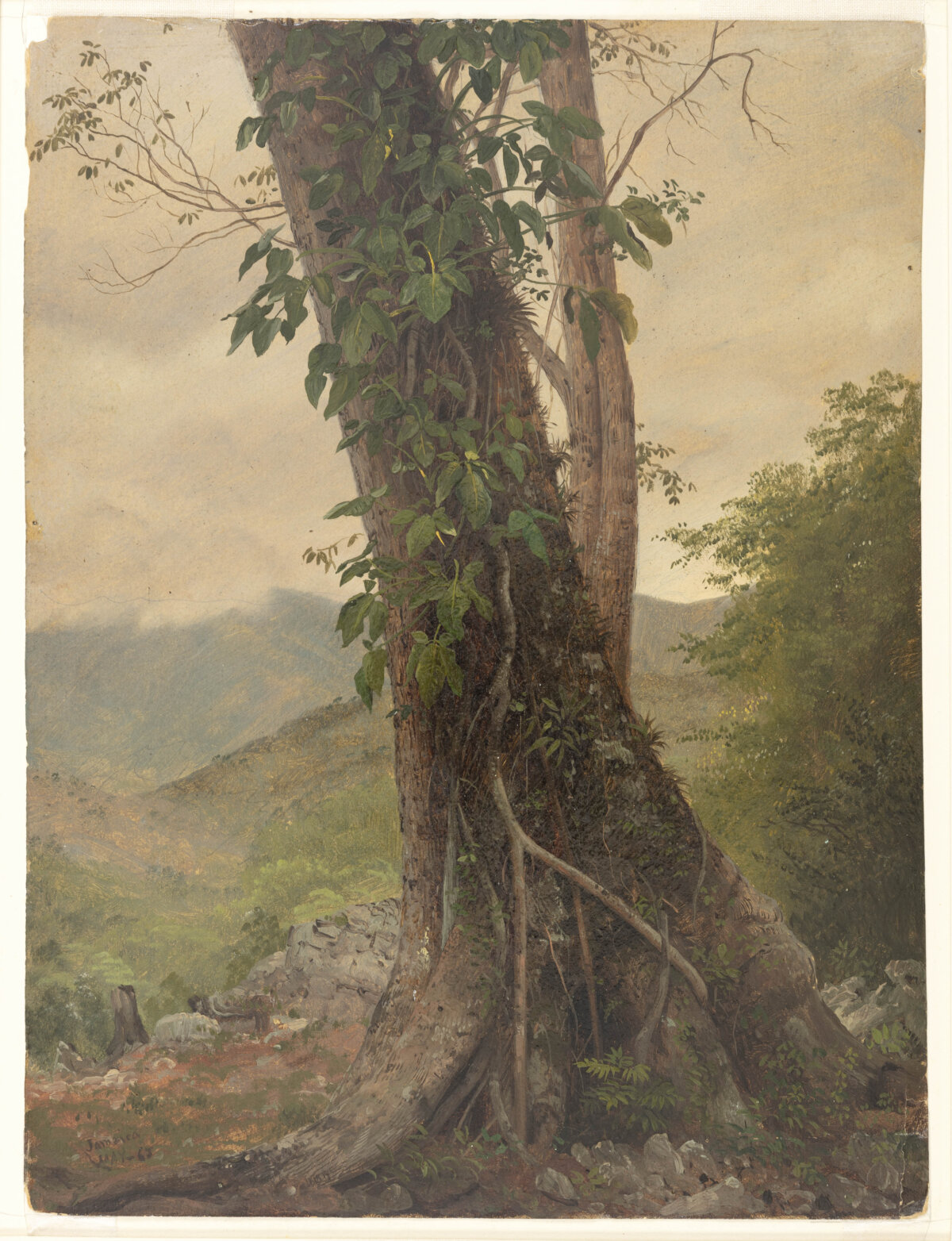
One of the sights Church found especially fascinating was the strangler fig. This is a type of ficus that engulfs trees in order to access sunlight in dark tropical environments. Included in the exhibit is the oil and graphite on paperboard “Tree With Vines, May 1865” and the graphite and gouache on wove paper “Parasite Vine and Palm Plant, June 1865.”
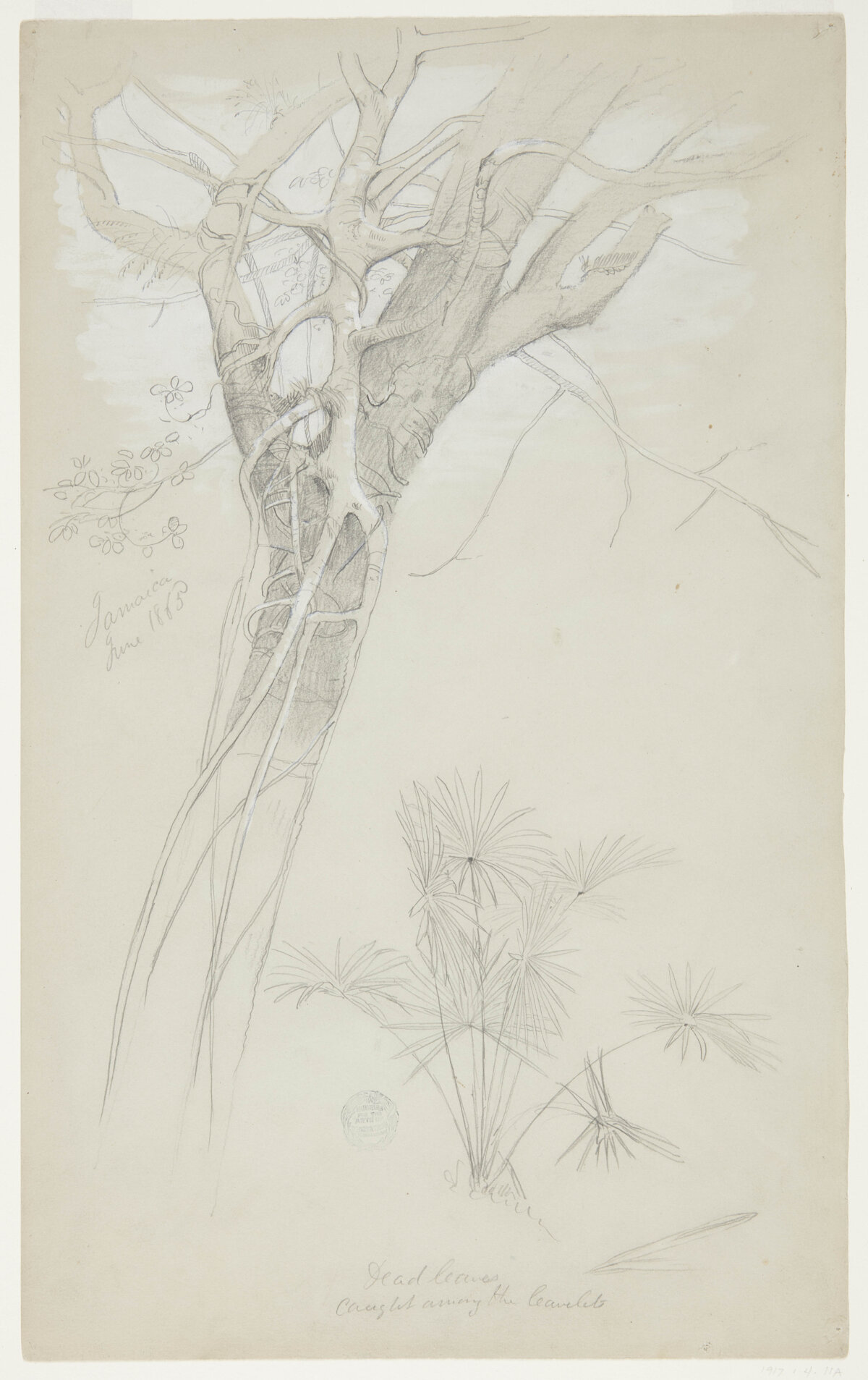
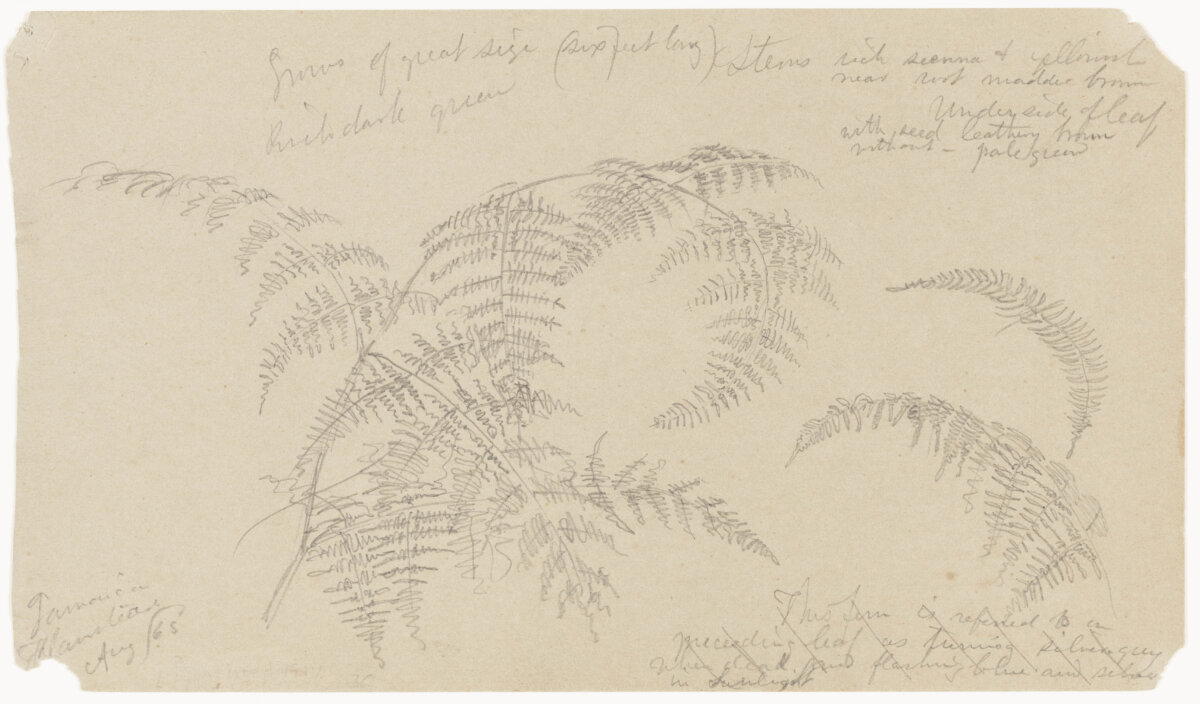
Additional graphite sketches are displayed in the exhibit. Church commonly annotated such works with short notes. The museum describes these markings as often “both informative and poetic.” These graphite sketches aided him in painting flora once he had returned to his New York studio.
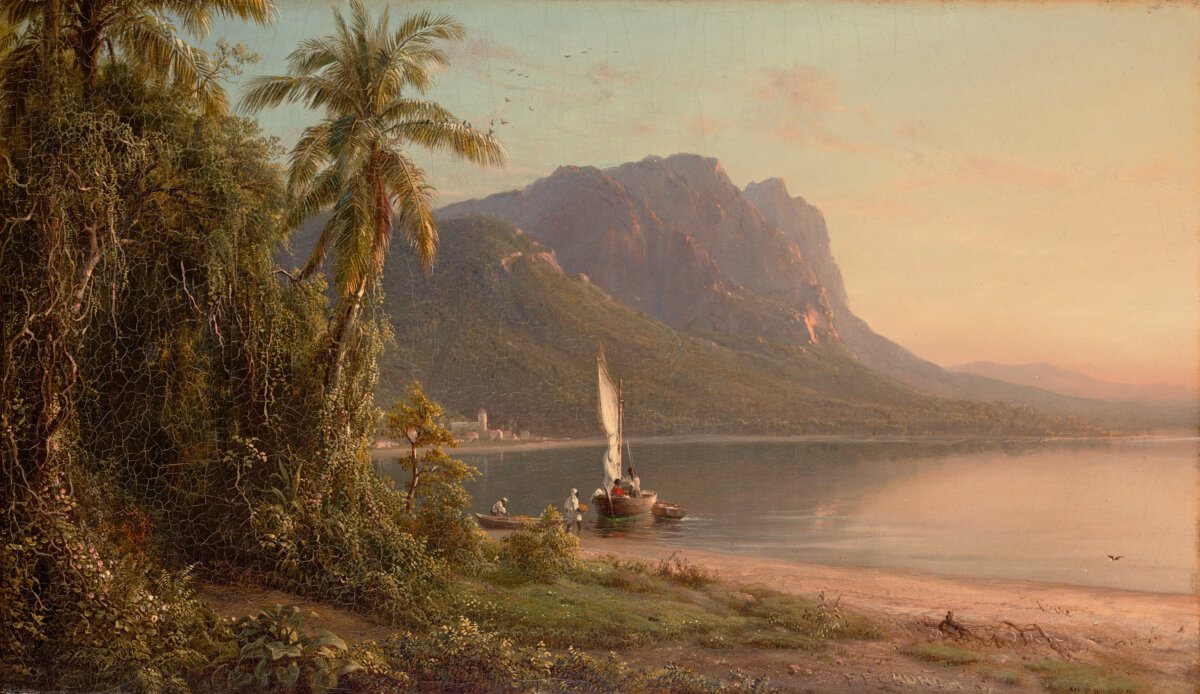
A single oil-on-canvas painting is included in the exhibit. This work, which shows magnificent mountains alongside a seaside scene with Jamaican laborers, is on loan from Wadsworth Atheneum Museum of Art. It is fascinating to see this 1871 canvas “Jamaica,” because Church made it after his trip using the studies that he had made as references.
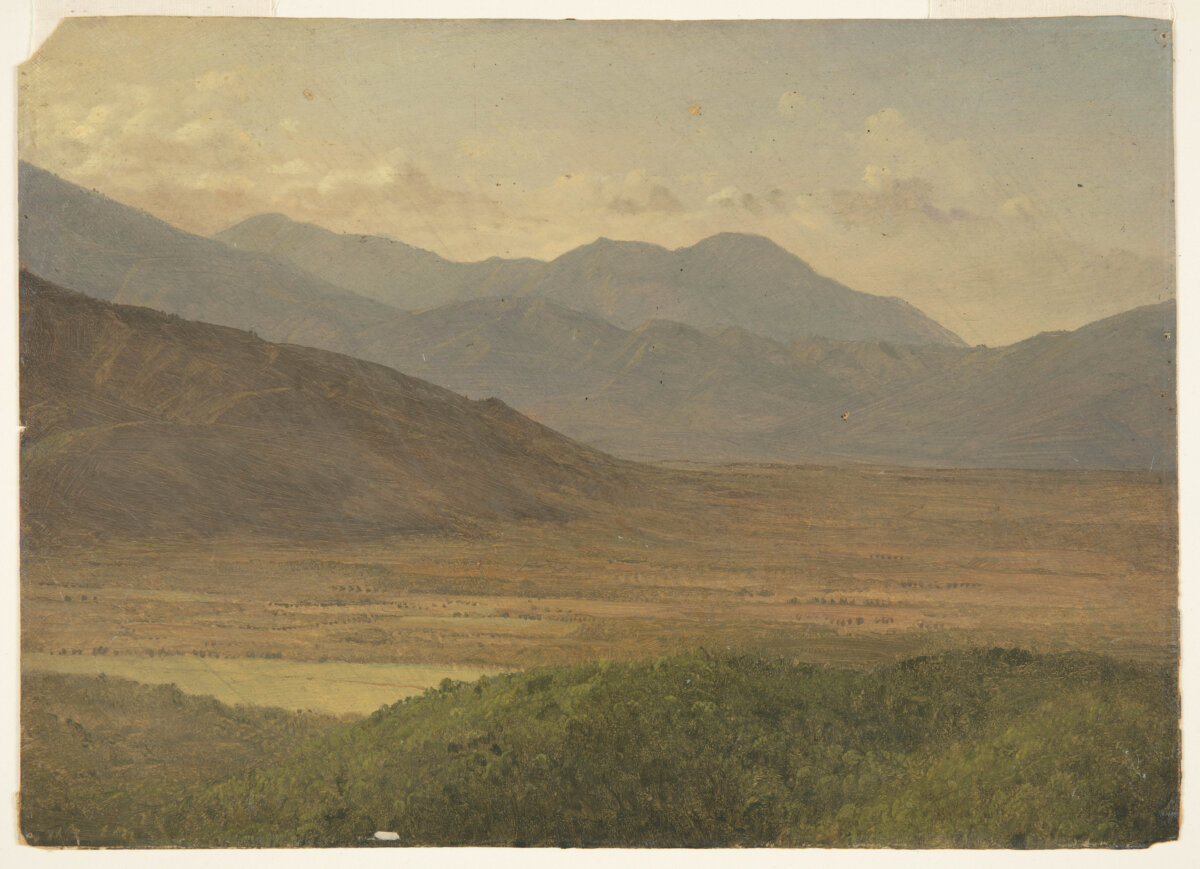
Some of the artworks on display were dashed off in moments while others were executed over the course of hours. They provide striking, intimate access to the range and practice of Church, who was already acclaimed in the United States by this time for his astonishing landscape paintings.
Throughout the exhibit, one is struck by Church’s ability to capture light, color, and form as well as his fluidity in communicating a subject’s emotional atmosphere. The museum notes that these “breathtaking sketches attest to the expressive and healing power of drawing from nature.” Approximately 161 years after Church’s Jamaica trip and 200 years after his birth, this statement remains as timeless as Church’s wonderous art.
“Frederic Church in Jamaica” at Cooper Hewitt, Smithsonian Design Museum in New York City is on view through February 15, 2027. To learn more, visit cooperhewitt.org.
What arts and culture topics would you like us to cover? Please email ideas or feedback to features@epochtimes.nyc.