SEARCH


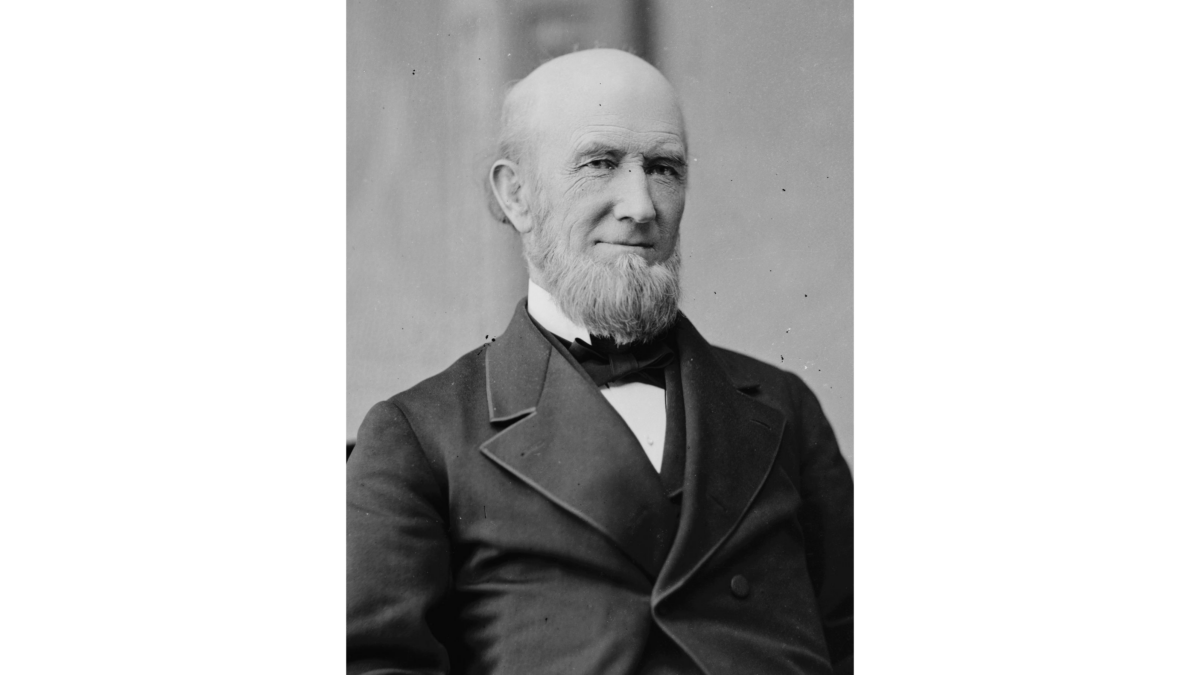
A third of a mile is not very far, but for the city of St. Louis, it was devastatingly long. The stretch of approximately 1,500 feet crossed the Mississippi River, and without a direct railroad bridge to cross it, St. Louis’s economy suffered immensely. A bridge connecting the city with the eastern portion of the country was a necessity. In 1867, the St. Louis Bridge and Iron Company hired James Buchanan Eads to build the bridge. It was an interesting decision by the company board members, especially since Eads had never built a bridge before.
A First Experience on the Mississippi
James Buchanan Eads (1820–1887) was born in Lawrenceburg, Indiana. The Eads moved constantly, as their father, Thomas, looked for work. In 1833, the search for employment opportunities led the family to St. Louis.
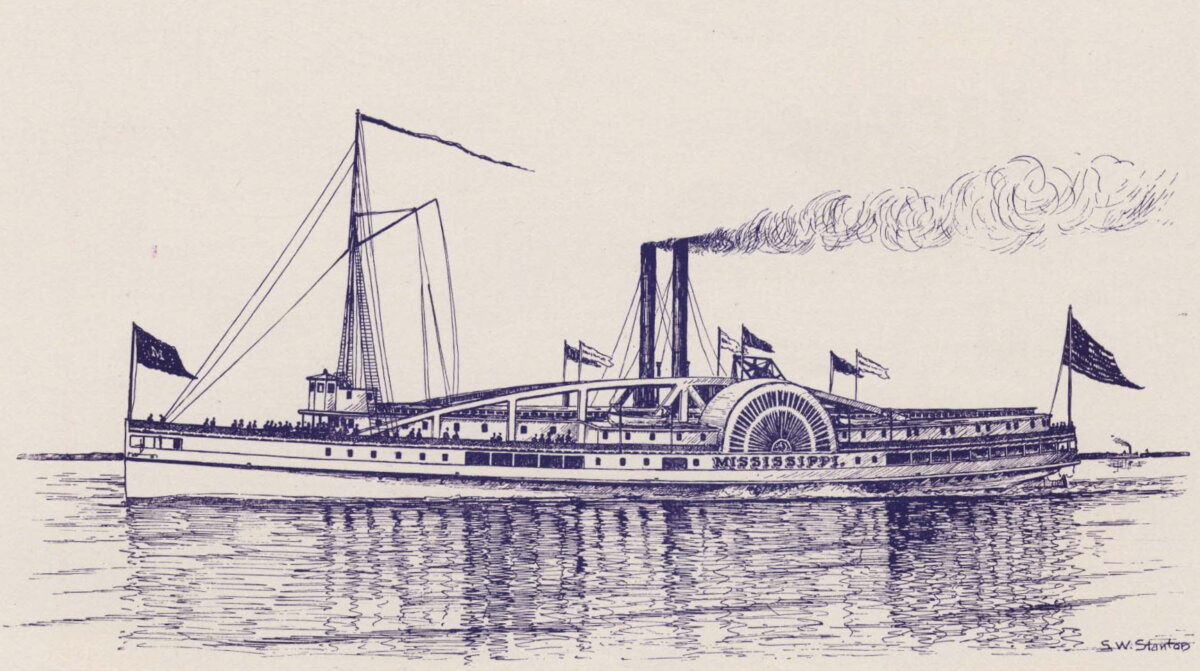
However, the opportunity became a disaster before they ever reached the city. Aboard a steamer, the boat burst into flames after a chimney flue collapsed. Crew members and passengers leapt into the water to reach the shore and escape the flames. Eight people died. Eads and his family survived. It was his first experience on the Mississippi, but it would be far from his last.
By necessity, Eads entered the workforce early, which kept him from finishing a formal education. He sold apples on St. Louis’ streets and worked as an errand boy for a dry goods merchant. The dry goods store owner allowed the curious Eads to use his personal library. It supplemented the education he never received.
Eads applied what he learned in books to real life. He was especially taken with engineering and often invented his own machines. When he visited the nation’s capital one year as a young man, he spent much of his time at the U.S. Patent Office, scouring through patents and deciphering how things were made.
Salvaging the Mississippi
Despite the traumatic boating experience when he was 13, by 18 Eads was working as a clerk for a St. Louis steamboat company. When one of the company’s steamboats, The Knickerbocker, sank in the Mississippi, Eads drew up plans to salvage it. His idea was not strictly specific to that ship but for the many boats that sank for various reasons along the river. For Eads, the murky river seemed like an underwater gold mine.
In 1842, he approached two boat builders, Calvin Case and William Nelson, about the idea of a salvage boat. It would include a diving bell and an apparatus powerful enough to hoist lost cargo from the river. Case and Nelson liked the idea, and the three went into business together. Case and Nelson built the boat, and Eads most often walked the river floor inside the diving bell. The financial windfall that Eads envisioned was slow to come.
Sadness and Separation
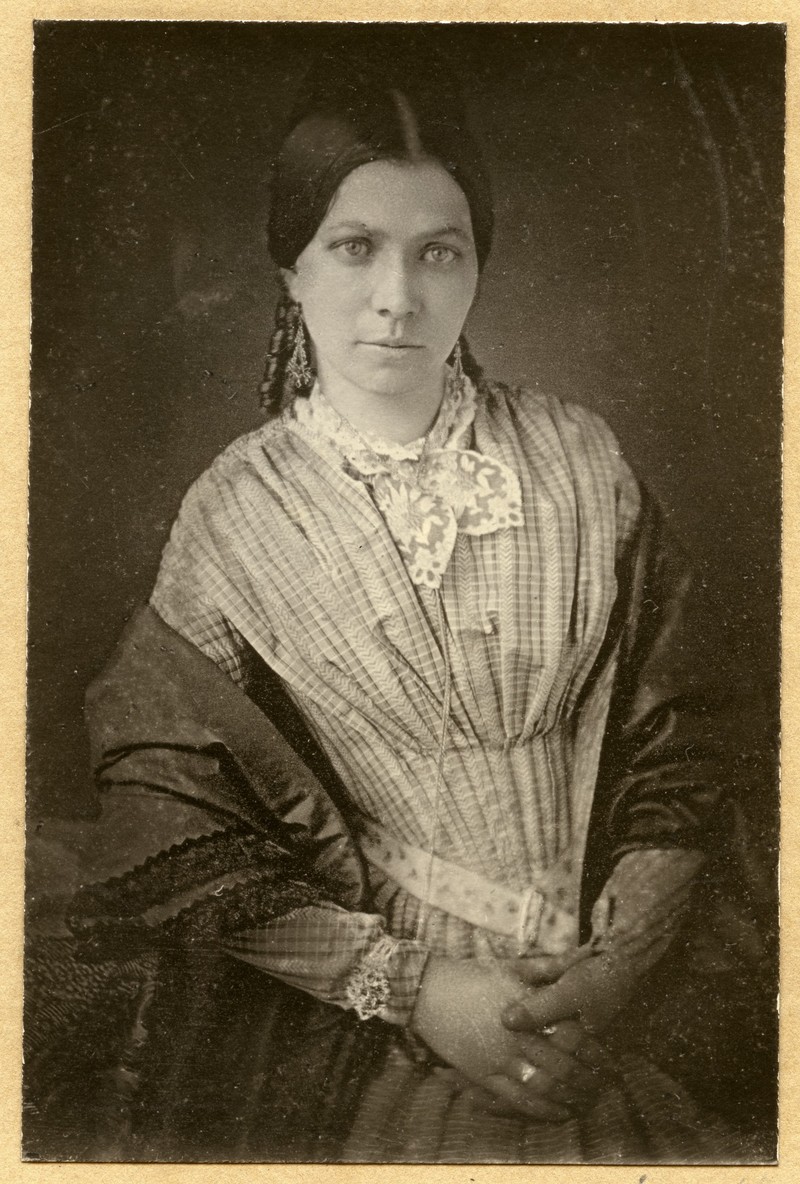
In 1845, Eads married Martha Dillon, with whom he had three children, but due to financial constraints, she lived with her in-laws in Iowa. Eads remained in St. Louis, pursuing what he believed would be inevitable wealth, even starting a glassworks business. The glassworks failed, primarily for logistical reasons, forcing Eads to focus on the salvage boats.
Martha, feeling the financial squeeze, began sewing for income. She also expressed her fears about the dangerous salvage work, specifically the possibility of an accident while in the diving bell. To add tragedy to the stress, their son, James Buchanan Eads Jr., died in infancy.
The sadness, stress, and loneliness afflicted them both. Nonetheless, Eads was determined to make the salvage business a success. By the early 1850s, his one salvage boat had turned into a small fleet capable of not just lifting cargo, but whole ships. The future looked bright, though it kept him from his family.
“It is no small loss to forego the pleasures of Christmas time with those I cherish so dearly, but with a man in debt it cannot be said that his time is his own,” he wrote Martha one December.
Sadly, they had no future Christmases together. In October 1852, Martha developed cholera and died. In a twist of tragic irony, Eads retired in 1857 an immensely wealthy man, with a fortune estimated at $500,000 (nearly $20 million today) from the business.
Building the Ironclads
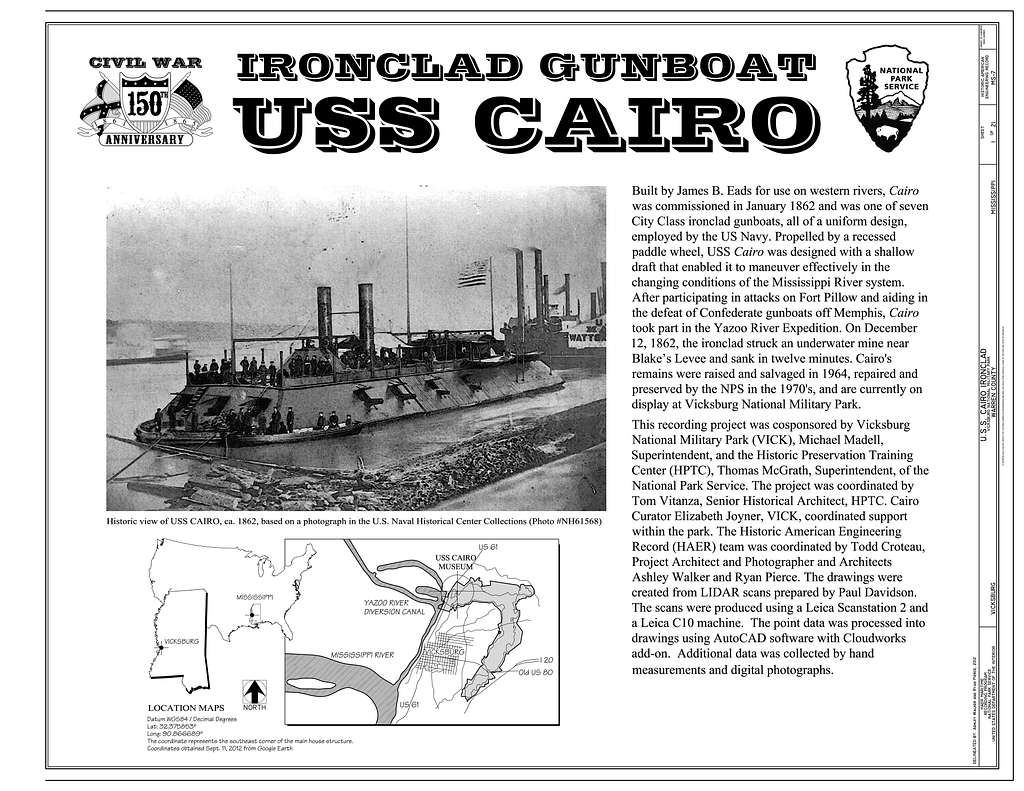
As the 1850s gave way to 1860, Eads sensed a national schism on the horizon. He proposed to the federal government the use of ironclad gunboats to patrol the country’s major waterways, especially the Mississippi. The government dismissed the idea, but when war erupted, Washington summoned Eads and accepted his proposal. Due to the federal government’s financial constraints, Eads had to finance the project personally.
Eads built one of the first ironclad ships to see combat. Within 100 days, four of these gunboats had launched. Eads oversaw the construction of seven such boats, and they proved vital to the capture of Fort Henry, Fort Donelson, the city of Vicksburg, and were instrumental in the Battle of Mobile Bay.
He put forth a heroic effort that greatly contributed to the Union victory. This effort endeared him to numerous powerful people, none more powerful than the future president, Ulysses S. Grant, who led the Siege of Vicksburg in 1863.
Bridging the Mississippi
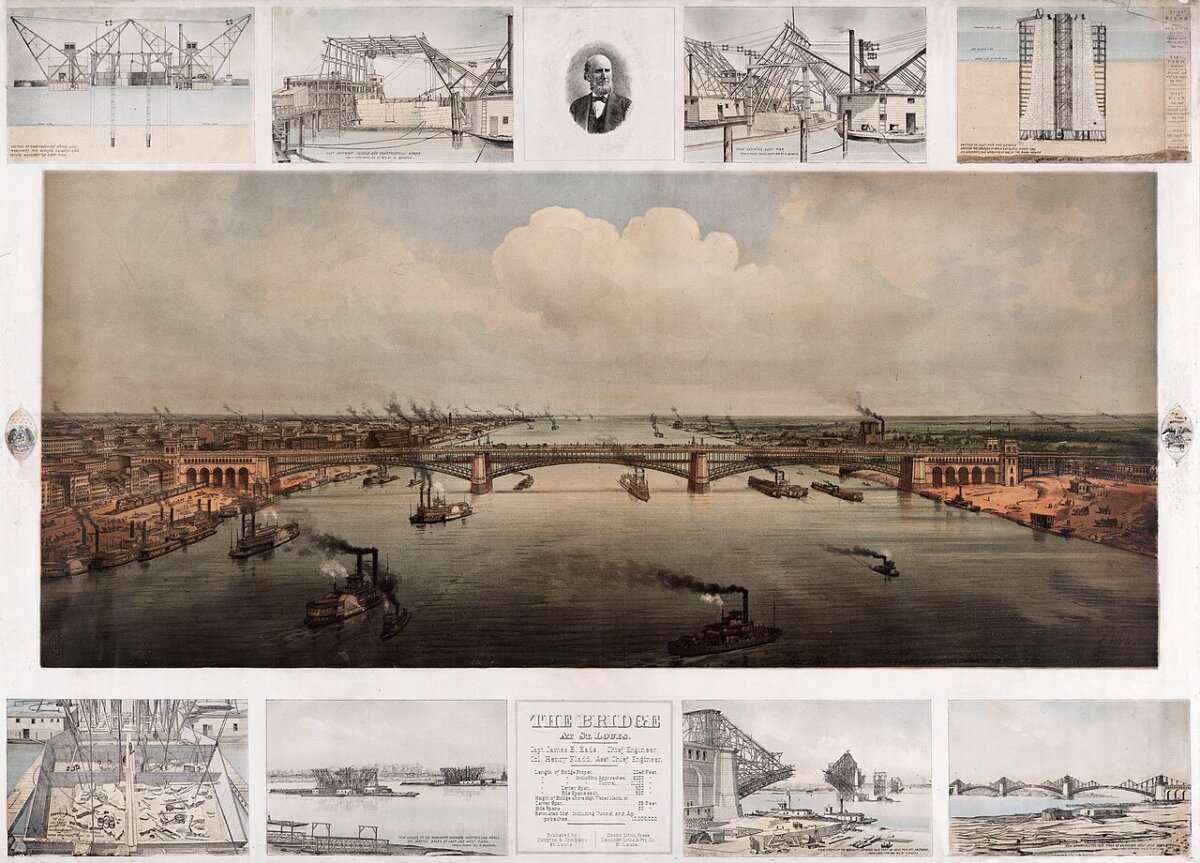
After the Civil War ended, Eads found himself in a very familiar location: St. Louis. The city needed a direct railroad bridge that could span the river because St. Louis’s economy was suffering due, in no small part, to Chicago’s railroad and business interests. Rival parties had been working to hinder the development of St. Louis many years before this—beginning with the completion of the Rock Island Bridge in 1856 and Chicago’s emergence as a major rail center by 1860—and by 1865 these same parties had supported a congressional bill aimed at stopping St. Louis’s bridge projects, on top of the local Wiggins Ferry Company’s concern about losing its transport monopoly.
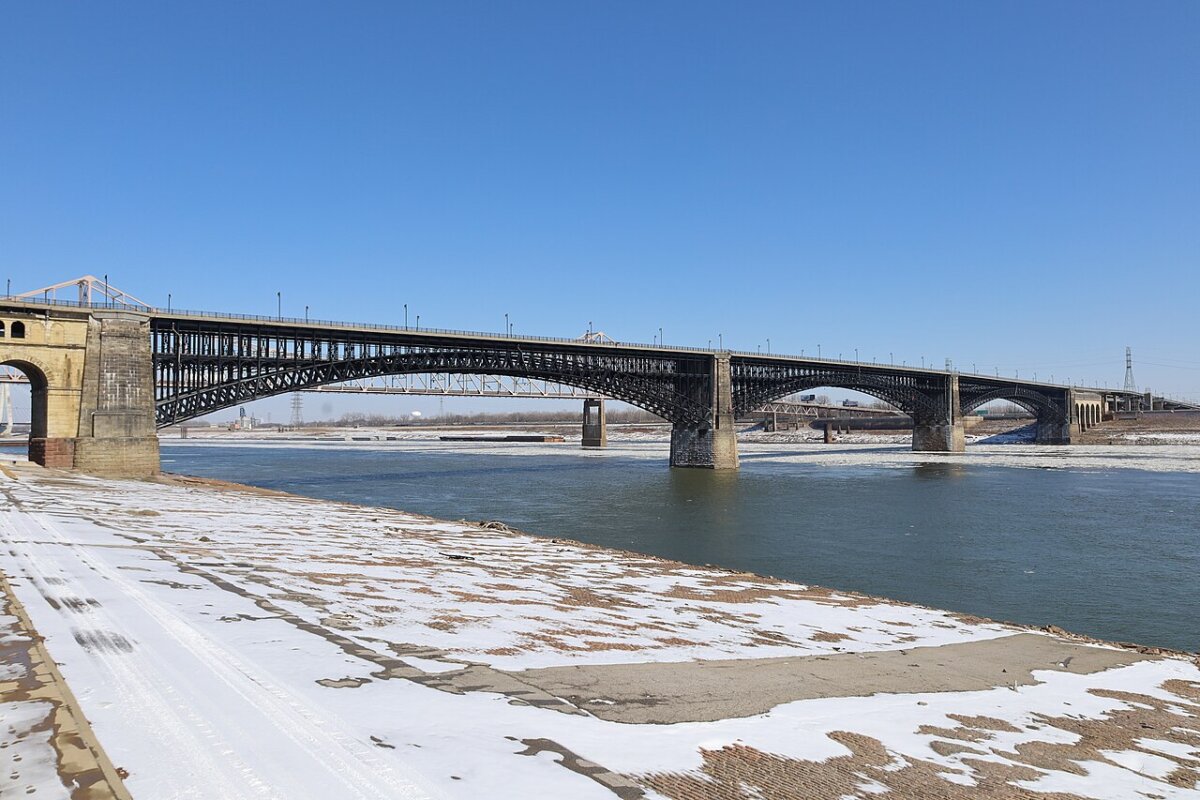
Eads was not constrained. He proposed a double-decker bridge for both pedestrians and trains, built in three sections to meet Congress’s legal parameters. His design included sections of 502, 520, and 502 feet long, each meeting the required minimum clearance for ships passing under the bridge. He chose a material from Andrew Carnegie’s recently established Keystone Bridge Company called steel. His idea was actually historical. Instead of trusses or the newer suspension method, he chose the arch system, like that of the ancient Romans.
Though hired in 1867 by the St. Louis Bridge and Iron Company. Eads’s design, however, was met with immense uncertainty and criticism, especially from Chief of the U.S. Army Corps of Engineers, Andrew Humphreys. Humphreys advocated building a canal for ships to go around the bridge rather than under it, an idea Eads viewed as ridiculous. Eads discussed the situation with then-President Grant, who green-lit his idea.
Completing the Eads Bridge
The most difficult part of the project was digging into the riverbed to reach its bedrock. Eads used a relatively new technology called pneumatic caissons, which were open bottom boxes pushed into the water. As air was pumped in, the water was pumped out. Lower and lower the box went until it reached the bedrock, one of the three reaching as deep as 123 feet. This was not only the most difficult part, it was also the most dangerous.
Workers moved up and down the caisson, but many began falling ill. They struggled to stand up straight. Unknown to them and Eads, they were suffering from a deadly illness known as “the bends,” caused by a quick change in air pressure. The doctor brought on-site recommended that the workers slowly move up to the surface. Unfortunately, the doctor did not recommend a slow enough transition. Of the 94 who were negatively affected by the illness, two were permanently disabled, and 15 died. According to a National Park Service account, 15 men died, two were permanently disabled, and 77 others were severely afflicted.
The project was finally completed in the summer of 1874. The public, however, hesitated to use it. Eads decided to make it unmistakably clear that the bridge was more than safe. On July 2, he had 14 locomotives go back and forth across the bridge. The public was convinced. Two days later, 150,000 people gathered to watch Gen. William Tecumseh Sherman drive in the final spike for the dedication ceremony of the Eads Bridge. St. Louis’s engineering problem was solved. The Mighty Mississippi was conquered.
Down to New Orleans
While the Eads Bridge was being completed, the self-taught engineer eyed another problem caused by the Mississippi River. At the river’s mouth in New Orleans, sediment buildup created sandbars that kept out commercial traffic. Removing sediment was time-consuming, and the delays caused economic issues for businesses and the national economy as a whole. Eads had an idea.
He believed he could stop the encroaching sediment by narrowing the waterway with jetties. Humphreys again criticized the plan, and again suggested building a canal. Just as he had concerning the bridge, Eads called Humphreys’ suggestion ridiculous. In 1876, Eads was proven right. His jetties fixed the problem that had wreaked economic havoc on commercial transport on the Mississippi River. By 1880, New Orleans reported a 6,500 percent increase in shipping.
Eads hoped to address another shipping and transport issue that was, this time, far from the Mississippi River. Global shipping was forced to go around South America’s Cape Horn to get from one ocean to the other. He began working on a plan to build a massive railroad system that would pull ships overland across the isthmus of Tehuantepec. He never got to attempt it. He died in the Bahamas while trying to recuperate his health, which had become fragile since his diving days. He has long been considered one of America’s greatest engineers.
What arts and culture topics would you like us to cover? Please email ideas or feedback to features@epochtimes.nyc.