SEARCH


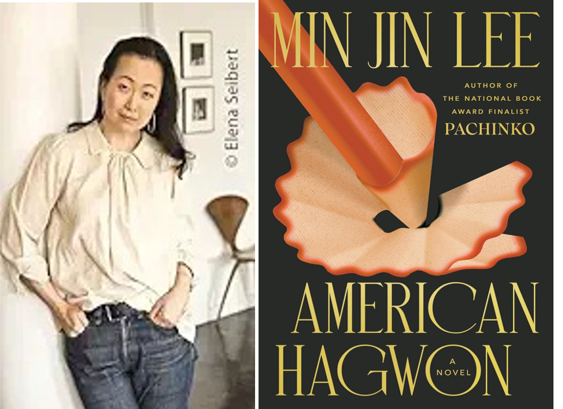
Min Jin Lee’s newest novel, “American Hagwon,” has generated a great deal of excitement. This is hardly surprising, given the success of her last book, “Pachinko” (2017). Born in Seoul and raised in Queens, Lee studied at Yale and Georgetown Law; she practiced as an attorney and then turned to writing, publishing her debut novel, “Free Food for Millionaires,” in 2007.
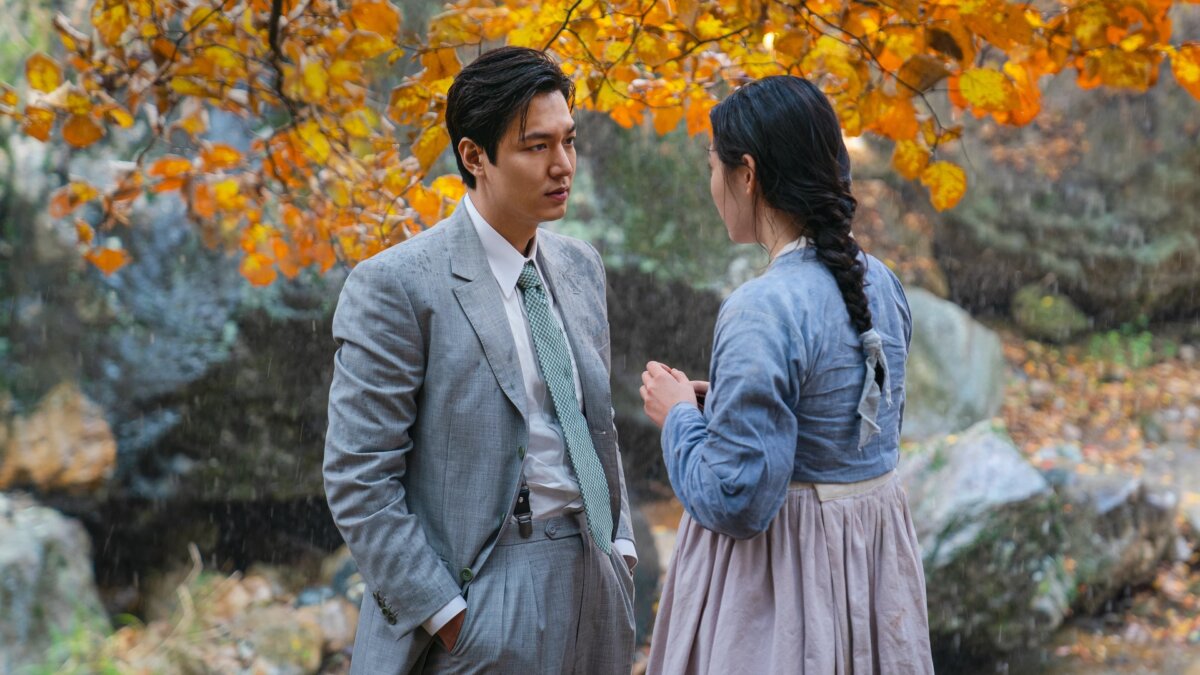
“Pachinko,” a 2017 National Book Award finalist, quickly made her an international name and became an Apple+ streaming series. She returns to similar themes in “Hagwon,” since both books follow generations of a Korean family struggling to make their way and survive in the tides of history and politics. However, this new story has a much narrower focus, making it more personal and up close.
The story begins in 1992, centering around the Koh family as they move to South Korea from Australia. The first few lines are foretelling: “The rules of engagement have changed already. Within a month of their arrival from Australia, Mrs. Helen Koh found her family a suitable apartment in a good school district in Seoul. The … neighborhood … was not as nice as the one where her sister, Sonya, lived, but it had to suffice.”
This hints at two fundamental aspects of the story. The first is a family who values the education of their children in the highest terms. The second is some of the compromises on the horizon if they’re to succeed—academically, socially, and in life itself.
‘Hagwon’
For readers unfamiliar with the term, a hagwon is a private, for-profit tutoring academy. It’s a fixture of South Korean childhood, where students go after a full day of regular school for more hours of instruction. Hagwons can range from cramped storefronts in low-income areas to polished office suites with whiteboards and vending machines.
Culturally, they’re akin to a rite of passage. Korean college admission has traditionally hinged on the Suneung, a national exam given just one day a year in November. One day’s results can literally reshape an entire family’s future.
This is in contrast to the American SAT, which is offered several times annually, can be retaken, and is weighed alongside grades, essays, and extracurriculars. The differences can be startling.
The hagwon model isn’t unknown here. In the 1990s, Korean-model hagwons began to surface in the United States, a detail that becomes prominent later in the story.
Meet the Kohs
Helen Koh dutifully manages the family finances, while her husband, John, works as an executive in a trading company. His career has moved the family between Paramus, New Jersey, Seoul, and Sydney. Their three children are all Jersey-born—sons Bo and DH and 13-year-old daughter Mido.
Mido is small, slight, and very quiet outside the home. She reads above her grade level, but teachers keep remarking on her lack of friendships. Helen consults specialists, depleting the family’s savings, and hopes quiet children might be more acceptable in Korea.
Bo and DH, at first, seem poised for success. Bo is a standout student and a perennial teacher’s favorite, while DH is an exceptional soccer player who’s admired by classmates and coaches. Nevertheless, rougher waters than anyone expects lie ahead.
Intimate yet Epic
On paper, the Kohs aren’t exceptional—a mother, a father, and three children, with everyone devoted to making sure the kids earn top marks and excel at every opportunity. Each is gifted in his or her own way. Yet life gets in the way, with obstacles arising for the parents as well as the children.
John’s career difficulties begin when his oldest friend and boss, Taehun Shin, who’s a married man, becomes involved with a young trainee, Danbi Jung. Unable to end the affair himself, Shin coerces John into getting rid of her by assigning impossible work and building a case for dismissal. The scheme strains John’s conscience, his family, and, inevitably, their finances.
Meanwhile, Helen must navigate the social hierarchy around her, including a wealthy sister and a status-conscious church, while working retail to make ends meet.
The secret to the success of author Min Jin Lee’s work is the relatability she brings to the Kohs. They aren’t exceptional in the Hollywood blockbuster sense, but that’s the point.
Minute details of living—a child who is “too” quiet, a friend who has a crisis on the night of the big exam, a social bill that comes due at a pivotal moment—have the same monumental effects as the tide of war and global politics in “Pachinko.”
At 650+ pages, the breadth of the story is considerable. Some might balk at the author’s commitment to this family’s tale, especially considering how niche the plot might appear to be. However, Lee’s considerable writing talents allow readers to engage in the Kohs’ lives. Readers can become addicted to following the story, even as viewers become addicted to watching the best K-dramas.
While there are similarities between the need for academic achievement in Korea versus the U.S., its emphasis in Korean culture and its relationship to national identity far surpasses what we’ve come to know and expect from our children.
The scope of “American Hagwon” is arguably small, but all lives have an epic quality to them if the characters are bold enough to live them to the fullest.
Lee understands this very well, and we’re richer for it.
‘American Hagwon’
By Min Jin Lee
Cardinal: Sept. 29, 2026
Hardcover, 656 pages
What arts and culture topics would you like us to cover? Please email ideas or feedback to features@epochtimes.nyc