SEARCH


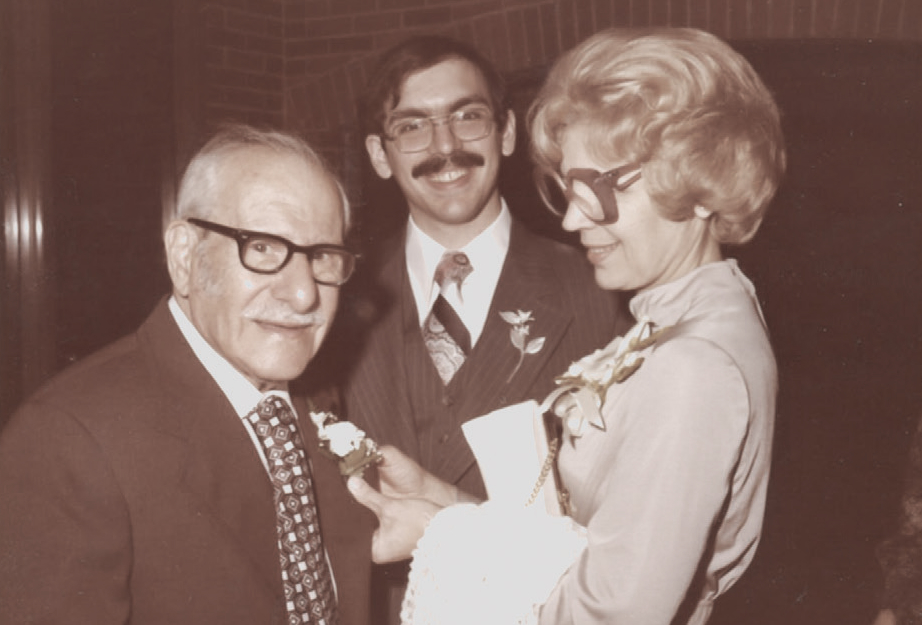
My grandfather, George Nicholas Lardas, was not born a United States citizen. But he bought citizenship with his own blood.
Papou (Greek for grandfather) was born in a leap year, February 29, 1892, on Ikaria, a Greek island off the Turkish coast. The family joked that his birthday came just once every four years. Ikaria was named for Icarus. Icarus and his father Daedalus escaped Crete on wings of wax and feathers that Daedalus crafted. Icarus flew too high, crashing into the sea near his namesake island after the sun melted his wings.
Like Icarus, Papou could not be contained on one Greek island. At age 15, after several years crewing his family-owned sailing ship, he had an opportunity for a carpentry apprenticeship. The apprenticeship was in Cairo, Egypt. Papou could read, write, and navigate. With another island boy, he sailed an open boat across the Eastern Mediterranean from Ikaria to Alexandria, about 428 nautical miles away. Then he went to Cairo, where he became an accomplished cabinetmaker. My middle son has the tool chest that Papou made after coming to America. He and my Uncle Jack have some of his carpentry tools, including some he made himself.
Two of his older brothers had moved to America, and had a restaurant in Youngstown, Ohio. When it started growing, they sent for family to help: Papou and Papou’s younger brother, Louie. Papou went, seeking an adventure bigger than Egypt. As in everything he attempted, he excelled as a restaurateur. Throughout his life, he alternated between cabinetmaking and restaurateuring. He worked in or ran restaurants all over the eastern U.S., from Chicago to New York, mostly workingmen’s diners, but he could make gourmet meals, too.
His skill became a family legend. According to my Uncle Jack, Papou could enter a restaurant, sample the menu, and describe how each item was prepared, what spices were used (and in what order), and duplicate them in his restaurant.
Then, the United States entered World War I. Still a Greek national, he enlisted in the U.S. Army. The National Guard “Buckeye” Division took volunteers from Ohio and West Virginia. Ohio draftees went to the 83rd Infantry Division.
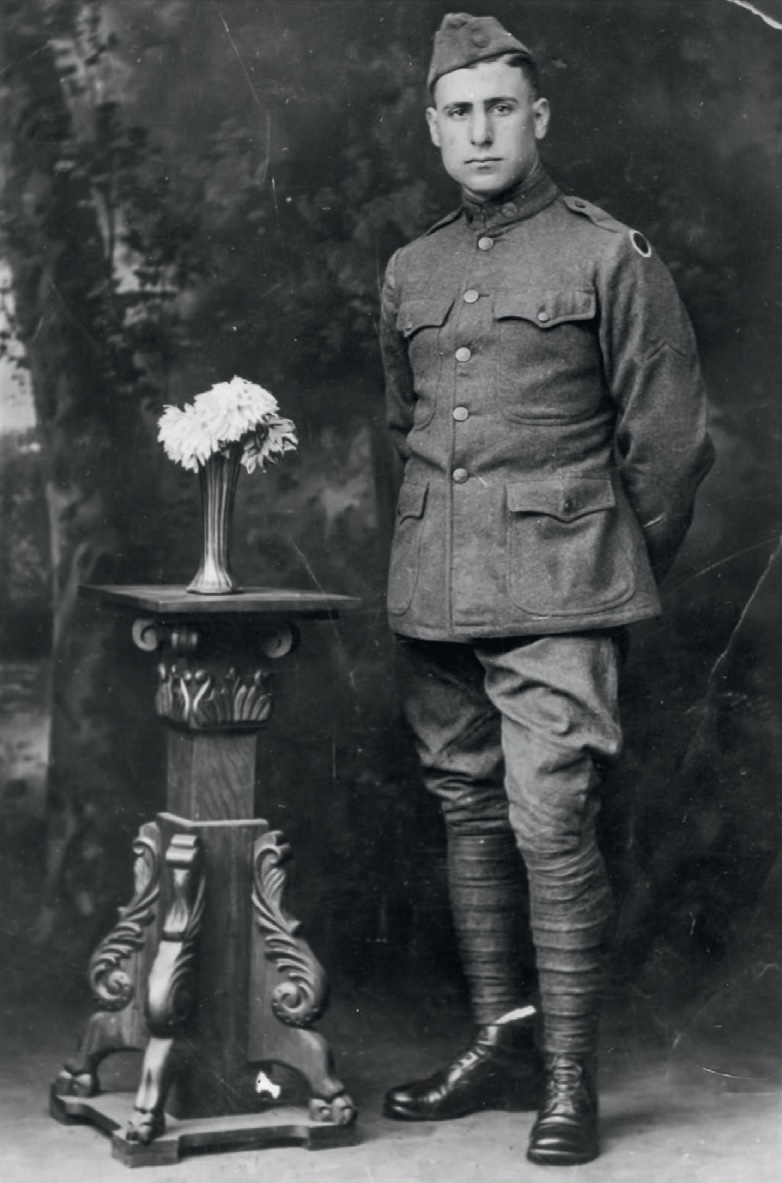 The author’s grandfather in his World War I Army uniform. (Courtesy of Mark Lardas)
Between the wars, he ran a restaurant and was a cook in another. When the Great Depression hit in 1929, he was a cook at a restaurant whose customers mainly worked at East Chicago’s Inland Steel mill. It went bust.
By then he was married, with four children. He sent his family to Ikaria in 1931, where they could have a more stable life. He stayed in America, moving wherever jobs were and sending them money to live on. For him, Depression-era America still offered more opportunities than his home island. Finally, in 1936, he brought them back to America.
During World War II, too old to serve, he worked as a carpenter at the Brooklyn Navy Yard. In my teens, in the 1970s, I built a model of the World War II battleship USS New Jersey. Papou saw it and pointed to a spot on the superstructure. He told me he helped build the chart room there.
Postwar, he relocated to Detroit. It was booming in the 1940s and he opened a restaurant there, usually working 80-hour weeks. My dad was in Ann Arbor, Michigan. We would see Papou on occasional visits. In the 1970s, late in life, he closed his restaurant and moved to Ann Arbor, to be near his eldest son. He worked as a part-time chef in upscale restaurants until he was in his 80s. He did not need to work; he just loved cooking.
I got to know him after he moved to Ann Arbor. After coming to America, he taught himself English. He loved reading. I got him a book about the sea every Christmas. I recovered some of them after he died, with his notes in the margins. I still have them.
He loved America. When I joined the Army ROTC in college, he called me to say how proud he was about that. He told me he wanted me to have his old World War I helmet. He did not have it, he told me, but the Army did.
After he was wounded at the Meuse-Argonne offensive, he wanted the destroyed helmet as a keepsake. At the hospital, he had to give it up, but the Army promised they would return it to him later. When I signed up for ROTC, I assured Papou I would do my best to get it back. I wrote to the Army’s record center in St. Louis about it, but I never heard back. I knew it was likely gone before I started looking, but my keeping that promise made him happy.
This article was originally published in American Essence magazine.