SEARCH


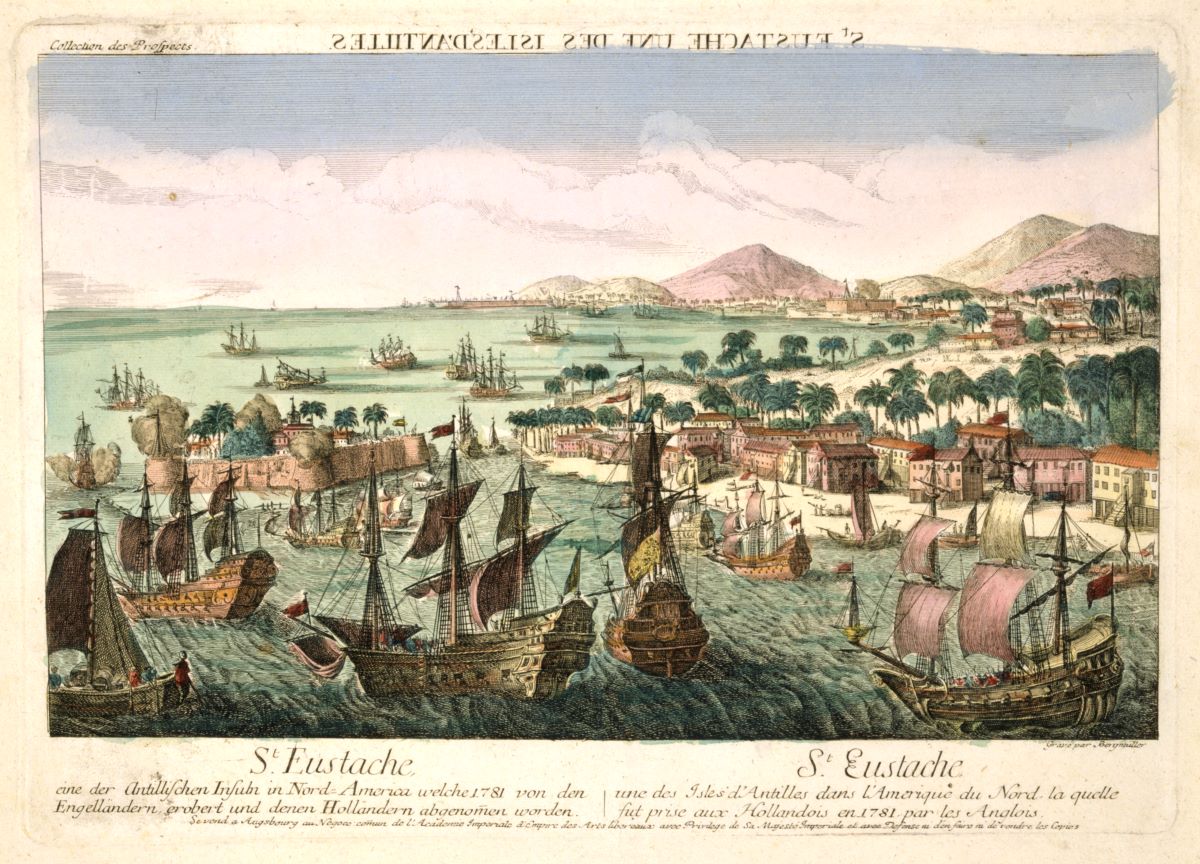
Nestled within the northern portion of the Leeward Islands in the Caribbean Sea is an 8.1-square-mile volcanic island called Sint Eustatius. First spotted by a European in 1493 during one of Christopher Columbus’s voyages, it was permanently settled by Europeans in 1636 with the arrival of the Dutch.
The island eventually became a commercial hub for European colonists and traders moving between the Caribbean and the Atlantic. The British statesman and parliamentarian, Edmund Burke, identified this “lusus naturae” as “another Tyre,” a reference to the ancient island city that was the center of trade throughout the Mediterranean.
For the British Americans of the 13 colonies, this modern “Tyre” became their main point of trade with foreigners—trade that was technically illegal. For many years, the British met that activity with a wink and a nod. When those colonists launched their rebellion against the British monarchy and parliament, that illegal trade became a commercial lifeline.
When Great Britain appointed Adm. George Bridges Rodney the task of bringing Sint Eustatius’s commercial enterprise to an end, the naval commander no doubt expressed British sentiment when he called the island “a nest of vipers, of villains!”
In late November 1775, approximately eight months before the colonists declared independence from Great Britain and nearly five years before Rodney was given his orders to take the Caribbean island, the Second Continental Congress established the Committee of Correspondence.
This Committee, which, shortly after its creation, was known as the Committee of Secret Correspondence, was originally composed of Benjamin Franklin, Benjamin Harrison, John Dickinson, John Jay, and Thomas Johnson (the financier Robert Morris joined a couple of months later). Their primary function was to correspond with foreign agents sympathetic to their cause, in Britain and elsewhere, for the sake of international diplomacy regarding trade and shipments of war materiel. At Sint Eustatius, there was plenty of sympathy to be found.
Building the Navy
Six weeks before the Continental Congress established the Committee of Correspondence, it had established the Continental Navy. During the early months of the war, the rebelling colonists and their Congress had been relying on the efforts of privateers. With the establishment of the Navy, Congress called for the construction of a 10-gun and a 14-gun ship to help cruise and protect the coastline.
Instead of building new ships, Congress’s Naval Committee, initially led by John Adams, John Langdon, and Silas Deane, purchased two merchant ships to be fitted as war ships. On Oct. 30, Congress called for two additional ships (a 20-gun and 36-gun ship) and increased the size of the Naval Committee to seven.
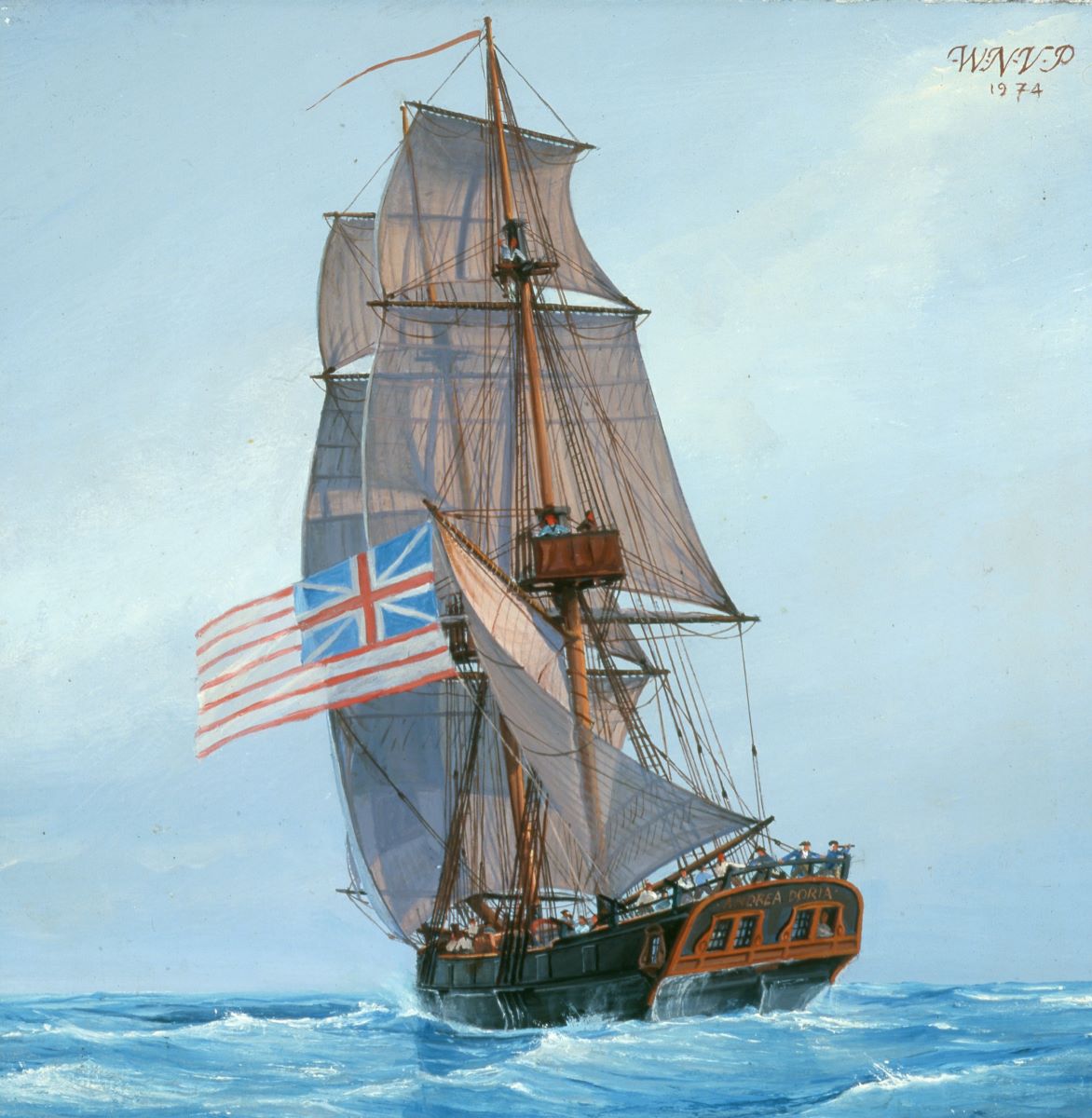
In the middle of November, the Naval Committee acquired the merchant brig, Defiance. It was refitted with 14 portholes for four-pound cannons, had 12 swivel guns placed along its rails, had its hull fortified, and was renamed Andrew Doria. The ship was named after the 16th-century Genoese admiral and patriot, Andrea Doria, who was known in Genoa as “Liberator and Father of our Homeland.”
Seek. Attack. Destroy.
By the end of the year, the Continental Navy had a fleet of eight ships, with a commission of 13 more to be constructed. As the eight-ship fleet prepared to conduct its first mission, they were given new flags to raise on board. The flag was called the Grand Union with the Union Jack in the top left corner with 13 alternating red and white stripes. On Dec. 3, 1775, the fleet’s flagship, Alfred, became the first to unfurl the flag—several weeks before George Washington’s Continental Army did.
The fleet was ordered to “search out and attack, take or destroy all the Naval forces of our Enemies.” Although they were charged to pursue the enemy at Chesapeake Bay, a bitter cold front hit, freezing the ships in place along the Delaware River. By the time the ice thawed, the British had increased their presence in the Chesapeake.
Esek Hopkins, commander in chief of the Continental Navy, thought better of sailing into the Bay, and decided on the Caribbean. In March, Hopkins and his fleet conducted the first amphibious assault by the Marines.
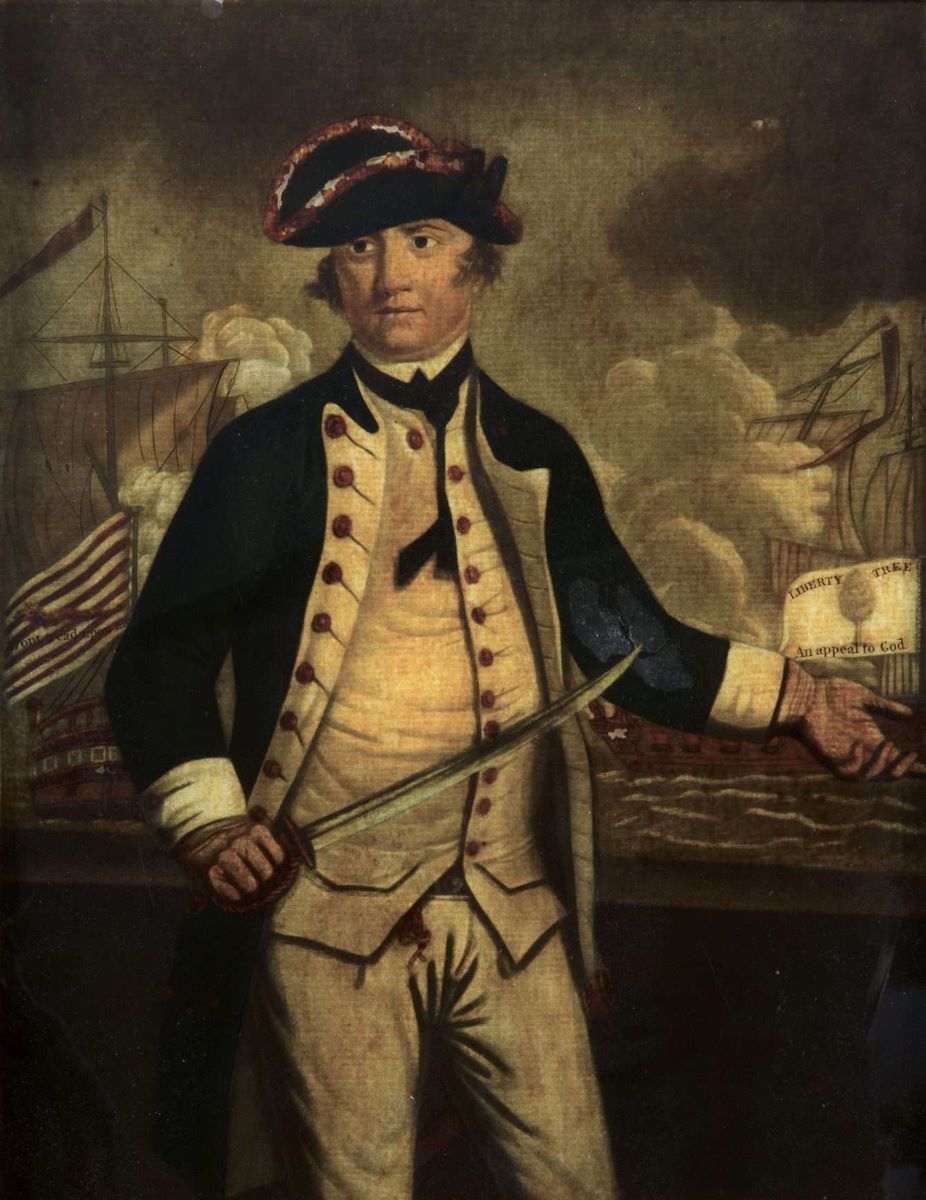
After the mildly successful assault in the Bahamas, the Andrew Doria, under the command of Capt. Nicholas Biddle, returned to port at New London, Connecticut, on April 8. The next day it was sent on reconnaissance, where it encountered the John and Joseph, a schooner that had belonged to a New London merchant. The Andrew Doria recaptured the ship, returned to New London on April 14, and off-loaded its goods, most of which were war materiel.
A Secret Diplomatic Mission
Biddle remained in command of the Andrew Doria throughout the spring and summer, finding middling success in capturing or recapturing merchant ships. It was during the summer that the Dutch removed the governor of Sint Eustatius, fearing he favored the American rebels too much. The replacement came after the British issued a formal complaint demanding the Dutch not merely renew their oath of neutrality, but to take further steps to ensure that Dutch possessions would not assist Americans. Ironically, the new governor, Johannes de Graaff, was just as favorable toward the Americans—primarily due to the profitability of trading with the rebels.
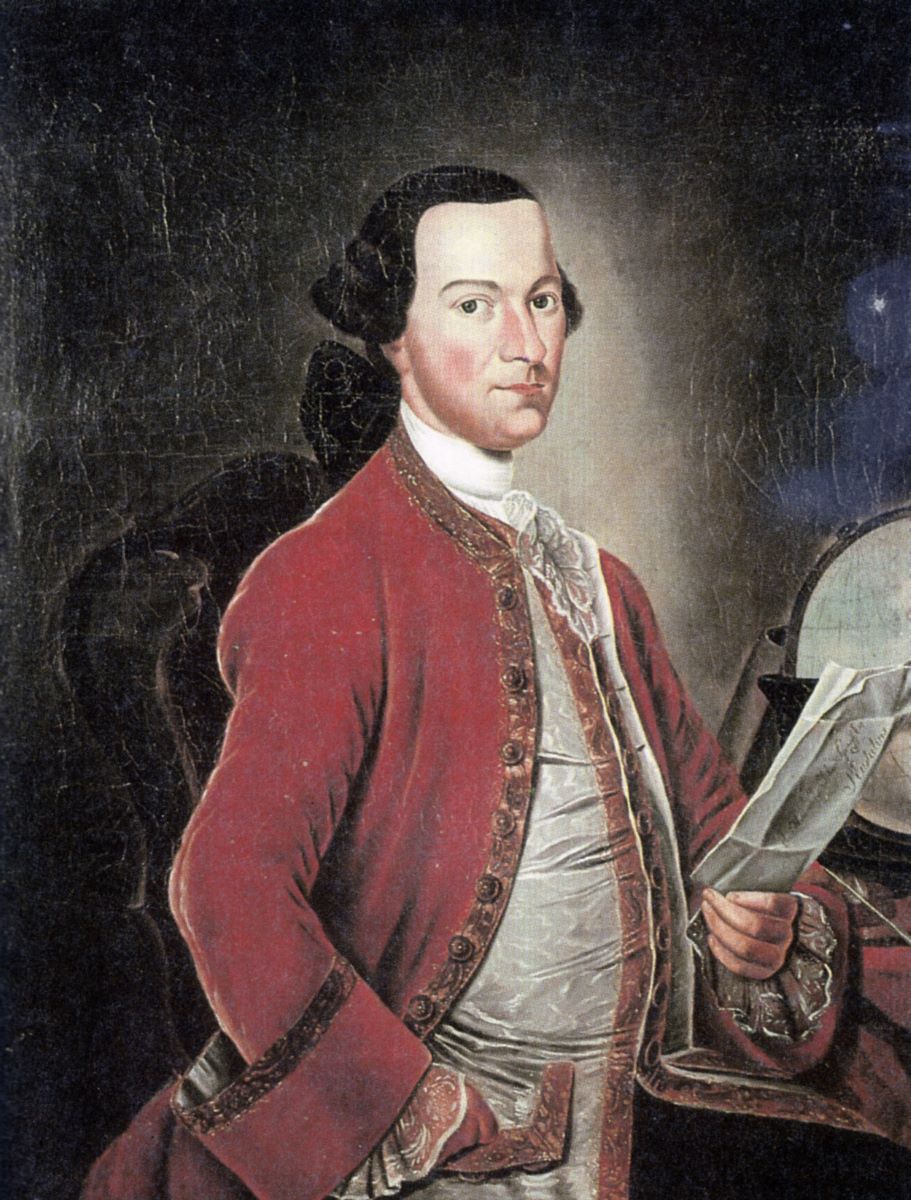
When Biddle took command of one of the newly built frigates, command of the Andrew Doria was given to Capt. Isaiah Robinson. The Andrew Doria had already made its mark in American history by being a member of the Continental Navy’s first fleet, but in the coming weeks, it would be set apart from every ship it sailed with and all those that came after.
As gunpowder became the most important commodity to the Continental Army and Navy, Robinson was ordered by the Committee of Secret Correspondence to venture to the West Indies to purchase munitions. Of course, the best place to make such a purchase was the tiny lusus naturae—Sint Eustatius.
Along with purchasing much-needed materiel, Robinson was also ordered to deliver a document to the island’s governor. This document made the mission different from previous ones. It was a copy of the Declaration of Independence, thus making the voyage a diplomatic mission.
The First Salute
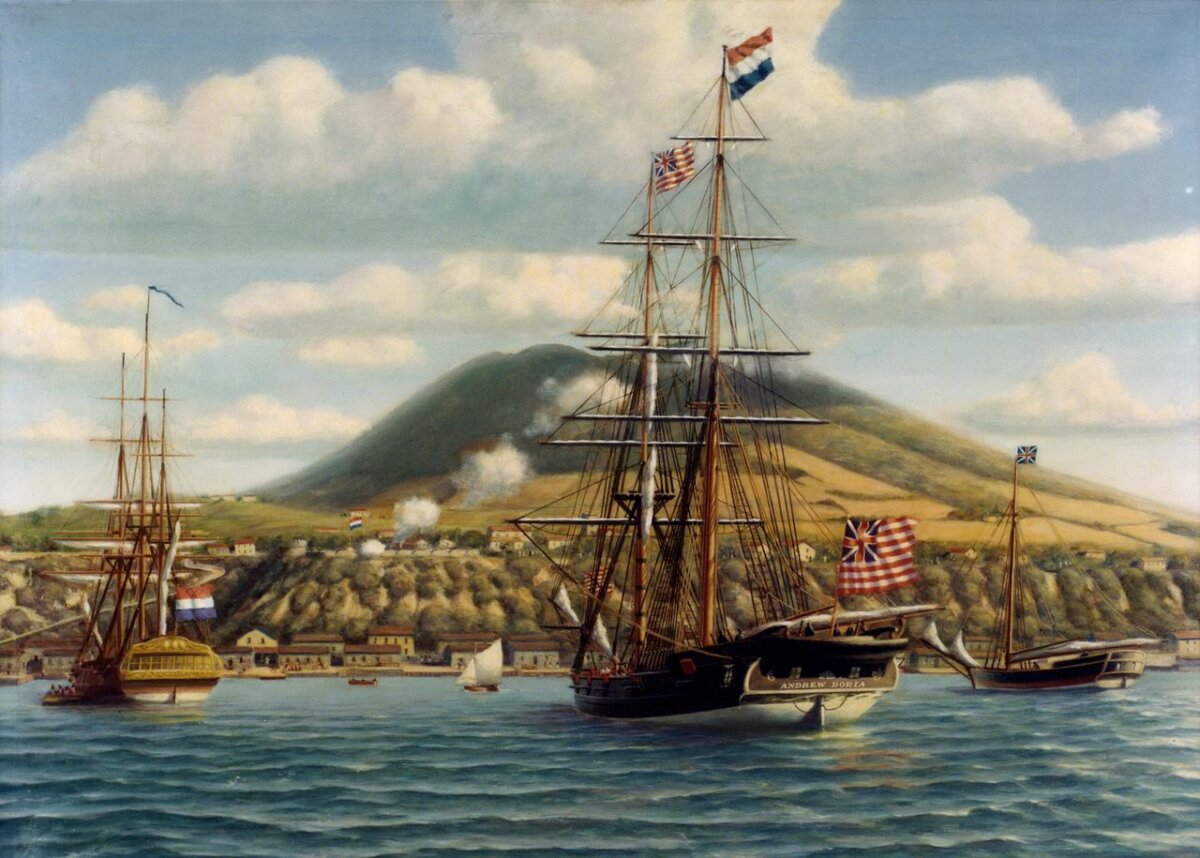
In mid-October, the Andrew Doria made its way toward the Caribbean. The voyage took about a month, and when the Andrew Doria reached Sint Eustatius, Robinson ordered a 13-gun salute—one cannon shot for each colony. Inside the island’s Fort Oranje, Commandant Abraham Ravene was uncertain how to respond. Since the Netherlands was officially neutral, a return salute would mean the Dutch acknowledged America’s national sovereignty, which could create a diplomatic crisis between the Netherlands and Great Britain.
Ravene ran to de Graaff and asked for instructions. Although there were British ships and representatives at the island, de Graaf apparently spent little time contemplating the response. He informed the commandant to respond with a salute, but with two less cannon shots. It was during this week in history, on Nov. 16, 1776, that the Andrew Doria received America’s first official salute from a foreign country.
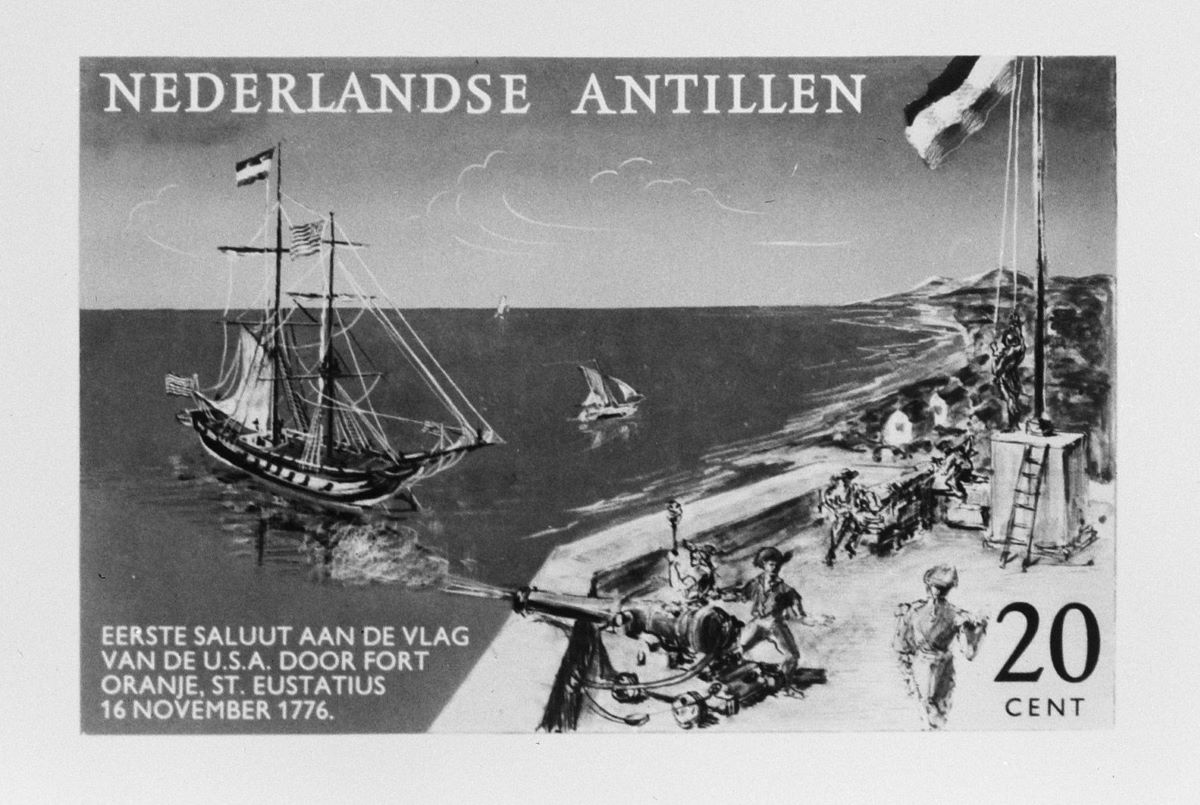
Shortly after this interaction, British ships sailed to inform their government. Outraged over what was ultimately a salute to America’s Grand Union Flag, the British issued a strong protest to the Dutch. De Graaff attempted to explain that the salute was merely a commonly practiced courtesy to what he believed to have been a merchant ship. The argument fell on deaf ears. The Dutch-British relationship would continue to deteriorate, ultimately leading to the Fourth Anglo-Dutch War (1780–1784).
Memorializing the Salute
In 1780, Rodney was sent to Sint Eustatius, but, by this time, he acknowledged that this “nest of vipers” had done their damage, stating, “This rock had done England more harm than all the arms of her most potent enemies.”
As for Robinson and the Andrew Doria, during the voyage home from Sint Eustatius, it added injury to insult by defeating the Royal Navy’s 12-gun sloop, Racehorse, and taking it as a prize. It was taken to Philadelphia and renamed Surprize.
The Andrew Doria, though, would last only one more year. With the British closing in on Philadelphia where the history-making ship was anchored, it was also during this week in history, on Nov. 21, 1777, that Robinson had the 14-gun brig set ablaze to keep it from falling into enemy hands.
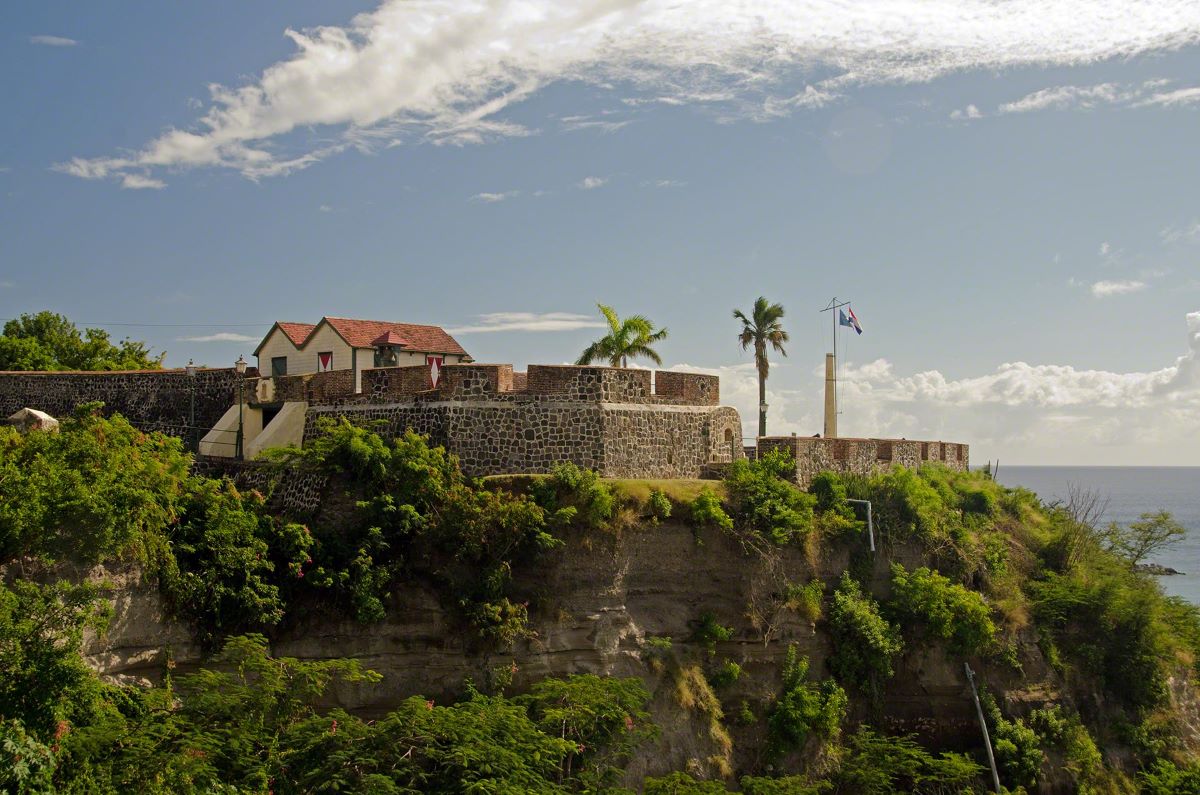
If one were to visit the small island of Sint Eustatius, there is a plaque at the base of Fort Oranje’s flagpole which was unveiled in 1939. The plaque was presented by President Franklin D. Roosevelt “In Commemoration of the Salute to the flag of the United States.”
Never miss a This Week in History story! Sign up for the American History newsletter here.
What arts and culture topics would you like us to cover? Please email ideas or feedback to features@epochtimes.nyc.