SEARCH


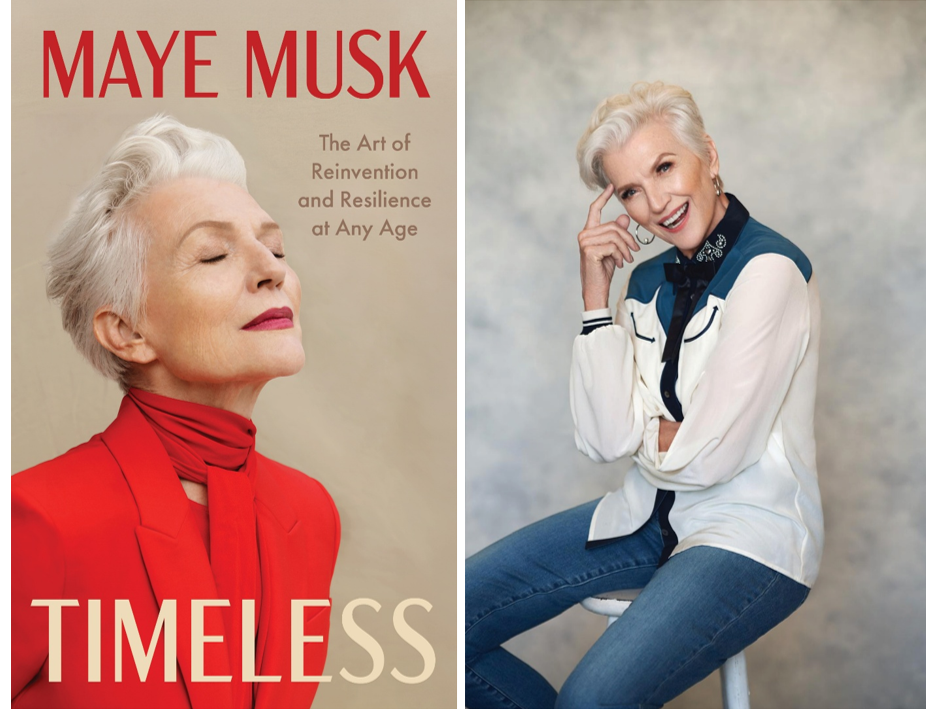
Maye Musk has enjoyed successful careers as a dietitian and model, though many people primarily know her as Elon Musk’s mother.
Her new memoir, “Timeless: The Art of Reinvention and Resilience at Any Age,” is designed to shine the spotlight on her life. But it is a strange work, pockmarked with so many omissions that one has to question if she suffers from amnesia or chronic evasiveness.
Musk was born April 19, 1948, in Regina, the capital of Saskatchewan, Canada, but she begins her life story without mentioning these facts. Her parents relocated the family to South Africa when she was a toddler, but she never explains why they emigrated.
What is missing: The author’s father, Joshua N. Haldeman, was arrested for being part of the political extremist technocracy movement in pre-World War II Canada and later failed to gain elected office. Once in South Africa, he became a vocal supporter of the racist apartheid system.
The author makes a one-sentence mention that her father was Pretoria’s first chiropractor. More attention is given to her family’s repeated efforts to locate the legendary Lost City of the Kalahari. Although their search came to naught, her descriptions of traveling through the southern African wilderness might be the most interesting aspect of the book.
A Violent Marriage
After graduating from college in Cape Town (the author doesn’t mention the school), Errol Musk pursued her romantically. The author never cites what Musk did for a living; he was a mechanical engineer who was elected to the Pretoria City Council. He later became immensely wealthy as a property developer and part-owner in an emerald mine.
Although the author rejected his marriage proposal, Errol went to her parents to say she accepted. To her initial horror, her parents began planning a wedding ceremony without her consent. But she went through with it, writing, “The big party my mom described sounded nice.”
The most jolting aspect of “Timeless” involves Musk’s nine-year marriage with a physically and emotionally abusive husband. South Africa’s draconian divorce laws did not enable women enduring domestic violence to escape from their marriages. It wasn’t until a change in the laws in 1979 that she could divorce Errol.
However, Errol continued to harass his ex-wife by refusing to pay child support and repeatedly suing her to gain custody of their three children.
A Single Mother
Musk writes eloquently about the struggle to raise her children as a single mother on a tight budget, using money she earned as a dietitian and a model. However, her story is at odds with Elon Musk’s 2009 interview with The New Yorker where he stated his mother employed a series of nannies to help raise the children. He added, “I think my mother somewhat overstates her role in raising me.”
Also in The New Yorker article, Maye Musk is quoted as taking young Elon to dinner parties when she couldn’t get a date. That’s absent from the book, in which she never mentions a post-divorce social life but recalls feeding her children a dinner diet of peanut butter and jelly sandwiches.
Musk offhandedly mentions that 10-year-old Elon moved back with his father because he had encyclopedias and a home computer she could not afford to give him. She never shares how she felt about her son’s decision.
Musk and her children eventually left South Africa, first taking advantage of her Canadian citizenship to settle in Toronto before relocating to the United States. While crediting Elon with encouraging the move, she doesn’t mention how teenage Elon was eager to leave so he could avoid South Africa’s compulsory military service.
New York Living
The author’s life became a stop-and-start routine, relaunching her dietitian and modeling work in Toronto before shutting it down and starting over in San Francisco and then in New York City. Musk admits receiving monetary assistance from her sons Elon and Kimbal, who became multi-millionaires in 1999 with the $307 million sale of Zip2, the software company they co-founded. (Kimbal would later become a wealthy restaurateur.)
The newfound financial security gave her a reinvented life in New York City, including lucrative modeling gigs, historic achievements as Cover Girl’s oldest spokesmodel at age 69, and a Sports Illustrated cover spot when she was 73. To her credit, she acknowledges that Elon’s fame helped her leverage many of her high-profile gigs.
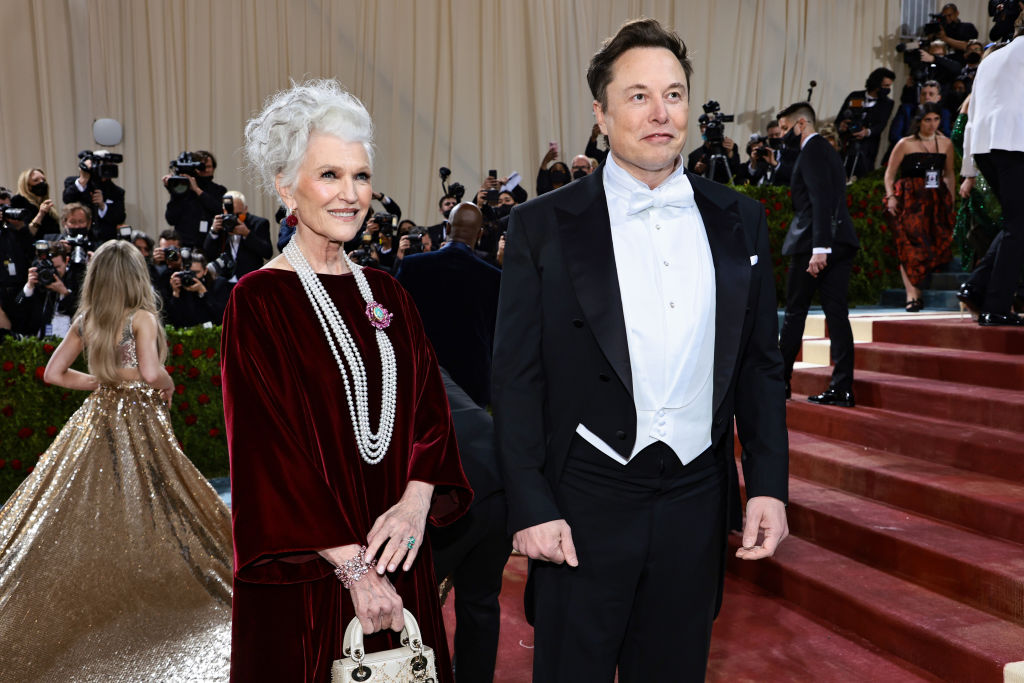
Musk happily recalls a red-carpet strut during the Met Gala, attending fancy parties with show business luminaries, and appearing with Elon on “Saturday Night Live” in 2021, where she insists they “were a hit.”
Musk hints at “friendships and a social life” in her later years without giving details. She writes vaguely about a gay insurance agent named Fred who “had a huge circle of friends” in the theater scene and taught her “how to know uptown from downtown.”
She touches on the joy of being a grandparent, but mostly focuses on her filmmaker daughter Tosca’s offspring. Kimbal’s children do not factor in her book. There is a single mention of X, Elon’s son who joined his father in White House visits, but nothing of Elon’s 13 other children from two ex-wives and several lovers.
Perhaps the most astonishing omissions involve how Musk, as a parent and grandparent, reacted to the paternal heartaches that Elon faced. These include the death of his 10-week-old first child from sudden infant death syndrome and his later estrangement from a son who publicly rejected his father and reinvented himself as a transgender woman. How did she counsel and comfort her son during those traumas?
“Timeless” is a bewildering autobiography with too many voids and unanswered questions. Musk’s colorful life could easily be the subject of a great book, but this isn’t it.
‘Timeless: The Art of Reinvention and Resilience at Any Age’
By Maye Musk
Harper Wave: Sept. 15, 2026
Hardcover, 224 pages
What arts and culture topics would you like us to cover? Please email ideas or feedback to features@epochtimes.nyc.