SEARCH


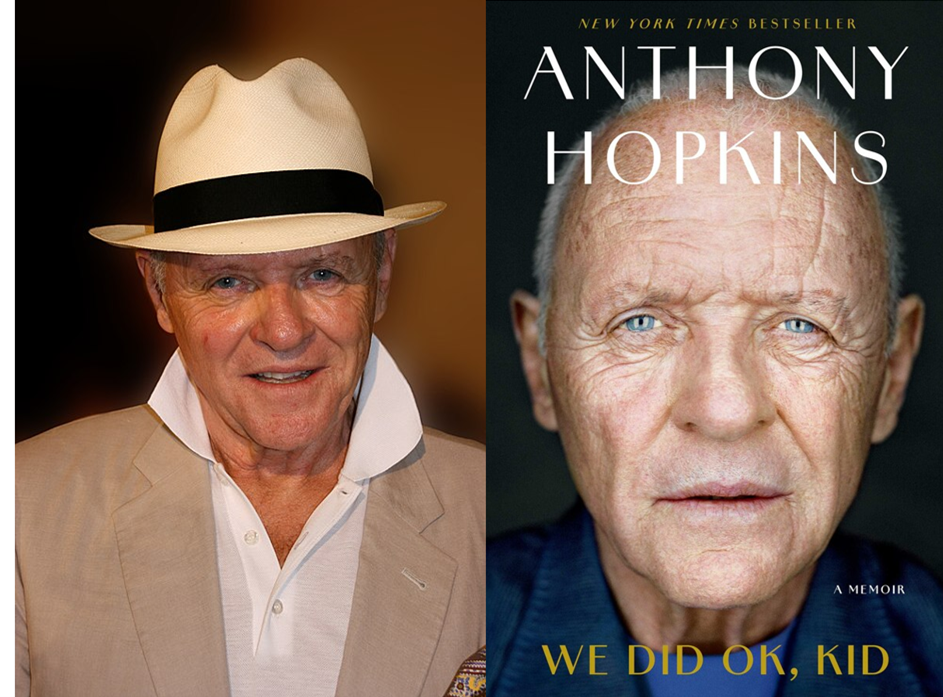
In his introduction, Anthony Hopkins alerts the reader that his autobiography won’t be dripping in pathos. Consider how he frames his father, Richard Arthur Hopkins.
“Dead and gone now,” he writes. “I don’t know if he exists in another dimension—an afterlife or any of that kind of wishful thinking. But he is deep inside me, like bits of broken china.”
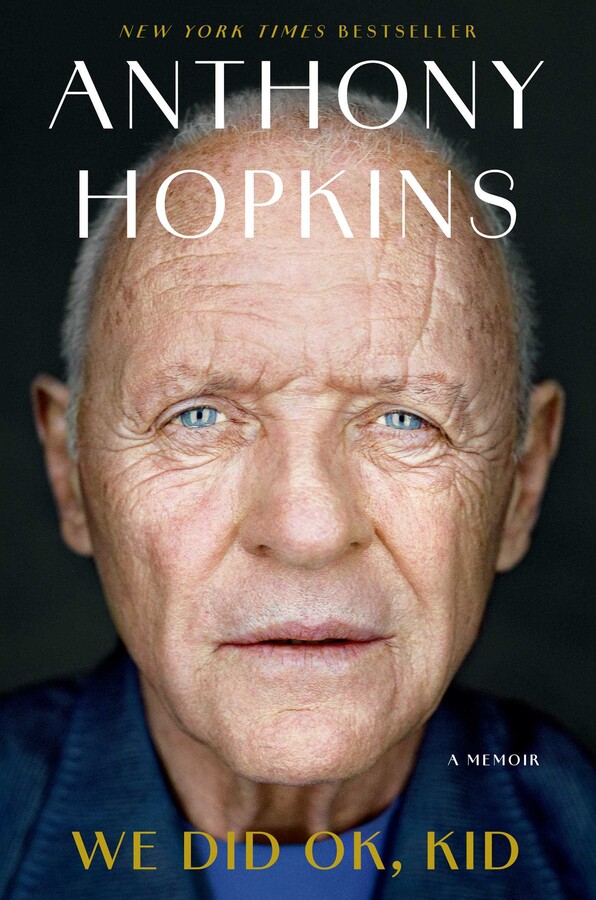
If anything, Hopkins brings a unique perspective to his memoir “We Did OK, Kid.” The title comes from a remark by the 87-year-old actor to a photo of himself, when he was a confused 3-year-old on a beach in his native Wales.
Hopkins’s approach to his life story is striking when one considers the melodrama that took place. Painful events are masterfully cauterized with anodyne observations, especially during segments on his awkward coming of age. The book becomes less interesting as Hopkins becomes professionally successful, where large chunks of his prolific career are strangely omitted.
The Acting Bug
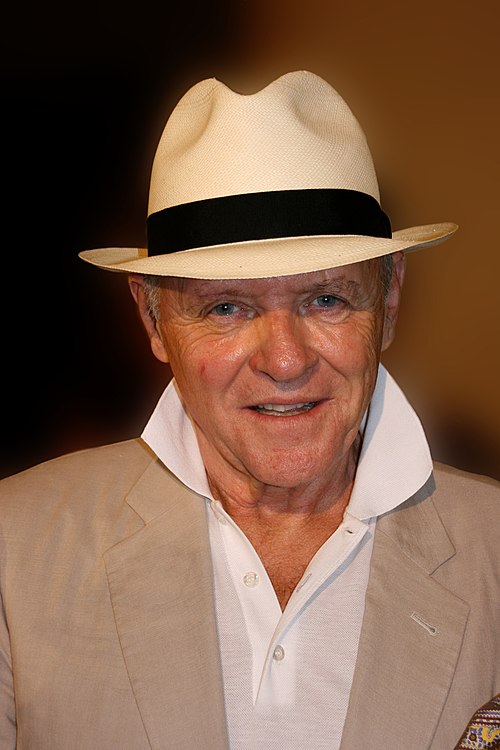
Hopkins looks back at his childhood with bemusement, noting how he was labeled “elephant head” by playmates due to having a large head atop a skinny body. Being sent to a prestigious boarding school felt like a waste of his time. Hopkins insisted he wasn’t “the sharpest knife in the cutlery drawer, and there seemed little hope for improvement.”
A class clown, Hopkins recalls making his classmates laugh with imitations of Looney Tunes cartoon characters and Bela Lugosi’s Dracula. This role he claimed to channel years later for his iconic Dr. Hannibal Lecter for “Silence of the Lambs.”
A school screening of the 1948 Laurence Olivier version of “Hamlet” resonated powerfully with the young Hopkins, who felt the Oscar-winning performance spoke to “some long-vanished, ancient part of [himself].”
The most entertaining parts of “We Did OK, Kid” involve the snarky young Hopkins at odds with a schooling environment that didn’t appreciate his not-serious behavior. While this failed to endear him with his teachers, Hopkins’ ability to play the jester gave him the energy and spunk to pursue a theatrical career.
His first big break was joining the National Theatre in 1965 under the direction of Laurence Olivier. Hopkins gave a cheeky audition by playing a scene from Othello, which was then Olivier’s starring role.
Difficulties With Stardom
Hopkins’s work in the National Theatre caught the attention of Peter O’Toole, who encouraged him to test for the role of Prince Richard (the future King Richard I) in the film version of “The Lion in Winter.” Hopkins snagged the role.
He credited the film’s leading lady, Katharine Hepburn, for giving him this priceless advice: “Be like Spencer Tracy, like Bogart. Don’t act. Just be. Just speak the lines. You are it—you are Richard the Lionheart!”
The initial taste of stardom with “The Lion in Winter” redirects Hopkins’s lightly amusing autobiographical struggles as an aspiring actor into a difficult tale of self-destruction through alcohol addiction. He recalls his first unhappily marriage as the worst of his life. His later estrangement from his daughter Abigail soured him on future parenthood.
Hopkins believes the reckless behavior fueled by alcoholism should have made him unemployable. He stated with surprise that he was given the chance to star in the prestigious TV miniseries “QB VII.” A serendipitous encounter with a theater-loving doctor during his mid-1970s Broadway run in “Equus” weaned him from drinking. Sobriety came with new pains, including bitterness that A-list stardom in Hollywood was too elusive.
Hopkins finally landed a career-defining role when his agent told him of a film called “Silence of the Lambs.” From its title, Hopkins mistakenly thought it was a children’s tale. Hopkins happily shares stories on the making of this 1991 classic. He claimed that his suggestions of Hannibal Lecter’s silently sinister physical presentation created a monster more horrid than any fiend with excessively violent machinations.
“Silence of the Lambs” created the A-list stardom Hopkins desired along with an Academy Award for Best Actor (to his surprise). His book, however, doesn’t properly cite most of his subsequent big screen achievements.
He makes no mention of the “Silence of the Lambs” sequels “Hannibal” (2001) and “Red Dragon” (2002). He either offers indifferent references of later films (as with the 2011 “Thor”) or totally ignores worthy performances, including as his Oscar-nominated work in “Amistad” (1997) and his title role in “Hitchcock” (2012).
Hopkins expresses amazement that he won a second Academy Award for Best Actor for “The Father” (2020), but gives no mention to his other honors, including being knighted by Queen Elizabeth II in 1993.
Hopkins concludes his autobiography by declaring, “It’s a big daily surprise for me to wake up every morning and realize that I have lived such an unexpectedly long life.”
With no profound wrap-up to offer, he provides an irrelevant appendix of favorite poems including Henry Wadsworth Longfellow’s “A Psalm of Life” and Thomas Gray’s “Elegy Written in a Country Churchyard.” It’s an esoteric denouement to a strangely idiosyncratic autobiography.
‘We Did OK, Kid: A Memoir’
By Anthony Hopkins
Summit Books: Nov. 4, 2025
Hardcover, 368 pages
What arts and culture topics would you like us to cover? Please email ideas or feedback to features@epochtimes.nyc