SEARCH


Though Franz Schubert was one of the Europe’s most beloved composers, various records leave historians with conflicted accounts of his personality: naive and cherub-like in some, and incredibly bitter and hedonistic in others. It’s reported he was “incapable of malice” when sober, but after a few drinks would withdraw into a dark corner and smash crockery, grinning as he did so.
If his personality was baffling, his life isn’t any less. While he was born in Vienna, on Jan. 31, 1797, and lived for 31 years, his cause of death is unknown. Syphilis? Typhoid fever? Mercury poisoning?
It seems fitting, then, that a man so enigmatic should leave behind an “unfinished” symphony. The work has been heralded as music’s “first Romantic Symphony,” but it lay forgotten for nearly 30 years. After discovery, people debated for decades if the remaining movements were lost before agreeing that Schubert simply never finished them.
Why, though, we have yet to learn.
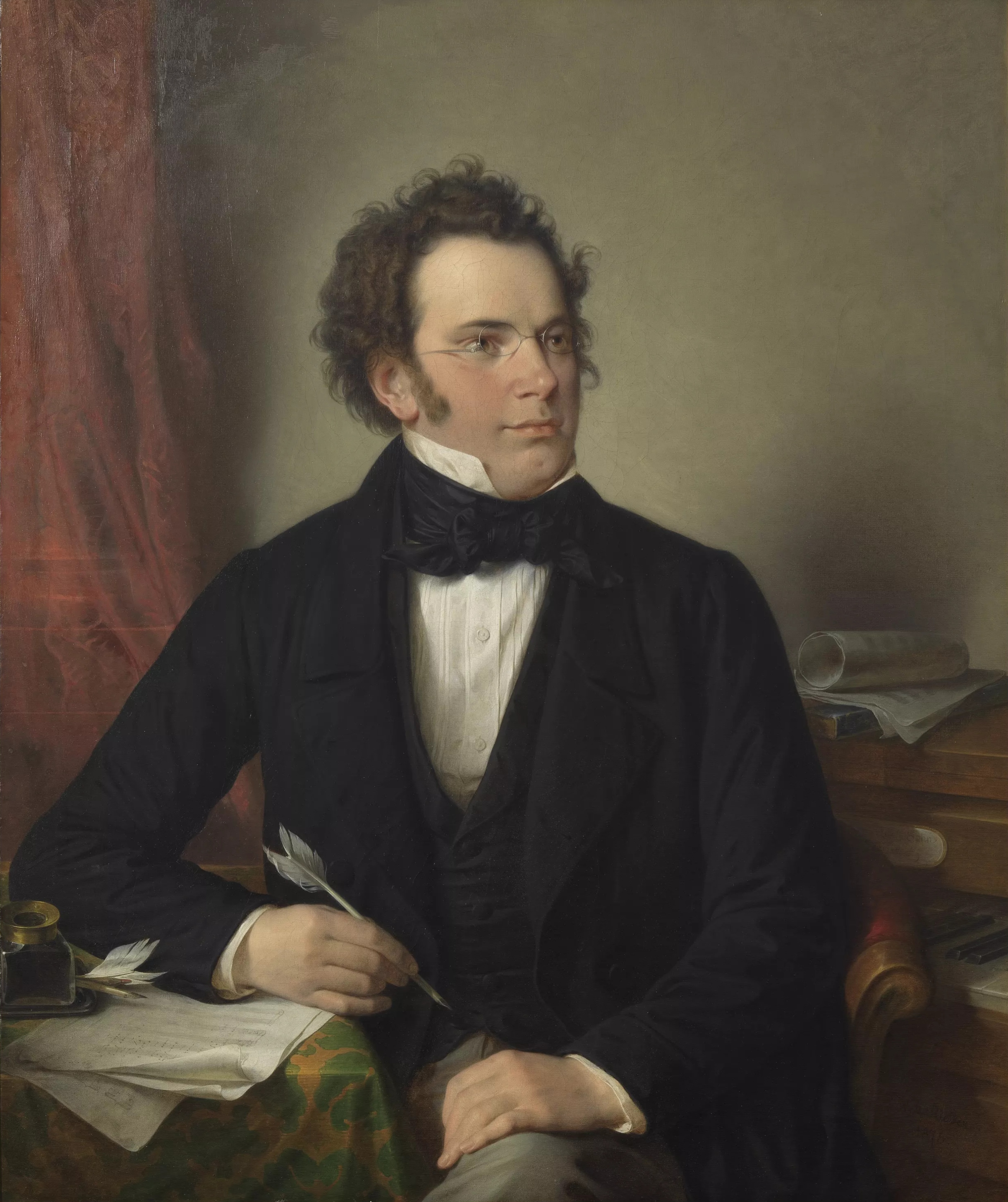 A portrait of Franz Schubert by Wilhelm August Rieder, 1875. Vienna Museum. (Public Domain)
The ‘Unfinished’ Symphony
Today’s performance is with Leonard Bernstein conducting the Royal Concertgebouw Orchestra. (Listen)
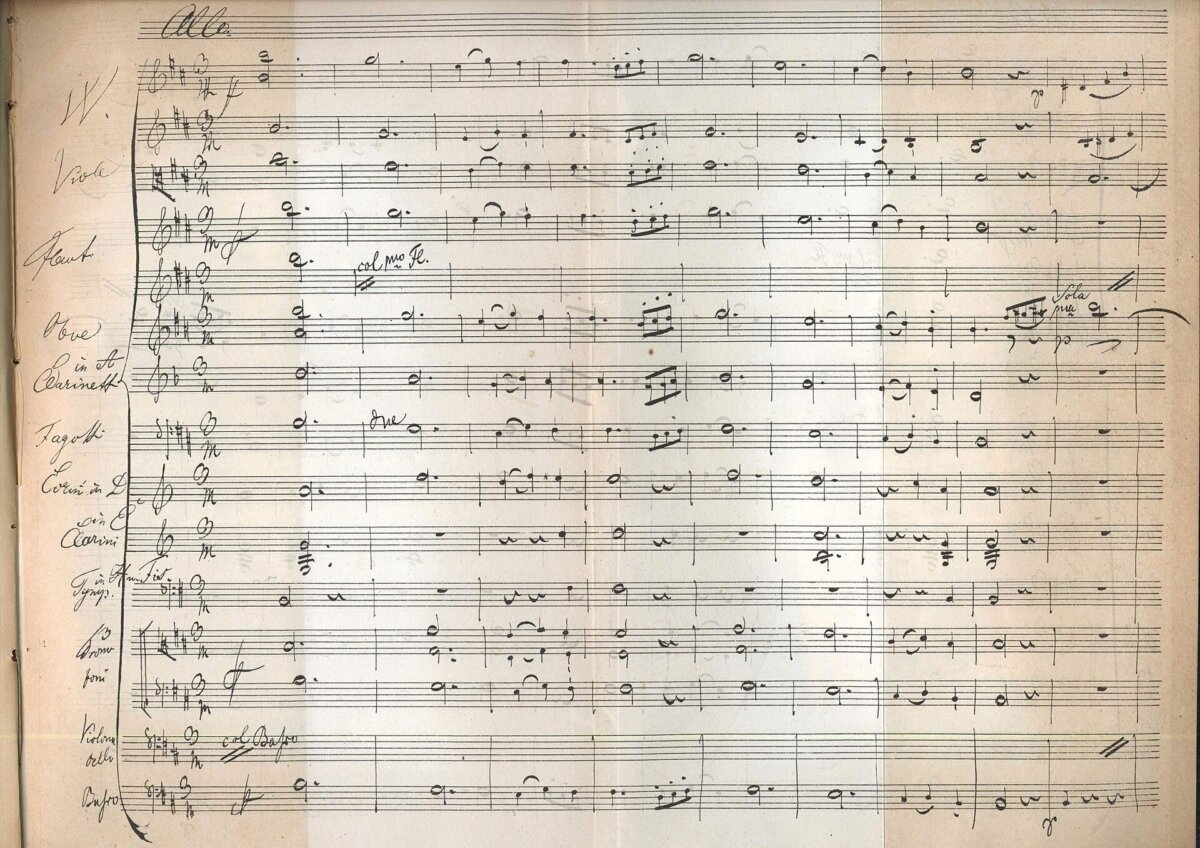
The “unfinished” symphony, also called his eighth, was first revealed by Anselm Hüttenbrenner to conductor Johann von Herbeck in 1860. Schubert, after being awarded a Diploma of Honor from the Styrian Society in 1823, had given Hüttenbrenner the symphony as thanks for his friend’s support.
The score was a strange gift from Schubert. It was marked “Vienna, Oct. 30, 1822,” in the key of B minor—which Beethoven called “the black key” after its associations with death and melancholy—and had only two movements. While Schubert planned to end the first movement with a transformation into B major, he chose to remain in the minor key.
The date on the score coincides with Schubert’s initial diagnosis with syphilis and offers an explanation for the dark key. However, his declining health is only one possible reason for abandoning the symphony. A known juggler of multiple projects, he may have been distracted by other works. Others proposed that Schubert simply gave up. The musicologist Alfred Einstein said, “Schubert could never have finished the work for nothing could approach the originality, power, and skill of the first two movements.”
Regardless, for a public still mourning Schubert’s premature death, two movements was enough. When Herbeck gave the work its premiere on Dec. 17, 1865, critic Eduard Hanslick said:
“After the few introductory measures, clarinets and oboes in unison begin to sound their sweet song above the peaceful murmur of the violins, then each and every child recognizes the composer, and a half-suppressed outcry ‘Schubert’ buzzes through the hall. He has hardly entered, but it is as if one knows him by his step, by his manner of lifting the latch.”
It is this haunting melody that opens the first Allegro Moderato—over a bed of agitated notes in the strings, it has a desperate urgency. Schubert then begins a cello melody (01:15) played in the range most similar to a human tenor’s voice. Filled with incredible yearnings, it enchants listeners into a gentle lull, before a sudden C-minor chord (01:49) interrupts and begins an exploration of his darker recesses—a tension he maintains all the way into the Andante con moto movement (13:51).
The violins in the second movement primarily play in their higher range—the sweetest sounding area on the violin. They envelop the orchestra in a shimmering glow, which, at times, transitions into sustained, chorale-like figures in the woodwinds. With a Schubertian nuance, he gives his major melodies a minor melancholy and his minor melodies a major sweetness.
The violins in the second movement primarily play in their higher range, the sweetest sounding area on the violin. While playing, they give the orchestras sound a shimmering glow. Throughout the piece, the violins stop playing and give way for sustained, chorale-like figures in the woodwinds.
The movement ends when the woodwinds sail over the gentle beats of the lower strings (24:22). It is almost like Schubert is fading away.
While the composer included sketches for a third Scherzo movement, much of the charm about his “unfinished” symphony lies in the unsaid. Whether or not he deliberately abandoned it, we will never know—but by leaving it incomplete, he has given us a space to imagine and wonder.
What arts and culture topics would you like us to cover? Please email ideas or feedback to features@epochtimes.nyc.