 SEARCH


NR | 3h 46m & 2h 32m| Documentary | 2024
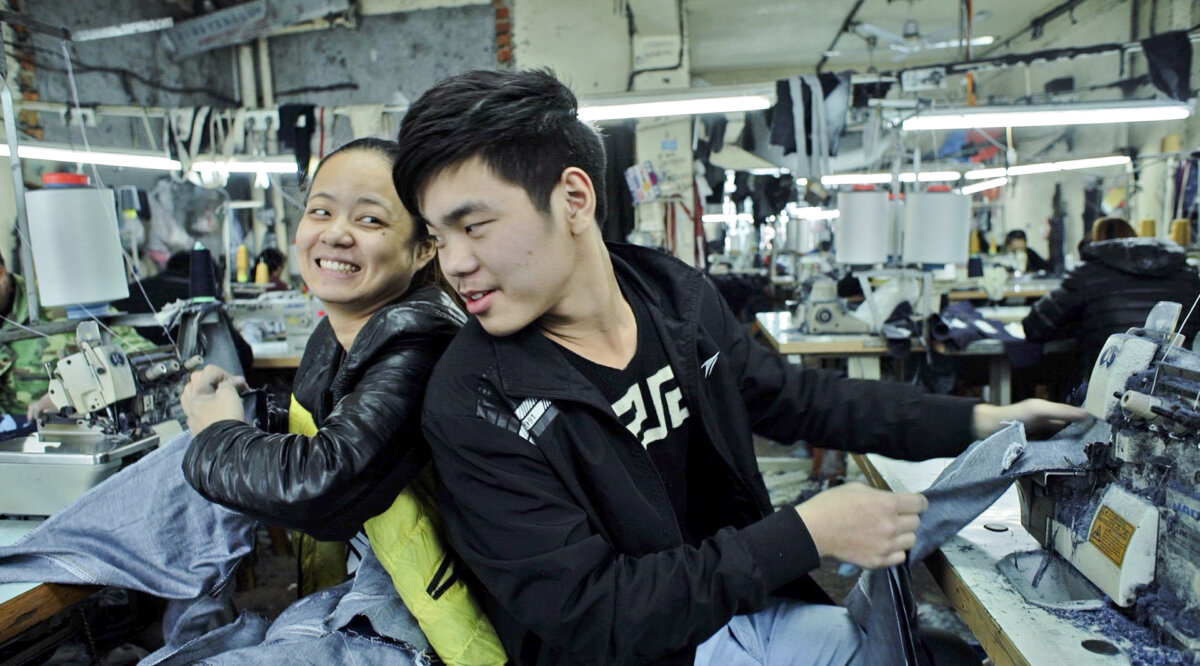
You cannot deny the tremendous work ethic of the young Chinese workers from the provinces, who come to labor in the 18,000 small textile factories in Zhili (roughly 100 miles from Shanghai). They have no sense of entitlement or expectation of a hybrid workplace. Granted, their attention to detail and quality control often appear questionable, but it is hard to blame them. They are only responding to the incentives of their piecemeal remuneration.
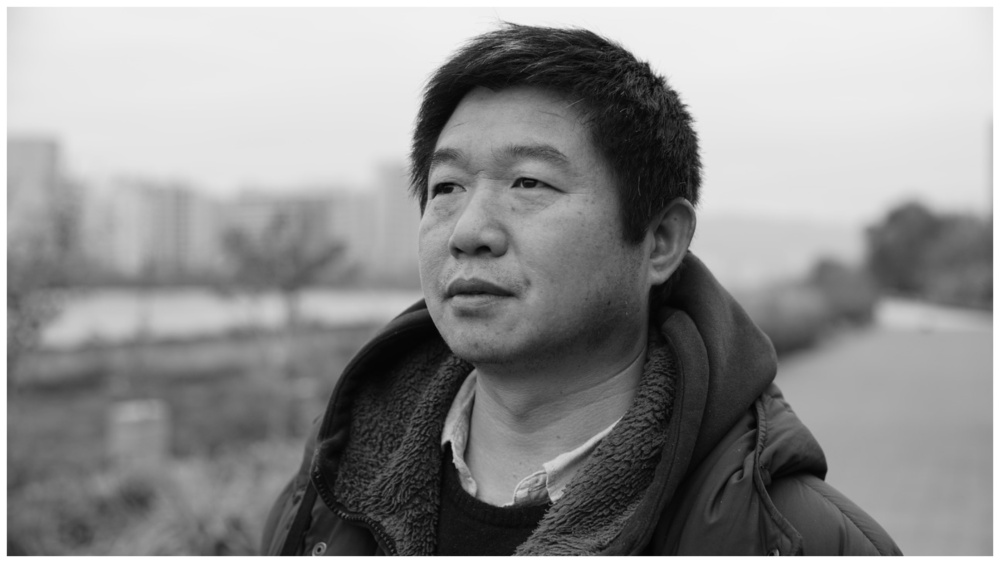
The system is rigged against these young workers, but they keep plugging on in Wang Bing’s “Youth (Hard Times)” and “Youth (Homecoming),” the final two installments of the gritty documentary trilogy that began with “Youth (Spring).”
Most of the “youth” really are kids in their late teens and early 20s, but some of the textile workers drifting in and out of Wang’s viewfinder are in their 30s or even early 40s. Wang filmed several Zhili factories over the span of 2014 to 2019, so he witnessed many of these young people maturing, but also growing disillusioned by the current Chinese system.
‘Hard Times’
As the subtitle suggests, “Hard Times” is largely dominated by workplace conflicts, including several fraught negotiations with factory owners for higher piecemeal rates. Inconveniently for the young laborers, such bargaining sessions always happen after the work has been completed, putting management in a strong take-it-or-leave-it position. Workers who are more inclined to stay and haggle face additional pressure from fellow laborers who are eager to start the long journey home to celebrate Chinese New Year with their families.
Violence even flares up, as when a group of workers looks on in shocked disbelief and horror as a debt collector and his family brutally beat their boss, with seeming impunity from the tardy police. Likewise, the law offers no help to another factory when their boss absconds with company funds, leaving them no hope of getting paid, or even maintaining the utilities in the company dorm where they live.
The initial film, “Youth (Spring),” hinted at the exploitation endured by provincial laborers. These are illegal migrants within their own nation, due to China’s strict residency regulations for employment. “Youth (Hard Times)” takes a hard, penetrating look at the dark side of the Chinese migrant worker experience.
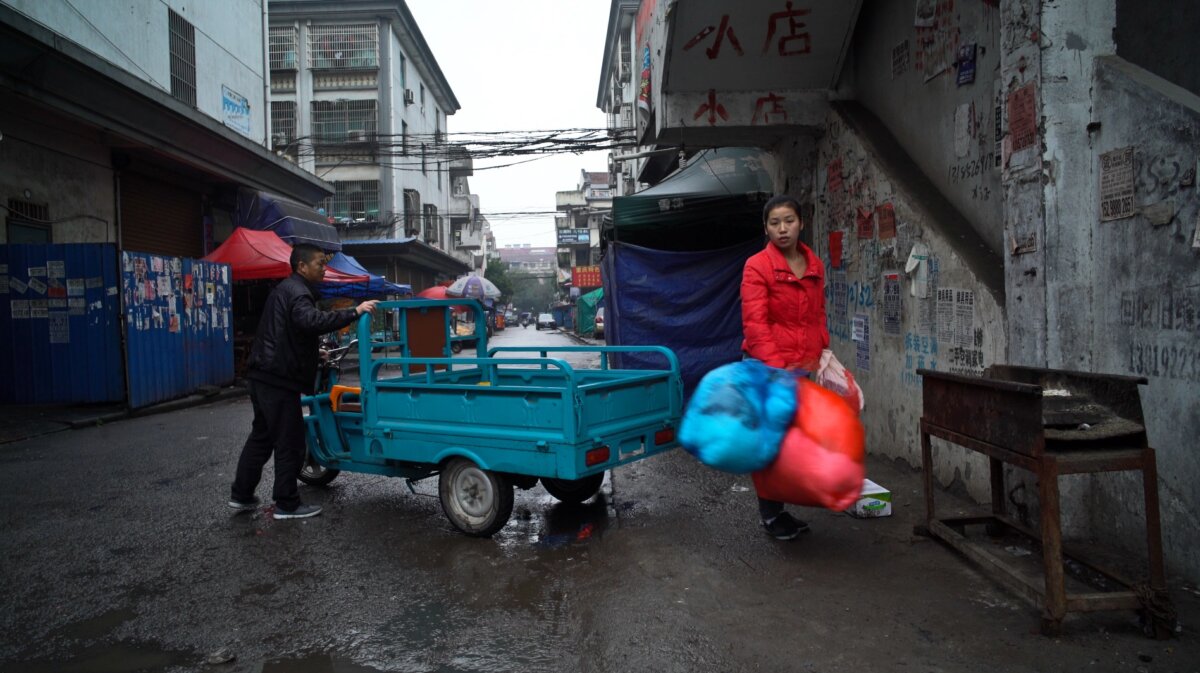
One worker grimly remembers a migrant riot. The uprising was ignited by a tax inspector who physically attacked a pregnant textile worker, after she refused to pay his dubious “assessment.” The worker survived his arrest during the brutal subsequent crackdown; later, he grimly observes: “You watch the news every day; they tell you how great China is. But after that—it looks different. It looks dark. You have no rights! So what’s the use of having money?”
‘Homecoming’
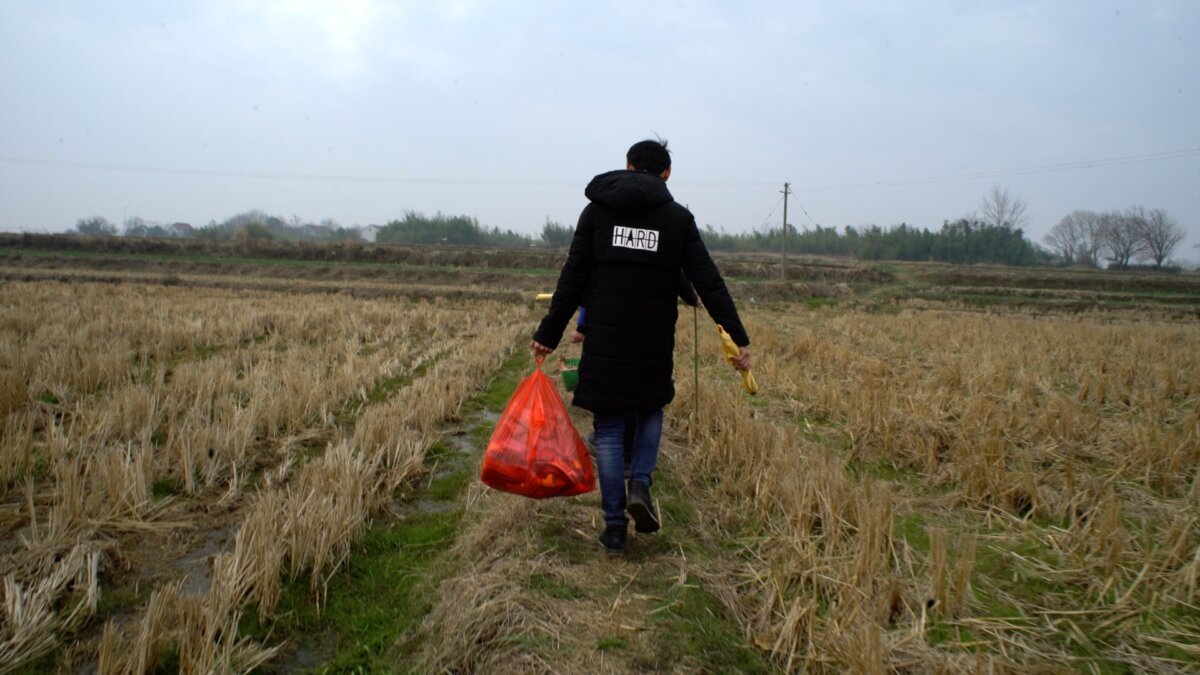
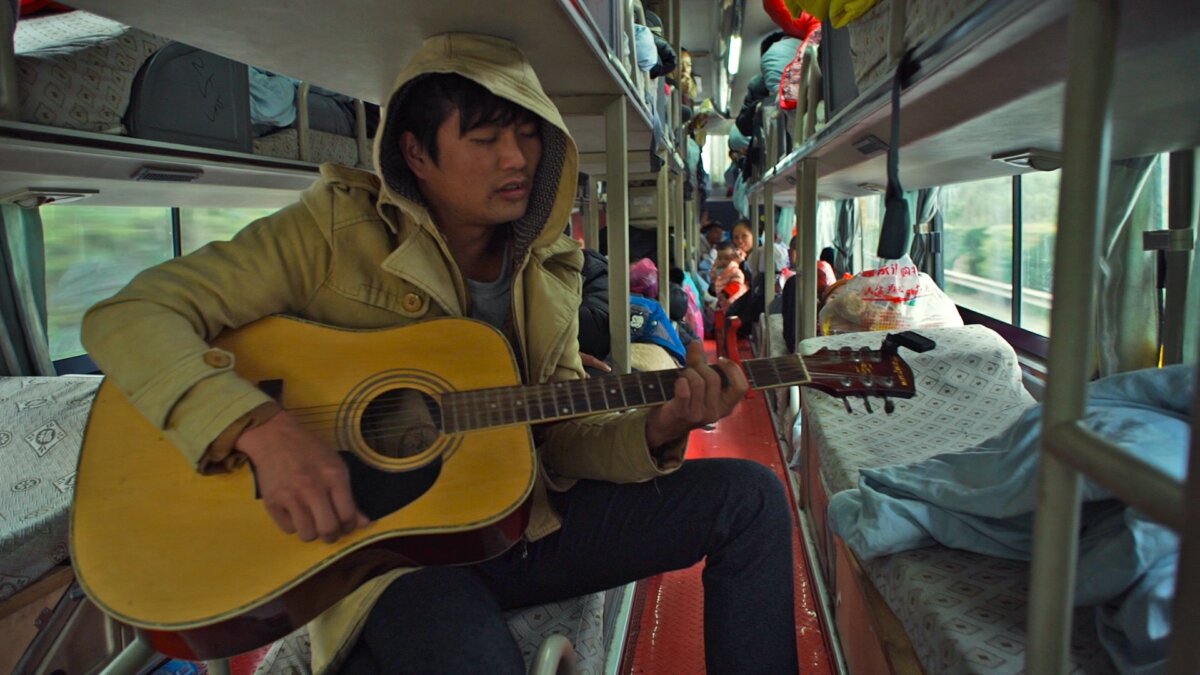
In many ways, “Youth (Homecoming)” represents the end of one cycle and the beginning of the next. When documenting the workers’ arduous journey back to their provincial homes, it covers similar territory as Lixin Fan’s 2010 documentary “Last Train Home.” Wang still has an eye for telling details and illuminating exchanges. He tells a father’s Kafkaesque story explaining how the police arrested him for reporting a politically connected gang that had stolen bricks from his roadcrew.
The most ironic sequences of “Homecoming” feature workers who were grossly underpaid, just like their counterparts in “Hard Times,” returning to Zhili to begin the cycle all over. Despite the undeniable exploitation, the Zhili plants still represent their best option. Perhaps more importantly, that is where many of their friends, siblings, and even spouses work.
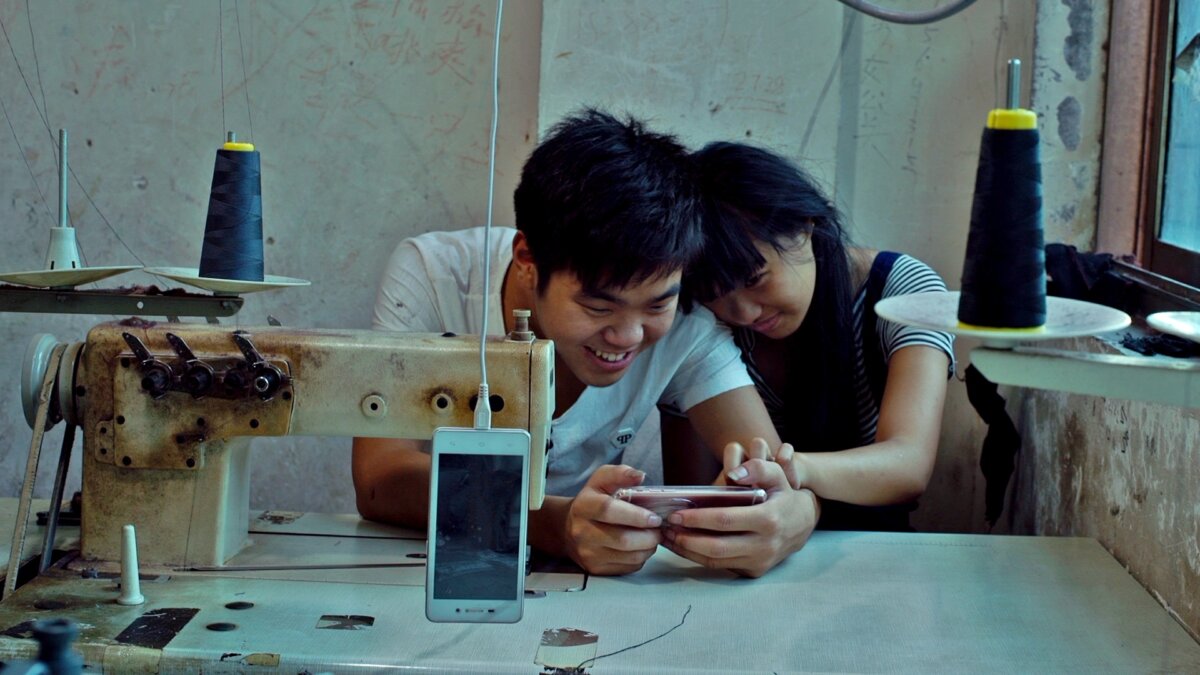
Indeed, Wang captures a significant truth: They might be trapped in an unfair game, but it is a social experience. As far as the authorities are concerned, the migrant workers are on their own, but they endure their travails together.
Patient Observation
Wang’s style is closely observational and patient to a fault. He truly immerses the audience in those cramped workshops. The scenes often produce feelings of claustrophobia and even listlessness from the repetitive motions. His approach is not unlike that of Richard Linklater’s “Slacker,” in that Wang’s camera will follow one worker into a scene, but exit with someone else.
Nevertheless, Wang’s trilogy, especially “Hard Times,” graphically illustrates the extreme vulnerability of provincial migrant workers in China. While most of their output remains in China, some are also exported to the United States. Frankly, after watching how quickly these garments were stitched together, viewers might want to avoid the “Made in China” label altogether.
After consuming Wang’s entire trilogy, the audience will feel like they walked a marathon in the migrant workers’ shoes. Any reasonably intuitive viewer should be able to start with the second film, without having first seen “Spring.” Indeed, if you only watch one of the trio of films, it should be “Hard Times,” which is by far the most dramatic and revealing.
“Youth (Hard Times)” clearly represents the apex of the trilogy. It’s is highly recommended for anyone who cares about international human rights and labor conditions. “Youth (Homecoming)” and “Youth (Spring)” are also recommended, mostly for the additional context and insight they provide.
For those ready and willing to spend nine and a half hours with Zhili’s underpaid laborers, the trilogy, “Youth,” is available for rent on Prime Video.
“Youth (Hard Times)” opens in New York on Nov. 1, and “Youth (Homecoming)” opens on Nov. 8.
‘Youth (Hard Times)’
Documentary
Director: Wang Bing
Running Time: 3 hours, 46 minutes
Not Rated
Release Date: Nov. 1, 2024
Rated: 4 1/2 stars out of 5
‘Youth (Homecoming)’
Documentary
Director: Wang Bing
Running Time: 2 hours, 32 minutes
Not Rated
Release Date: Nov. 8, 2024
Rated: 3 1/2 stars out of 5
What arts and culture topics would you like us to cover? Please email ideas or feedback to features@epochtimes.nyc

