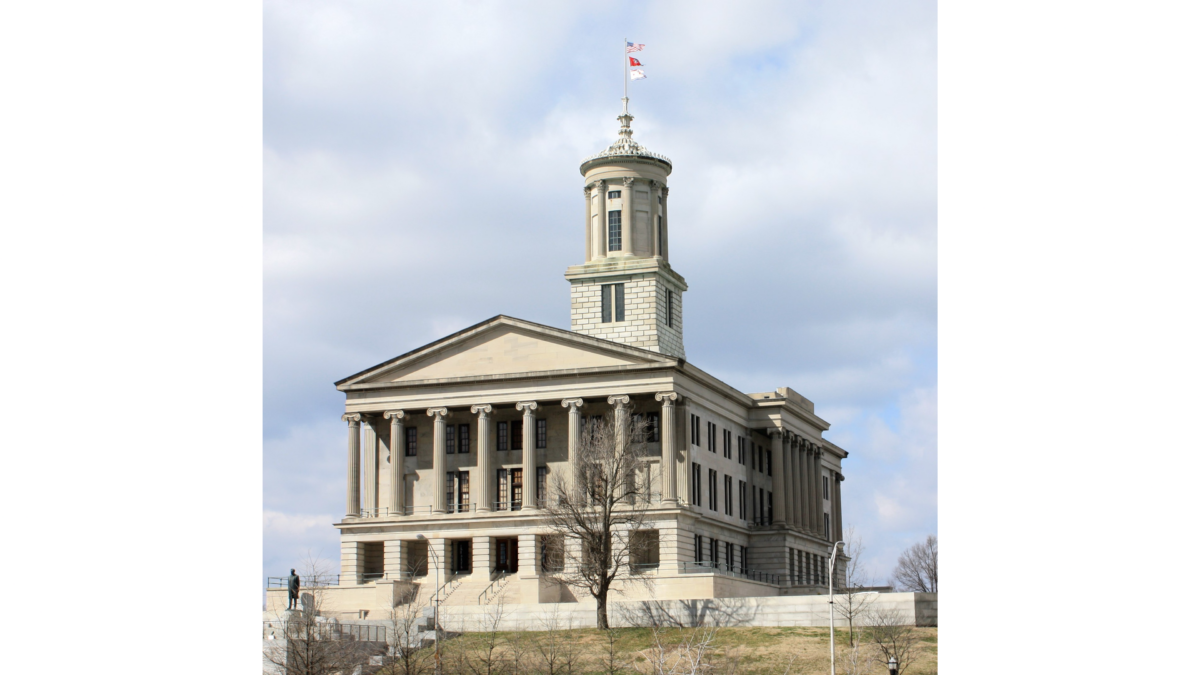
The front and back side of the Capitol are distinguished by eight fluted-shaft Ionic columns with volute, or scroll-like, capitals. The column bases are circular. Resting on the decorative top-of-column capitals are entablatures, which are bands of moldings. The columns appear to be holding up a massive pediment, above which rests a limestone block tower and a column-ringed cupola. (Public Domain)
Philadelphia architect and engineer William Strickland (1788–1854) envisioned, and then designed, the circa 1859 Greek Revival building in Nashville that serves as the Tennessee state Capitol. At about 206 feet in height, the statehouse resembles a white monolith on the top of downtown Nashville’s tallest hill. The solid stone foundation of the building is seven feet thick. The structure was originally constructed entirely of Tennessee-quarried limestone.
The three-story design adheres to the Greek Revival style Ionic order, one of three classical architectural focuses (the other two being Doric and Corinthian) defined by mid-sized columns. The columns are adorned with a treatment called egg and dart, consisting of egg-shaped carved moldings alternating with V-shaped carved moldings.
As is indicative of the 18th-century Greek Revival style, classical shapes, forms, and designs inspired by ancient Greek architecture are all evident throughout the Capitol. Balanced proportions, pediments, wide moldings and, especially, the columns define this structure.
To make the Tennessee Capitol as fire-proof as possible, the design called primarily for the use of limestone for exterior and interior walls, as well as the colossal columns.
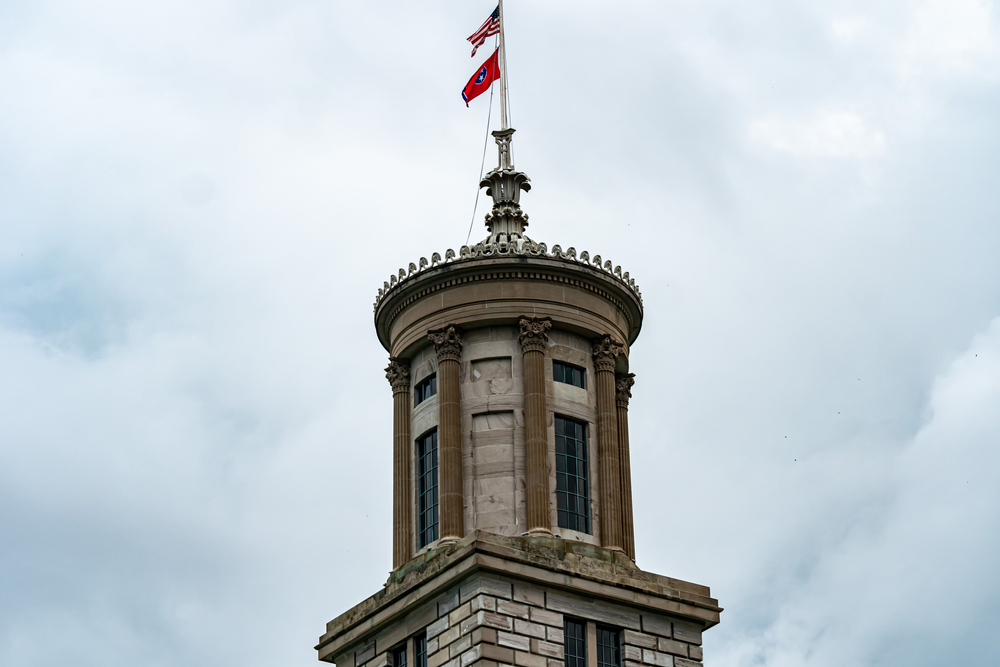
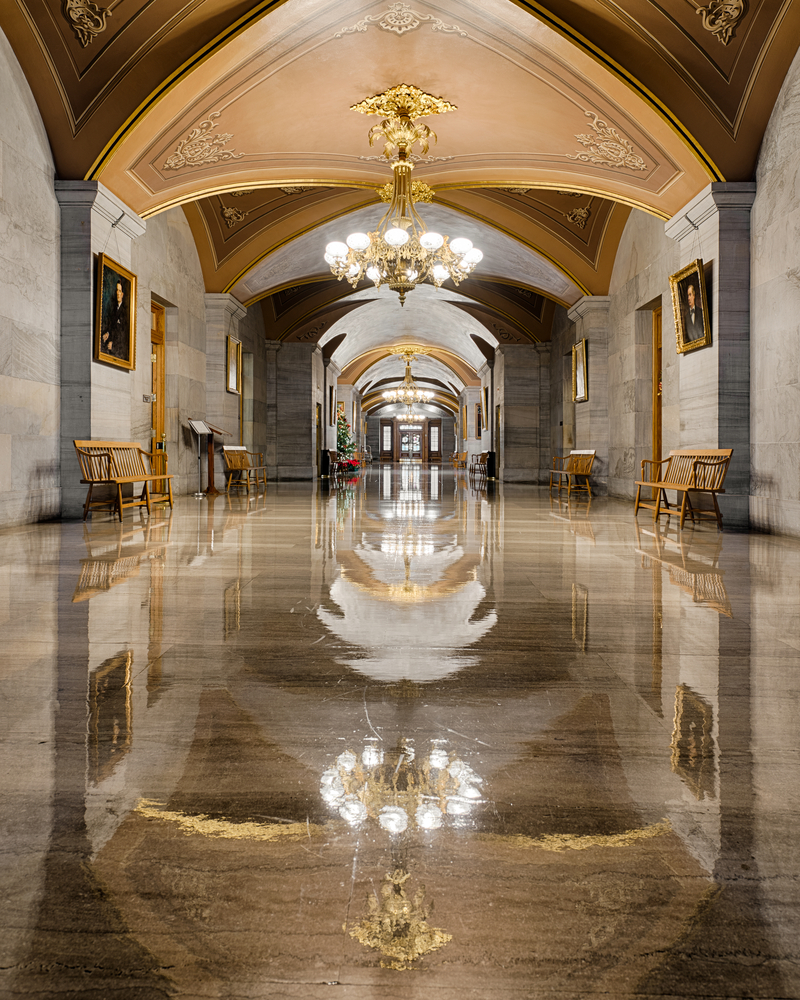
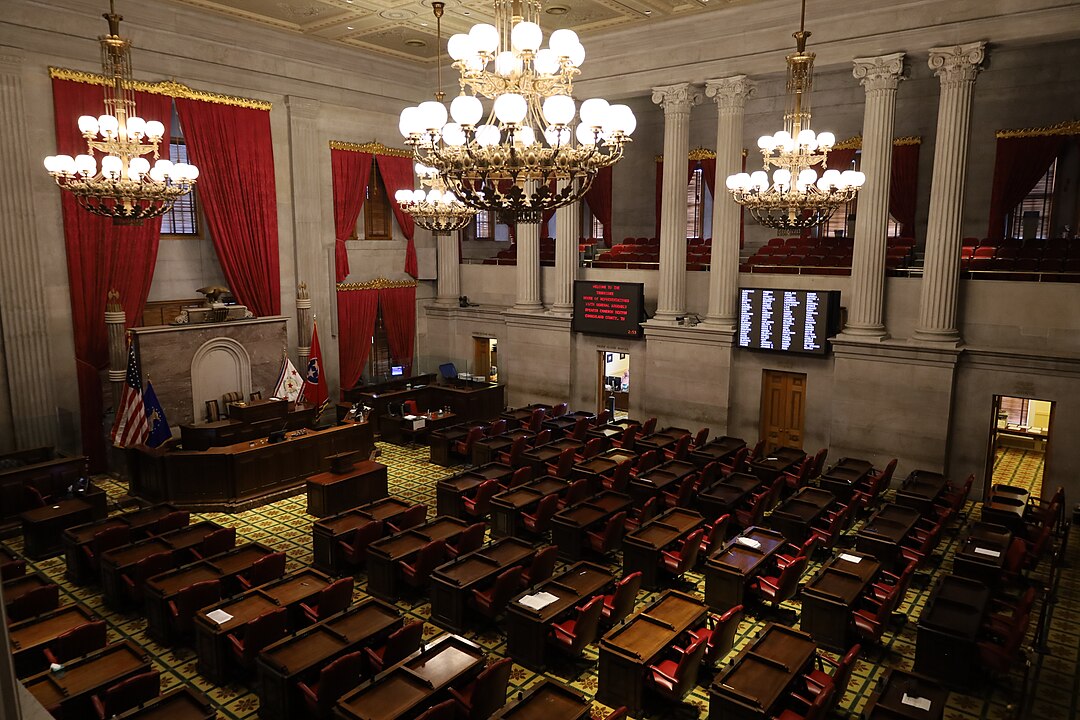
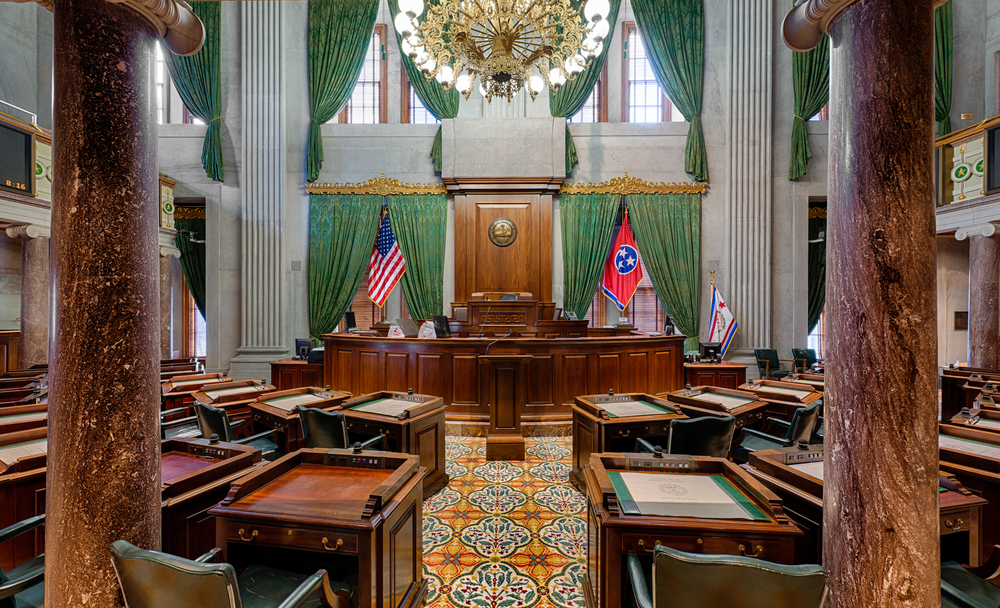
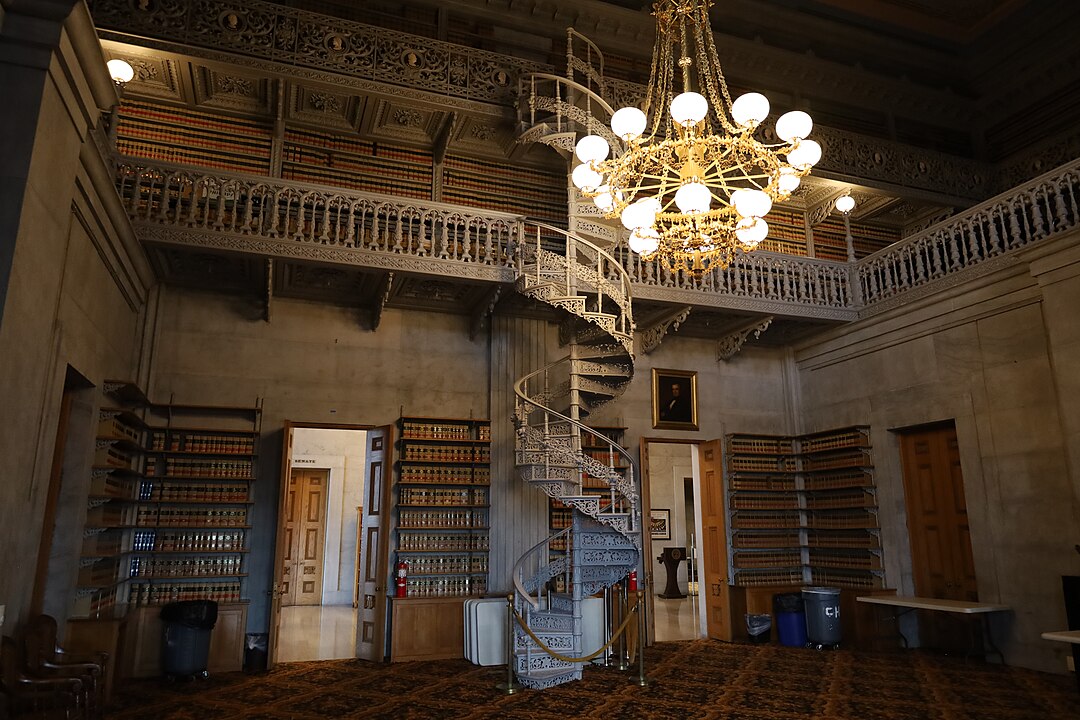
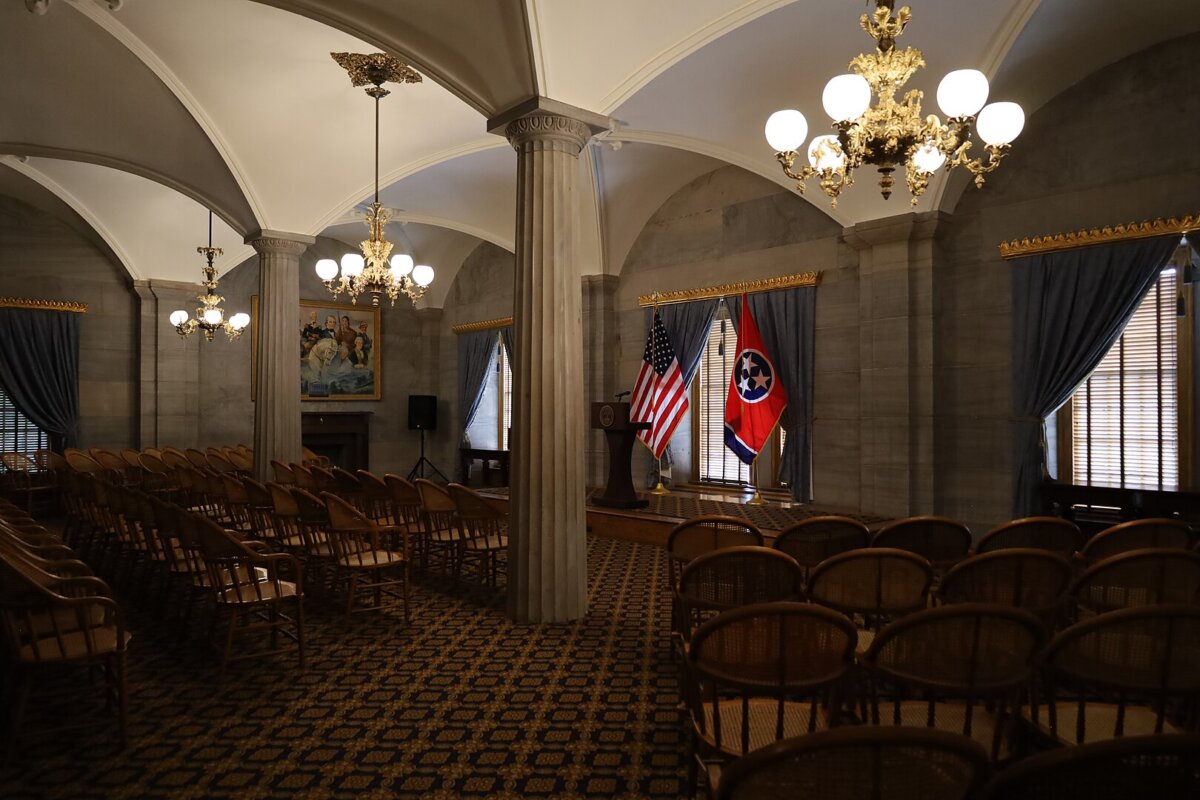
The Capitol’s 80-foot-tall tower includes a 37-foot cupola with a finial, inspired by the Greek Lysicrates monument in Athens. Eight columns are topped with capitals sporting acanthus and lotus leaf designs. The wrought-iron finial crown at the very top of the tower has a four-tier leaf design culminating in a flag pole. The cupola is mounted on a cut-stone pedestal. (RebeccaDLev/Shutterstock) French bronze gasoliers with glass globes are the focal point of the Capitol’s expansive second-floor corridor; they hang from gilded medallions set in an intricate ceiling design. The walls are sheathed in Tennessee limestone set with carved floor-to-ceiling columns. Spaced symmetrically between doors, the columns impart a grand hall feel to this space. (Nagel Photography/Shutterstock) Red Tennessee marble with an inset arch design forms the backdrop of the speaker’s rostrum in the House of Representatives chamber, also on the second floor of the Capitol. The 16 columns are each carved of single pieces of limestone. Four massive bronze and glass-globe gasoliers hang from the 42-foot-high ceiling. A gilded decorative cornice tops long, garnet-hued draperies. (Antony-22/CC BY-SA 4.0) The gallery in the Senate chamber (located on the Capitol’s second floor) is supported by 12 solid marble columns topped with entablature with classical designs. A polished semicircle wood rostrum is accentuated by a polished wood backdrop featuring the Tennessee state seal. (Antony-22/CC BY-SA 4.0) The State Library is replete with intricately designed wrought-iron balconies and a unique spiral wrought-iron staircase with a double-tier railing. Floral, lace, and scroll images are included in the wrought-iron designs. The room serves as a meeting place for legislators. (Antony-22/CC BY-SA 4.0) Noteworthy in the old Supreme Court chamber of the Capitol is the arcade-style ceiling, which connects wide and low-set arches supported by columns. These baseless fluted columns are adorned with egg-and-dart capitals. Bronze and glass-globe gasoliers light the solid limestone walls and accentuate the gilded cornices, from which draperies hang. (Antony-22/CC BY-SA 4.0)
What arts and culture topics would you like us to cover? Please email ideas or feedback to features@epochtimes.nyc
A 30-plus-year writer-journalist, Deena C. Bouknight works from her Western North Carolina mountain cottage and has contributed articles on food culture, travel, people, and more to local, regional, national, and international publications. She has written three novels, including the only historical fiction about the East Coast’s worst earthquake. Her website is DeenaBouknightWriting.com
 SEARCH