SEARCH


Three months after declaring independence, the United States was losing its war against the British Empire.
Following the capture of Staten Island in July 1776, British and Hessian forces launched a massive assault in late August, swiftly routing Continental Army units and Patriot militias and forcing them off Long Island. Their onslaught continued in September as they took New York City and most of Manhattan, leaving the Continental Army with just a tenuous foothold in northern Manhattan and the surrounding countryside.
Meanwhile, the Royal Navy dominated the surrounding waters to help secure control of the region. That superiority was on full display when three British warships forced their way past the underwater obstructions designed to block the North River. In his book “1776,” David McCullough describes these obstructions as a mix of “sunken hulks and a submerged chain of spike-studded logs.” Defying both the river barriers and a heavy artillery barrage from Fort Washington, the warships ran the gauntlet largely unscathed and continued north toward Tarrytown, New York.
By mid-September, Britain’s path for a rapid advance into upstate New York appeared wide open. Yet, despite his overwhelming military superiority, British Gen. William Howe did not press the advantage, choosing instead to spend the next several weeks consolidating his positions.
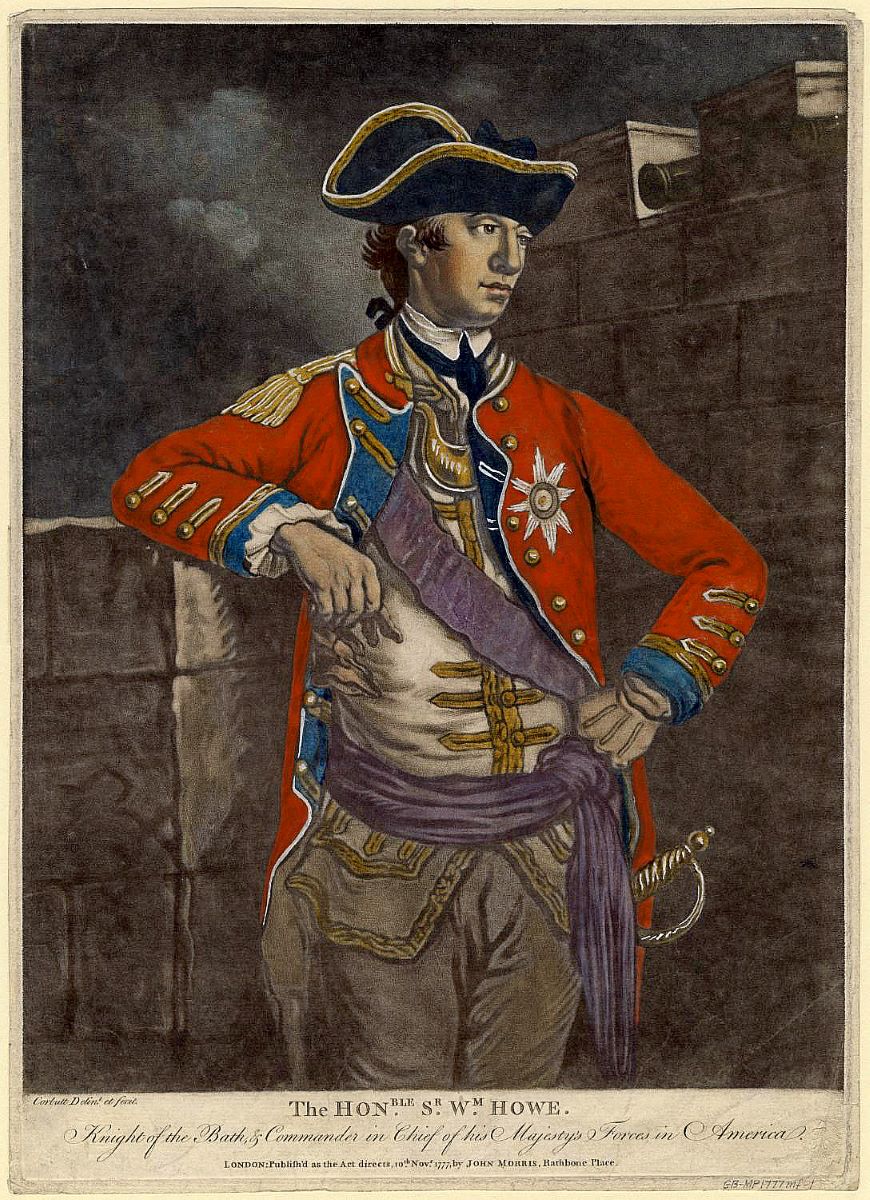
That pause ended Oct. 12 when Howe resumed the offensive with an amphibious landing in Westchester County, setting in motion a rapid series of engagements that culminated in the Battle of White Plains.
Throg’s Neck
The Continental Army was in a crisis. Compounding the recent military disasters, the rapid depreciation of Continental currency left American farmers and suppliers with little choice but to sell their goods to the British, who paid in gold and silver coins. Combined with other supply issues, this led to severe shortages of food, clothing, shoes, and blankets, leaving the soldiers and militiamen cold, hungry, and thoroughly demoralized.
By October, thousands had already deserted or defected to the British. Yet, despite the Americans’ weakened condition, Howe regarded their fortifications on Manhattan as far too formidable for a frontal assault.
He concluded that an amphibious landing on the mainland would provide a better opportunity to outflank the Americans and potentially trap the Continental Army.
Outdated charts used by British planners depicted Throg’s Neck as a peninsula. In reality, it was an island cut off from the mainland by vast salt marshes and a deep tidal creek. The only avenues to the mainland were a narrow causeway and a single bridge.
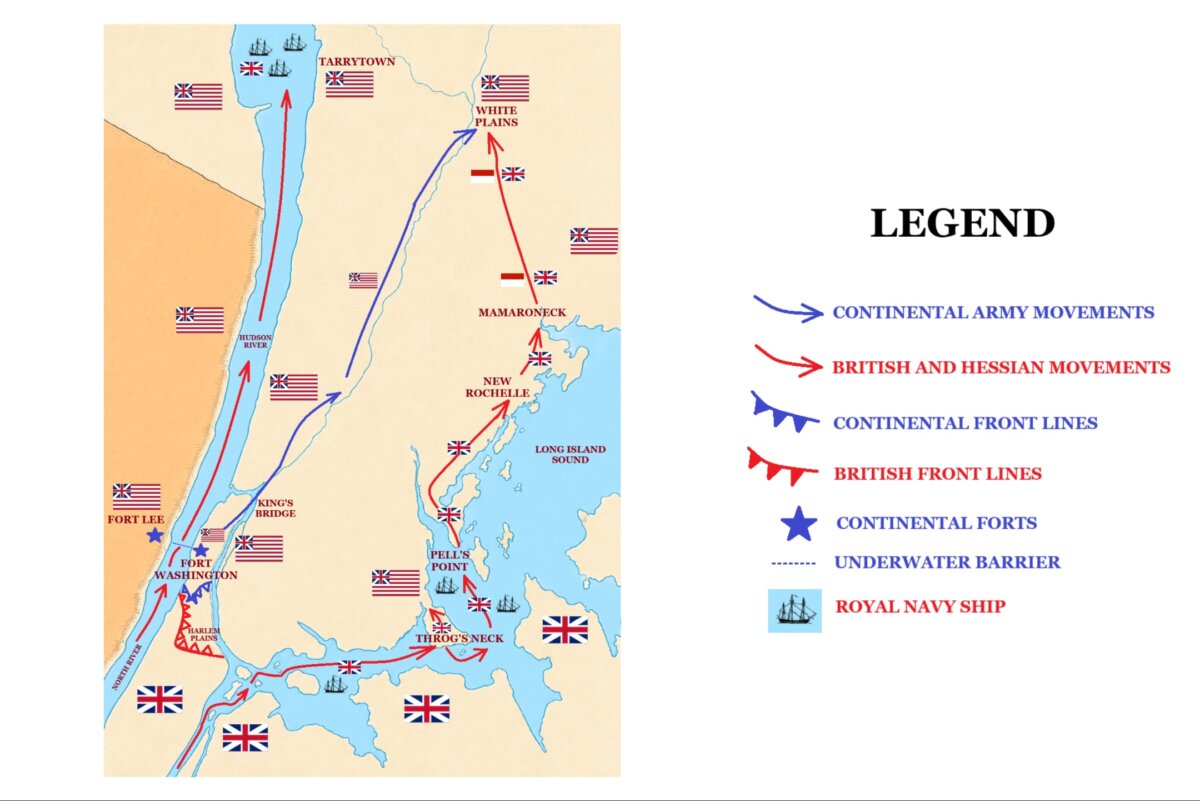
Col. Edward Hand and 25 riflemen were posted on the island when 4,000 British and Hessian invaders came ashore. The riflemen withdrew to the mainland and took cover behind piles of cordwood near the causeway, while a separate unit led by Maj. William Stephens Smith quickly destroyed the bridge.
As the invaders approached the crossing, they were blindsided by the deep channel and the ruined bridge. At that moment, the riflemen opened fire, pinning them down.
Gen. George Washington rushed reinforcements and artillery to the scene, effectively bottling up the invaders for days. Meanwhile, he and his generals began scouting the surrounding area for potential landing sites Howe might choose for his next move.
By then, Gen. Charles Lee had rejoined Washington’s staff following the victory at Fort Sullivan in South Carolina, for which he had taken credit. Gen. William Alexander (Lord Stirling) and Gen. John Sullivan had also returned after being released through a prisoner exchange.
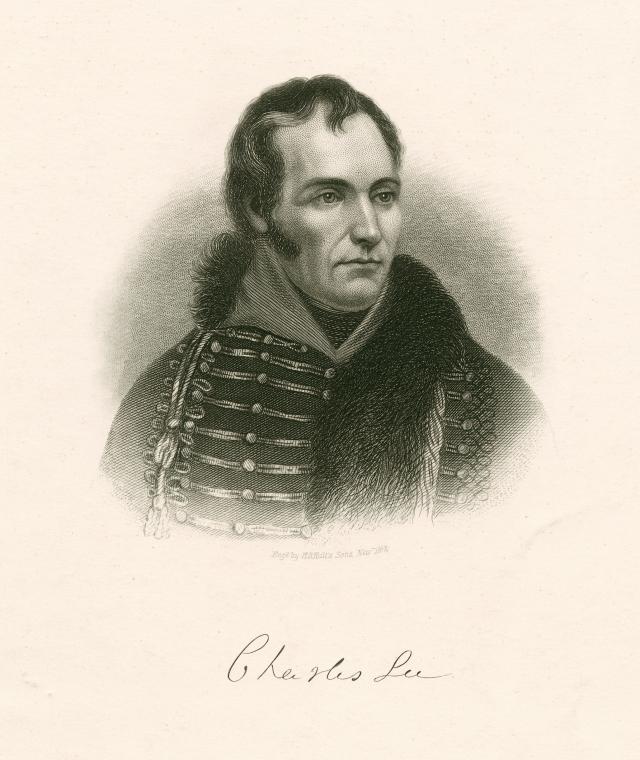
Lee urged Washington to abandon Manhattan, which he considered a trap. He was not alone in that assessment. At a council of war on Oct. 16, the generals voted overwhelmingly to evacuate the island and move the army north.
Gen. Nathanael Greene argued that a garrison should remain behind at Fort Washington. Washington ultimately approved. That fateful decision would later haunt both men.
Pell’s Point
Frustrated by the lack of progress, Howe withdrew his army from Throg’s Neck on Oct. 18, sailed north, and launched another amphibious landing at Pell’s Point. His plan was to advance across Westchester County and cut off Washington’s escape routes. But, as the troops marched toward New Rochelle, the British advance guard came under a fierce attack from a small detachment from Col. John Glover’s brigade. Taking advantage of the terrain, Glover’s men staged a disciplined fighting retreat, luring the unsuspecting redcoats into a trap.
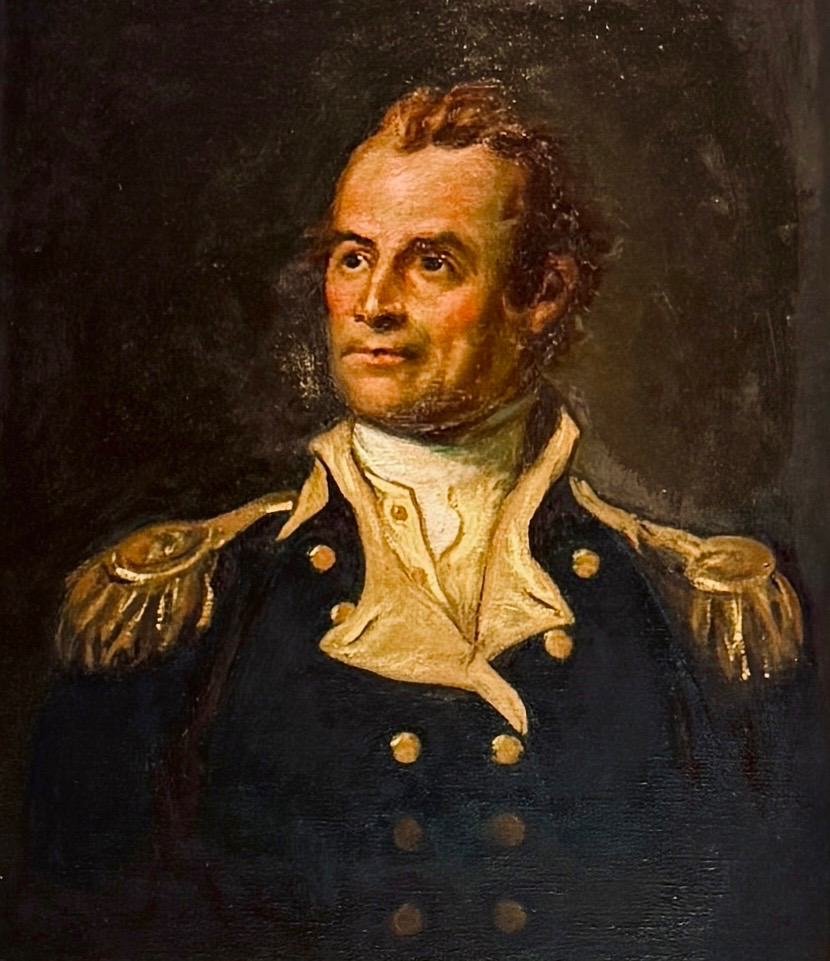
The British took the bait and marched straight into an ambush, where the remaining 700 Continentals from Glover’s brigade unleashed devastating volleys before withdrawing behind successive stone walls.
These leapfrogging attacks and subsequent artillery duels continued for hours, delaying the British advance by a full day. More importantly, the engagements bought Washington the crucial time needed to escape Howe’s trap.
Eliminate Robert Rogers
Once settled in New Rochelle, Howe ordered Maj. Robert Rogers and his Queen’s Rangers to secure his right flank at Mamaroneck.
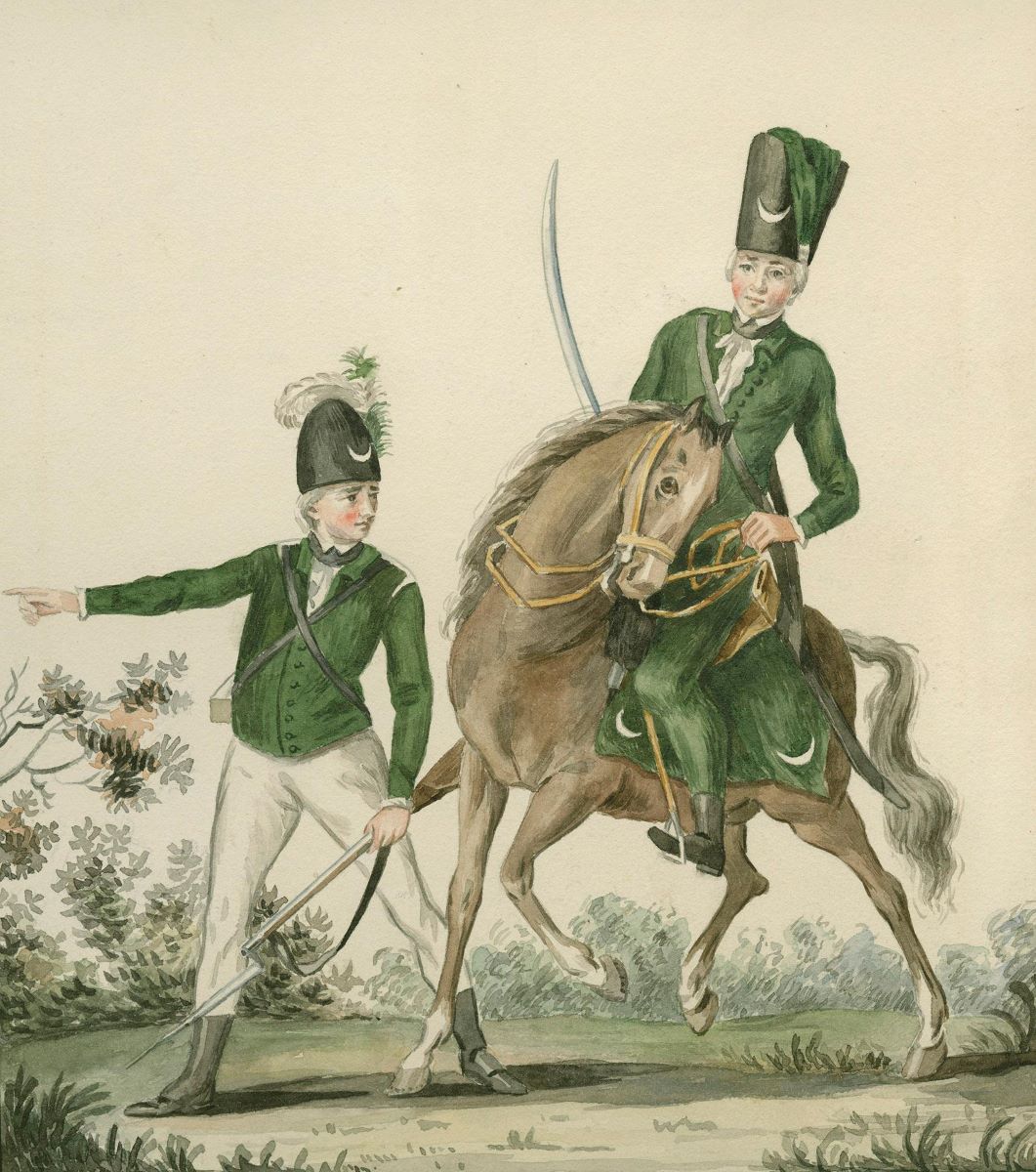
The Rangers captured the town and its supply depot before establishing camp at Heathcote Hill. Rogers posted sentries along the roads leading north and east but left the approaches from the British lines to the west and south largely unguarded.
Because Rogers and his Rangers were American Loyalists, Washington considered them traitors. When local scouts informed him of their proximity, Washington ordered a surprise attack to wipe them out.
Local Patriots guided Col. John Haslet and 750 Continentals in the pre-dawn hours of Oct. 22. They deliberately approached Heathcote Hill along the roads facing the British lines, where, at around 4 a.m., Haslet’s men caught the sentinels off guard and cut them down with swords.
Upon reaching the hill, they stumbled upon 60 Rangers, whom they overwhelmed in fierce hand-to-hand combat. The noise of the struggle, however, alerted Rogers, who rallied his remaining men and formed a tight defensive perimeter. With the element of surprise lost, Haslet withdrew his force, taking 36 prisoners along with captured weapons and blankets.
Howe was deeply disappointed in Rogers for allowing the Americans to infiltrate his camp. The skirmish, combined with Rogers’s heavy drinking and disciplinary problems, contributed to his eventual downfall. In January 1777, Rogers was removed from command of the Queen’s Rangers and was eventually replaced by Maj. John Graves Simcoe.
White Plains
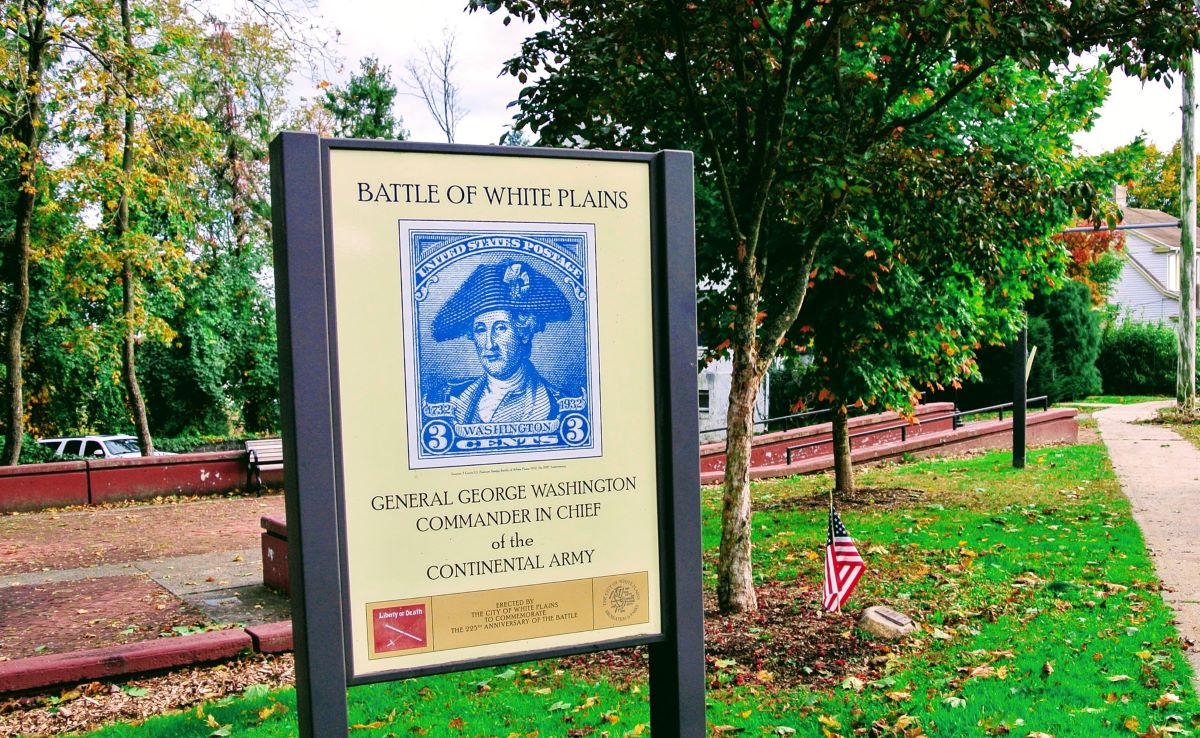
Washington arrived in White Plains on Oct. 22 and began fortifying the hills overlooking the village. He positioned Gen. William Heath on Hatfield Hill to anchor the left wing and Gen. Israel Putnam on Purdy Hill to command the center-right, while Washington himself held the center. Defensive entrenchments were dug across the terrain to strengthen the three-mile line.
The weakest point in this layout was Chatterton’s Hill, a strategic height across the Bronx River that dominated the American right flank. To defend this exposed position, Washington sent less than 500 militia.
On Oct. 28, Howe approached White Plains with 13,000 British and Hessian troops, with Lt. Gen. Henry Clinton commanding the right column and Lt. Gen. Leopold Philip von Heister leading the left. Gen. Joseph Spencer and 1,500 militia took up positions well in front of the lines, where they ambushed an advanced Hessian column led by Col. Johann Rall. British and Hessian units responding to the attack began moving to their left, outflanking Spencer’s men and forcing them to retreat across the river.
Washington observed the British columns shifting toward his right wing at Chatterton’s Hill, realized the position was understrength, and quickly reinforced the hill with 1,200 Continentals under Gen. Alexander McDougall.
Howe also recognized the strategic importance of Chatterton’s Hill and ordered Rall and Gen. Alexander Leslie to assault the position. British and Hessian artillery opened a heavy bombardment in support of the advancing infantry.
The Hessians were repelled in their first assault but eventually outflanked the militia, who broke and fled. With their lines now exposed, the Continentals were forced into a fighting retreat that allowed the Hessians to seize Chatterton’s Hill.
With the American right flank collapsed and the hill firmly in Hessian hands, Howe halted his army, and the heavy fighting came to an end.
Aftermath
Both armies remained largely stationary for the next two days. Bolstered with additional reinforcements, Howe planned a renewed attack for Oct. 31, but heavy rains forced a postponement.
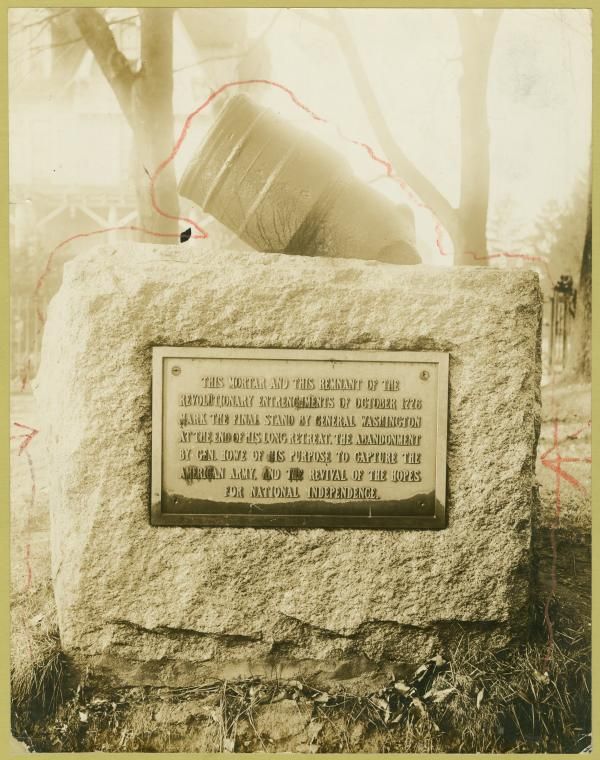
Under cover of night, the Continental Army quietly slipped away to a series of hills farther north near North Castle. The following morning, the British discovered the American lines abandoned.
Rather than continuing the pursuit, Howe moved his army south on Nov. 5; his sights were now set on Fort Washington and its 3,000 isolated defenders.
In response, Washington divided his army, leaving 7,000 men at North Castle while posting approximately 4,000 near Peekskill to guard the Highlands. He then crossed the Hudson River and moved south into New Jersey with 2,000 men.
The Battle of White Plains cost Britain 47 killed, 182 wounded and four missing, while American losses stood at 50 killed, 150 wounded and 17 missing.
Washington had not only lost much of the territory comprising modern-day New York City but also the confidence of some of his closest associates, most notably his adjutant general, Joseph Reed.
The crisis afflicting the Continental Army had deepened. For American Patriots, the dark days ahead were about to become the times that try men’s souls.
What arts and culture topics would you like us to cover? Please email ideas or feedback to features@epochtimes.nyc.