SEARCH


The late American historian and Pulitzer Prize-winning author David McCullough once said, “History is who we are and why we are the way we are.”
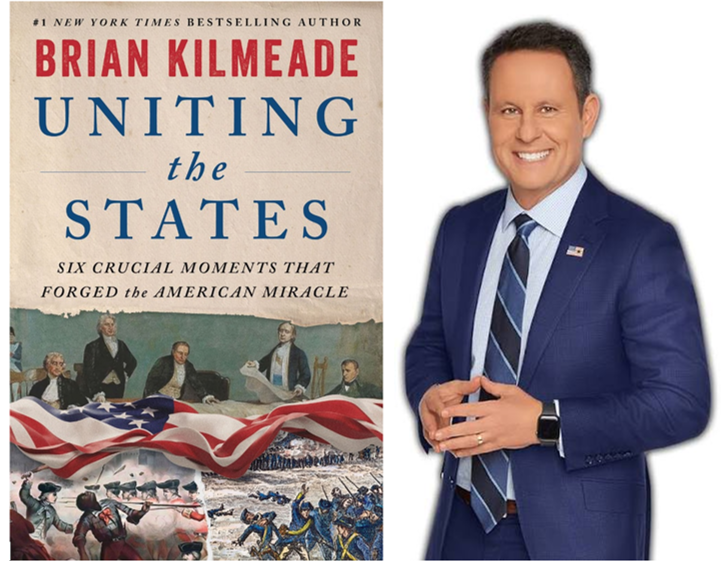
Bestselling author and Fox & Friends TV host Brian Kilmeade brilliantly illustrates that point in his latest book, “Uniting the States: Six Crucial Moments That Forged the American Miracle.”
A keen student of American history, Kilmeade reveals the backstories of six men, the unique circumstances they encountered, and the actions they took that helped shape the country during its first 50 years.
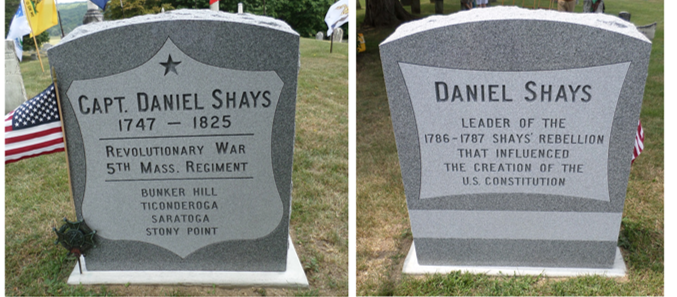
Those profiled include Founding Fathers John Adams, George Washington, Thomas Jefferson, James Madison, and John Quincy Adams. The sixth man Kilmeade profiles isn’t considered a Founding Father. Yet Revolutionary War captain and Massachusetts farmer Daniel Shays’s desperate actions after the war proved to be the catalyst for adopting the U.S. Constitution.
John Adams
Long before he became America’s second president, helped draft the Declaration of Independence, and participated in the 1774 Continental Congress, Adams was a fledgling Boston attorney. In 1770, Boston was a cauldron of civil unrest because it was a garrison town with 4,000 British troops occupying a city of 15,000.
Kilmeade’s engaging narrative explains the personal and professional challenges Adams faced when he agreed to defend the British troops charged with murdering five Bostonians during the Boston Massacre.
How would defending the accused impact his law practice? Would his wife and family be safe? Would he be safe, and what of his reputation with his fellow citizens?
“Then and there, Adams talked himself into it,” Kilmeade wrote. “This was, he thought, ‘as important a cause as had ever been tried in any court or country of the world.”
The case was important to Adams because he wanted America to be a government of laws, and he believed the law must stand above hate. As the author points out, prior to Adams’s passionate defense in that landmark case, there was no such thing as a presumption of innocence or due process, principles that James Madison made memorable decades later in the Bill of Rights.
George Washington
Readers familiar with Kilmeade’s history books know that he is meticulous in revealing the good, the bad, and the ugly of his subjects. In his profile of Washington, he shows how the future Father of Our Country suffered several catastrophic military events. The first was the French and Indian War, and the hardships of conflict continued as he led the Continental Army.
After retreating to New Jersey following devastating losses in New York, Washington realized the colonial army’s best strategy was to prolong the war. In other words, he knew the Continental Army could never beat the British in open country. But, as long as they picked their spots and used the element of surprise, they could wear the redcoats down over a prolonged conflict.
Washington’s strategy worked: After two surprising winter victories in New Jersey at Trenton and Princeton, those modest wins, as Kilmeade notes, “recaptured the nation’s imagination and restored its belief in the cause.” Kilmeade noted that the world also noticed.
“As British historian George Trevelyan put it, ‘It may be doubted whether so small a number of men ever employed so short a space of time with greater and more lasting effects upon the history of the world,’” Kilmeade wrote.
Daniel Shays
The author’s profile of the Massachusetts farmer was a surprise selection, since, in early historical accounts, Shays was often viewed as an enemy of the state. Kilmeade argues that Shays Rebellion, which began in 1786, was not so much a rebellion as a civil act of disobedience.
Shays and others protested Massachusetts’ policy of taxing farmers and demanding payment in gold or silver. Many were Revolutionary War veterans who had not yet received their military pensions. Unable to pay and with no recourse available, many had their farms and livestock sold at auction. Some were thrown into debtors’ prison.
Before organizing farmers to protest, Shays was considered a model citizen, a respected man in his community, and a devoted family man who had served his country for five years in the war.
Kilmeade adroitly describes the dilemma facing both sides and the fallout. He concludes that the infamous insurrection helped convince Washington and other Founders that the Articles of Confederation were inadequate.
At the heart of the crisis was a structural failure: The federal government had no power to levy taxes, regulate commerce, or support an army. The farmers’ rebellion, and how best to handle it, made clear the need for a stronger governing document.
Kilmeade wrote that Shays was a patriot who lost everything in his support for the average citizen. The U.S. Constitution was signed 13 months later.
Trio of Founding Fathers
Other Founders falling under Kilmeade’s probing microscope are Jefferson, Madison, and Quincy Adams. The nation’s third president, Jefferson, was in the right place at the right time. In 1803, Napoleon Bonaparte had a fire sale on France’s North American holdings. Jefferson closed the transaction that doubled the size of the country for just $15 million, or 3 cents an acre.
Jefferson’s presidential successor and close friend, Madison, had the unenviable challenge of overseeing the War of 1812, often called “America’s second war of independence” against Great Britain. Kilmeade states the war was basically a draw but with an important caveat: “The United States of America had emerged bloodied from a fight with a bully after demonstrating its independence once and for all.”
Like his father, Quincy Adams was a one-term president. His most valuable contributions to the nation occurred as a legislator after his presidency. Kilmeade calls Quincy Adams “the conscience of the nation”; he covers in detail how the Massachusetts legislator spearheaded consistent opposition to the “slaveocracy” of the South, bringing it into national conversation two decades before the Civil War.
Kilmeade’s books are well-written and well-researched, and reveal intriguing, little-known historical facts. Readers of his newest work won’t be disappointed that the same holds true in his newest book.
‘Uniting the States: Six Crucial Moments That Forged the American Miracle’
By Brian Kilmeade
William Morrow: Oct. 13, 2026
Hardcover, 304 pages
What arts and culture topics would you like us to cover? Please email ideas or feedback to features@epochtimes.nyc.