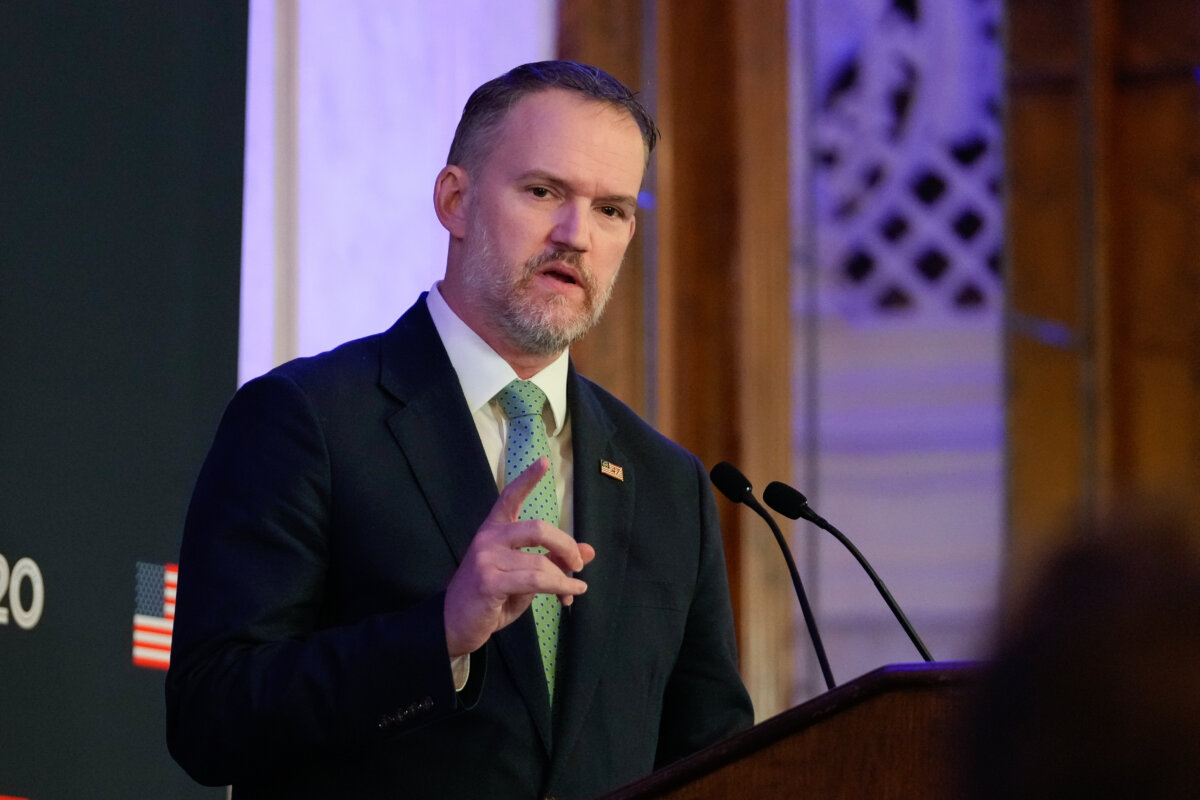

U.S. Trade Representative Jamieson Greer says any eventual trade agreement with Canada must accommodate the interests of both countries, as negotiations remain stalled.
In an interview with CNBC on Nov. 25, Greer said he spoke with his Canadian counterparts last week and that several “sticking points” remain in discussions with Ottawa, including on automobiles, steel, and aluminum.
He said the United States has seen increased growth in its vehicle and steel sectors, and that U.S. President Donald Trump “wants to be careful about any potential modifications on that front, including with Canada.”
“We want to make sure that North American trade in these products is beneficial for the United States. Obviously, there has to be something that accommodates Canada as well,” Greer said.
Formal trade negotiations between Washington and Ottawa were suspended on Aug. 21 after the two sides failed to reach an agreement. The breakdown was followed by additional U.S. tariffs of 50 per ent on $27.6 billion worth of Canadian goods. Canada subsequently imposed retaliatory tariffs on $27.6 billion worth of U.S. imports, with rates of 15, 25 and 50 percent.
Despite the collapse of talks, informal discussions between the two countries have continued, with both governments indicating that progress toward a potential agreement has been made.
Prime Minister Mark Carney told reporters in early November that Washington had softened some of its previous demands and was now “asking less” and “offering more.”
Trump also said this month that Washington would “make a deal with Canada very soon,” and that tariffs on American farmers’ products would be removed.
Greer was also asked about Canada’s approach to trade with China, such as the Nov. 17 announcement that Beijing would lift tariffs on around $400 million worth of Canadian exports. In exchange, Ottawa would extend tariff exemptions to an additional 32 types of Chinese steel and aluminum products.
“When I see them talking about giving waivers to China for steel and aluminum from that country, that gives me pause,” Greer said, adding that Canada remains “invested in full globalization.”
“We’re trying to correct for some of those excesses, and so we’re trying to figure out how to square that circle,” Greer said.
Greer also commented on Canada’s efforts to establish closer economic and political ties with the European Union through a proposed “associate membership” arrangement, saying Ottawa has already had a comprehensive trade agreement with the bloc for over a decade.
“I’m not sure there’s a lot of juice left to squeeze in that,” he said.
He argued that closer integration with the EU could require Canada to change some of its business regulations, potentially hindering economic activity.
Greer’s comments came as the Trump administration proposed a new round of tariffs targeting imports from 14 trading partners, citing what it described as excess industrial capacity and unfair trade practices.
China could see tariffs of up to 40 percent, while the European Union, Japan, Vitenam, and India, would be subject to tariffs ranging from 15 percent to 35 percent.
‘Continue Our Conversations’
Canada-U.S. Trade Minister Dominic LeBlanc told reporters the announcement was “not a surprise,” noting that he had discussed the proposed measures with Greer over the weekend.
LeBlanc noted that Canada is not being targeted with the new levies, and said Canadian officials are “going to continue our conversations with the Americans to try and find a deal that’s in Canada’s interest.”
Canada’s chief trade negotiator, Janice Charette, told a House of Commons committee on Nov. 17 that Canada should prepare for an eventual trade agreement that retains some level of U.S. tariffs.
She said Washington had so far shown an “unwillingness to enter into any arrangement in which there is full tariff-free trade.”
“We have to prepare for that eventuality, but obviously, our goal is to get as close to tariff-free trade as possible,” Charette said.