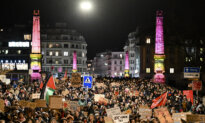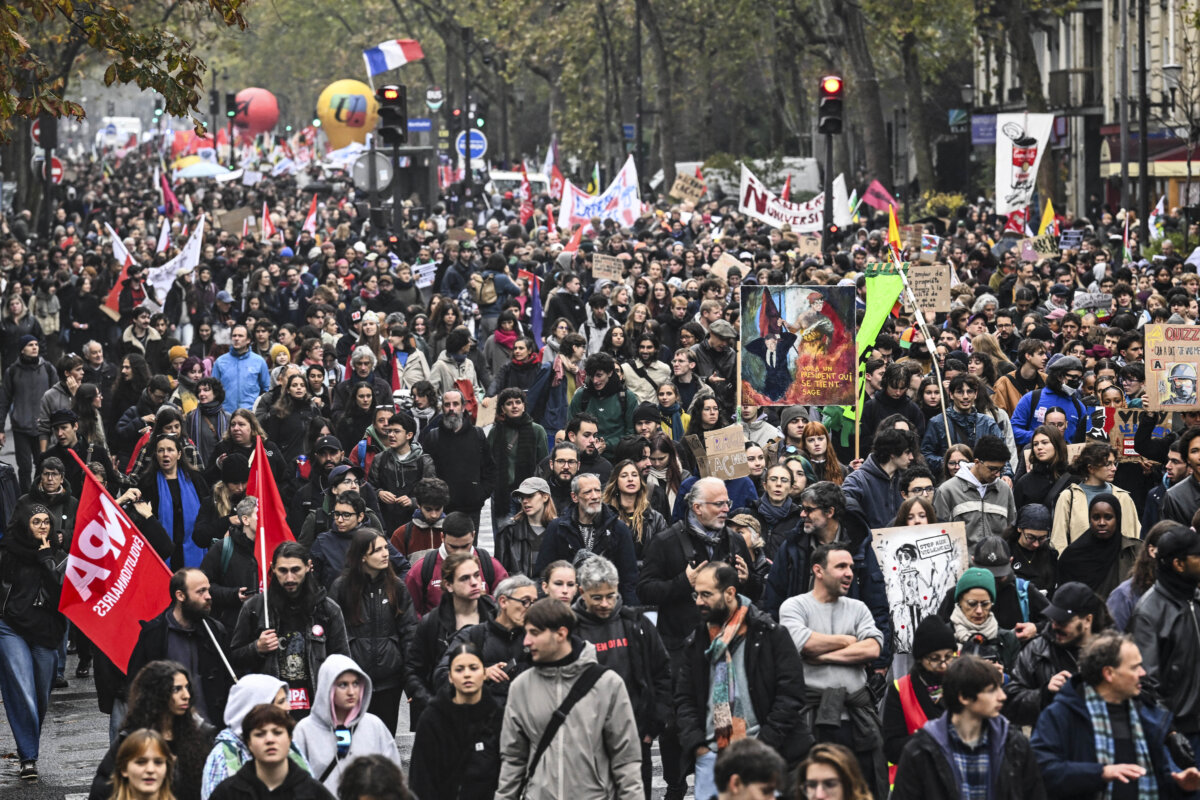

U.S. embassies have issued alerts warning Americans of protests in France and Belgium over the coming days and recommending they avoid areas where demonstrations are being held.
Multiple groups are set to stage demonstrations in France on Nov. 21–22.
“Some past demonstrations were violent and involved property destruction and looting. Police responded with less-than-lethal crowd control methods,” the U.S. Embassy and Consulates in France said in a statement, adding that recent demonstrations have largely been peaceful.
Metro stations can be shut down at the last minute, or services delayed due to the demonstrations. Blockades may be set up, causing road delays. Protests can also occur outside of planned routes, the alert said.
France has seen multiple protests in recent weeks. A nationwide strike on Nov. 5 over demands for higher wages and pensions brought together student, retiree, and left-wing unions, with hundreds of thousands taking to the streets.
The government reported hundreds of arrests and injuries to dozens of police officers on the day. Protests on Nov. 17 drew fewer people, with the Interior Ministry reporting roughly 146,000 demonstrators nationwide.
The embassy advised Americans to exercise caution if they are unexpectedly caught near a large gathering. It recommended that people check with local service providers for train disruptions and metro interruptions or closures.
The embassy advised Americans to plan alternative routes and allow extra time while traveling, adding that they must monitor media and local resources to stay updated on the latest situation.
The alert for Belgium warns Americans in the country about a public transportation strike and a labor union demonstration set for Monday.
“The labor union protest and demonstration is expected to take place starting at 10:00 AM near the Brussels-North Station before proceeding toward Brussels-South Station via the Small Ring Road, passing in front of the U.S. Embassy,” the U.S. Embassy in Belgium said in a Nov. 20 statement.
“Local law enforcement is expected to be deployed throughout the event to monitor developments, manage crowd movements, and maintain public order,” the embassy said.
The embassy expects significant traffic and mobility disruptions throughout Monday, especially along protest routes and in surrounding areas.
Such disruptions may include road closures and traffic restrictions, potential closures of metro stations in several affected areas, and disruptions to public transport services, the embassy said.
The public transport operator of Belgium’s capital, Brussels, STIB/MIVB, has warned that the national strike will disrupt its metro, tram, and bus services.
The American Citizen Services will not provide routine services on Monday afternoon because of the strikes, the embassy said. These routine services include passports, consular reports of birth abroad, and federal benefit services such as Social Security.
The embassy advised people to stay aware of their surroundings, carry cellphones programmed with local emergency numbers at all times, and follow instructions from authorities and road signs about detours and closures.
Belgian trade unions FGTB-ABVV, CSC-ACV, and SYNOVA will take part in the protests, the European Economic and Social Committee’s Workers’ Group said in an Oct. 28 statement, adding that the Group expressed solidarity with these unions.
Both France and Belgium are designated as “Level 2–Exercise increased caution” in travel advisories issued by the Department of State.
Belgium’s July 23 advisory update says large-scale, generally peaceful demonstrations linked to the country’s political situation could disrupt transportation and other essential services.
The Oct. 21 travel advisory update for France warned that protests can disrupt transportation services and that police may respond to demonstrations with force, including the use of tear gas and water cannons.