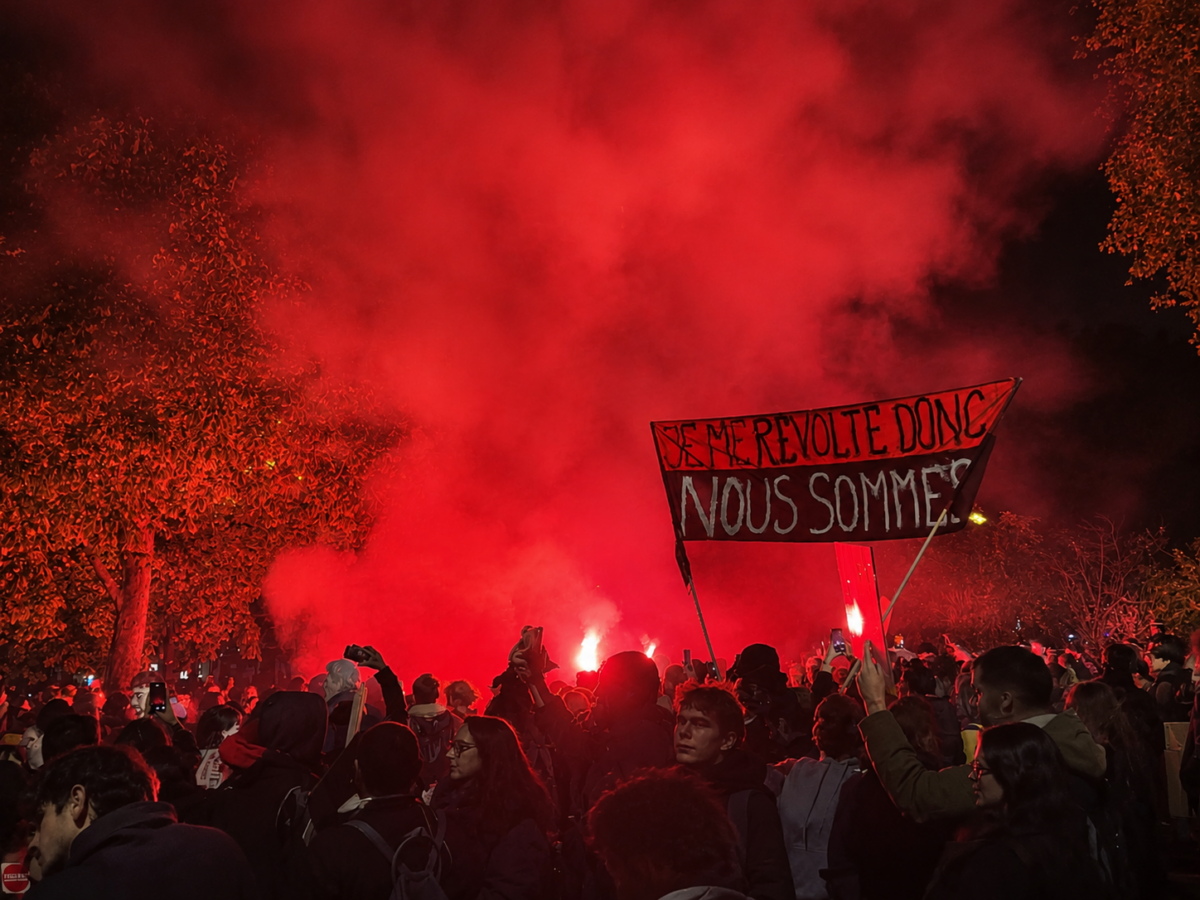

PARIS—Hundreds of thousands of people marched across France on Nov. 5 in a nationwide strike for higher wages and pensions that brought together left-wing unions, students, retirees, and “yellow vests,” the largest turnout since far-left high school protests in September grew into the country’s most serious social unrest in years.
The Interior Ministry reported 575,000 demonstrators nationwide on Thursday, including 65,000 in Paris, down from an initial estimate of 600,000. That was higher than the 550,000 recorded on Oct. 17, when riots and looting broke out, and more than twice the 256,000 counted on Oct. 6, at the height of the student protests. The CGT, France’s largest union confederation, put the turnout at 1.6 million.
The U.S. Embassy in Paris had issued a security warning to Americans ahead of the protests. In a Nov. 4 alert, it cited recent violence, property damage and looting, warning that curfews could be imposed without notice and that protests could spread beyond planned routes. The Eiffel Tower was closed for the day.
448 Arrests, 53 Officers Injured
Interior Minister Laurent Nuñez deployed some 70,000 police officers and gendarmes, backed by armored vehicles, drones, and helicopters, for what he had called a “sensitive day,” promising “a response of extreme firmness” to any violence.
By evening, the ministry reported 448 arrests and 53 police officers and gendarmes injured nationwide. Nuñez said on Thursday evening that the marches unfolded “in a context where, once again, violence was widespread.”
The worst violence was in Lyon, where several hundred black-clad rioters at the head of a 30,500-strong march damaged shops and set fire to a car, according to the prefecture, which reported 40 people injured, among them 34 police officers and gendarmes, and 24 arrests.
Schools were targeted again from the early morning. Near Toulouse, about 30 hooded individuals fired fireworks mortars at staff of a high school in Tournefeuille and set fire to its student affairs office. In Lille, a high school was evacuated after its gate was set ablaze.
In Paris, a teacher was assaulted when fights broke out outside the Lamartine high school after outsiders joined a blockade, leading the school principal to condemn scenes of “extreme violence,” according Le Figaro.
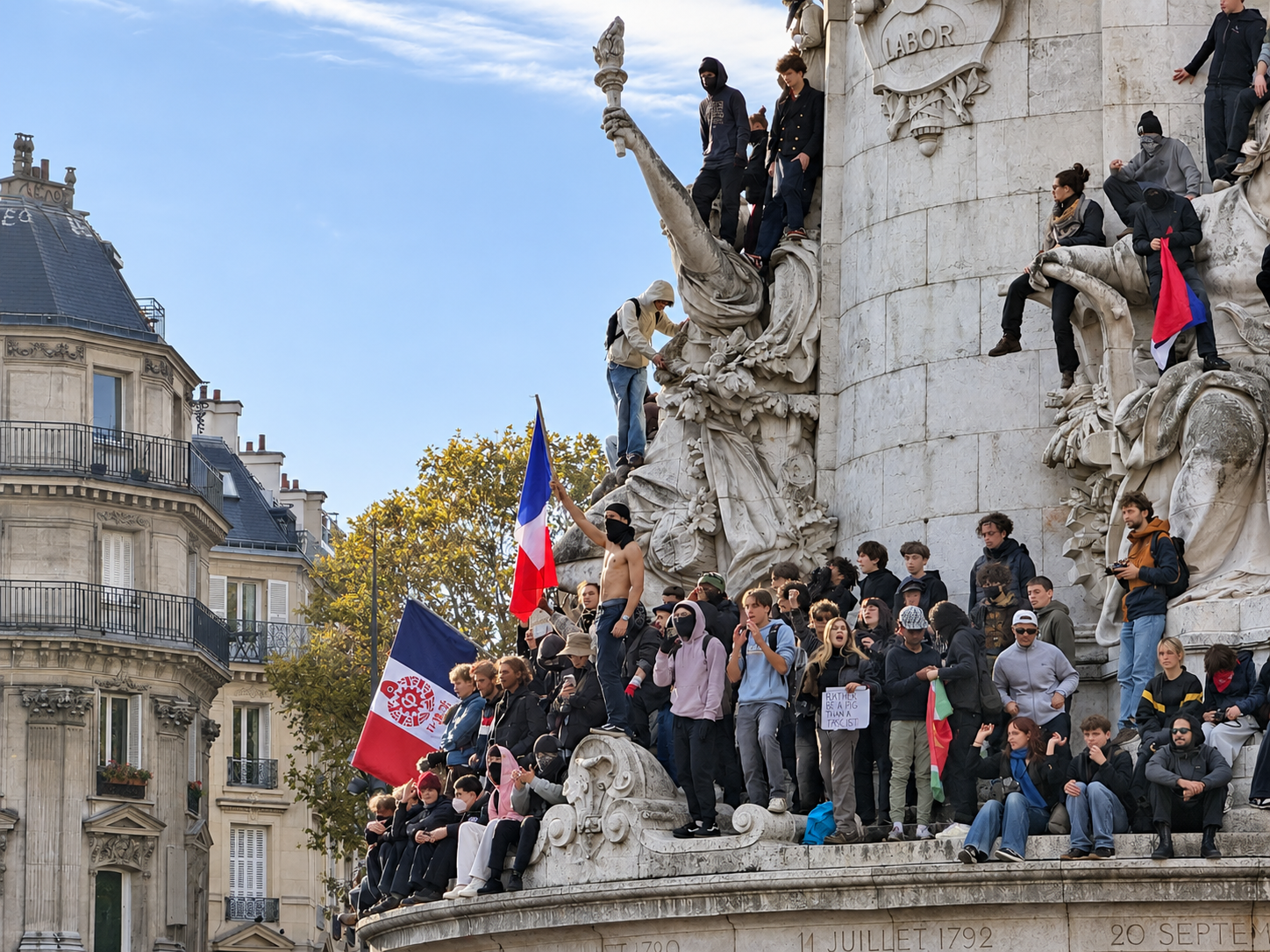 Demonstrators wave French flags and gather on the Monument to the Republic at Place de la République in Paris on Nov. 5, 2026, during a day of nationwide demonstrations across France. (Etienne Fauchaire/The Epoch Times)
In Rennes, police were pelted with steel pétanque balls outside a high school. In Strasbourg, a giant effigy of a riot police officer was burned before the crowd, and Nuñez asked the prefect to refer the matter to prosecutors. In Paris, police came under fire from projectiles.
Socialist Activists From Across Europe
The Paris march also drew delegations from abroad. Italy’s largest union confederation, the CGIL, sent one as “a concrete sign of closeness and solidarity” with French unions, it said.
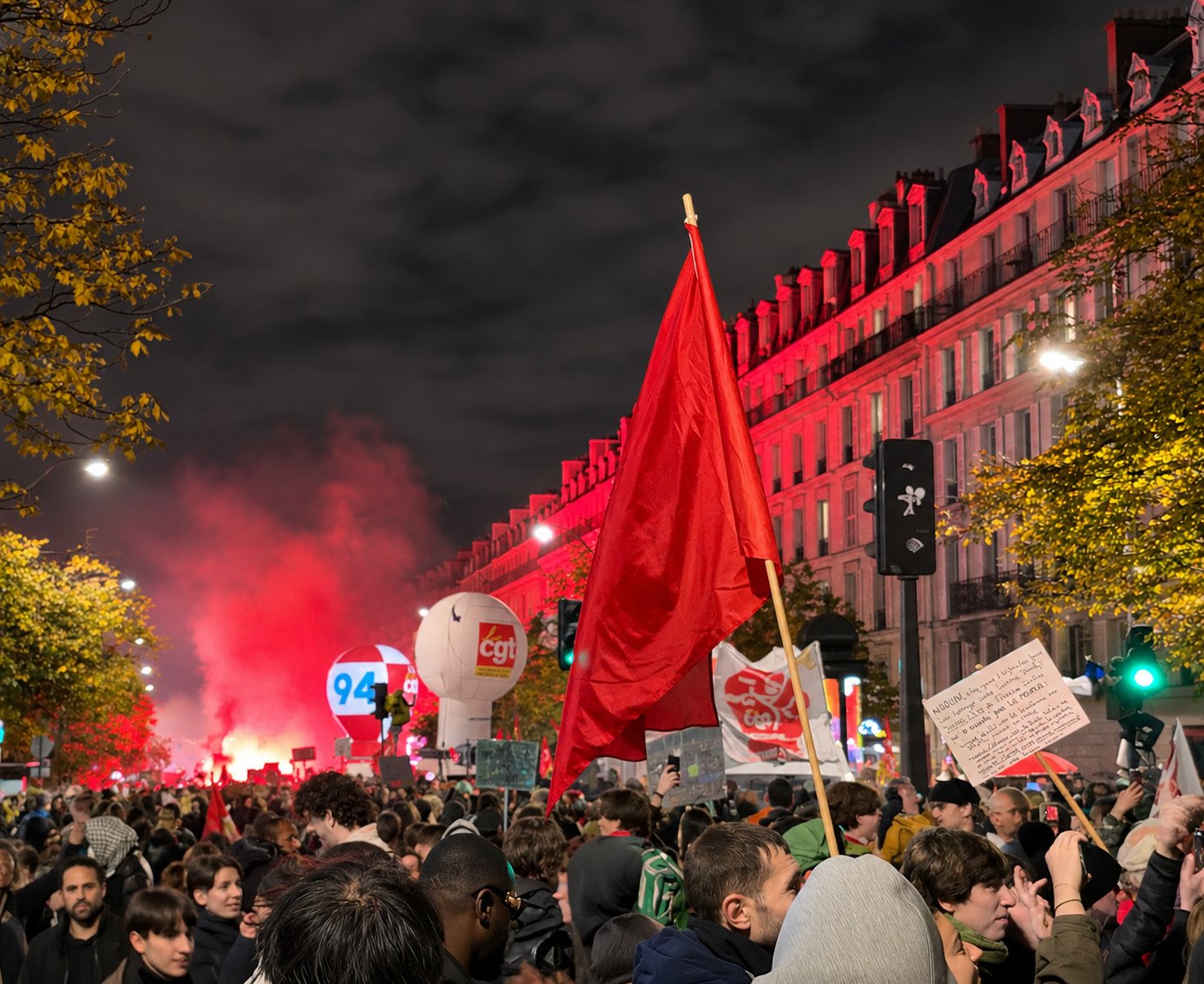 Demonstrators wave red flags as flares illuminate the protest procession through the streets of Paris on Nov. 5, 2026, during nationwide demonstrations across France. (Etienne Fauchaire/The Epoch Times)
About 50 British trade unionists and students, organized by the campaign group Strike Map, also made the trip, including Daniel Kebede, general secretary of the National Education Union, Britain’s largest teachers’ union.
Louis, a university student and member of the UK-based Stop the War Coalition, which he said has led Britain’s pro-Palestinian marches, told The Epoch Times in the Paris march that the delegation brought together socialist groups, anti-war groups, and trade unions, and that he had come to learn from French activists.
“I’m coming here to speak to university students in France to develop my own ideas and tactics of how we can make sure the movement in the UK replicates what happens here,” said Louis, declining to give a surname.
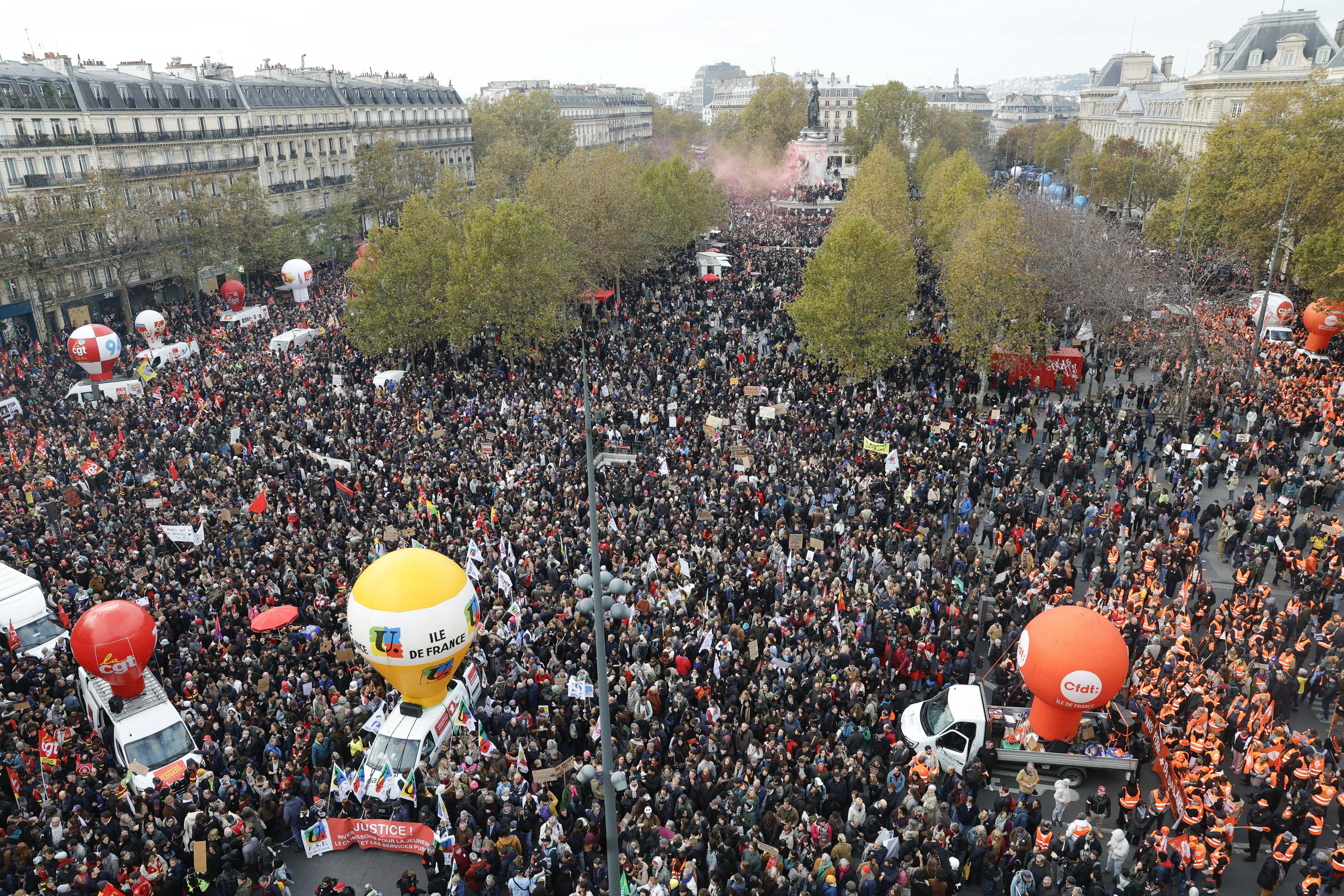 Demonstrators gather at Place de la République ahead of a nationwide day of strikes and far-left protests in Paris on Nov. 5, 2026. (Geoffroy Van der Hasselt/AFP via Getty Images)
“If we do our separate things in our own countries, we won’t be able to battle the ruling class, because they are absolutely organizing together,” he said.
He said Stop the War has worked with Europe’s leading far-left parties, including Spain’s Podemos, Germany’s Die Linke, and France Unbowed. The Communist Party of Britain is one of the coalition’s affiliated organizations.
Government to Hold Talks
French Prime Minister Sébastien Lecornu announced Thursday evening that he would meet with unions and employers on Monday to discuss wages and the cost of living. Labor Minister Jean-Pierre Farandou said raising the minimum wage was an option. The CGT union is calling for a 10 percent increase, while the CFDT wants an extra 100 euros a month, about $112.
“The message from the street to the government and to employers is clear: Nothing will stop us,” CGT General Secretary Sophie Binet said before the Paris march set off.
The unions’ show of strength came as the student movement that started it appeared to be fading, with the prime minister’s office counting 81 of some 3,700 high schools blockaded on Thursday, though the student union USL claimed 1,000. Yellow vest and left-wing youth groups have called for new actions on Saturday.