
Iran has ruled out transferring its enriched uranium abroad, as senior officials have said the material is needed for domestic nuclear projects.
Mohsen Rezaei, secretary of Iran’s Supreme National Security Council, said Tehran had informed Russia that all enriched nuclear material would remain inside Iran for domestic use. Russia has previously offered to remove uranium from Iran.
“We need enriched materials to design ships and submarines powered by nuclear energy,” Rezaei told Lebanon’s Al Mayadeen television network in an interview published on Nov. 10.
U.S. President Donald Trump’s administration has repeatedly said it aims to prevent Iran from rebuilding its nuclear program after U.S. forces struck the Fordow, Natanz, and Isfahan nuclear sites during Operation Midnight Hammer on June 22, 2025.
Trump said in September that the United States had detected activity at Iran’s Pickaxe Mountain and warned that the site could become a military target.
International Atomic Energy Agency Director General Rafael Grossi told Bloomberg Television in September that there were some indications of movement around the site.
“We don’t have any concrete information as to activities that may be taking place there,” Grossi said. “Of course, we need to go there. When we regain access, we need to go back to Fordow, as we need to go back to Isfahan, and so on.”
Tehran has rejected U.S. allegations surrounding its nuclear activities and outlined seven conditions for ending the conflict with Washington, including sanctions relief, the release of frozen Iranian assets, and war reparations.
Nuclear Facility Inspections
Iranian Foreign Ministry spokesman Esmail Baghaei said the International Atomic Energy Agency (IAEA) recently inspected the Bushehr Nuclear Power Plant, the country’s sole operating commercial nuclear reactor.
The plant began commercial operation in 2013 and generated nearly 1.3 percent of Iran’s electricity in 2025, according to the IAEA.
Baghaei said in an interview published by Al Mayadeen on Nov. 9 that IAEA inspectors visited Iran about 10 days earlier to conduct routine inspections at Bushehr and other facilities that remain accessible.
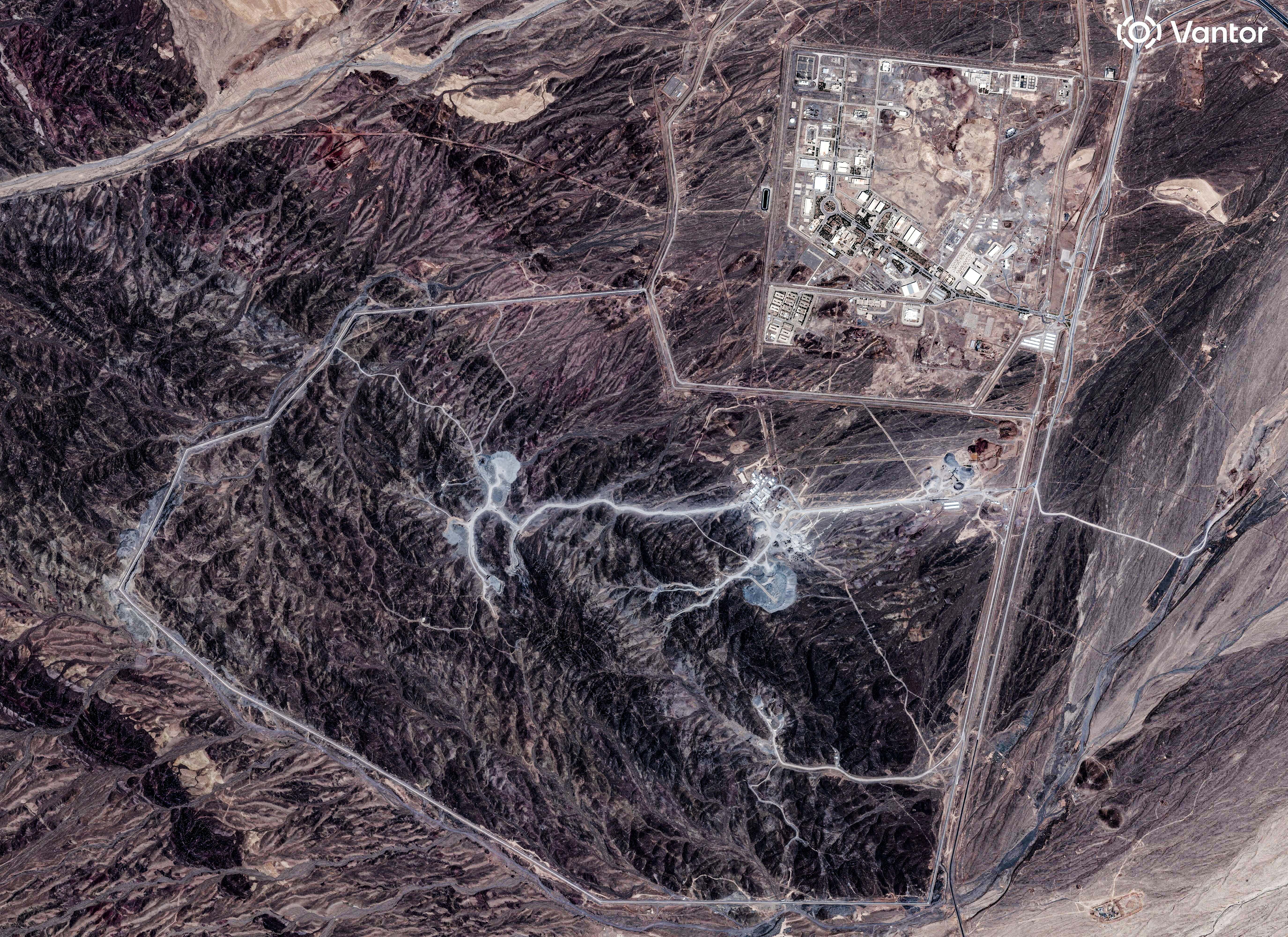 A satellite view shows an overview of the Natanz nuclear facility and Pickaxe Mountain, near Natanz, Iran, June 30, 2026. (Vantor/Handout via Reuters)
Baghaei also rejected any proposal to transfer enriched uranium outside Iran, saying the option was “off the table” and there was no justification for such a move.
The Epoch Times contacted the IAEA for comment but did not receive a response.
The IAEA said in a February report that Iran had almost 22,000 pounds of enriched uranium in June 2025. That amount included about 1000 pounds enriched to 60 percent, about 400 pounds enriched to 20 percent, and about 13,000 pounds enriched to 5 percent.
Grossi said last month that Iran had not provided the access and information needed for the agency to verify previously declared nuclear material at its safeguarded nuclear facilities, including sites damaged in military attacks.
He said the exception was the Bushehr plant, where inspectors continue verification activities.
Iran has engaged with the IAEA to “arrange for the delivery of safeguards equipment required for the verification of spent fuel prior to its transfer to a new dry storage facility,” Grossi said.
He said that the transfer is expected to take place early next year.
“While communications between the IAEA and Iran continue at a technical level, normal inspection activities have not resumed,” he said.
US Maintains Pressure
The United States has continued efforts to gather intelligence on Iran’s nuclear program.
The U.S. State Department’s Rewards for Justice program is offering up to $20 million and possible relocation for information about the program, including its nuclear facilities, its equipment, associated scientific personnel, and the movement of related materials.
“The regime’s lack of compliance with the IAEA on safeguards obligations has led to the agency’s loss of ‘continuity of knowledge’ regarding Iran’s production and inventory of key components like centrifuges,” the U.S. State Department said earlier this month when announcing the reward.
On Nov. 9, Trump said that additional U.S. military action against Iran was unlikely, while warning that the United States remained “locked and loaded” should circumstances change.
Trump made the remarks after meeting Qatari Prime Minister Mohammed bin Abdulrahman Al-Thani at the White House. Qatar has served as an intermediary between Washington and Tehran.