
German ministers have said there will be tough penalties for those who engaged in Saturday night’s riots and looting, which left more than 100 police officers in Frankfurt injured.
German Interior Minister Alexander Dobrindt blamed “troublemakers from the immigrant community” for the criminality that emerged. He did not provide evidence to support the claim or say which groups joined the demonstrations.
As in France, the largely peaceful daytime protests were followed by nighttime unrest.
Dobrindt, a member of the conservative Christian Social Union from the coalition government, said authorities would identify those responsible and bring them to justice.
“I expect there to be severe penalties. We are not prepared to accept, in the slightest, that such incidents and such rioting should take place here,” he told reporters on Sunday.
He said a strategy based on a large security presence and officer deployments across multiple locations had proved effective in containing the violence.
Located in the western state of Hesse, Frankfurt was the main flashpoint for the weekend’s violence, although there were attacks against the police in other cities, including Berlin and Cologne.
Organized by the campaign group “Gen Z regelt” (“Gen Z takes charge”), the protests demanded better education and lower living costs.
Hesse Interior Minister Roman Poseck said that many of those involved in the criminal activity in Frankfurt were German nationals with an immigrant background, citing police information.
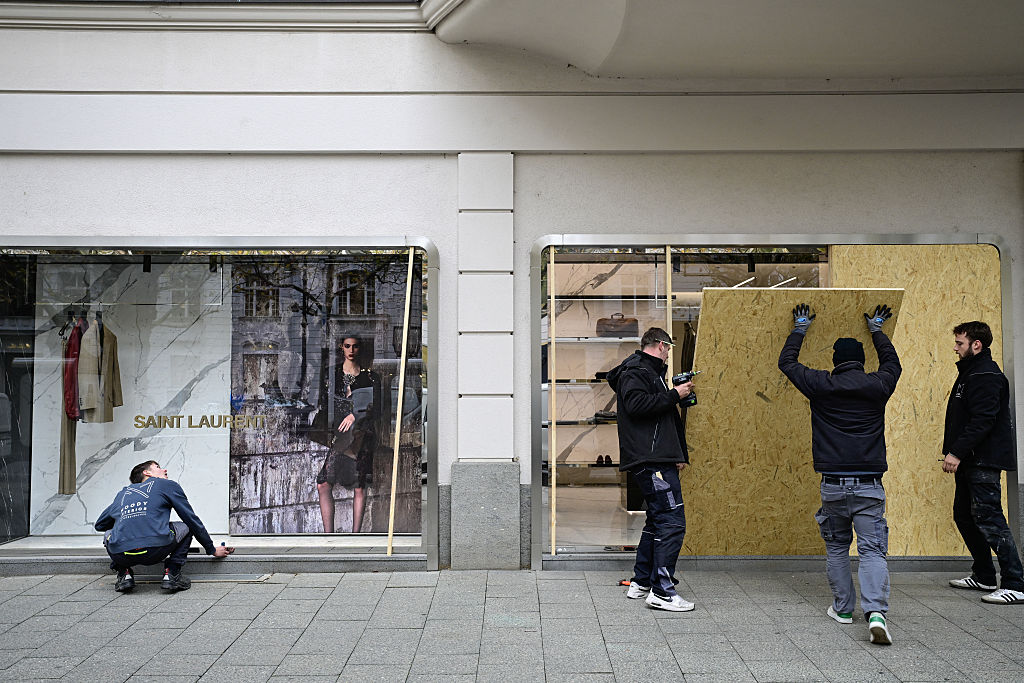
Violence included windows being smashed and the use of petrol bombs, while rocks and bottles were thrown at emergency service personnel.
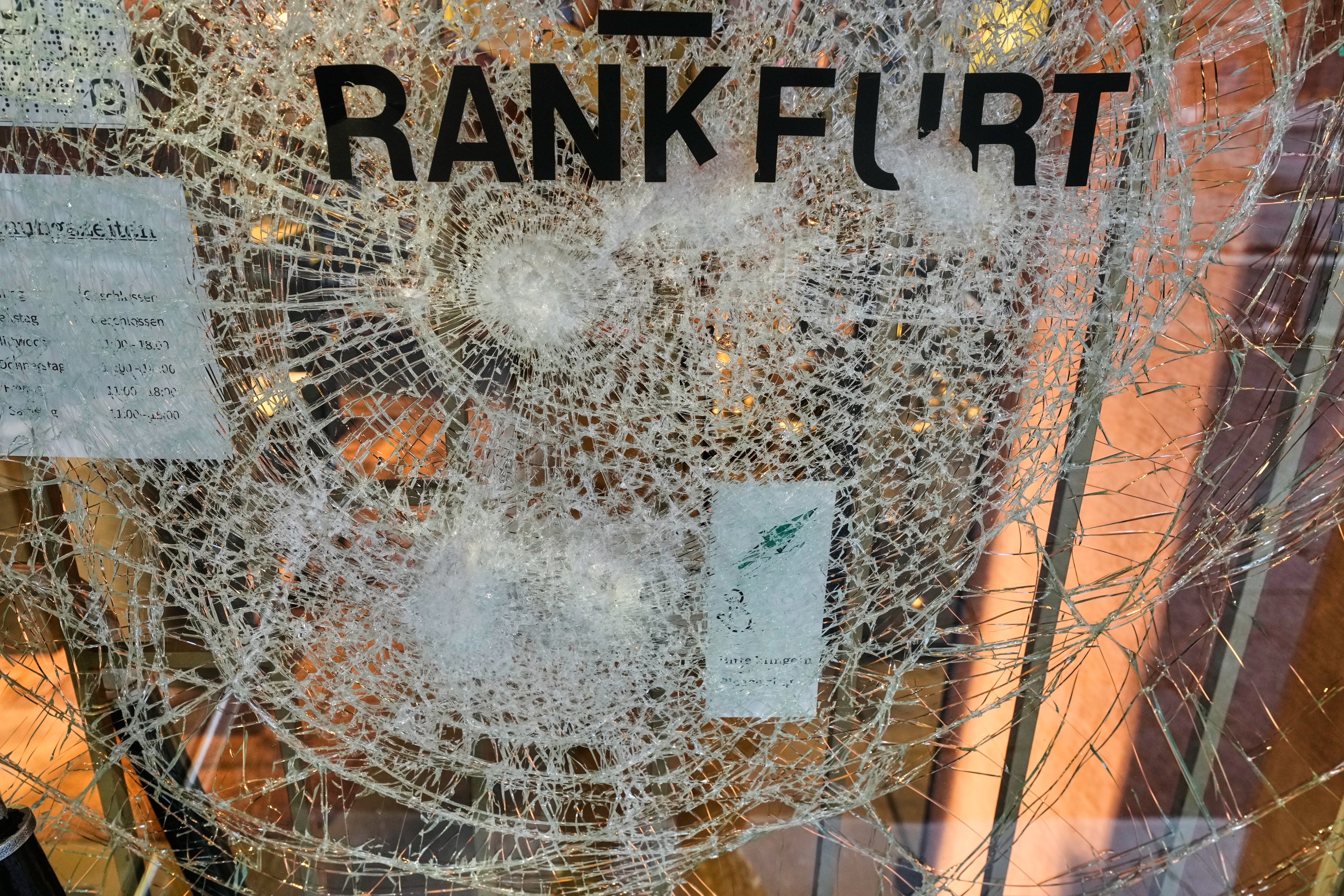 A smashed window of a jewelry store in Frankfurt, Germany, on Nov. 1, 2026. (Michael Probst/AP Photo)
He added that police deployed 1,300 officers and detained 54 people aged 13 to 29.
“Police currently estimate that they are dealing with between 1,000 and 1,500 violent troublemakers, predominantly from an immigrant background,” Poseck said. “I am shocked by what I have seen, and there is no point in sugar-coating it. Let me make this very clear: Things cannot go on like this.”
There was also violence in Cologne on Saturday night. Police used water cannons to disperse the crowd, while in Berlin, some among the crowds of demonstrators attacked police with bottles and fireworks.
In France, protests continued on Halloween for a third consecutive weekend after extensive riots and looting across several cities on Oct. 17 left the country reeling.
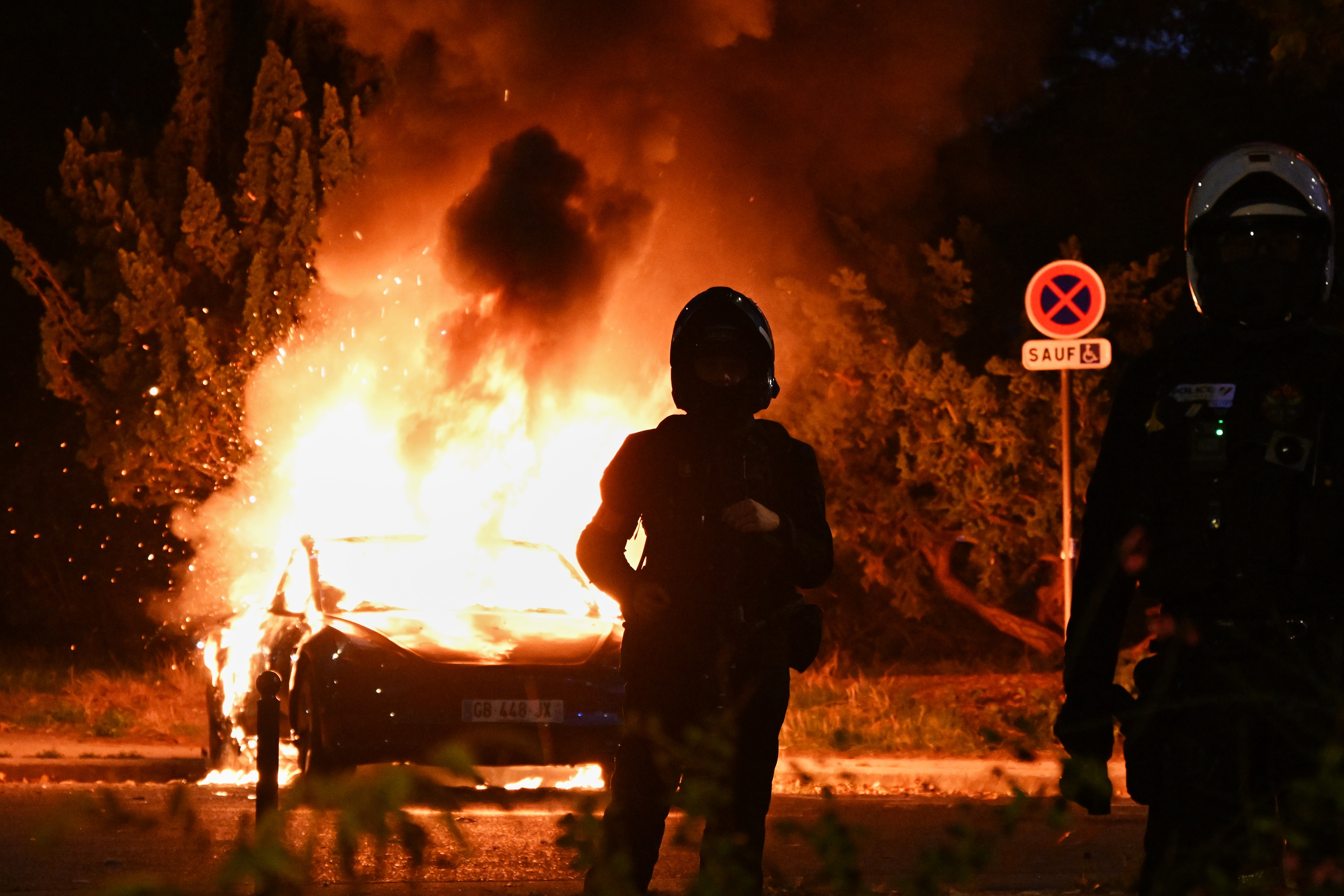 A car is on fire in Paris on Oct. 31, 2026. (Emma Da Silva/AP Photo)
Germany is governed by a coalition between the center-right Christian Democratic Union (CDU); its Bavarian sister party, the Christian Social Union (CSU); and the center-left Social Democratic Party (SPD). Chancellor Friedrich Merz, of the CDU, leads the government, which took office in May 2025.
In recent years, Germany has seen a surge in support for the populist Alternative for Deutschland (AfD), a socially conservative party that supports strict immigration controls.
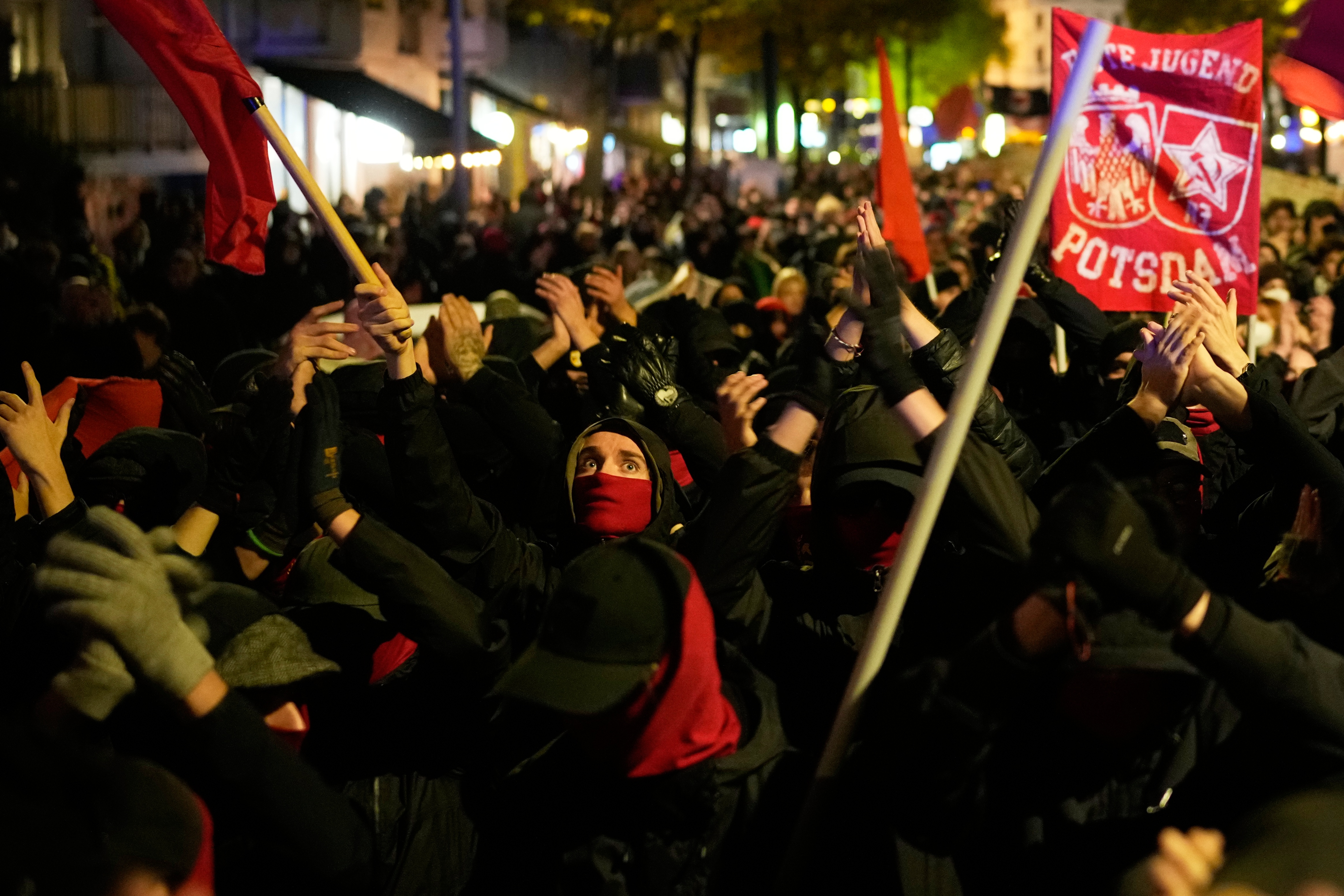 Demonstrators attend a protest organized under the slogan “Gen Z Takes Care of It” in Berlin, Germany, on Oct. 31, 2026. (Ebrahim Noroozi/AP Photo)
‘No Consequences to Fear’
The party is currently leading the national opinion polls. An INSA survey from Oct. 30 puts the populist party at 29 percent.
AfD’s co-leader Alice Weidel said in a Nov. 1 post on X that riots were a result of CDU policy that has “courted and promoted left-wing extremism for years, coupled with uncontrolled migration, in which perpetrators have no consequences to fear whatsoever.”
Weidel added: “Last night must finally have consequences—and those can only be drawn by the AfD.”
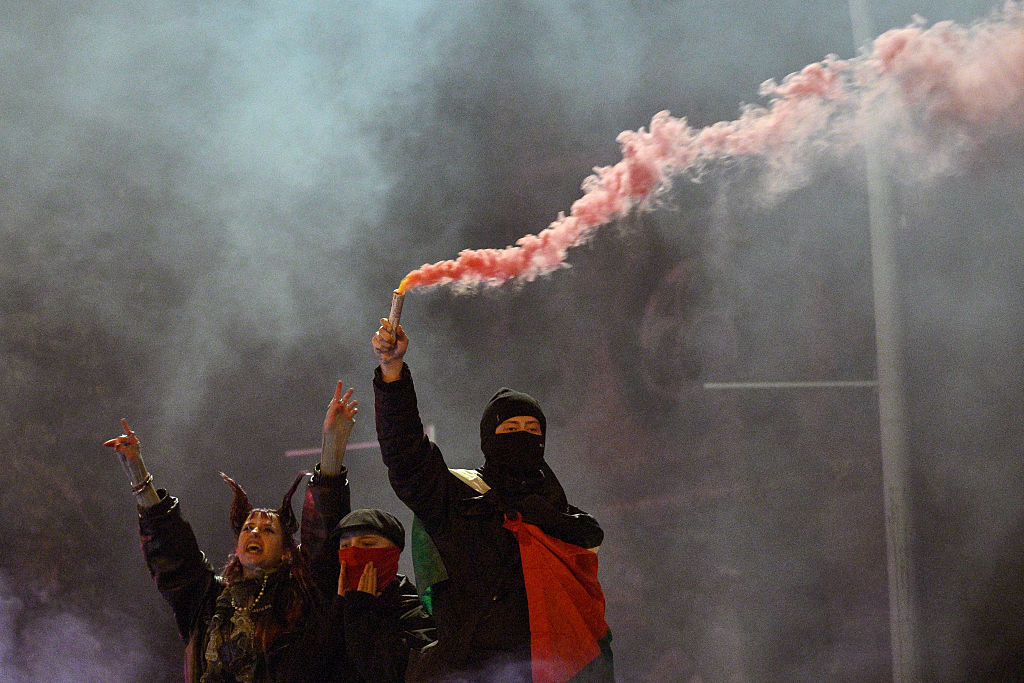 Protesters light smoke flares in Berlin on Oct. 31, 2026. (Ralf Hirschberger/AFP via Getty Images)
In prepared remarks for a CDU conference beginning on Monday, Merz stated, “Violence has no place on our streets, and my government will show no tolerance,” German public broadcaster ARD reported.
Reuters contributed to this report.