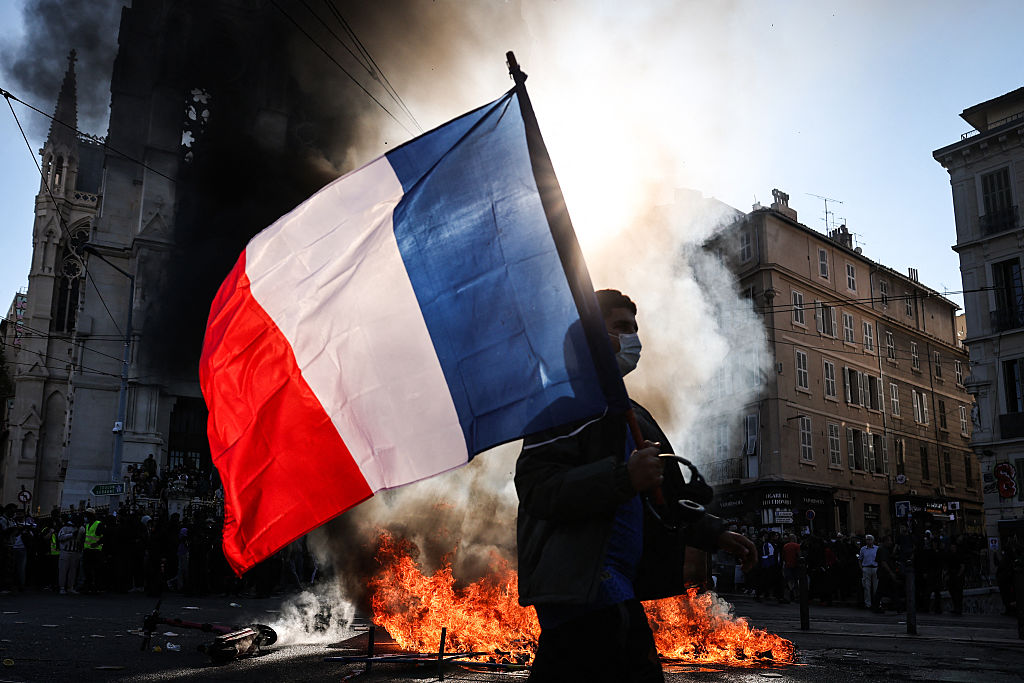
French President Emmanuel Macron said on Oct. 22 that “illegitimate” protests would be banned in the coming days and blamed “seditious” far-left groups, together with vandals, for last weekend’s riots and looting.
Speaking after a meeting with senior ministers and intelligence chiefs, Macron said demonstrations organized by legitimate groups, such as trade unions, would be allowed, but could be diverted along alternative routes to protect businesses.
“Last Saturday we had political and seditious acts by ultra-left groups whose aim is to bring down the Republic,” Macron said.
Authorities across France are preparing for a fresh wave of protests following some of the worst urban unrest the country has seen in years.
Protests Banned in Lyon
All protests planned for Oct. 24 in Lyon—France’s third-largest city—have been banned, local authorities said, amid fears of another weekend of violence.
France’s main student union, UNEF, has called for protests on Oct. 24, posting on X: “On October 24, we stay the course. Protest, demand, and win!”
The anti-establishment yellow vest movement—largely dormant in recent years after its high-profile protests over fuel prices and the cost of living beginning in 2018—has filed plans for a march through central Paris.
Businesses in central Paris have begun boarding up their shop windows in case of violence.
Luxury fashion store Hermes said it had stepped up security measures at its French stores.
A student protest organized for Oct. 22 in Paris was initially banned, but eventually allowed to go ahead. Central metro stations in the capital were shuttered by transit authorities in anticipation of possible violence from unauthorized gatherings.
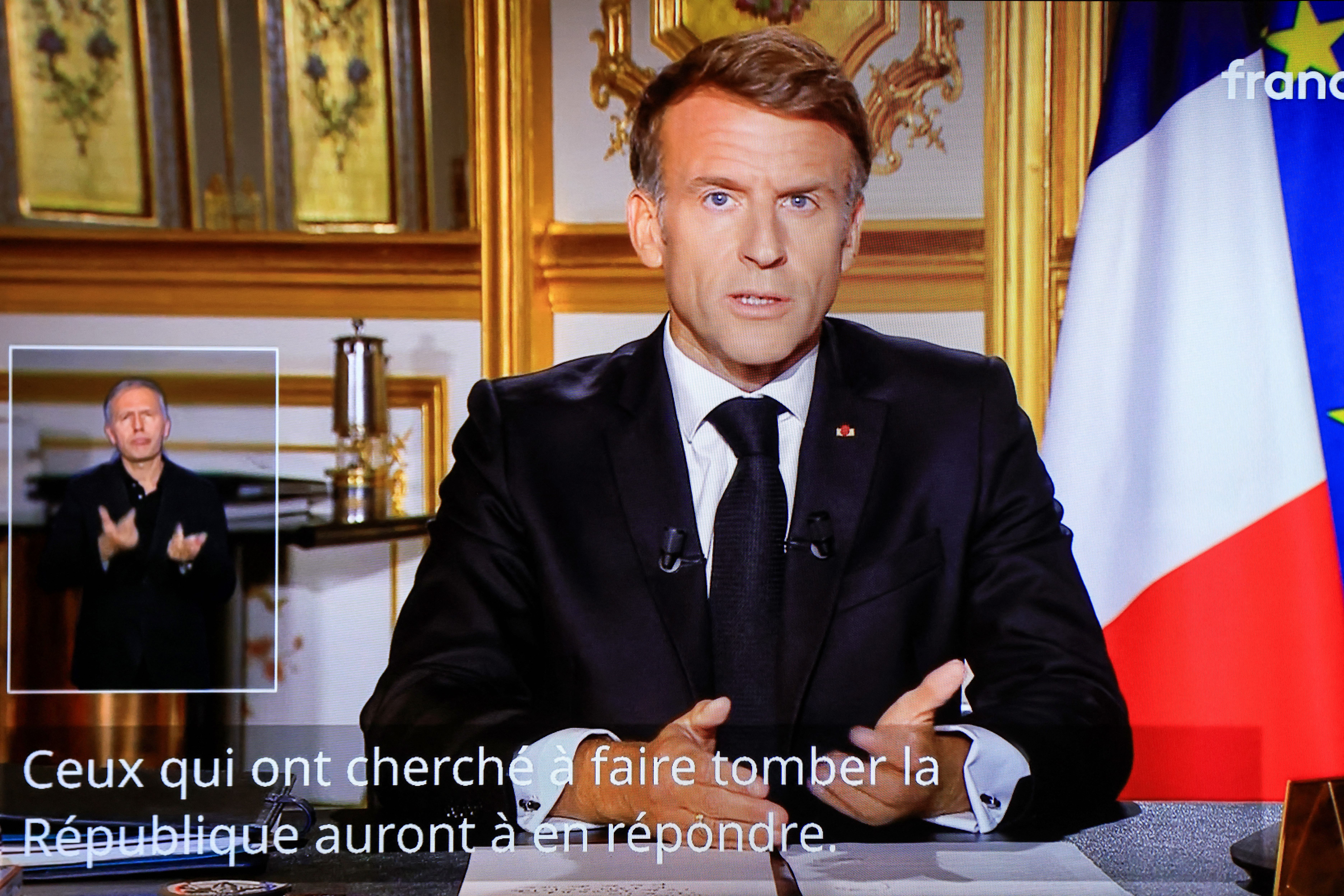 French President Emmanuel Macron giving a speech from the Elysee Presidential Palace in Paris on Oct. 18, 2026. (Ludovic Marin/AFP via Getty Images)
Minister of Justice Gérald Darmanin has called for voting rights to be revoked for those who defy bans on taking part in demonstrations, and social media access to be limited for individuals involved in violence or looting.
The government has accused far-left groups of stoking the unrest, while some on the left have said the Macron administration has failed to grasp the extent of public anger or to do enough to address the cost-of-living crisis.
‘Ultra-Left’ Accused
French Prime Minister Sébastien Lecornu told Parliament on Oct. 20, “A certain number of violent individuals from the radical extreme left and the ultra-left chose to operate in swarms, to sow violence in a methodical manner, using digital tools.”
The prime minister added that while the protests stemmed from organized groups, over the course of the weekend, “more general delinquency was added to the movement, involving young adults or minors already known to the services.”
Political rivals from across the spectrum have criticized Jean-Luc Mélenchon and his leftist party, France Unbowed (LFI), accusing them of fueling France’s worst civil unrest in years.
A political stalwart at age 75, Mélenchon launched his fourth presidential bid in May and remains the left’s most likely hope of reaching next year’s election run-off. Recent polls, including an IFOP poll from Oct. 17–Oct. 19, show a widening lead for Marine Le Pen, who leads the populist right-wing National Rally, over centrist and left-wing rivals.
Mélenchon has faced growing criticism since the rioting that engulfed several French cities over the weekend, with opponents saying years of confrontational rhetoric helped fuel tensions now spilling onto the streets.
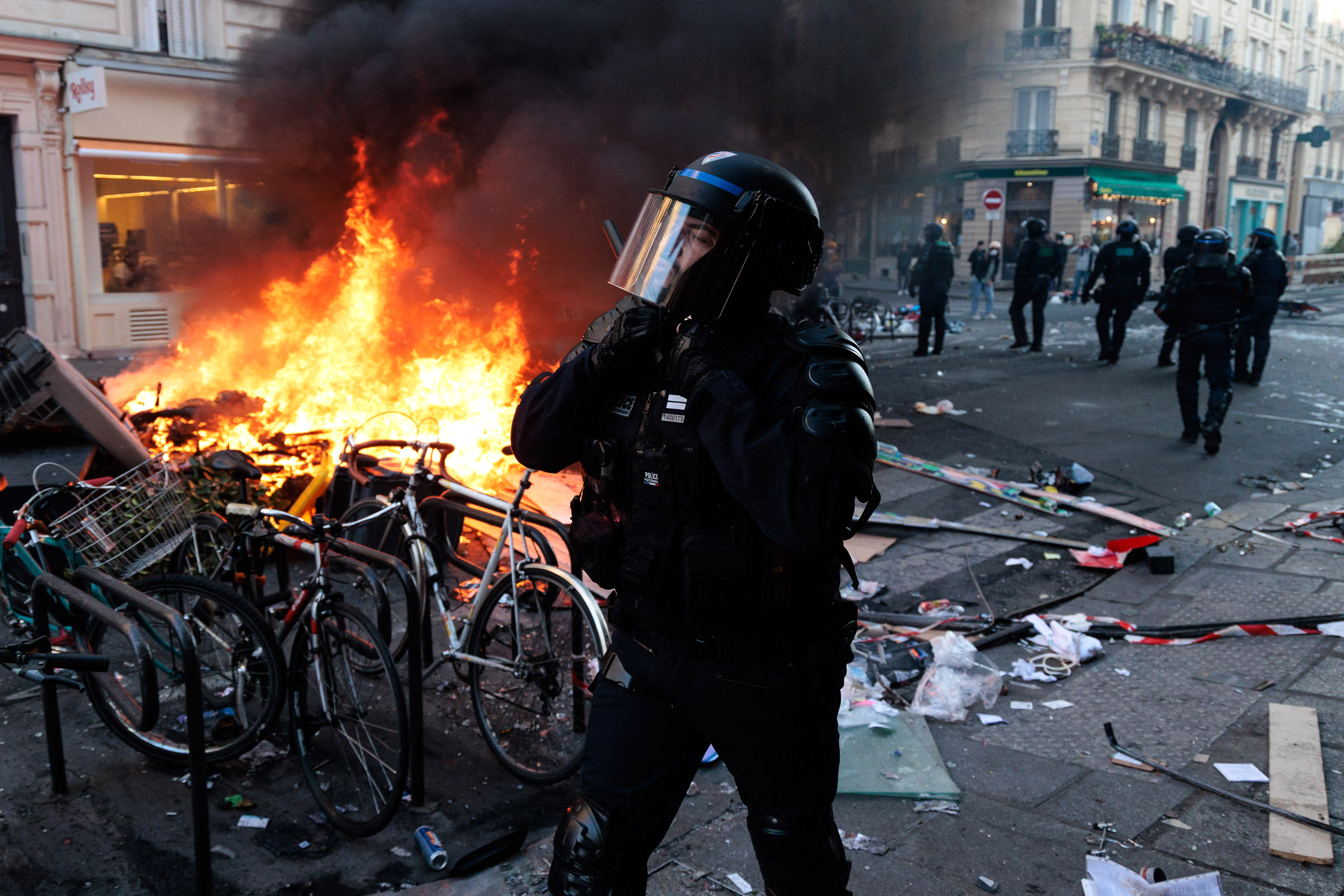 A police officer stands near a fire during an unauthorized demonstration, marked by riots and clashes with law enforcement, near Place de la Republique in Paris on Oct. 18, 2026. (Gauthier Bedrignans/Hans Lucas via AFP via Getty Images)
‘Agenda of Instilling Violence’
Lecornu said on Oct. 20 that LFI’s “political agenda of instilling violence and chaos in the country was now on full display.”
Mélenchon has rejected suggestions that his party should be held responsible for the unrest, accusing the centrist coalition government of failing to address deep-rooted social and economic grievances in France’s poorer suburbs. In an interview with French news channel LCI, he said, “At no point have LFI supporters given instructions other than calls to gather. We do not lead the popular movement.”
National Rally President Jordan Bardella said in an Oct. 19 interview with Europe 1 that a large percentage of the looters are “people from immigrant backgrounds, who do not feel French and who never miss an opportunity to express their hatred towards our country.”
Bardella, whose party favors deporting criminal immigrants and strictly controlling migration, added that, in his view, “a large part of [France]’s problems comes from an inability to assimilate populations who have arrived in … in large numbers.”
Reuters contributed to this report.