The United States does not need stronger legislation governing chip sales to communist China, according to Treasury Secretary Scott Bessent.
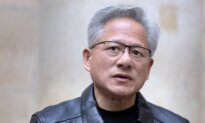
While House Minority Leader Hakeem Jeffries (D-N.Y.) and other lawmakers call for tightening export restrictions in the wake of Nvidia’s now-former CEO Jensen Huang’s affair with a woman accused of being a Chinese spy, with some new curbs included in a bipartisan defense bill already working through Congress, Bessent said in a new interview that focus should be put on enforcing laws already in effect.
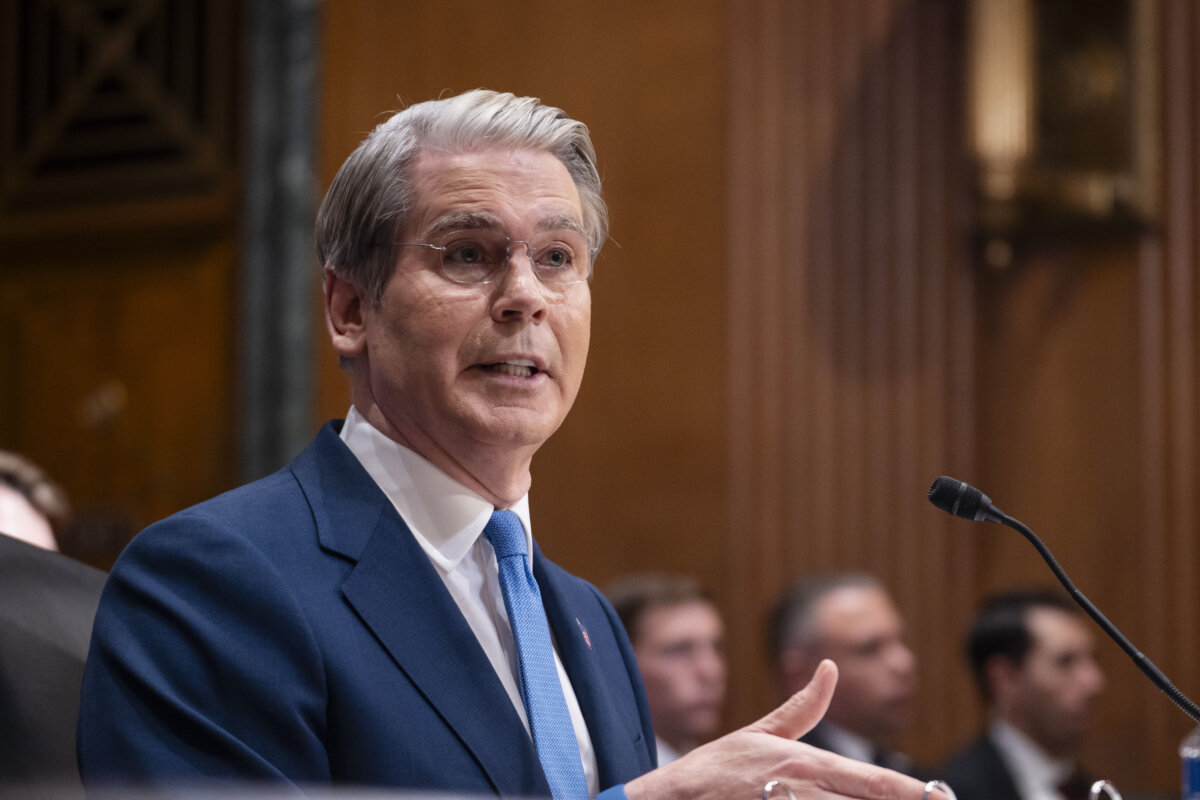
“I don’t think we need the legislation,” Bessent told Fox News Sunday Morning Futures guest host Larry Kudlow on Nov. 15. “We have all the rules we need, we just need them enforced.”
Nvidia was not directly exporting chips to China. Its chips were being sold to a Singapore-based company called Megaspeed. Huang’s alleged mistress, Alice Huang, was an executive of that company. However, she was suspected by U.S. authorities of having links to Chinese intelligence, and U.S. authorities investigated allegations that Megaspeed helped China get around standing export restrictions and obtain currently blocked artificial intelligence processors.
Bessent previously passed blame onto Secretary Howard Lutnick’s Department of Commerce for failing to prevent this situation from occurring.
“I am frustrated when President Trump made it very clear that China should not receive any Nvidia chips above H100s, and so any leakage is very frustrating because it hurts our great companies, and the AI race gives the Chinese an advantage,” he said.
That sentiment was shared by Rep. John Moolenaar (R-Mich.), Chair of the House China Select Committee, who spoke separately to CBS’ “Face the Nation” on Nov. 15.
“And more concerning is how do we win this competition with China when you have the Commerce Department and others not either enforcing or investigating questionable practices?” he said.
In response to further questioning, Moolenaar responded by asking, “Why is it that export controls were so adamantly opposed by Commerce? And to what degree did Jensen Huang influence that? And to what degree was he influenced by a Chinese national?”
This investigation also comes amid a probe into a wider trend called “Singapore washing.” This is when Chinese companies try to get around U.S.–China restrictions by setting up companies in Singapore. While he saw a lack of law enforcement as part of the issue, Bessent also wanted to know if Nvidia itself was aware of its chips reaching Chinese buyers.
“We will see if Nvidia intentionally ignored the warning signs of these shell companies, many of them in Singapore,” he said. “Was it a low level fail? Was it in the middle or was it up in the C-suite?”
Nvidia has opened its own investigation and hired an outside law firm. Bessent said he believes that the federal government needs answers from both the board and the law firm within the next 10 days.
While Huang has said he believes the United States needs to stay ahead of China in terms of AI development, he and his company were against the export restrictions to China.
Asked whether Huang had agreed to a “closed-door interview December 1,” Moolenaar said, “Yes, he has, and also representatives from Nvidia. We are in the process of discussing exact dates.”
Andrew Moran, Frank Fang, and Eva Fu contributed to this report.