
The upcoming Contemporary Era Committee vote by the National Baseball Hall of Fame is a reminder that managers, executives, and umpires are important to the game, too.
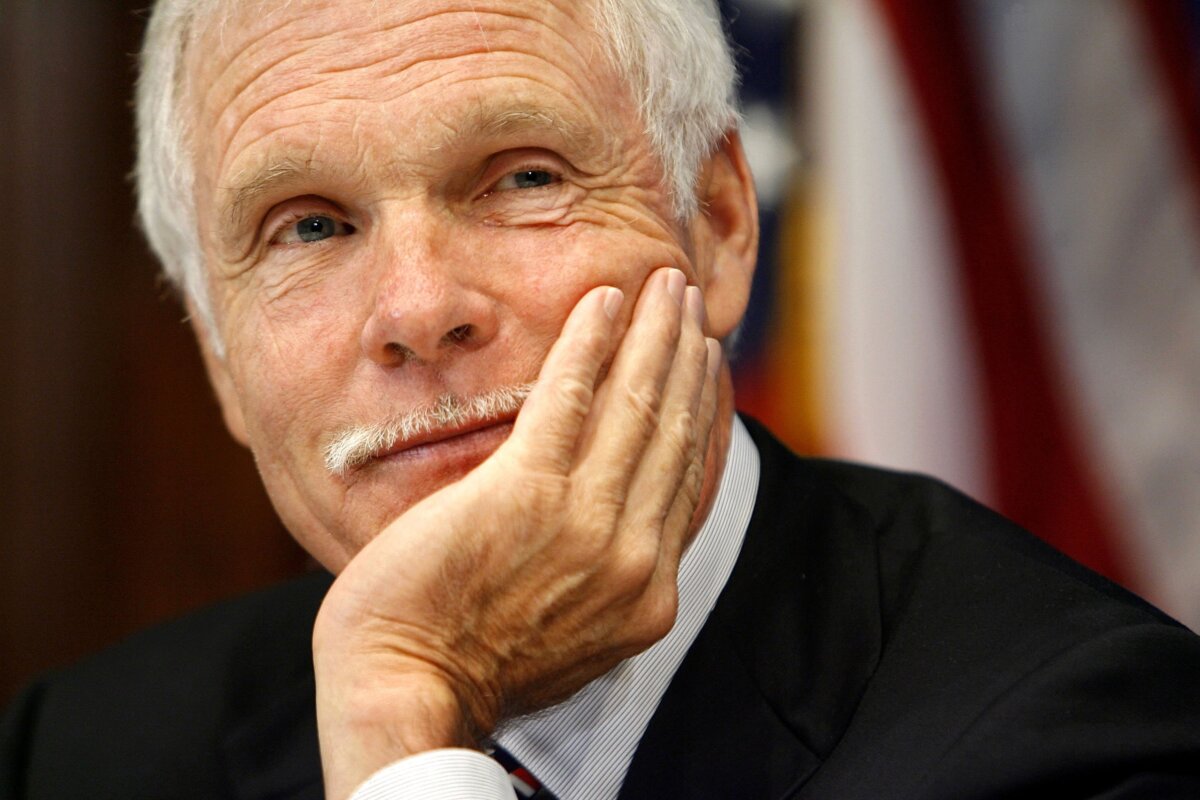
Ted Turner, the former Atlanta Braves owner, is among the eight candidates up for a vote on Dec. 6 in San Diego by the 16-member Hall of Fame Board-appointed electorate.
After the committee meets and reviews the candidacies of the finalists, the results will be announced live on MLB Network’s “MLB Tonight” that same night at 8 p.m. EST.
Turner, who died in May, owned the National League club from January 1976 to October 1996.
At the time of purchasing the Braves for $10 million, Turner owned a UHF TV station in Atlanta. The Braves became the focal programming for WTCG Channel 17 (later to become SuperStation WTBS).
It was in 1976 that Turner began having his Channel 17 beamed to a satellite and relayed to TV cable systems across the United States.
Few people were as close to Turner in the everyday operations of the Braves in his early years of owning the club as Bob E. Hope.
Beginning his affiliation with the club as a stadium usher, Hope became a confidante and friend Turner relied on in growing the Braves’ brand. He would serve as a vice president and director of public relations and promotions under Turner.
“He was a colorful character and a refreshing voice when baseball was very conservative,” Hope told The Epoch Times on Wednesday. “There were a lot of things he did that were innovative, even if they were almost considered outrageous at the time. Ted was an entertainer and a promoter.”
Hope remembers brainstorming ideas with Turner on how to bring fans into Atlanta-Fulton County Stadium, in hopes of keeping their attention through some unsuccessful Braves seasons.
Everything was on the table, from ostrich races to 34 couples getting married at a mass home plate ceremony dubbed “Headlocks and Wedlocks.”
After the ceremony, an on-field professional wrestling show was presented. According to Hope, his boss was game for anything that would get fans talking about the Braves.
During the summer of 1976, as the Olympics were taking place in Montreal, Hope orchestrated an Olympian event between the Braves and the visiting Philadelphia Phillies.
“We decided to have a baseball Olympics. Ted was all in on this. It was a race where we had a Phillies player start at first base and a Braves player at third base. They had to push a baseball with their nose to home plate. The players [Braves] said no to this. I called Ted to come down from the press box and help us out,” Hope said.
As it turned out, Turner, always the showman, took Hope’s advice and filled in to race against the Phillies Tug McGraw. Turner put on his Braves uniform (he kept a locker in the clubhouse) and pushed the baseball, while on his hands and knees, toward home plate. Fueled by his competitive nature, Turner was determined to win.
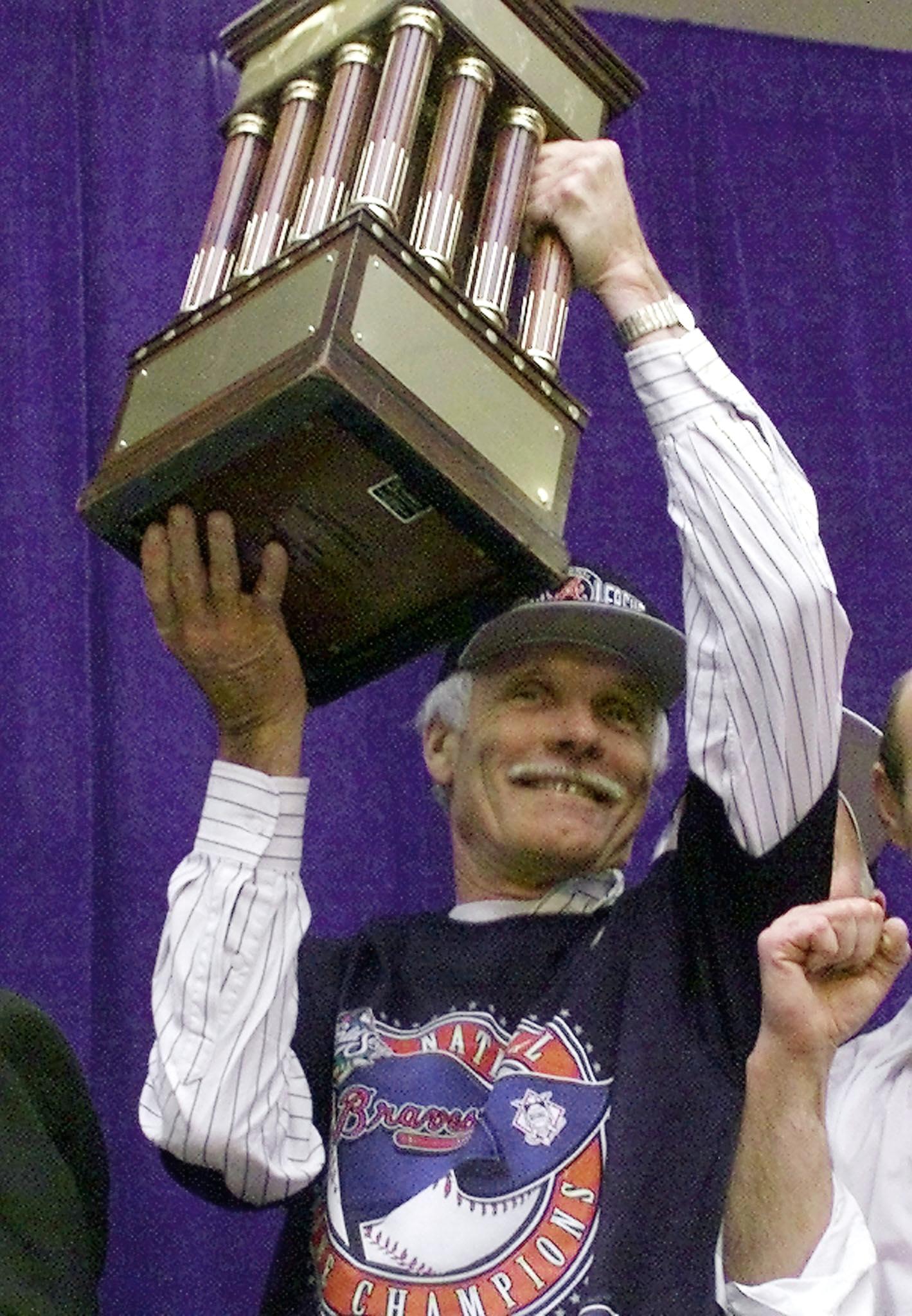 Ted Turner of the Atlanta Braves holds the National League Championship trophy in the locker room after their 11th-inning 10–9 victory over the New York Mets in game 6 of the National League Championship Series at Turner Field in Atlanta, Ga., in 1999. (Steve Schaefer/AFP via Getty Images)
“Ted showed that baseball was entertainment,” Hope said. “His charisma made him the ‘Charlie Hustle’ of owners.”
Turner’s biggest impact was his TV SuperStation, as Hope sees his former boss’s biggest contribution to baseball.
The Braves were seen in communities nightly, through their cable systems on WTBS, that hadn’t before seen MLB broadcasts on a regular basis.
Hope believes this did more to engage the country in baseball than anything done before.
“When Ted bought the Braves, he really didn’t have much money, so he knew that he wasn’t going to have a good team. We used to say, ‘Keep the smoke going until the fire goes out,’” Hope explained.
“When he got the team, it was like buying a house. They gave him a mortgage. Ted had $2 million in the bank when he bought the Braves.”
By all accounts, as Hope recalls, Turner liked his players. When he purchased the Braves, Turner wasn’t much of a baseball fan. He was a television programmer who found content on the baseball field.
Being one of the guys seemed important and came naturally to the Braves owner. He dressed with the players and often showered with them.
“Ted marched to his own drummer,” Hope sums up his former boss.
In 1977, during a lengthy Braves losing streak, Turner benched Braves’ skipper Dave Bristol and filled in for one game as the club’s manager.
“For all the imagery Ted had for being a self-promoter, you don’t see his name on anything. He gave away billions of dollars over his lifetime and kept it quiet. His connecting television and baseball, I believe, is enough to get Ted into the Hall of Fame,” Hope said.