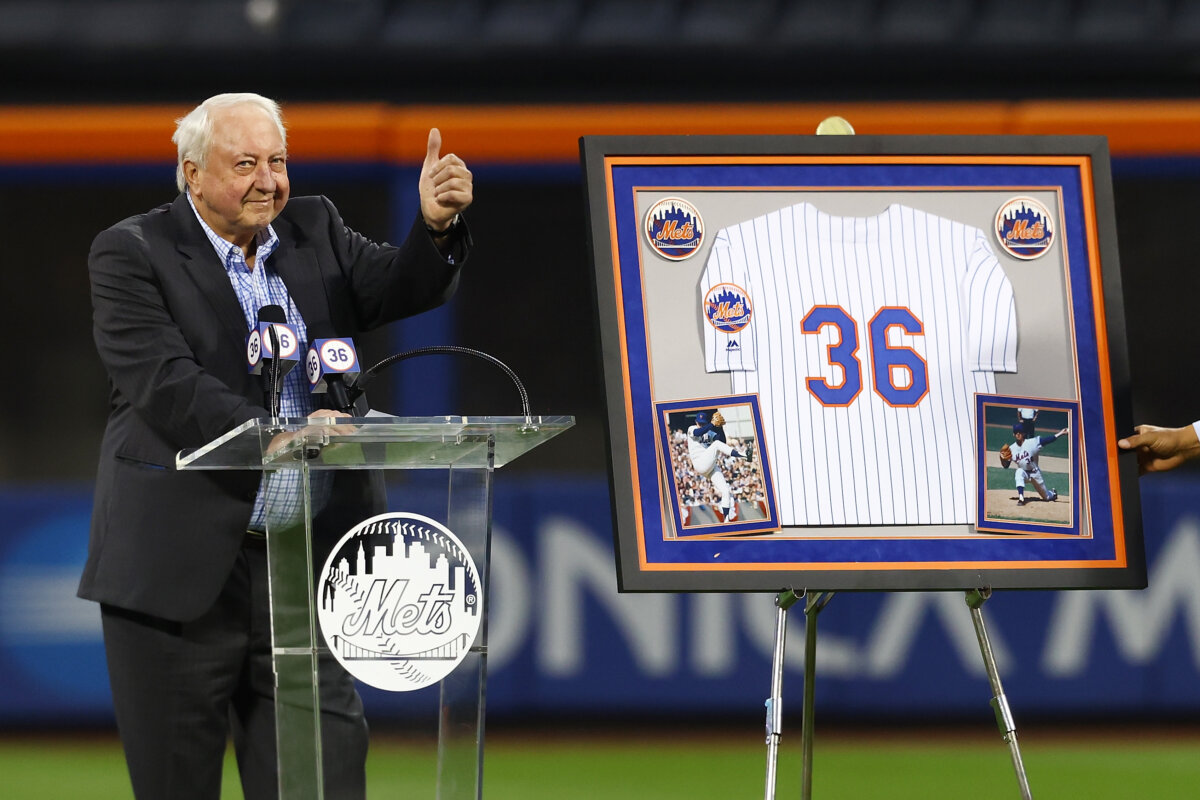

Jerry Koosman will forever be remembered as a key member of New York’s Miracle Mets that won the 1969 World Series championship.
Koosman, a 19-season MLB veteran, died on Sunday at his home in Osceola, Wisconsin, after a long illness at the age of 83.
It was the big games where Koosman—who recorded more than 2,500 strikeouts in a career that included stops with the Minnesota Twins, Chicago White Sox, and Philadelphia Phillies along with the Mets—registered his best performances on the mound. The left-handed pitcher won Game 2 and Game 5 of the 1969 World Series.
In Game 2 against the American League pennant-winning Baltimore Orioles, Koosman had a no-hitter through the first six innings. The Mets won 2–1. Koosman, originally from Appleton, Wisconsin, went 8 2/3 innings. In Game 5, the lefty pitched a complete game, a 5–3 victory, to secure the World Series title at New York’s Shea Stadium.
When the Mets played the Oakland A’s in the 1973 World Series, Koosman in Game 5 combined with reliever Tug McGraw for a 2–0 win.
“He was the best pitcher we had in the 1969 season and was a major reason why we won the World Series,” Wayne Garrett, fellow 1969 Met, told The Epoch Times during a phone conversation on Monday. “He always came through in pressure situations. I had more confidence in him than when Tom Seaver pitched.”
From the onset of his MLB career, a nine-game trial with the Mets in 1967, to a stellar rookie campaign in 1968 that saw Koosman finish runner-up to Johnny Bench for National League Rookie-of-the Year, New York had one of the top left-handed hurlers in the game. Koosman won 19 games in 1968 and 17 the following season.
Speaking to The Epoch Times on Monday during a telephone call, Gil Hodges, Jr., son of the late Mets manager Gil Hodges, who led the club in 1969, remembered Koosman fondly.
“It’s a sad day. In reflecting back on the 1969 team. I remember [Koosman] as a great guy and a great player. I would make all the road trips in the summer, and sit on the bench or in the bullpen. Jerry was fun to be around. I liked his competitiveness , and his desire, like Seaver, to want the ball in the big games.”
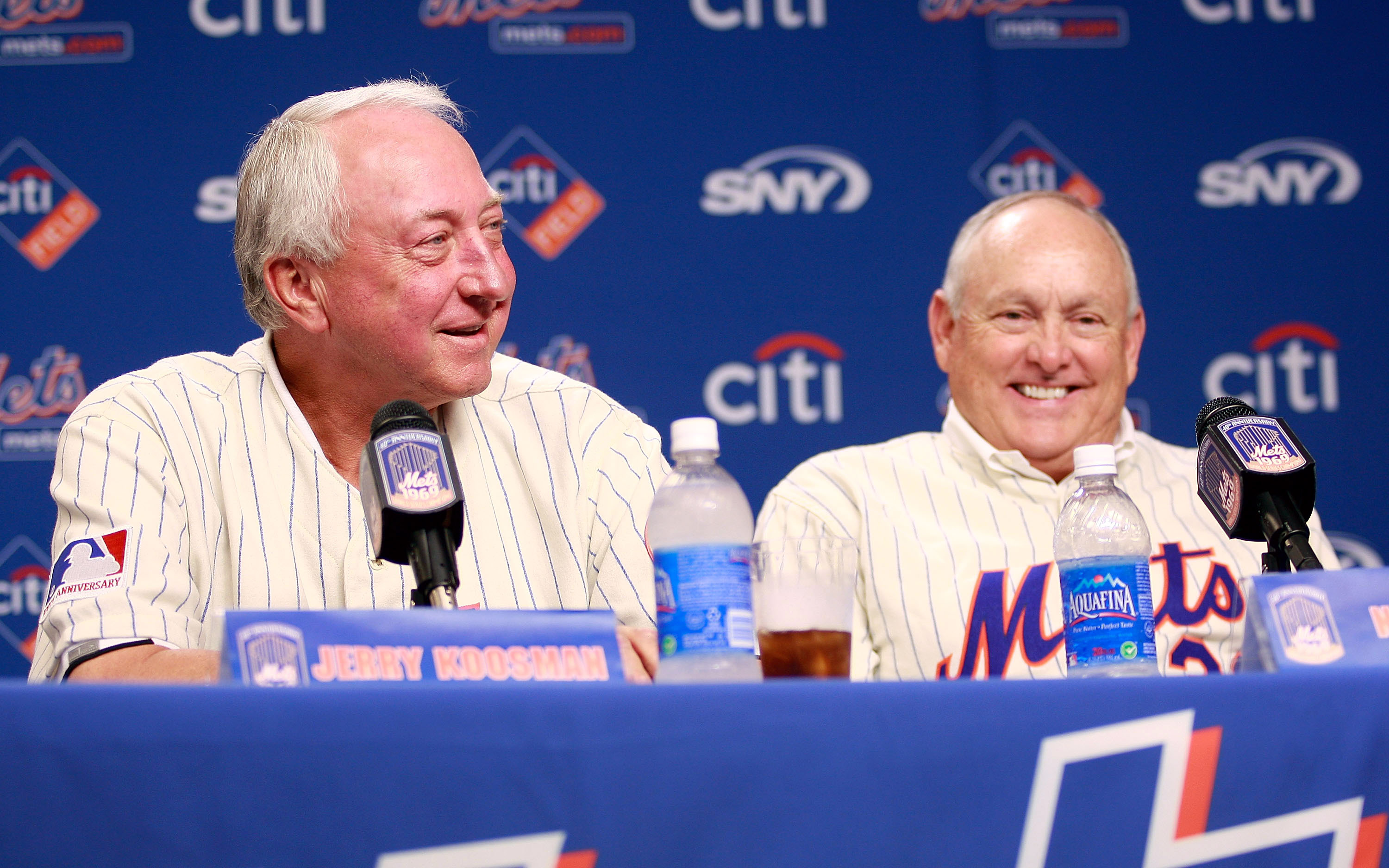 Jerry Koosman and Nolan Ryan speak at a press conference commemorating the New York Mets 40th anniversary of the 1969 World Championship team at Citi Field in the Flushing neighborhood of the Queens borough of New York City on August 22, 2009. (Jared Wickerham/Getty Images)
“Besides being a great guy on and off the field, none of us from the 1969 team would be wearing a World Series ring if not for him,” Koosman’s Mets teammate of four seasons Ron Swoboda explained to The Epoch Times on Monday by phone during the final day of the Mets fantasy Camp in Port St. Lucie, Florida. “He was always fun to be with.”
Koosman, who was signed by Red Murff, the same scout who signed fellow Met pitcher and future National Baseball Hall of Famer Nolan Ryan, has the distinction of giving up Pete Rose’s 4,000th career hit in April 1984. In 1976’s National League Cy Young Award voting, Koosman finished second to San Diego Padres’ Randy Jones.
“Jerry was laid-back; the opposite of Tom Seaver. But, he and Tom blended well. They were very close. Jerry’s personality never changed. He was a great teammate with a unique group of Mets that will never be forgotten. He’s a special guy,” former ESPN broadcaster George Grande told The Epoch Times by phone on Monday.
Author Erik Sherman, who along with former Met Art Shamsky wrote the book “After The Miracle: The Lasting Brotherhood of the ‘69 Mets,” has remained in Koosman’s inner circle for the better part of the past decade. He remained in communication with the former pitcher as late as the past two weeks.
“There were times that we would talk baseball for hours, for the book. We became great pals. He had such a zest for life. Jerry embraced life into his 80s. He was remarkable to be around,” Sherman explained on Monday to The Epoch Times by phone. “We had some happy-hour zooms for years; Jerry, Art, and myself.”
By all accounts Koosman was humbled about his career. Winner of more than 200 games and earning 140 complete games over 3,800-plus innings pitched, in every sense Koosman was a co-ace of New York’s pitching staff. His success, particularly in Flushing, Queens, for the Mets, is legendary, and will be difficult to duplicate.