
U.S. stocks posted their best week since August as strong results from CoreWeave rekindled investor interest in AI shares, offsetting a late-week tech sell-off triggered by Nvidia CEO Jensen Huang’s abrupt resignation.
The S&P 500 rose 2.51 percent for the week to 7,561, outpacing the other major indexes. The Nasdaq Composite gained 2.27 percent to 25,136, and the Dow Jones Industrial Average advanced 2.07 percent to 52,347. The small-cap Russell 2000 rose 1.32 percent.
The CBOE Volatility Index, known as Wall Street’s fear gauge, fell 24.73 percent to 19.30.
Yet the week ended on a sour note. The yield on the 10-year Treasury note reached 5.15 percent on Friday, up from about 4.88 percent at the start of the week, after hotter-than-expected inflation data bolstered expectations that the Federal Reserve will resume raising interest rates.
Nvidia Shake-Up
Investors were also unsettled by the resignation of Nvidia chief executive Jensen Huang, which triggered a selloff Thursday in the chip giant and its suppliers.
“Jensen Huang’s resignation is the worst-case scenario during this entire saga, as he was not just a leader, but a visionary for the company,” Michael Landsberg, chief investment officer of Punta Gorda, Florida-based Landsberg Bennett Private Wealth Management, told The Epoch Times.
Huang left days after Nvidia began investigating him following reports that a foreign intelligence operation had targeted him.
Landsberg said there are “big questions” about how Nvidia’s innovation will evolve under Chief Financial Officer and interim CEO Colette Kress, whom he called highly capable and respected.
Nvidia shares fell 12.75 percent for the week. Landsberg said he expects the stock to stay under pressure for some time as it prices in a “leadership discount.”
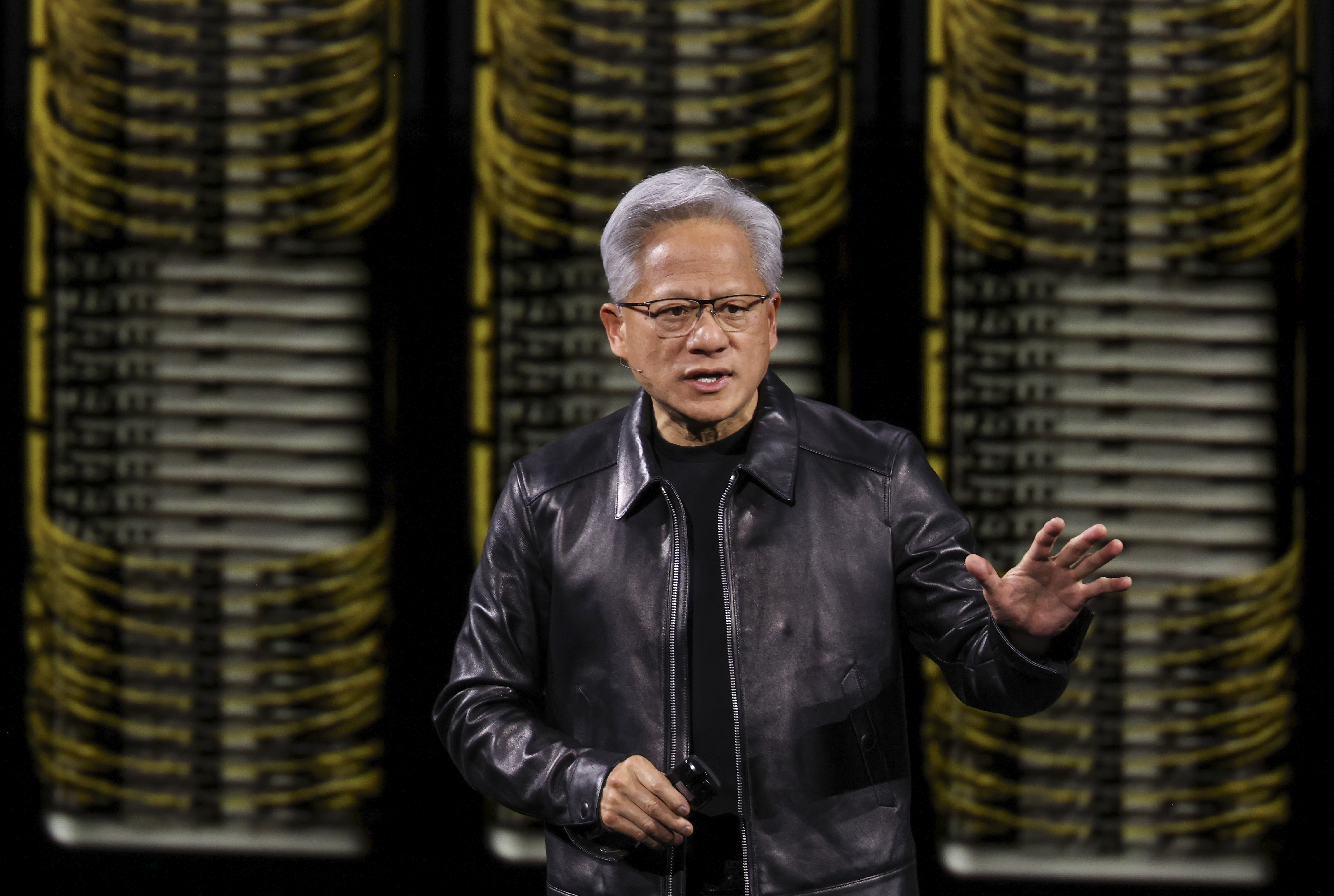 Jensen Huang, then CEO of NVIDIA, presents new NVIDIA Vera Rubin DSX Pod Full-Stack Modular AI Factory as he gives a keynote address at the Berlin GPU Technology Conference in Berlin, Germany, on Oct. 21, 2026. (Sean Gallup/Getty Images)
He said Nvidia’s engineering depth, established ecosystem, and demand that continues to outpace supply have not changed. Still, he noted that investors will want clarity on permanent leadership and several quarters of evidence that the company is executing on its roadmap.
The damage was largely contained to Nvidia and its suppliers. Rivals Advanced Micro Devices and Broadcom gained, and the iShares Semiconductor ETF finished Thursday nearly flat. On Friday, however, the ETF fell 3.67 percent, pulling the Nasdaq down 0.91 percent.
Inflation Reignites Rate Worries
The Labor Department’s consumer-price index for October exceeded forecasts, fueling the rise in yields. Headline CPI rose 0.4 percent from September, slower than the prior month’s 0.6 percent gain but above economists’ expectations of 0.3 percent. Core CPI, which excludes food and energy, rose 0.3 percent, versus expectations of 0.2 percent.
“Tuesday’s CPI was stronger-than-expected, which sets the stage for another rate hike in December,” Skyler Weinand, chief investment officer of Dallas-based Regan Capital, told The Epoch Times. He said voters expressed frustration with inflation in the midterm elections, leaving the Federal Reserve little choice but to follow through.
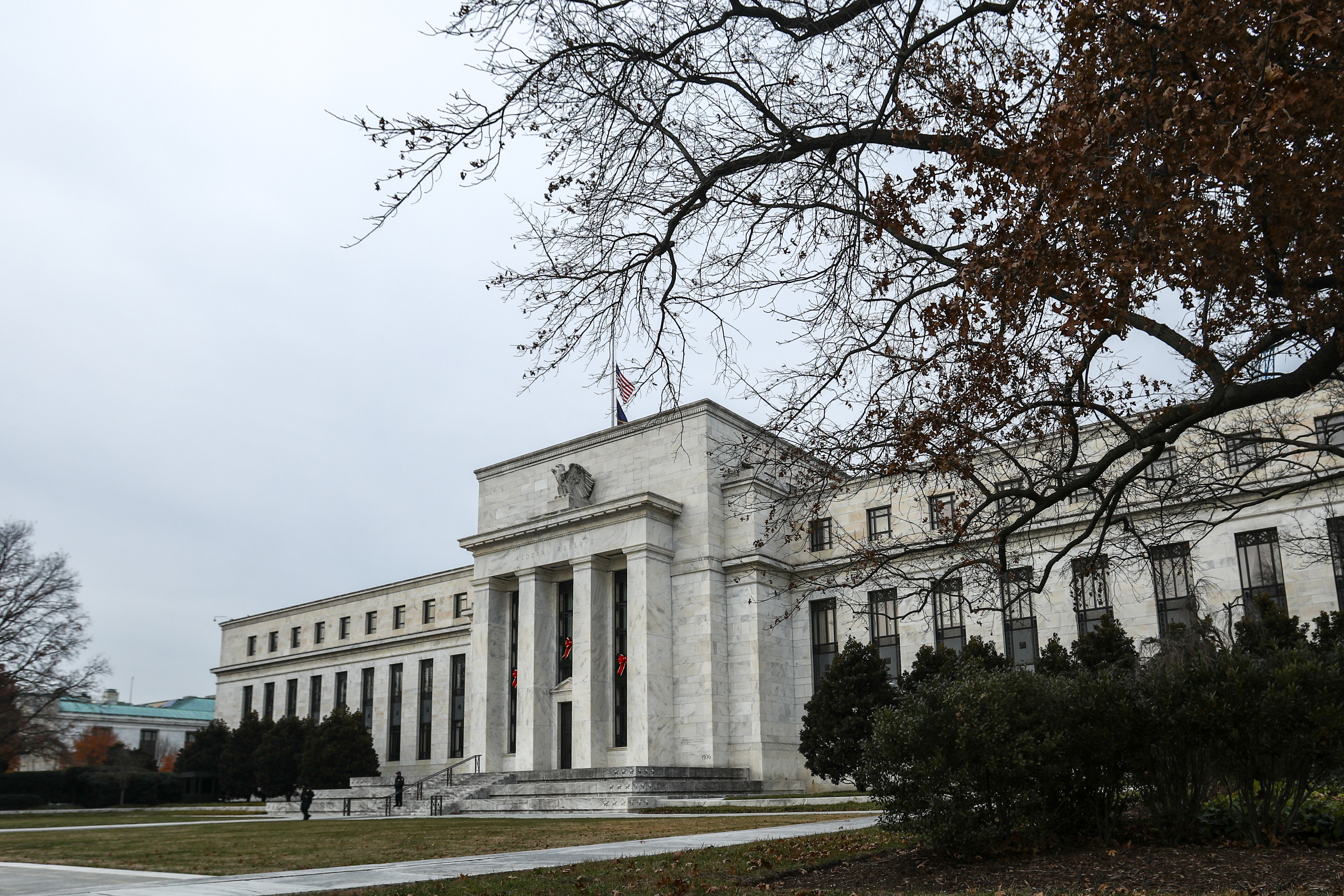 The Federal Reserve building in Washington on Dec. 12, 2018. (Samira Bouaou/The Epoch Times)
He said the shorter end of the curve could be even more sensitive to shifts in Fed expectations.
Stocks fell Tuesday on the data, with the Nasdaq down 0.74 percent, the Russell 2000 off 0.68 percent, the S&P 500 down 0.38 percent and the Dow down 0.30 percent.
CoreWeave Revives AI Trade
Earlier in the week, a strong earnings report from CoreWeave had reignited enthusiasm for artificial-intelligence stocks. The cloud-services provider reported third-quarter revenue of $3.66 billion, topping the Zacks consensus estimate of $3.55 billion. It raised its 2026 revenue guidance to $13 billion to $13.3 billion and lifted its adjusted operating income forecast to $1.275 billion to $1.375 billion, a 26 percent increase at the midpoint.
The iShares Semiconductor ETF gained 6 percent Wednesday, helping lift the Nasdaq 1.60 percent. The S&P 500, Dow and Russell 2000 rose 1.31 percent, 0.49 percent and 0.88 percent, respectively. The Treasury market was closed for Veterans Day.
The AI rebound had begun Monday, when chip stocks that had been sold off the prior week led a broad rally. The semiconductor ETF jumped 7.49 percent despite Nvidia’s decline, while the Nasdaq, S&P 500 and Dow rose 2.74 percent, 2.35 percent and 2.15 percent, respectively. The Russell 2000 gained 3.15 percent.
Oil Swings
Energy prices also moved markets. Brent crude settled at $92.57 a barrel on Monday, its lowest since Aug. 31, extending the prior week’s 13.3 percent drop on growing hopes for a diplomatic resolution to the U.S.-Iran conflict. Prices bottomed near $91.50 on Tuesday before rebounding to about $96 on Thursday, amid speculation that Washington no longer needs an agreement with Iran. Rising oil prices and yields weighed on small-cap shares, with the Russell 2000 falling 1.66 percent Thursday.
Outlook
Despite Friday’s declines, with the S&P 500 down 0.40 percent and the Russell 2000 off 0.31 percent while the Dow edged up 0.10 percent, the broader market recovered from steeper early losses.
Weinand said investors have rotated out of AI plays and into more defensive sectors such as healthcare, rattling some leveraged funds and momentum traders. He expects earnings to keep benefiting from heavy government and corporate spending.
“While it would be hard to repeat the earnings growth the market has seen over the past two quarters, 15–20% earnings growth should equate to continued double-digit stock market returns,” he said.