SEARCH


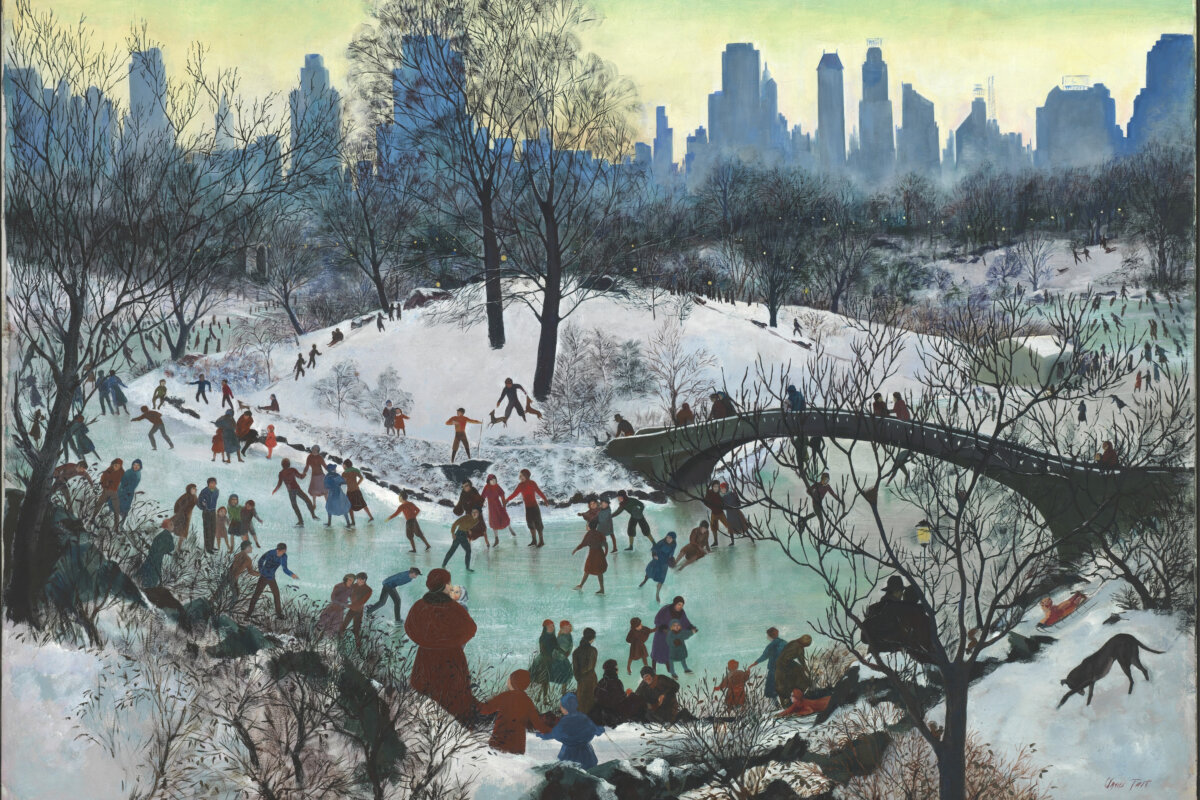
December is a month of strange and wonderful incongruities.
The name alone is a sort of joke. It comes from the Latin word for “ten,” because, before reforming the calendar, the ancient Romans considered March the beginning of the New Year. Moreover, Dec. 21 marks the winter solstice, bringing the longest night and the shortest daylight of the year, yet it’s also just the beginning of winter.
December’s rituals are just as muddled. For many people, Black Friday kicks off the Christmas season, and Christmas Day brings an end to it, with some Christmas trees hitting the curb that very day. Yet for Catholics and some other Christians this arrangement is topsy-turvy, as Advent, the weeks leading up to Christmas, is a penitential season, followed by the proper time for parties and celebration, the Twelve Days of Christmas.
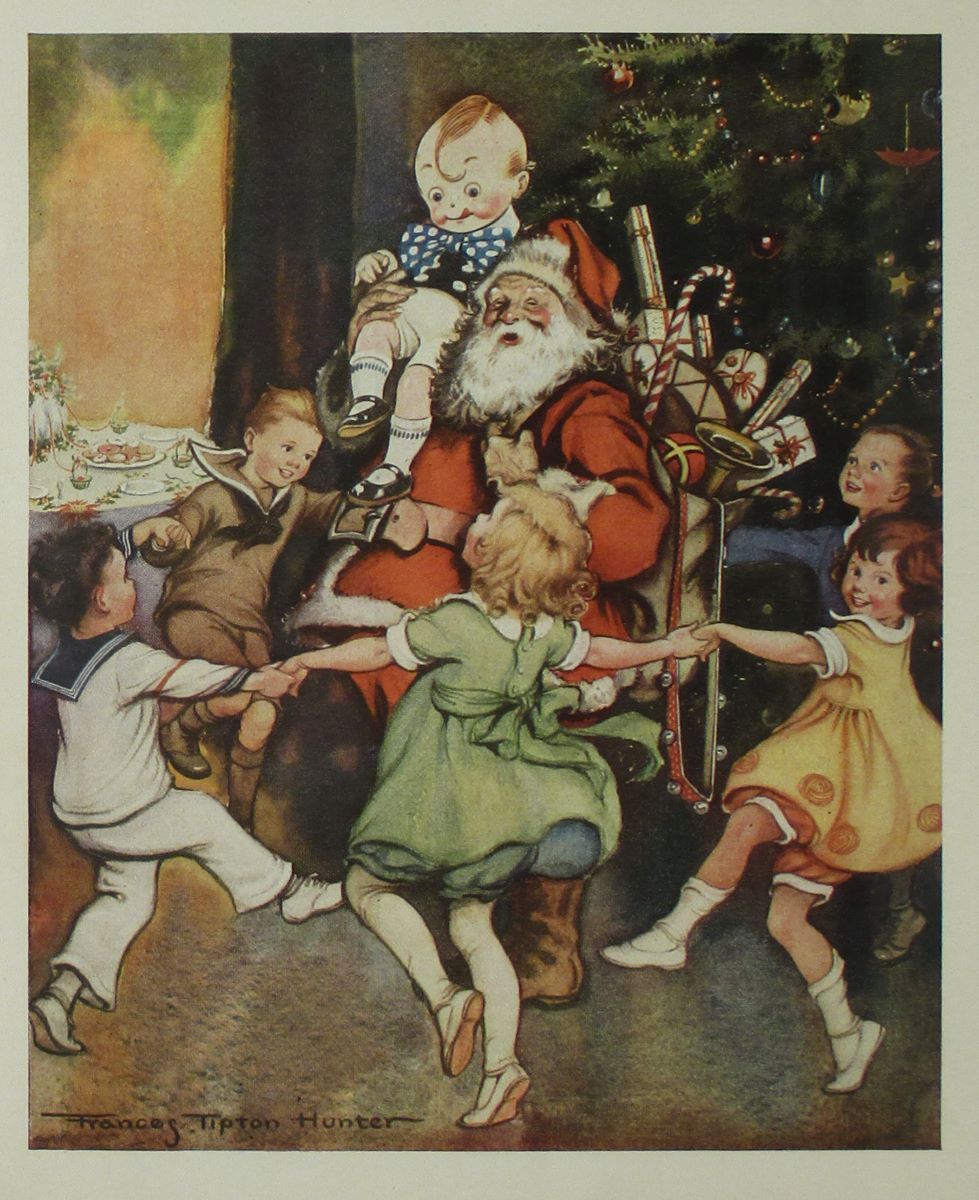
Then there’s the mixed-up case of St. Nicholas, a 4th-century bishop in modern-day Turkey and an ascetic who fasted twice a week and underwent torture and imprisonment during the Roman emperor Diocletian’s persecution.
Today, St. Nick’s a “Ho-ho-ho” fat man in a red suit who drives a sleigh pulled by flying reindeer, a conveyance, by the way, which should appeal to those worried about the jolly old elf leaving a carbon footprint.
In keeping with this sense of fun, foolishness, and the fantastic, let’s look at ironic or humorous poems about December, its holidays, and winter, in general.
The Reason for the Season
As a child growing up in the South, I more than once heard an adult say to some young ‘un in the cold weather, “Close the door! Were you born in a barn?” The question implied poor manners.
Only recently did the perfect answer to that question occur to me: “You mean, like Jesus?”
And right there is one of the many anomalies of December—that a babe born in a stable surrounded by a menagerie of livestock would one day be considered a king and the son of God. Christina Rossetti’s lovely poem “In the Bleak Mid-Winter,” which was later put to music, gently unveils this paradox.
In the bleak mid-winter
Frosty wind made moan,
Earth stood hard as iron,
Water like a stone;
Snow had fallen, snow on snow,
Snow on snow,
In the bleak mid-winter
Long ago.
Our God, Heaven cannot hold Him
Nor earth sustain;
Heaven and earth shall flee away
When He comes to reign:
In the bleak mid-winter
A stable-place sufficed
The Lord God Almighty,
Jesus Christ.
Enough for Him, whom cherubim
Worship night and day,
A breastful of milk
And a mangerful of hay;
Enough for Him, whom angels
Fall down before,
The ox and ass and camel
Which adore.
Angels and archangels
May have gathered there,
Cherubim and seraphim
Thronged the air,
But only His mother
In her maiden bliss,
Worshipped the Beloved
With a kiss.
What can I give Him,
Poor as I am?
If I were a shepherd
I would bring a lamb,
If I were a wise man
I would do my part,
Yet what I can I give Him,
Give my heart.
When Frost Is the Poet of Winter
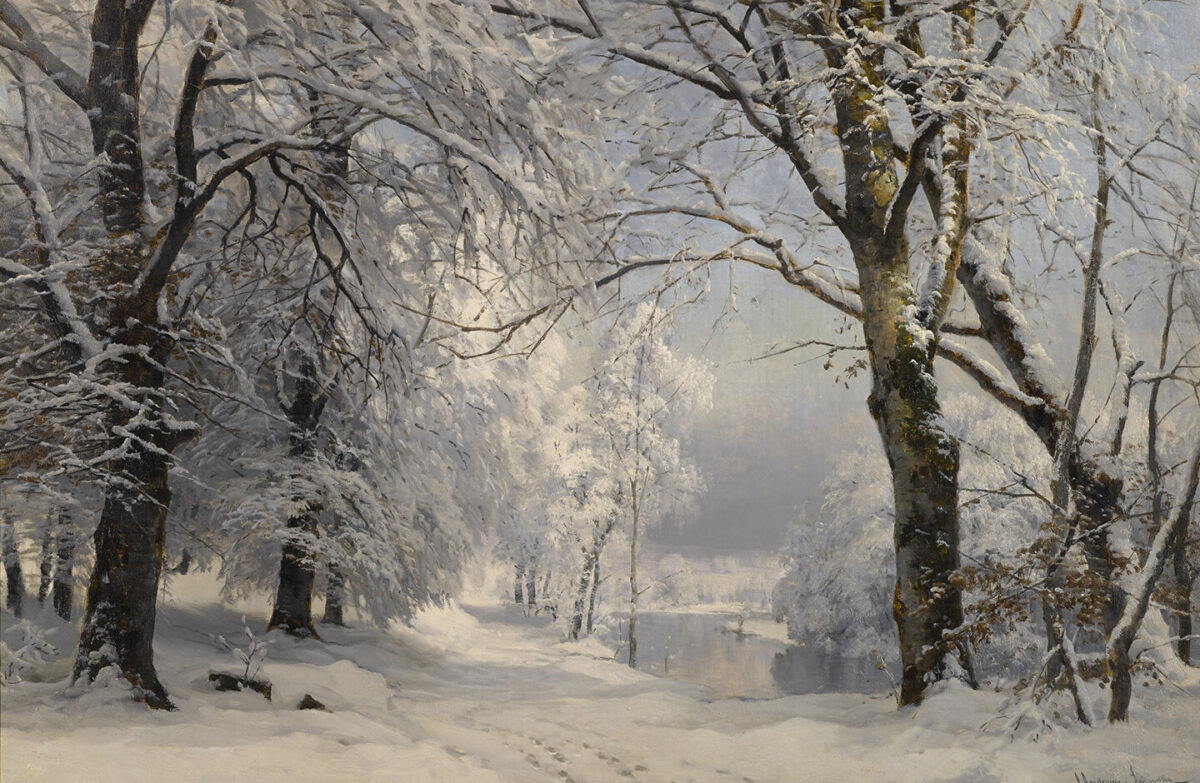
A New Englander of long standing, Robert Frost knew his winters well. In his short poem, “Dust of Snow,” his narrator reacts to an accident with wry humor rather than with curses, a mood-changer which transforms a rough day:
The way a crow
Shook down on me
The dust of snow
From a hemlock tree
Has given my heart
A change of mood
And saved some part
Of a day I had rued.
Some of the poems below may have a similar power, to shake down on us a dust of words and laugh at the travails of winter.
Two for the Kids, and for the Rest of Us
When Shakespeare’s “Blow, blow, thou winter wind” joins hands with “Freeze, freeze, thou bitter sky” in real life, surely a good number of those afflicted want nothing more than to roll over in their beds and weather those storms beneath blankets and quilts. In “Furry Bear,” creator of Winnie-the-Pooh, A.A. Milne gifted all who struggle with winter’s snarly weather a vision of that heart’s desire for a deep snuggle in the sheets:
If I were a bear,
And a big bear too,
I shouldn’t much care
If it froze or snew;
I shouldn’t much mind
If it snowed or friz—
I’d be all fur-lined
With a coat like his!
For I’d have fur boots and a brown fur wrap,
And brown fur knickers and a big fur cap.
I’d have a fur muffle-ruff to cover my jaws,
And brown fur mittens on my big brown paws.
With a big brown furry-down up to my head,
I’d sleep all the winter in a big fur bed.
Ken Nesbitt’s “This Winter I Went Sledding” is a child’s recitation of cold weather disasters. The kid’s sled slams into a tree, for instance, he gets smacked in the face with a snowball, and his tongue freezes to a pole. Many of us, adults and children alike, needn’t undergo these ordeals to agree with the poem’s concluding lines: “So, yes, the snow is pretty,/but I think I’ll stay inside.” Like many of us, the boy prefers to experience the icy winds and bitter cold from the comfort of his living room.
Word-Painting Winter
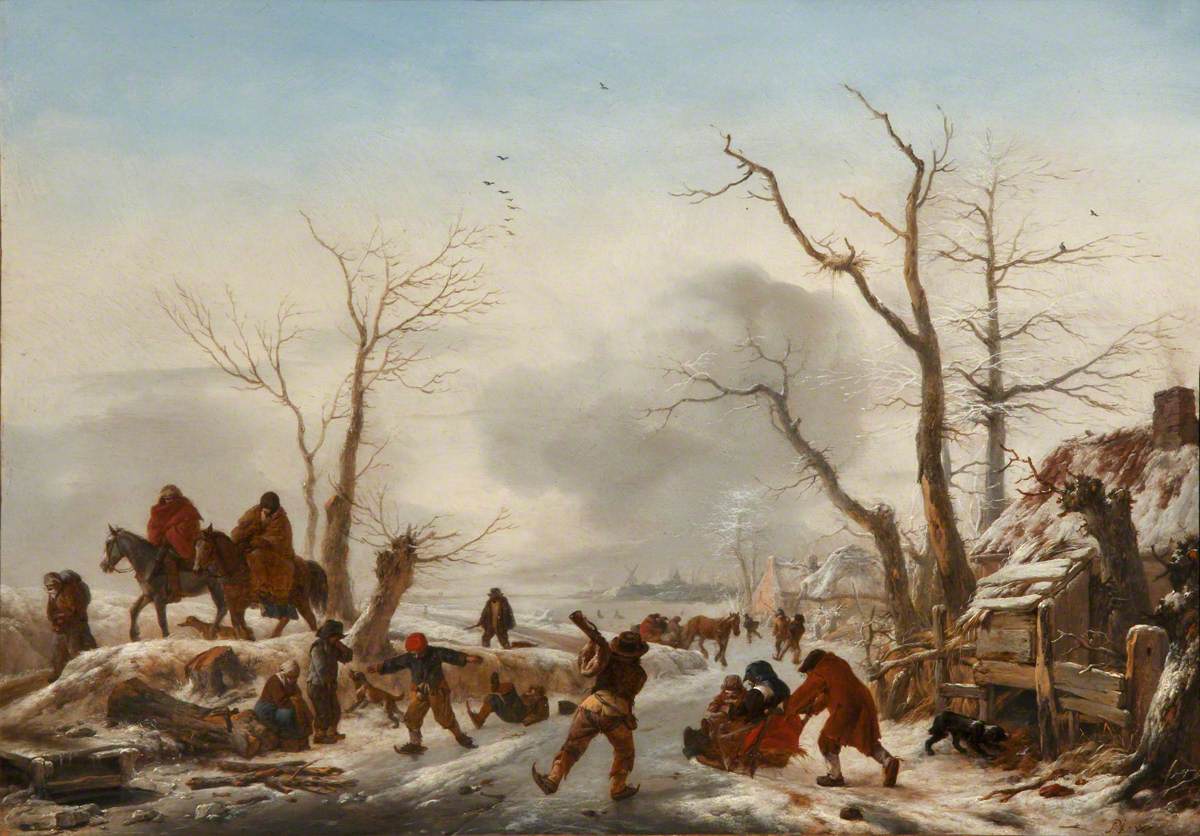
Known for his light verse, Ogden Nash’s “Winter Morning Poem” gives us this more pleasant of a frozen landscape, with metaphors bringing both recognition and delight. In the last two lines, Ogden, who loved composing goofy verse, steps up to the plate and swings away.
Winter is the king of showmen,
Turning tree stumps into snow men
And houses into birthday cakes
And spreading sugar over lakes.
Smooth and clean and frosty white,
The world looks good enough to bite.
That’s the season to be young,
Catching snowflakes on your tongue!
Snow is snowy when it’s snowing.
I’m sorry it’s slushy when it’s going.
The Other Face of Snow
Buffalo, New York is famous for its snowfalls, when cold winds whipping off Lake Erie pick up the lake’s warmer moisture and dump several feet of snow on the city. In “Snow in Buffalo” poet Phil Rogers dreams of escape from the white hillocks to warmer climes:
Six feet of snow in Buffalo
I guess it’s only apropos,
but makes me crave a bungalow
somewhere deep in Mexico.
To dance a lively fandango
on a warm and sunlit patio,
good music on the radio,
not wrapped up like an Eskimo.
Even a flight to Borneo,
so not to have to shovel snow,
would fill me with a golden glow,
and surely help my lumbago.
But all these trips I must forego,
alas, they’re not the status quo;
my bank account is really low,
can’t even get to Tuckahoe.
A Little More Sunshine
Let’s end as December ends, with Christmas and a sweet way of living out the spirit of the season. Here is Mark F. Stone with “Make Christmas a Verb.”
For many, the gifts are the be-all and end-all:
the big screen, the tablet, the Barbie and Ken doll.
For me, gifts I get are like ice in the sun.
I cannot recall them. No, not even one.
How did I find a true way to remember
the import of each twenty-fifth of December?
The quest to acquire is an urge one can curb.
The lesson I learned was: make Christmas a verb.
Knock on the door of your neighbors who deal
with aging and loneliness. Bring them a meal.
If you have means and you live in fine fettle,
drop off some greens in that little red kettle.
Visit our vets who are hurt and express
your thanks for their service as they convalesce.
Deliver to others a luminous glow.
The gifts you will cherish are those you bestow.
In case anyone was confused, those greens in the poem are dollar bills, and the little red kettle belongs to the Salvation Army.
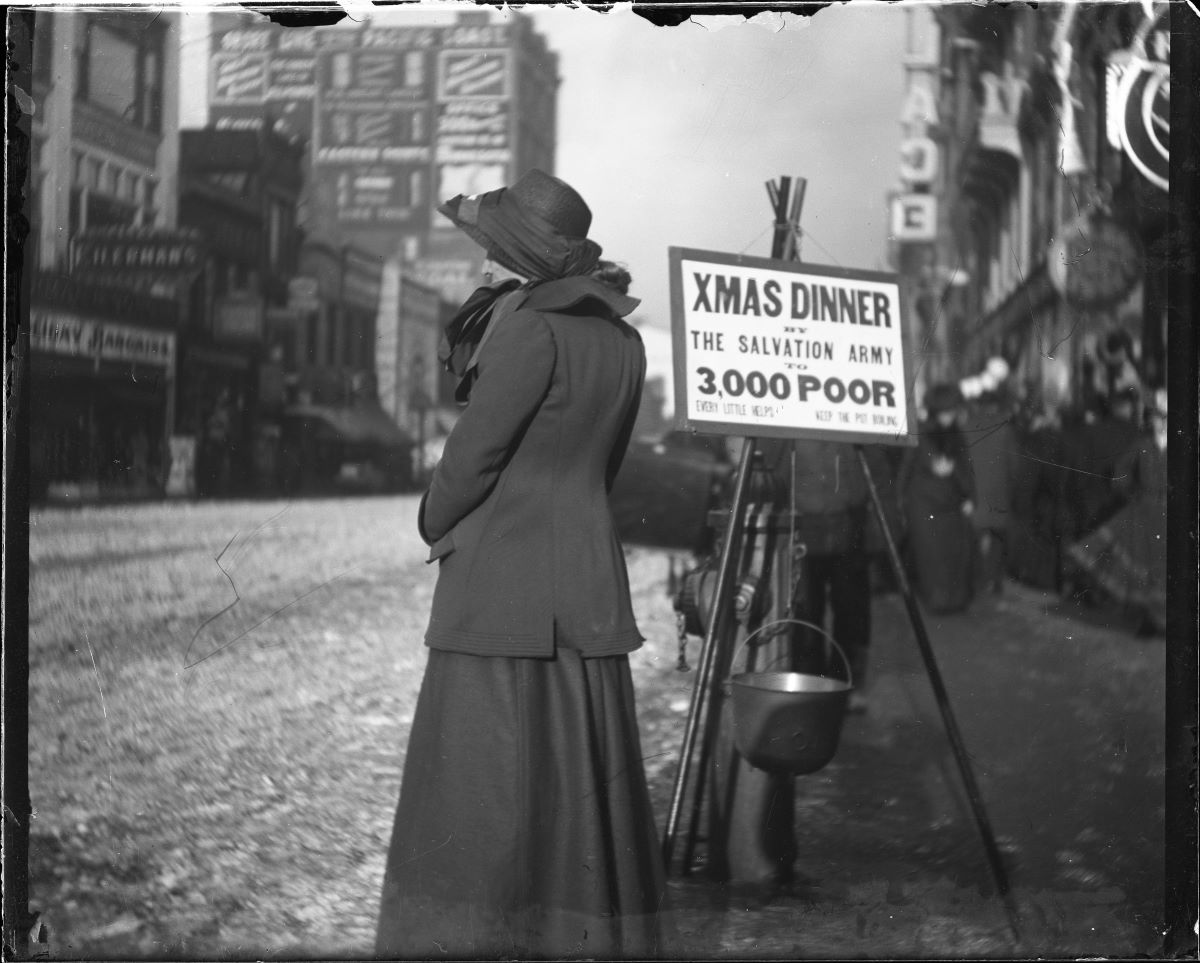
For those who dislike the vicissitudes of December, the coughs and colds, driving through the snow, and feeling perpetually half-frozen most of the time, here’s hope that these poems have brought a little warmth. As Victor Hugo in “Les Misérables” wrote, “Laughter is sunshine, it chases winter from the human face.”
Now if it would just chase the snow from the driveway.
What arts and culture topics would you like us to cover? Please email ideas or feedback to features@epochtimes.nyc.