SEARCH


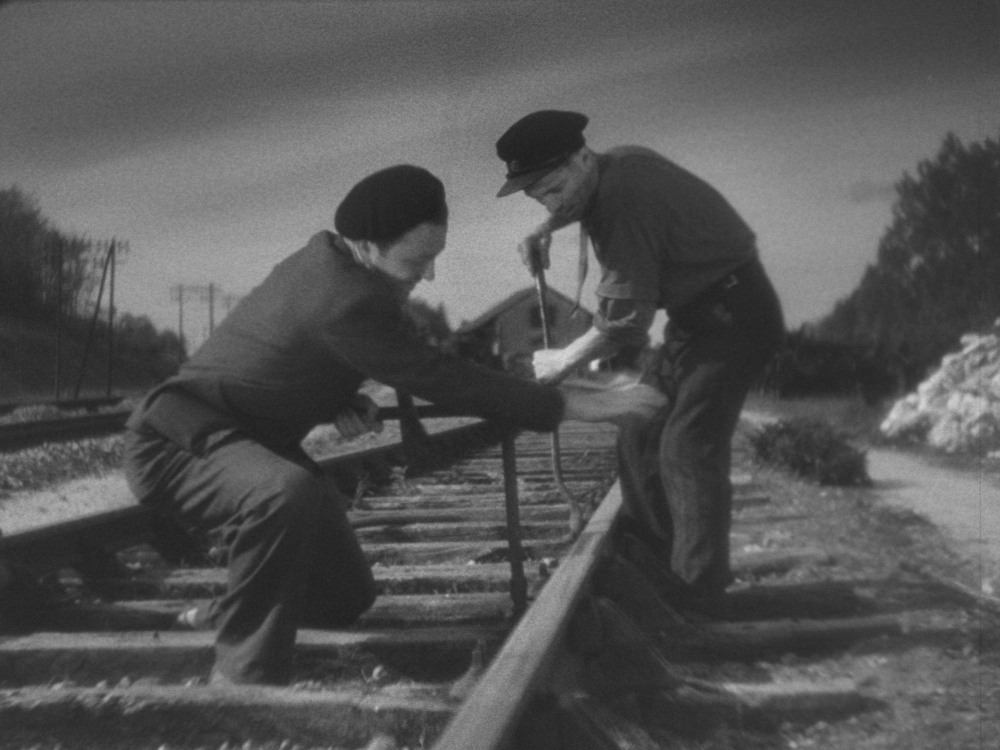
Celebrated French filmmaker René Clément’s action-packed docudrama “The Battle of the Rails (“La Bataille du rail”), set in France during World War II, salutes the anti-Nazi war of sabotage waged by France’s railway workers.
Clément’s introductory text explains: In 1940, Nazi Germany literally tears France in two, restricting free movement across the infamous demarcation line. Nationwide, that resulted in an eerie occupied zone and a so-called “free” zone; linking both under German control, of course, are France’s extensive railroads.
Unarmed French railway workers, alongside armed French underground guerilla fighters called the maquis, lead the resistance. In peacetime, these workers unassumingly operate, repair, and maintain the railroads. Now in wartime, they heroically sabotage trains and tracks, delaying or derailing, as it were, meticulously laid Nazi plans.
Over four years, this group of Frenchmen grow in number and in nerve. On the day of the 1944 Allied landings in Normandy, it isn’t just soldiers but civilians like these who were critical to victory. They disrupted Nazi transport tactics and lay the groundwork for France’s eventual liberation.
Train of Events
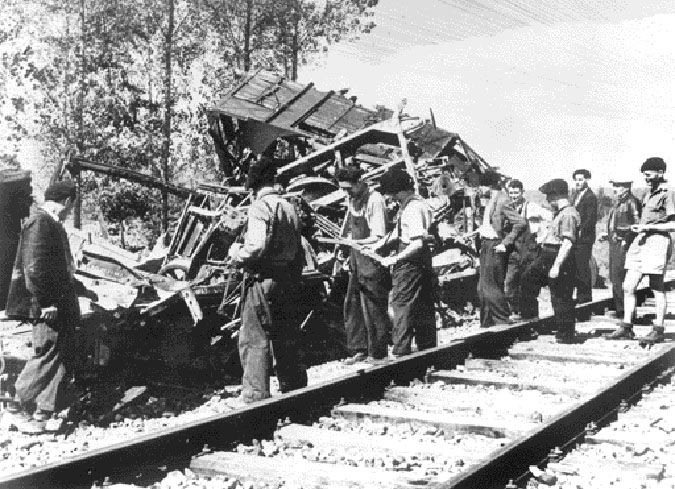
Instead of a linear plot with clearly defined characters, Clément opts for an unraveling train of events, set in motion by a handful, then a horde, of railway workers. Colette Audry’s screenplay and Jacques Desagneaux’s editing give these events urgency and immediacy.
Charles Boyer, who briefly served in the French army, narrates some of the lines, offering background. This film won the Jury Prize at the first Cannes Festival in 1946 and a Best Director award for Clément.
Polish filmmaker Maciej Drygas’s docufilm “Trains” (2025) is a poetic ode to Europe’s resilience as reflected in its pioneering railroad network. Clément’s film is a grittier ode to France’s resilience as reflected in its gutsy wartime railway workers.
Through sensitive shots and framing, Clément and his cinematographer, Henri Alekan, bring these typically French civilian anxieties to life. A retired engine driver’s wife fears for his life and discourages him when he’s asked to come out of retirement to help the Resistance. He joins anyway.
An unnamed railroad worker was caught sabotaging. He now stares agonizingly at the wall he’s facing, awaiting his turn to be shot. When the shot rings out, the camera pans to trains in the yard nearby. They seem to whistle their anguish at the death of France’s patriots or to defiantly blow steam as if signaling continued resistance, even after, or especially after, such martyrdom.
Film Craft
Clément uses low-angle shots to look up at trains on their tracks from grassy knolls below. His high-angle shots look down from telegraph poles at saboteurs assembling at a train-yard below and plotting sabotage.
Sometimes, that means cutting train brakes, planting magnetic bombs on steam-stocks, or springing sudden leaks in fuel wagons. Knee- and ground-level shots stare from beneath the undercarriage at workers stealthily disengaging a connecting rod or dismantling vital valve gear. Tracking shots move with every piece of the action; this could be a French attack or a German counterattack.
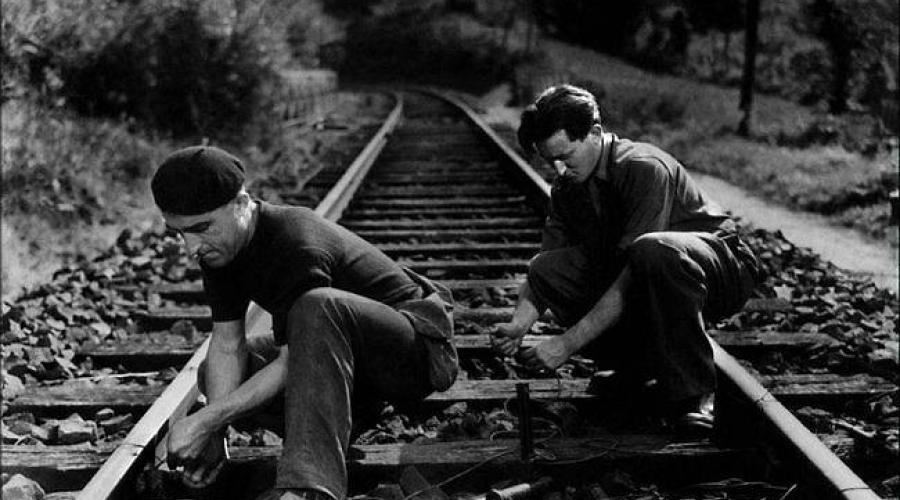
The entire film is engaging, but some scenes are particularly riveting.
After successive setbacks, saboteurs succeed in derailing a prized Nazi armored train. Watch how superbly Clément pulls this scene off. Without gimmicky special effects or elaborate post-production studio tricks, he films entirely outdoors and from several angles.
As the train hurtles off the track, the groaning wagons resemble a line of speeding racehorses crashing into each other, bucking first up, then down as they plunge noisily into the ravine below.
Dry Humor
Despite his grim theme, Clément’s not without irony or dry humor. The Nazis are furious that wagons and engines deliberately stalled on tracks are disrupting the flow of their men and munitions. They order a 30-ton crane and assign French railway workers to lift those mountains of metal off the tracks—except, moments before, a worker has swiftly and surreptitiously sawed a crucial coupling in half then placed it right back.
When the crane–hoist strains at its chain, and the wagon’s about to lift clean off the ground, the coupling snaps. The wagon tumbles, dragging the crane down with it. Livid, a Nazi officer screams at a railway worker to clear the mess; half-smiling, the Frenchman smirks, impishly insisting that he’ll now need a 50-ton crane to even begin work.
Once, a Nazi officer is yelling dire warnings to a gathering of railway workers; they can either make common cause with Germany in civilizing the world or be crushed for dissent. He addresses them with the utterly incongruous epithet, “Comrades!”
The Frenchmen listen in sullen silence alright, but watch their jaws clench.
You can watch “The Battle of the Rails” on YouTube and DVD.
‘The Battle of the Rails’
Documentary
Director: René Clément
Running Time: 1 hour, 25 minutes
Release Date: Feb. 27, 1946
Rated: 5 stars out of 5
What arts and culture topics would you like us to cover? Please email ideas or feedback to features@epochtimes.nyc.