SEARCH


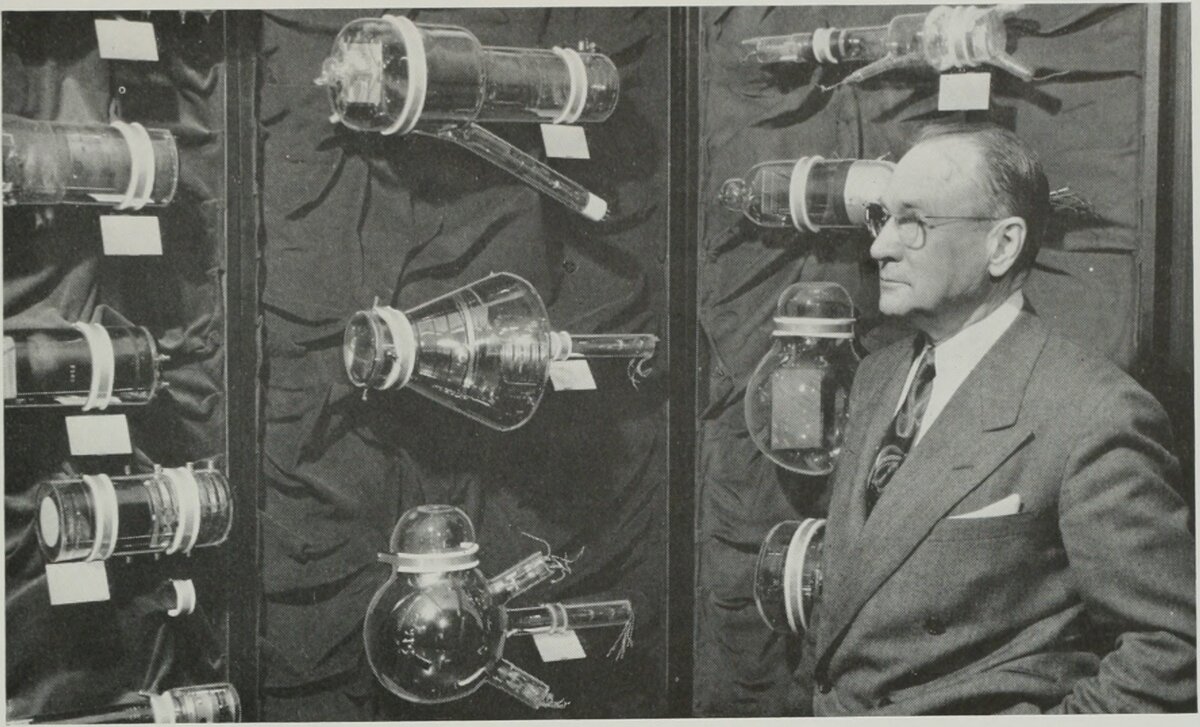
Vladimir Kosma Zworykin had been sailing for longer than he had wished. Indeed, he wished he had never been forced to board a ship in search of a new home. The Russian was a scientist in his home country, but it was 1919, and Russia was undergoing a revolution.
He had tried to remain in his homeland, but the Bolsheviks had proven too chaotic and too violent. His ship finally arrived on the shores of America. He had successfully fled one revolution and was determined to bring a different kind of revolution to his new home.
The Path to America
Vladimir Kosma Zworykin (1889–1982) was born 200 miles outside of Moscow in Murom, a city located along the Oka River. Zworykin’s father owned a fleet of steamships. While aboard one of these, young Zworykin pressed a buzzer. The fact that the mere pushing of a button summoned someone to inquire what he wanted filled him with wonder. His fascination with electronics never ceased.
The brilliant young man studied at the St. Petersburg Institute of Technology where he earned a degree in electrical engineering in 1912. During his time at the Institute he studied under Boris Rosing, the inventor who envisioned the advent of television. Rosing had already made breakthroughs with using the cathode-ray tube, a German invention that allows an image to be produced in a vacuum tube via electric beams against a phosphorescent surface.
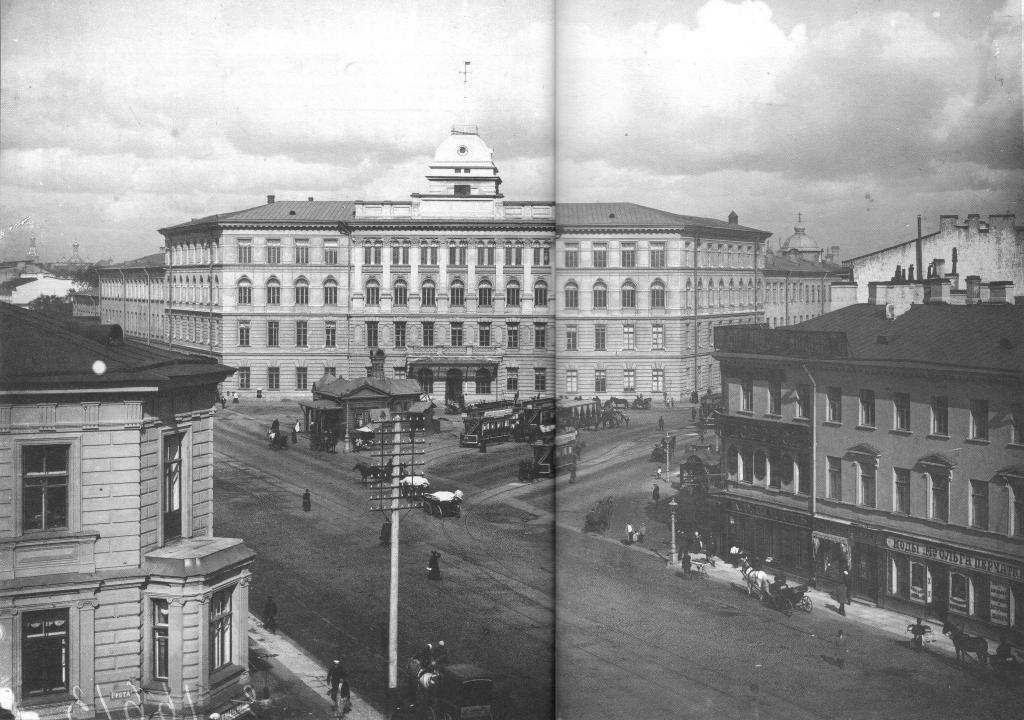
After graduating from the Institute, Zworykin left for Paris to study at the College de France under the guidance of French physicist, Paul Langevin. For about two years, he helped Langevin research X-ray diffraction, until the outbreak of World War I in 1914. Zworykin returned to Russia to serve as an officer in the Signal Corps, working primarily in radio communications. Russia would be engulfed in revolution before the war ended. Its new leaders signed the Brest-Litovsk Treaty in March 1918, officially ending Russia’s involvement in the war. By this time, the Russians were faced with a civil war, and, by 1918, Zworykin sought his escape.
Sailing the globe twice and making numerous stops, he finally settled in America where he took a job in 1919 as bookkeeper for the Russian Embassy. The job was brief. The following year, he joined the research staff at Westinghouse Electric and Manufacturing Company in Pittsburgh. The staff was focused specifically on photoelectricity—a late 19th-century German discovery—in which electromagnetic radiation causes the movement of electrons within a material. As interesting as the subject was, Zworykin was intent on continuing the research he had begun while studying with Rosing.
Unimpressed Executives
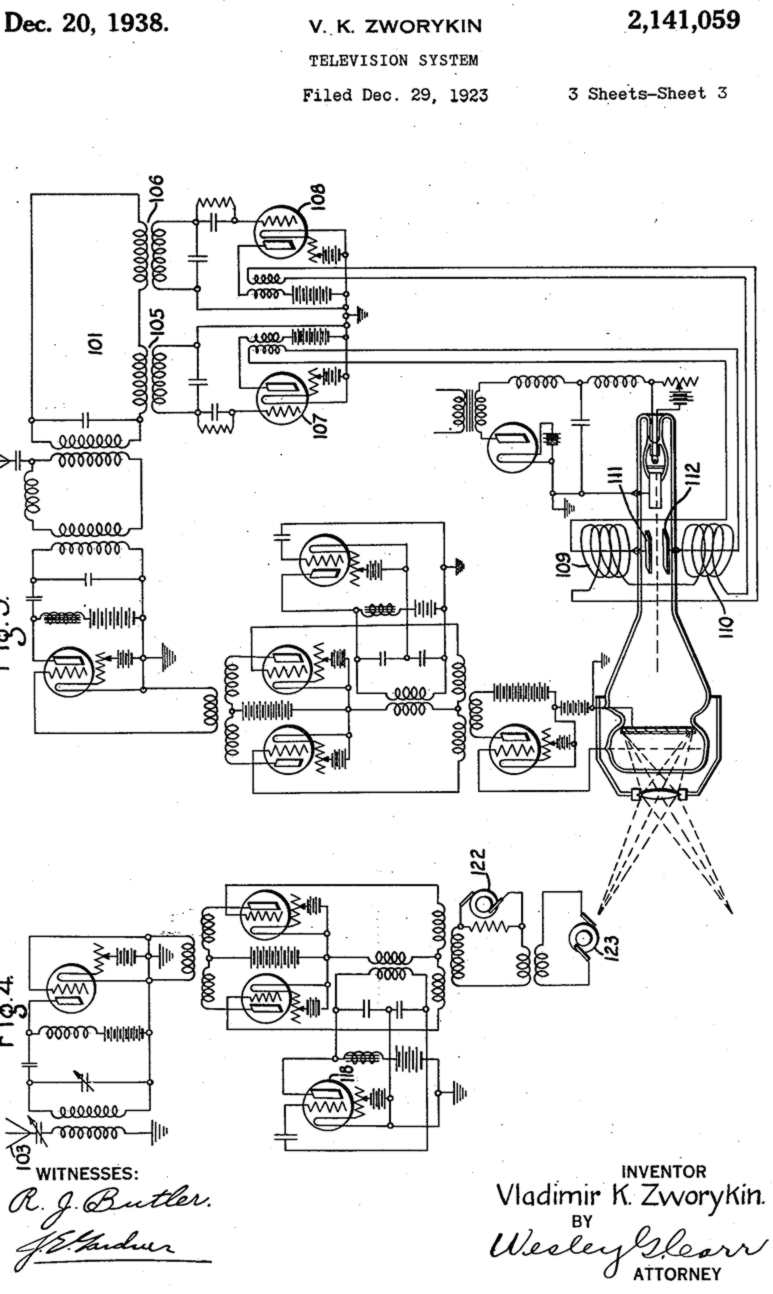
Zworykin helped the research staff make advances in the study of photoelectricity by increasing the sensitivity of photocells by using alkali metals. The breakthrough led to his co-authoring a book on the subject. But he was most excited about his television breakthrough via his technological advancement of the cathode-ray tube. He called his invention the iconoscope. It proved a primitive method to view an image, but it was a major step toward television transmission.
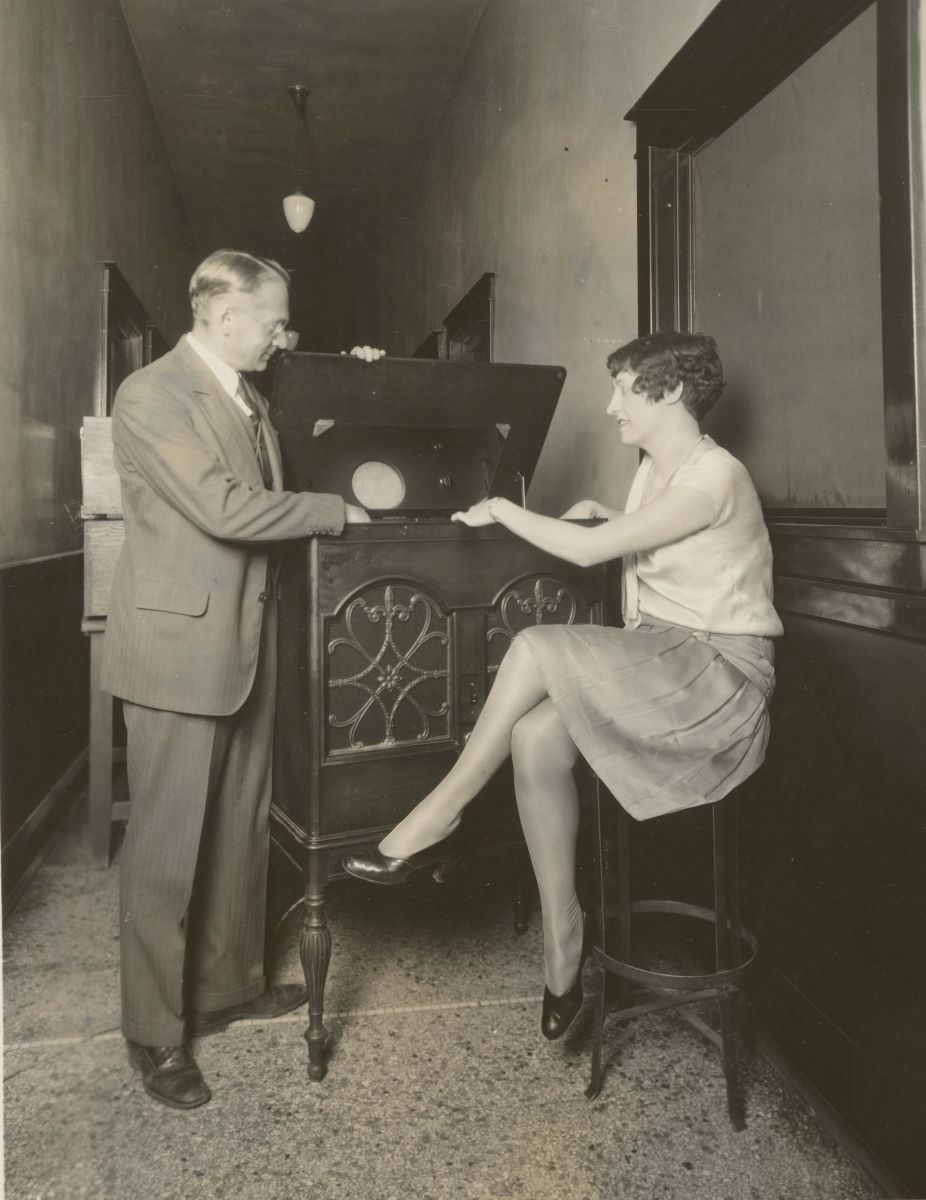
Zworykin received a patent for it in 1923 and presented the technology to the Westinghouse executives in 1924. The executives were not impressed and preferred he work on other projects. The young Russian immigrant scientist, however, continued the pursuit, as he had done before—on his own time.
The same year he presented his idea to the executives, he became a U.S. citizen. He then earned his doctorate in physics from the University of Pittsburgh in 1926, specializing in photoelectricity. By 1929, he had made another television breakthrough with his kinescope; it made video recording possible. Zworykin conducted a demonstration of the technology. Again, the executives were unimpressed.
The Sarnoff Connection
His frustration was short-lived. Westinghouse made a corporate arrangement with Radio Corporation of America (RCA) and sent over several of its engineers, including Zworykin. The Russian-American met a fellow Russian-American by the name of David Sarnoff, who had previously established the National Broadcasting Company (NBC) and was to become RCA president in the coming months. Sarnoff was a radio visionary. When Zworykin told Sarnoff that he could build a mass market television in 18 months and for just $100,000, Sarnoff placed him as RCA’s Electronic Research Lab director.
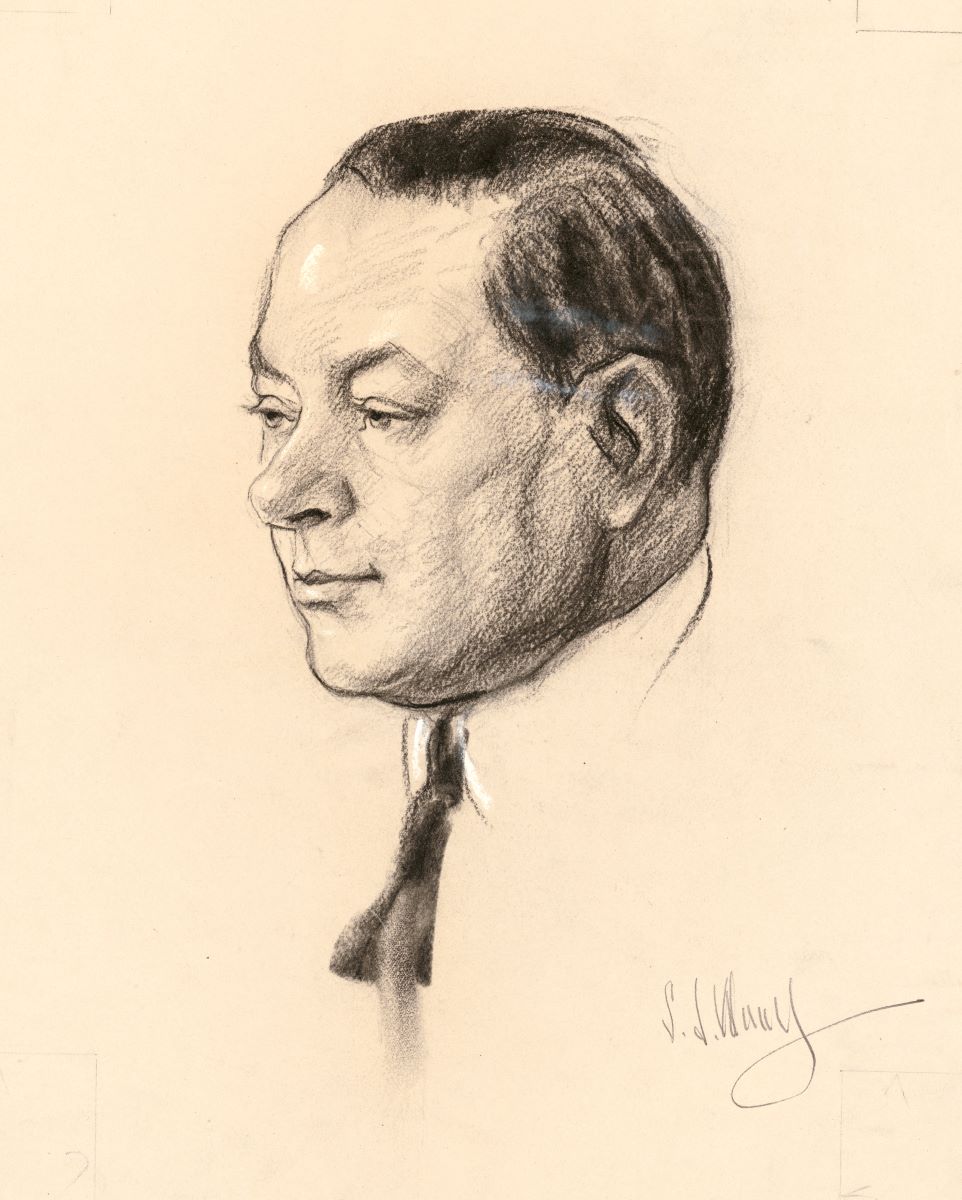
Sarnoff would always joke that Zworykin’s television took 10 years and $50 million to finally become a marketable product.
That product made its first appearance before a large audience at the 1939 World’s Fair in New York City. When President Franklin D. Roosevelt conducted the opening ceremonies, it was broadcast by Sarnoff’s NBC and through Zworykin’s product.
Building off of Zworykin’s iconoscope and kinescope, as well as his “storage principle,” which became the basis for all television manufacturing, RCA engineers developed the image orthicon, a far more sensitive camera tube than the iconoscope; the vidicon, a more simplified camera tube that used photoconductivity to capture images more clearly (these were also used for capturing images on early NASA spacecraft); and the shadow mask, which was a camera tube with a small screen, composed of thousands of tiny holes, allowing for three color electron beams (red, green, and blue) to pass through the holes and establish color images. All of these camera tube advancements make the modern television what it is today.
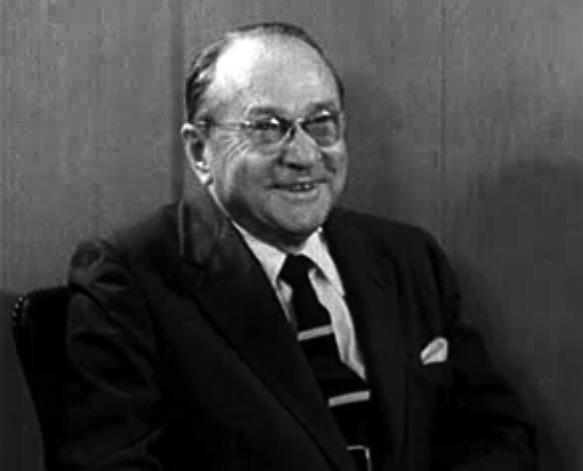
In later years, he was often called the “Father of Television,” a moniker he did not like because he did not approve of what was being put on television. “The programs,” he once said in an interview, “I would never let my children even come close to this thing. It’s awful what they’re doing.”
Zworykin became RCA vice president and technical consultant in 1947 while remaining director of the research laboratory. He maintained those positions until Aug. 1, 1954, when he retired. RCA, however, named him honorary vice president and he remained a consultant until 1981.
‘None Were of Greater Importance’
The medical industry became his next endeavor. He helped develop several inventions, including the endoradiosonde, an ingestible radio pill that could capture physiological data within the patient’s body; an ultrasonic radar cane to assist the blind; an ultraviolet color-translating microscope, which magnified living cells in color through ultraviolet radiation for biological research; and an electric card for maintaining health records.
Altogether, Zworykin received 120 patents. He was a member of the National Academy of Sciences and the National Academy of Engineering (NAE). He was awarded the Chevalier of the French Legion of Honor, the Faraday Medal of the British Institution of Electrical Engineers, the U.S. National Medal of Science, the NAE Founders Medal, and was inducted into the National Inventors Hall of Fame in 1977—five years before his death.
Of all that Zworykin created and advanced, he is most known for his work in television. “Of all the contributions made by individuals towards the realization of an all-electronic television system in the United States of America,” wrote R.W. Burns in his scholarly work, “Television: An International History of the Formative Years,” “none were of greater importance than those of Dr. V.K. Zworykin.”
What arts and culture topics would you like us to cover? Please email ideas or feedback to features@epochtimes.nyc.