 SEARCH


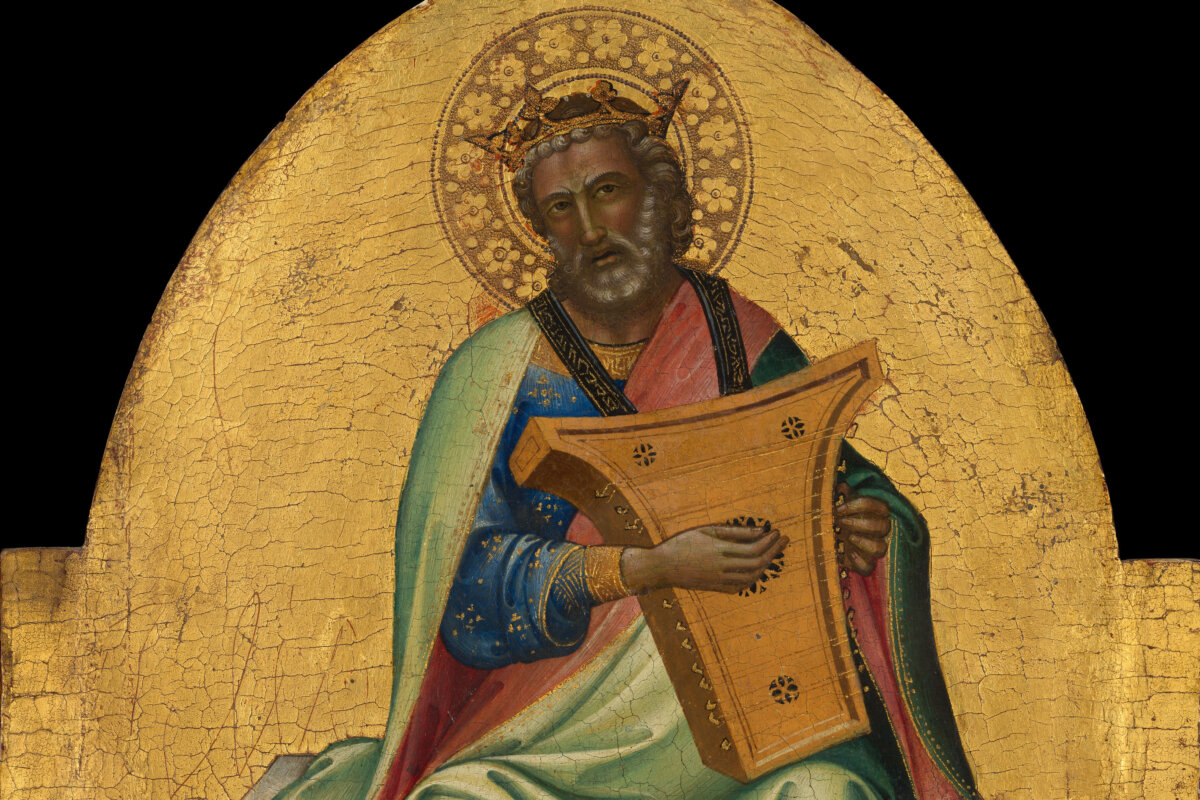
In Psalm 33:2 of the King James Bible, worshipers are instructed to “Praise the LORD with harp: sing unto him with the psaltery and an instrument of ten strings.” Though uncommon today, the psaltery has long been a culturally important instrument. It appears again in the Book of Samuel as King David celebrates the return of the Ark of the Covenant, a chest housing the stone tablets of the Ten Commandments, to Jerusalem. Modern Bible translations often replace the psaltery with a harp or lyre, but earlier versions include it as a celebratory symbol.
The Bible is a foundational work of the Western artistic tradition. And through this tradition, the psaltery appears repeatedly, starting in ancient times and continuing through the prolific Renaissance period. Its presence offers a reminder that joy is an important part of spiritual life, and even quiet moments can be cause for elation.
A Popular Medieval Instrument
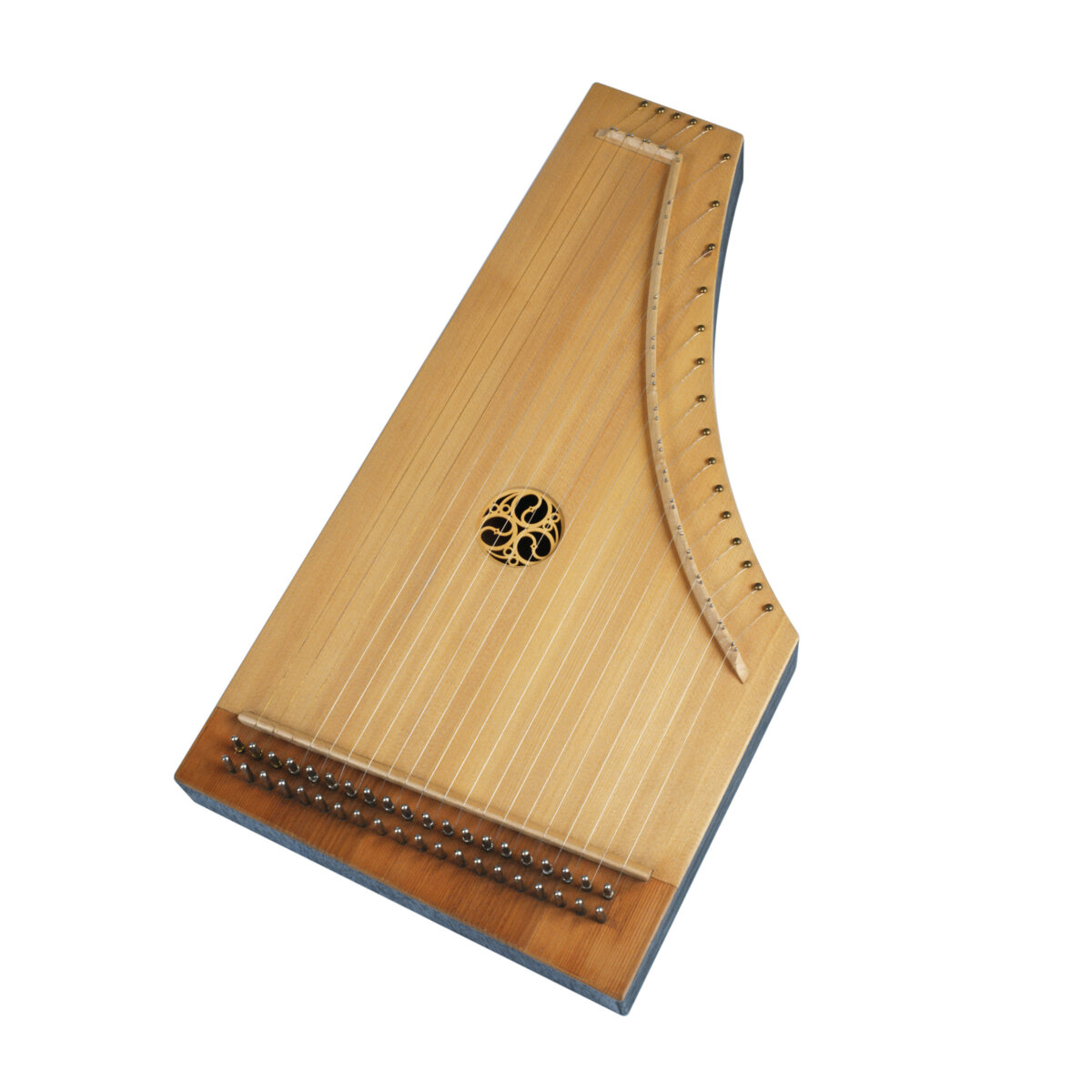
Versions of the psaltery exist throughout recorded history, but European-style psalteries stem from the 12th century. They have a trapezoidal or triangular shape with strings meant to be plucked with fingers, though modern versions allow a player to use a bow. It can lie flat on a table while being played, or it can be held close to the body, or rest in the player’s lap. Metal strings are stretched across the wooden body and are often strung in groups, or “courses,” for added volume and clarity of tone. Today, it is common for a psaltery to have as many as 32 strings.
The instrument has a shimmering, ethereal tone, which made it a popular choice during the Medieval period, a time when agrarian communities prioritized a focus on the spiritual realm. Composer Nathan Davis with Strings Magazine describes the instrument as having “strings that sing with bright silvery voices.”
When played with a bow, its higher-pitched voice sounds like the violin. But when plucked, its gentle tones are ideal for everything from folk songs and dances to religious ceremonies. The instrument derives its name from the ancient Greek language; the verb “psallein” means to pluck or play a stringed instrument with fingers.
The psaltery was mentioned in some of the Bible’s significant passages featuring praise and celebration. When it became a popular instrument of the Medieval period, it was included in many works of art during this time, which deepened its influence.
Spiritual Meaning in the Natural World
Between the years 842 and 847, Benedictine monk Rabanus Maurus wrote a sweeping series called “De rerum naturis,” or “On the Nature of Things,” featuring 22 books on many topics. The volumes contained literal meanings of different types of plants and animals, and they sought to define larger concepts like philosophy and geography. Maurus also assigned spiritual meanings to things to illustrate a divine order of the universe. The series of books, sometimes called “De universo,” is known as an early form of the modern encyclopedia.

For Maurus, characteristics of the psaltery represented different metaphorical meanings. Early versions of the psaltery were shaped like a square rather than a trapezoid or triangle, and he thought the four corners represented the first four books of the New Testament. He also thought that since the instrument is played while lying flat with the music flowing upward, this symbolizes ascension into the heavens. In the Book of Psalms, David says, “Upon a psaltery and an instrument of ten strings will I sing praises unto thee.” In his “De rerum naturis,” Maurus relates this to the Ten Commandments.
An illustration from the manuscript housed at the Monte Cassino monastery in Italy shows three musicians playing instruments. The cymbals, harp, and lute are all being played by musicians in a joyous fashion. But the psaltery stands alone and untouched as a symbol of its divine authority. Both the illustration and the manuscript view the act of creation, whether in a musical sense or a nature-oriented sense, as a beautiful and sacred part of life.
Spiritual Connection and Reflection
During the early Renaissance, paintings began to look particularly realistic, and Christian figures like King David remained popular subjects for depiction. These life-like works of art allowed viewers to connect on a more human, personal level.
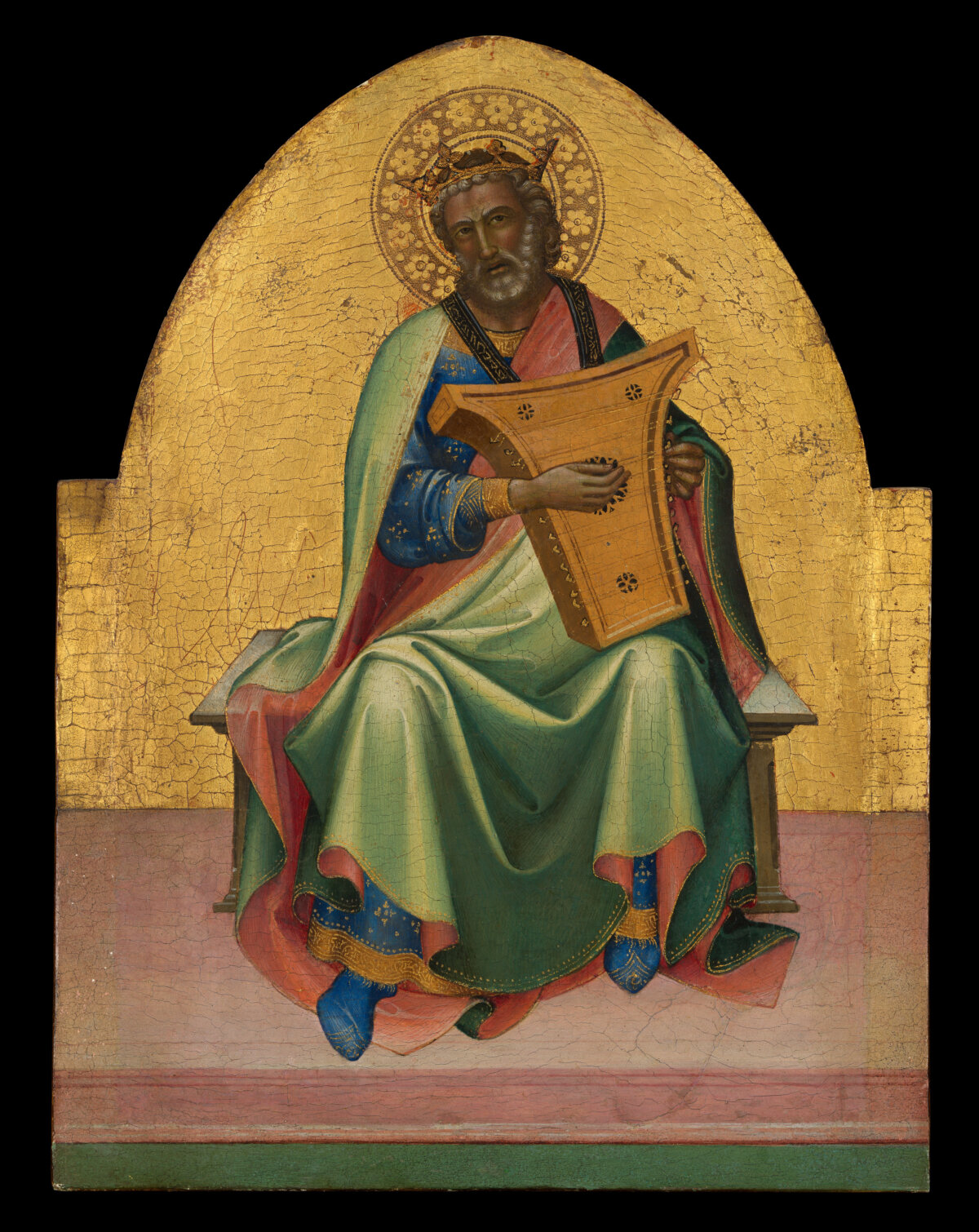
A 15th-century painting by Italian artist Lorenzo Monaco (born Piero di Giovanni) is an Early Renaissance work depicting King David as a psalmist playing his psaltery. His gaze, and he appears to be deeply inspired. The direction of the eyes was often used to depict moments of spiritual connection and reflection, inviting the viewer to do the same.
The psaltery was traditionally tuned to the diatonic scale, meaning only notes played in a specific key were used in compositions, but as the Renaissance reached its peak in the late 15th and early 16th centuries, music became more complex. The chromatic scale was more widely used because musicians could incorporate notes that sounded harmonious from different keys. So, the psaltery evolved.
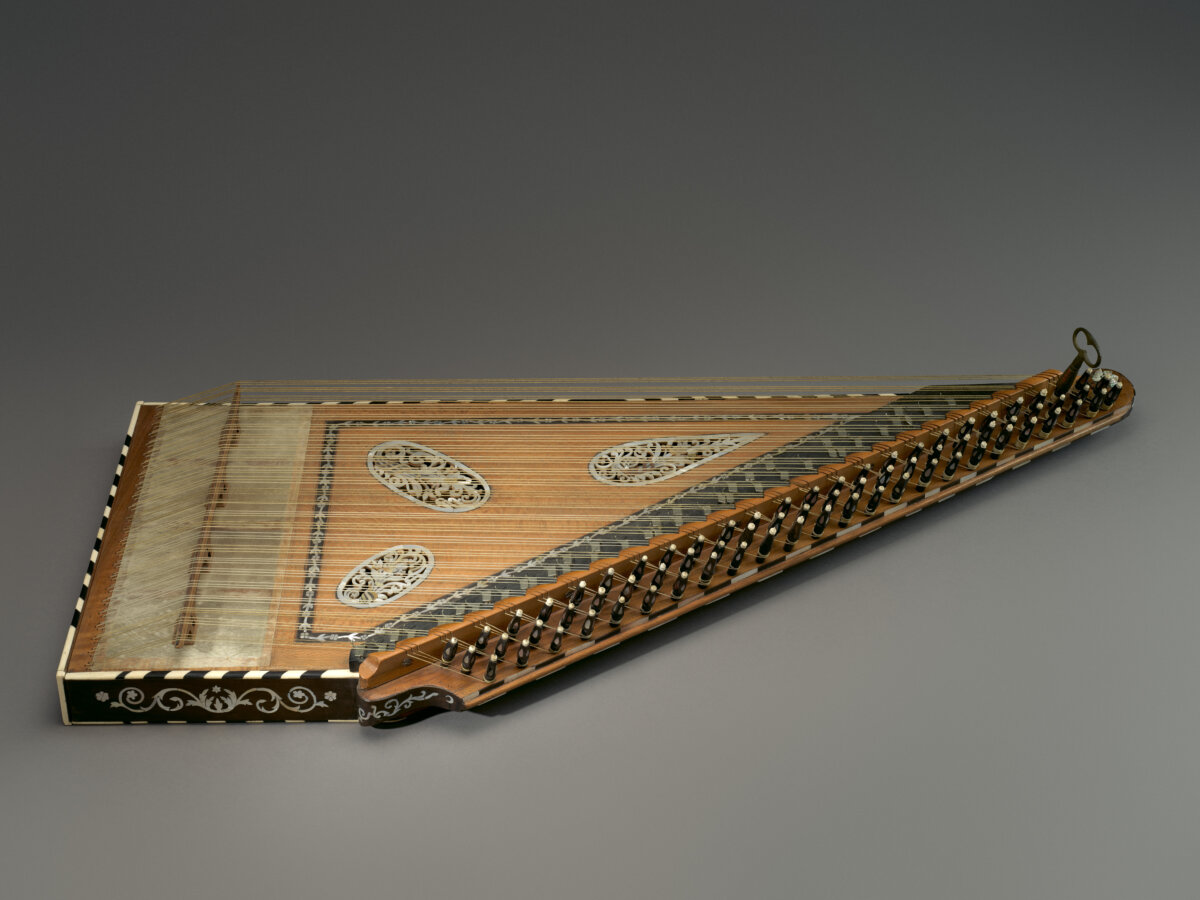
The Arabic qanun, popularized in Europe during the 12th-century Crusades, was one of the psaltery’s key predecessors and bears a close resemblance. But the psaltery’s descendants include the harpsichord, an early type of keyboard, and the piano. It also helped give rise to an entire new family of instruments, the zither family, which features the hammered dulcimer and other instruments donning cross-body strings and no separate neck.
Filling the World With Wonder
Evidence of the psaltery’s influence on the Western tradition of art can still be found throughout the world. The British Library in London houses several manuscripts featuring illustrations of psalteries, including the Luttrell Psalter, an illuminated manuscript from the 14th century with rich detail on everyday life and spiritual customs. It contains illustrations of cathedrals and musicians, angels, and Biblical figures playing a psaltery, like those featured at Chartres Cathedral in France. Even one of the defining literary masterpieces of the Medieval period, “The Canterbury Tales” by Geoffrey Chaucer, mentions the instrument in “The Miller’s Tale.” The reference, updated from Middle English to modern English, is: “He kissed her sweetly and took his psaltery, playing eagerly and making melody.”
The psaltery’s presence throughout the history of the Western cultural tradition reveals that artists and art lovers alike valued the joyous side of not only the human experience, but of the spiritual experience as well. And though the psaltery now plays second fiddle to more common instruments like the harp, we are still reminded of the significance and importance of celebration when we see the instrument depicted in historical works of art and architecture.
The arts teach us that things have a literal meaning, and they can have symbolic ones too, filling our everyday world with wonder. So, whenever you see a psaltery in a piece of art, you don’t just see an instrument of music; you see an instrument of joy.
What arts and culture topics would you like us to cover? Please email ideas or feedback to features@epochtimes.nyc.

