SEARCH


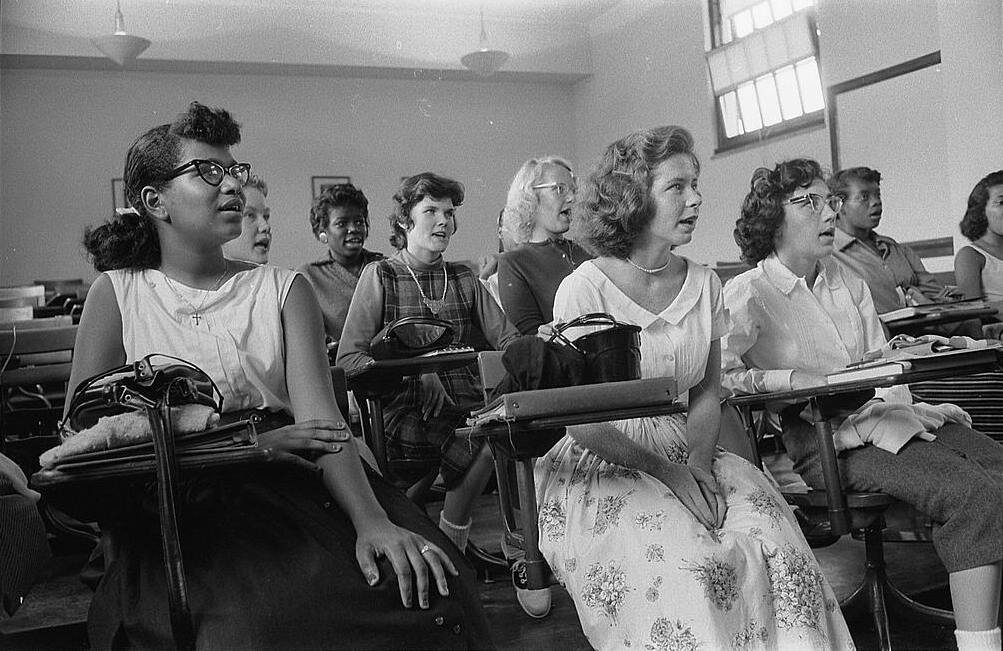
It’s that time of year again: yellow buses rolling down the roads and highways, special sales on notebooks and pens, the morning rush to get the gang out the front door, kids leaving the house that first morning with an empty backpack and trudging home weighted down with books like soldiers on the march.
Whether it’s a senior trooping off to his final year at the public high school, a sixth-grade homeschooled student cracking open her Saxon math book, or a mom with a tear in her eye after saying goodbye to her freshman son at college, likely the last things on anyone’s mind are the U.S. Constitution and Supreme Court rulings having to do with education. Yet like state educational guidelines and regulations, the curricula that come and go, and the diverse opinions on what makes up a good education, some cases that appeared before the highest court of the land in the last 75 or so years dramatically changed both our schools and our country.
 Young students learn to read words on flash cards. (Benjamin Chasteen/The Epoch Times)
Brown v. Board of Education and Wisconsin v. Yoder are two such cases in which the Court’s interpretation of the Constitution reframed laws regarding its educational system.
‘Separate Is Not Equal’
Brown v. Board of Education is one of the best-known legal actions of the 20th century.
Following World War II, more and more citizens opposed the racial discrimination and segregation then common in the United States, particularly in the South. Those among the living who were children in that era can still remember practices like the “Whites Only” signs on restaurants, the separate seating of whites and blacks in movie theaters, and the voting suppression common in some states.
Segregation began to collapse in 1948, when President Harry Truman issued Executive Order 9981, which effectively ended all forms of racial discrimination in the U.S. military. Though now forgotten by many Americans and though its implementation encountered some resistance, 9981 ordered the end of all forms of racial discrimination in the U.S. military and was a huge step forward in American race relations.
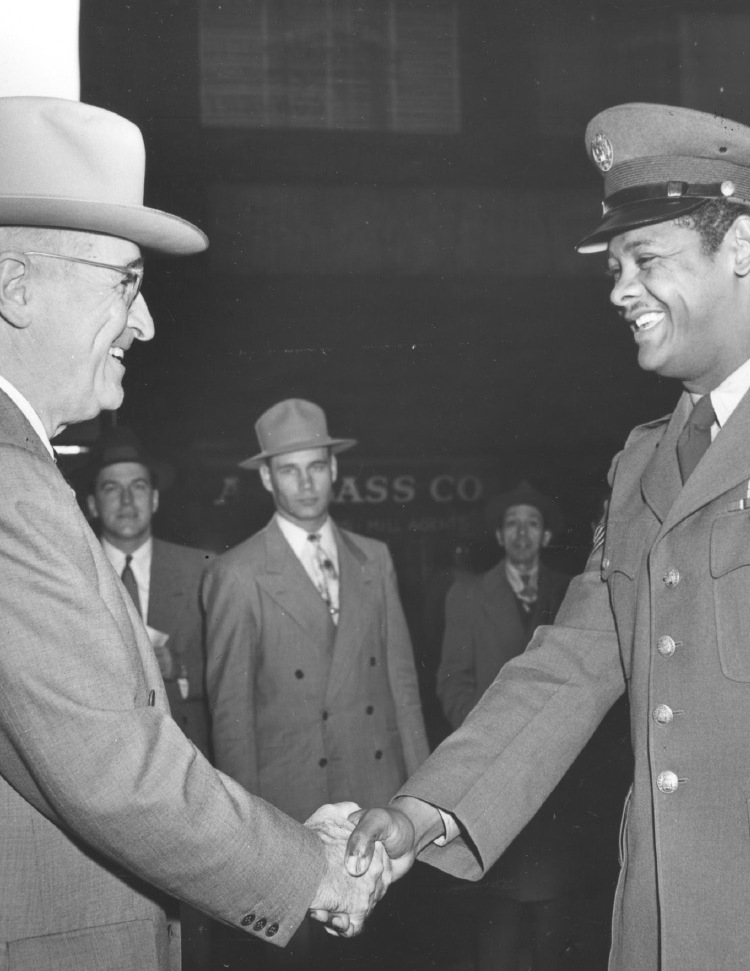 “Ending Segregation in the Military.” President Harry Truman (L) shakes the hand of an African American serviceman. (Smasongarrison/CC BY-SA 2.0)
But it was the schools that became the battlefields for change. In the late 1940s, the National Association for the Advancement of Colored People (NAACP) began a concentrated effort to integrate America’s schools. Encouraged and supported by this group, Oliver Brown of Topeka, Kansas, and other parents tried to enroll their children in public schools reserved exclusively for whites. When they were refused, the NAACP filed a class-action suit on their behalf, which made its way to the Supreme Court. Though others besides Oliver Brown were involved in bringing this suit, this trial became known as Brown v. Board of Education.
In an 1896 decision, Plessy v. Ferguson, the Court had ruled that segregation was legal under the Constitution if facilities indeed provided the same services to both whites and blacks, giving rise to the doctrine of “separate but equal.” In 1954, with Chief Justice Earl Warren leading the way—he worked hard to ensure unanimity among the judges for this important decision—the Court, in effect, overturned Plessy, largely on its interpretation of the 14th Amendment. The Court declared that school districts across the United States should integrate their classrooms “with all deliberate speed.”
Aftermath
Though the Court has been criticized for not setting an exact date for the implementation of its decision, it’s likely that the ensuing years of turmoil would have occurred irrespective of a set date. Centuries-old institutions and practices don’t change overnight.
There were dramatic moments in this fight for equal educational opportunities, like the enrollment of James Meredith at the University of Mississippi in 1962, when federal troops had to subdue violent protest riots on and around the campus. Policies like busing students to schools far from their homes in an attempt to achieve racial balances in the classroom met with mixed success, and were as often opposed by blacks as by whites for reasons ranging from the hardship this often placed on students to beliefs that all schools should be improved.
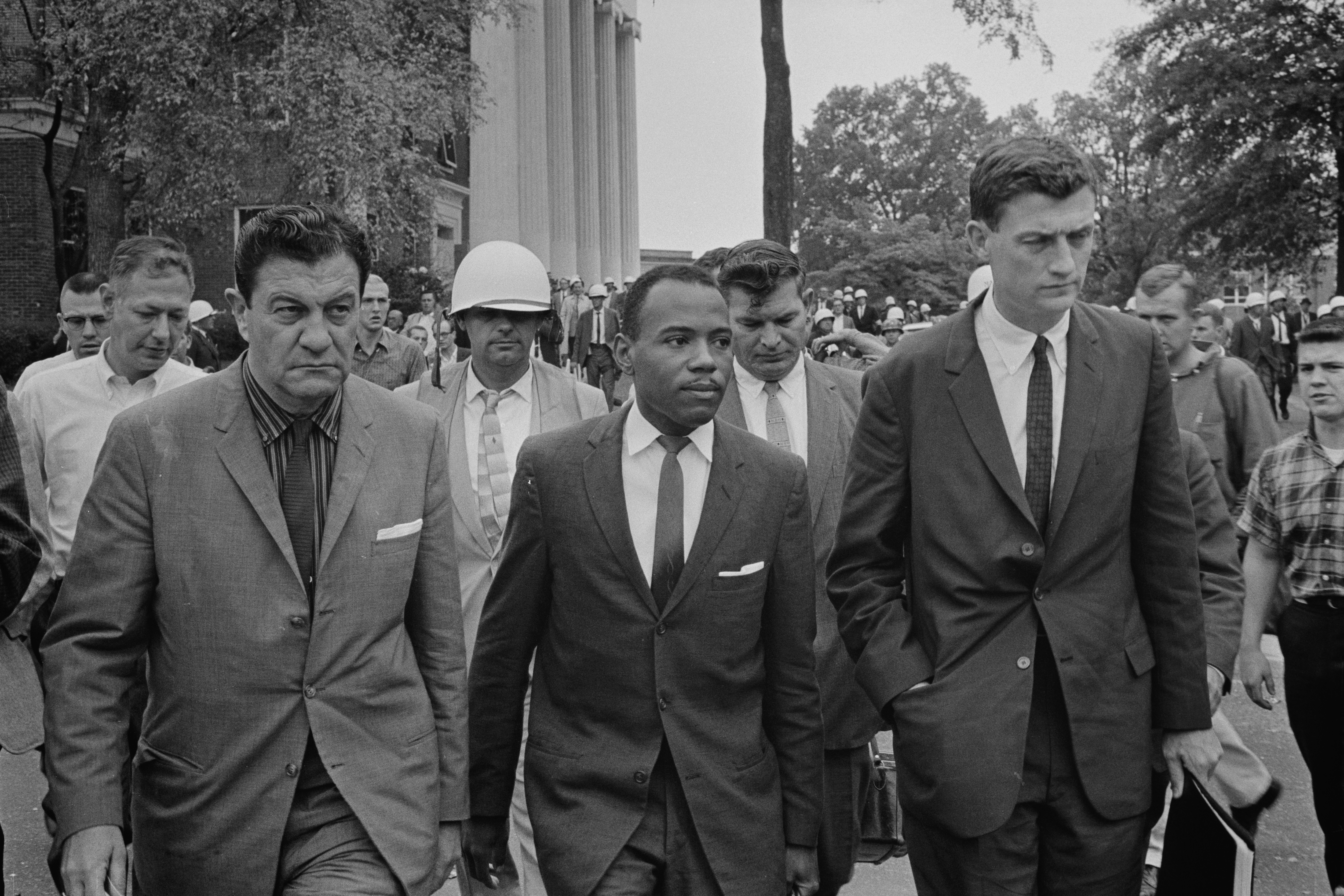 James Meredith (C) walking to class at the University of Mississippi, accompanied by U.S. marshals. Library of Congress. (Public Domain)
Nevertheless, the ramifications of the Brown decision spread far beyond education. If schools needed to be desegregated, the reasoning ran, then so did all of the other exclusionary racial practices then in place. The segregated restaurants, buses, clubs, and other enterprises and organizations disappeared one by one. And though some critics today still decry America as a racist country, since the ruling the United States has produced a black president, black military commanders and CEOs, mixed-race colleges and universities, and a society wherein people of all races share the same opportunities if they have the will and vision to pursue them.
The spark in this tumultuous reformation was Brown v. Board of Education.
The Amish, Religious Freedom, and Parental Rights
In the early 1960s, the Court’s ruling in two cases—Engel v. Vitale and Abington School District v. Schempp—effectively removed prayer and Bible readings from public school classrooms. Critics of that decision have since maintained that this constraint weakened morality in school.
In 1972, however, the Court championed religious freedom in the arena of education with its Wisconsin v. Yoder decision. In this case, the state of Wisconsin required students to attend school until the age of 16. Among the Amish, an eighth-grade education, usually attained by 14, was deemed satisfactory for their children’s future. When the state of Wisconsin demanded that Jonas Yoder and two other Amish fathers enroll their children in two more years of school, they resisted, arguing that the traditional Amish education adequately fitted young people for their agricultural lifestyle and that time in public school might endanger their faith.
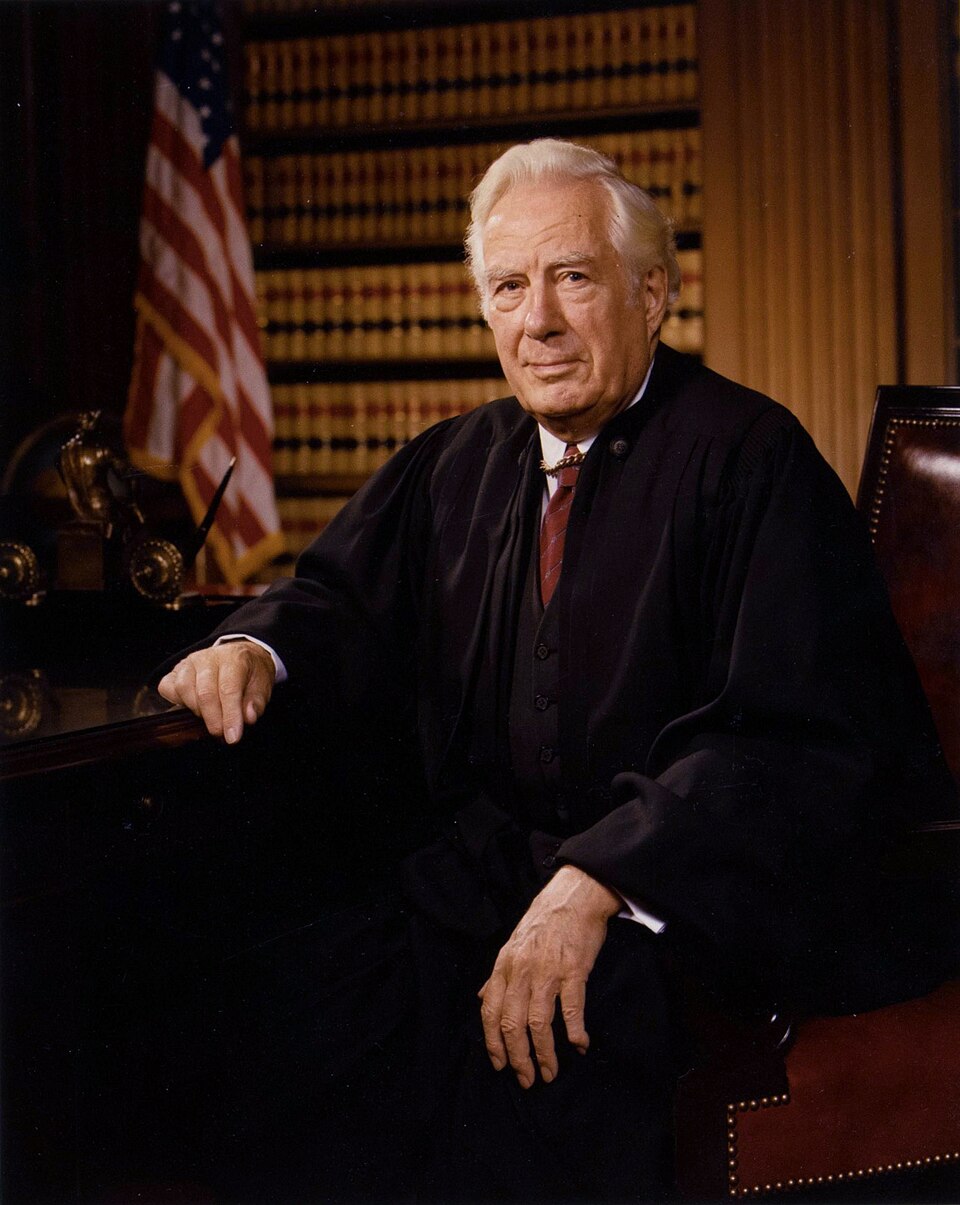 Supreme Court Chief Justice Warren E. Burger’s official photograph. (Public Domain)
Chief Justice Warren Burger, who had replaced Earl Warren in 1969, and the Court decided in favor of Yoder, primarily citing freedom of religion from the First Amendment. The National Constitution Center includes a lengthy excerpt from Burger’s opinion, which is worth reading both for its reflections on the Amish and as an example of a judicial mind at work. Here Burger wrote: “[T]he values of parental direction of the religious upbringing and education of their children in their early and formative years have a high place in our society.”
Beyond the Courtroom
Though not necessarily the intention of the Court, the Yoder case implicitly features two valuable insights into the American understanding of education which, because they are so familiar to us, are often overlooked. The first is the Court’s implied recognition of the parent as primary educator of the child. This concept is fiercely under attack by some educators and centers most recently on the teaching of sexual education and policies regarding gender in public schools, which many parents find offensive. In places like Northern Virginia, for example, schools continue to push an agenda of gender and sexuality over the objections of students, parents, and the U.S. Department of Education.
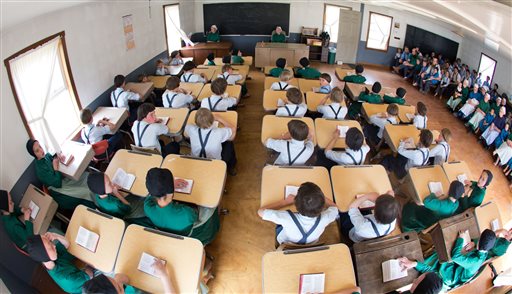 Amish children, from first through eighth grade, sing songs in German and English during the final day of class while their families listen, on Tuesday, April 9, 2013, in Bergholz, Ohio. (AP Photo/Scott R. Galvin)
Moreover, the Brown and the Yoder cases are indicative of the ideals and options in a republican education that are deeply rooted in our past. Unlike so many other nations, American elementary and secondary school students can attend a collage of public schools, charter schools, private academies—including those attached to churches and featuring a faith-based curriculum—and home schools and home school co-ops. Institutions of high learning include both state-supported and private colleges and universities, private and public trade schools, and various religious colleges.
Equal opportunities in education and a cornucopia of programs, schools, colleges, and universities from which to choose provide the springboards for students to pursue their dreams and ambitions.
What arts and culture topics would you like us to cover? Please email ideas or feedback to features@epochtimes.nyc