SEARCH


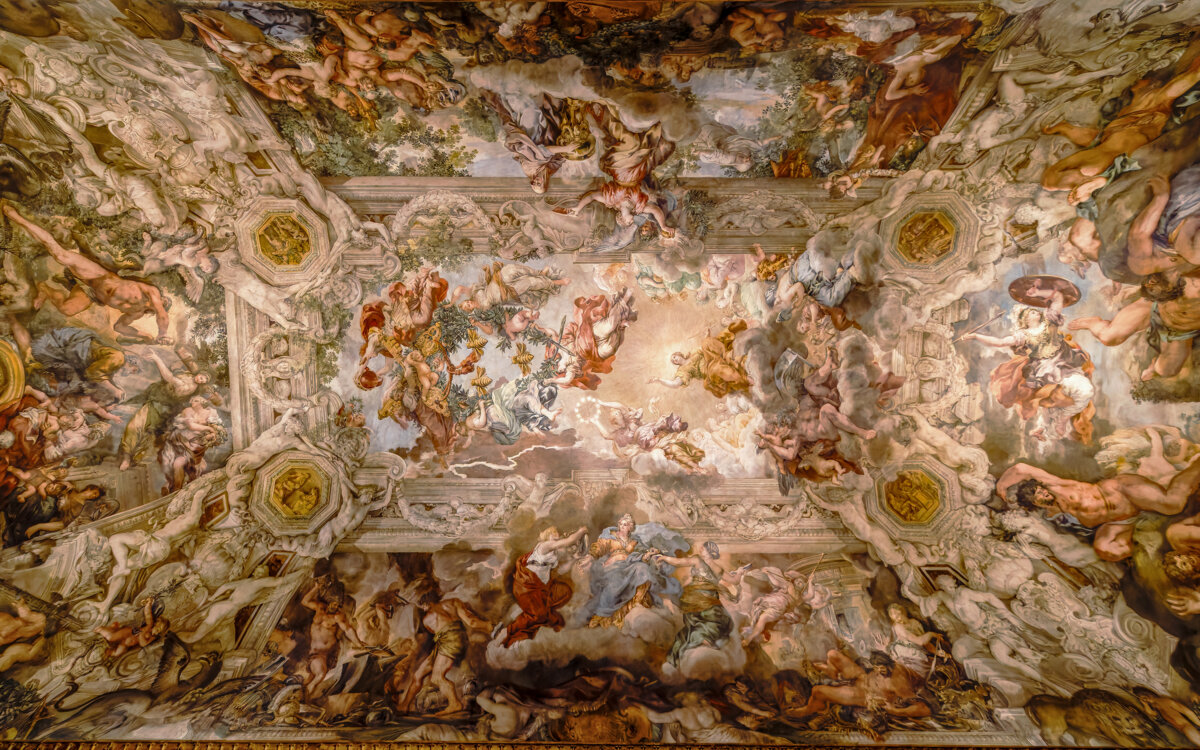
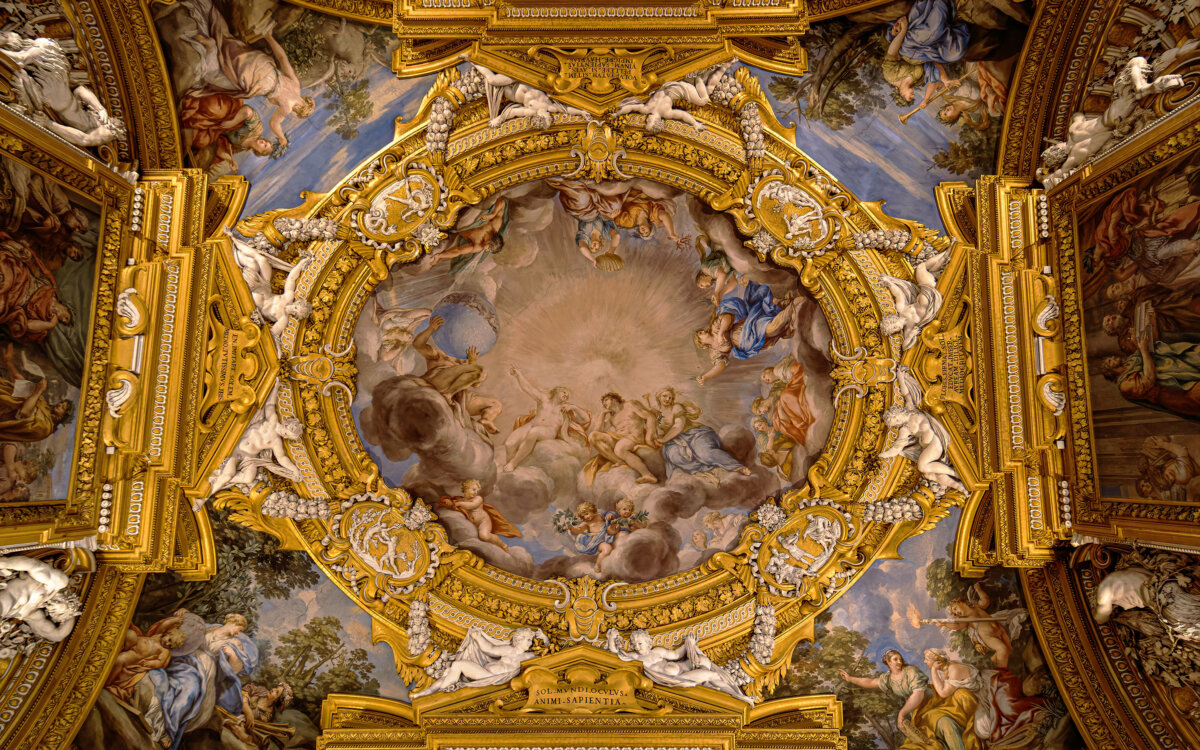
Step into the grand salon at Palazzo Barberini and look up; the ceiling seems to disappear. In the fresco “Allegory of Divine Providence and Barberini Power,” a bright sky pours light over a crowd of goddesses, angels, and putti, who tumble toward you as if heaven had burst through the plaster.
This is the world of Pietro da Cortona, the innovative Tuscan-born artist whose illusionistic ceilings became the model for baroque painters across Italy and beyond.
From Cortona to Rome
Born Pietro Berrettini in Cortona in 1596 or 1597, he later took his hometown’s name as his own. His family were artisans and masons, an upbringing that may have given him a feel for materials and architectural form.
He studied painting in Florence under Andrea Commodi, and, while in his teens, he moved to Rome. There, he trained in the studio of Baccio Ciarpi and absorbed the influence of Renaissance masters, classical sculpture, and the emerging baroque style. His early work included fresco decorations at Palazzo Mattei and several religious paintings.
In 1624, he began decorating the church of Santa Bibiana, a project overseen by Bernini, which introduced him to influential patrons and helped establish his reputation.
His career advanced through the patronage of the Sacchetti, a wealthy Florentine family closely allied with the Barberini family. Maffeo Barberini was elected Pope Urban VIII in 1623, and through the Sacchettis, Cortona was introduced to the new pope and his nephew, Cardinal Francesco Barberini. For the Sacchettis, he painted three large, dramatic works that demonstrate his growing command of dynamic composition. Instead of arranging figures in restrained order, he filled the canvases with energetic movements and shifting perspectives that draw the viewer into the scene. These qualities would come to define his mature style, later seen in his frescoes.
The Ceiling That Opened the Sky

Capitoline Museums, Rome. (Public Domain)
Cortona’s greatest opportunity came from the same patron who had launched his career. In 1625, Pope Urban VIII bought a villa on Rome’s Quirinal Hill from the Sforza family and resolved to transform it into a residence for his nephews. He commissioned Carlo Maderno, who retained the original villa at the core of the design and extended the new building around it.
After Maderno’s death in 1629, the legendary rivals Gian Lorenzo Bernini and Francesco Borromini carried the work forward, and the Palazzo Barberini became a showcase of Baroque architecture. Bernini designed the immense square staircase, while the stylized spiral staircase is attributed to Borromini.
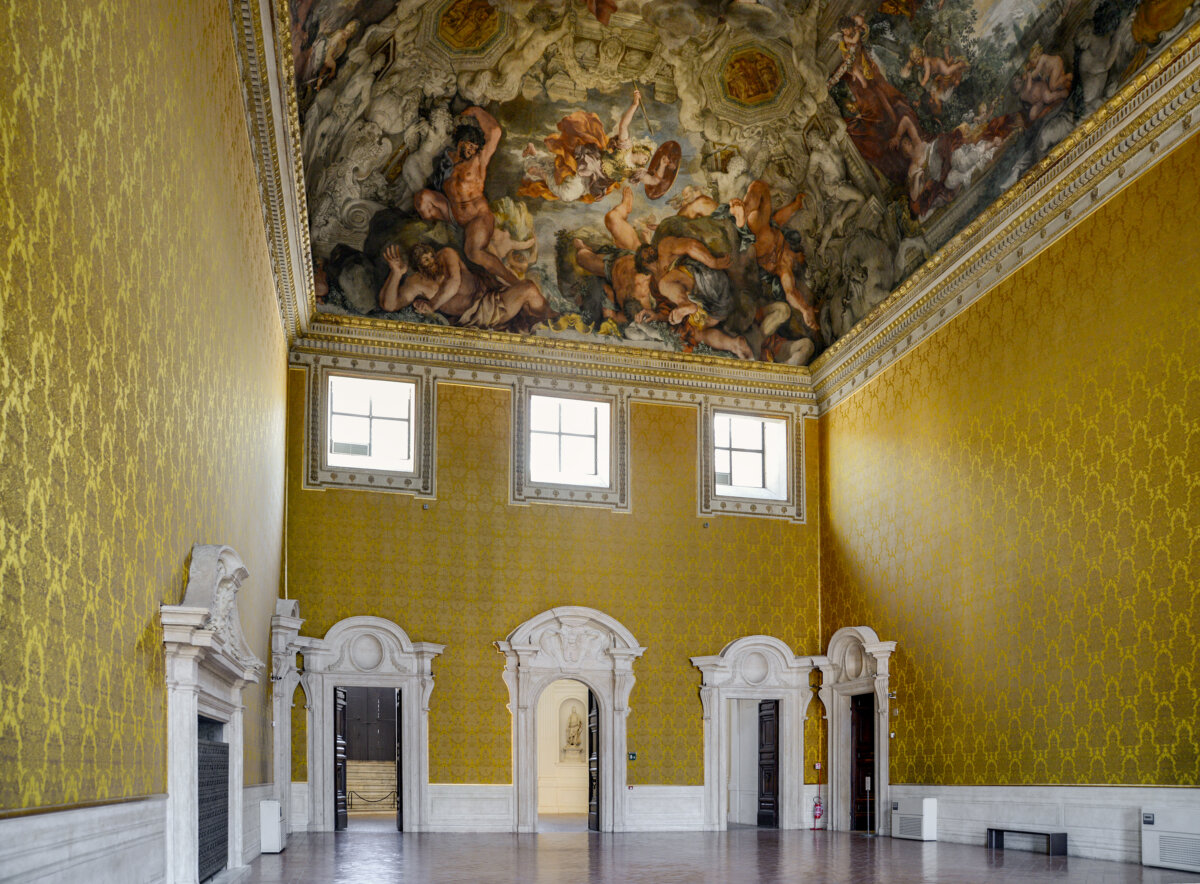
In 1633, Cortona was commissioned to paint the ceiling of the palace’s grand salon. Completed in 1639, his fresco, “Allegory of Divine Providence and Barberini Power,” celebrates the family’s influence and presents its rise as part of a divine plan.
At the center, Divine Providence represents God’s guidance and approval of earthly events. Nearby, Immortality holds a crown of twelve stars above a swarm of golden bees, taken from the Barberini crest, which stand for the family and its growing power. The keys to the kingdom of heaven and the papal tiara tie that authority directly to the church.
Other figures reinforce the message: Time, with his scythe, evokes mortality and the passing of years, while laborers at a forge along the edges symbolize the effort and industry behind the family’s achievements. Together, these elements portray the dynamic Barberini family as guided and blessed by heaven.
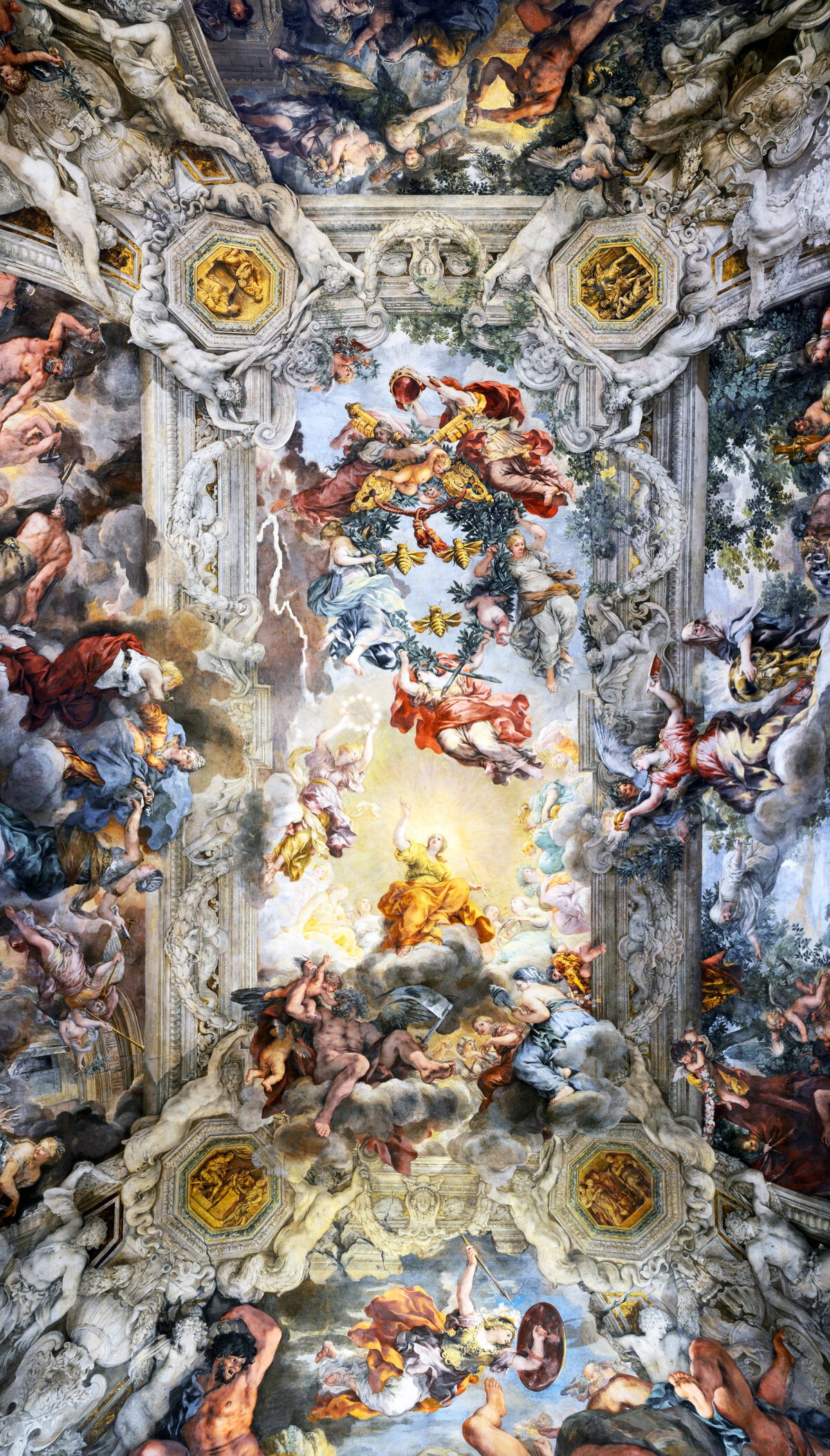
What made the work revolutionary was how it was painted. Cortona did not treat the ceiling as a flat surface. Instead, he used “di sotto in sù,” an Italian term meaning “from below upward,” to paint figures and architectural details as if suspended high above the viewer. Combined with “quadratura,” the use of painted architecture and forced perspective made the room’s ceiling seem to open up.
Illusionistic ceilings were not new to Italy, but Cortona pushed the technique to unprecedented grandeur. Painted frames seem to crumble as lifelike figures spill over their edges, suggesting that the scene extends beyond the ceiling itself. Because the composition was designed to be viewed from many points in the room rather than from a single vantage point, the figures appear to shift as visitors move beneath them. This effect was deliberately political and religious, meant to inspire awe at the power of the new papacy, and it did.
Beyond the Ceiling
The success of “Allegory of Divine Providence and Barberini Power” soon brought Cortona commissions beyond Rome. In 1637, Grand Duke Ferdinando II de’ Medici, the ruler of Tuscany, invited him to decorate rooms at the Palazzo Pitti in Florence. He began with frescoes illustrating the Four Ages of Man, a story from Ovid’s “Metamorphoses” that traces humanity’s decline from an age of innocence to one of violence. Each age is named for a metal: golden, silver, bronze, and iron.
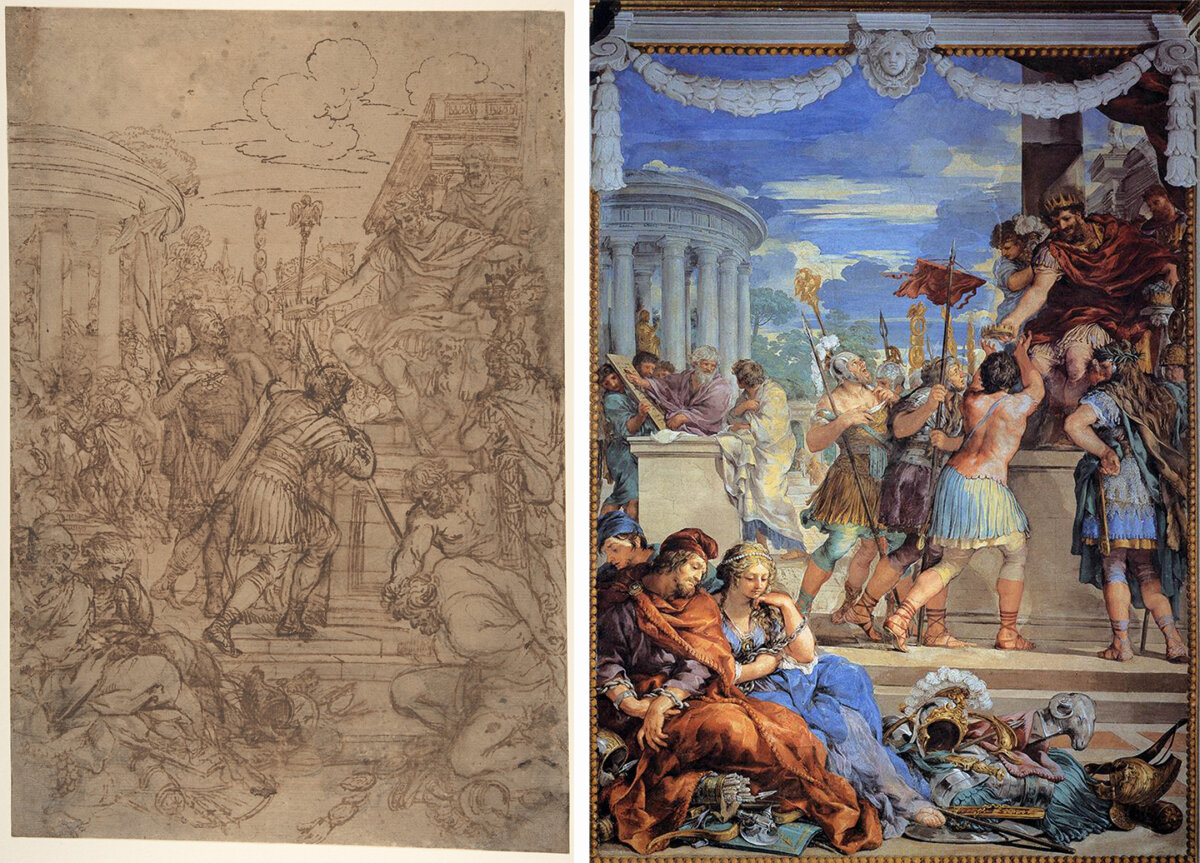
Cortona then designed the decorative program for the five Planetary Rooms, each dedicated to a celestial body: Venus, Apollo (the sun), Mars, Jupiter, and Saturn. Their ceilings combine stucco, gilding, and painted allegory, in which figures and scenes stand for ideas, to present the Medici as virtuous rulers. When Cortona returned to Rome in 1647, his collaborator, Ciro Ferri, completed the cycle.
Cortona continued to paint religious and mythological subjects for churches and private patrons, including frescoes at Santa Maria in Vallicella and the gallery ceiling of Palazzo Pamphilj in Rome. Beyond painting, Cortona was an accomplished architect, best known for the church of Santi Luca e Martina, and from 1634 to 1638 he headed the Academy of St. Luke, Rome’s painters’ guild and art academy. He died in Rome on May 16, 1669.
By fusing painting, architecture, and decoration into a single unified scheme, Cortona gave later generations a language of spectacle that outlasted the baroque. To this day, anyone who tilts their head back and feels a ceiling give way to the sky is still standing inside the world he imagined.
What arts and culture topics would you like us to cover? Please email ideas or feedback to features@epochtimes.nyc.