SEARCH



Author Bonnie Garmus made quite a splash with her wildly successful 2022 debut novel, “Lessons in Chemistry.” Garmus’s second novel, “Peck & Peck,” features surprisingly few hints of the heavy-handed feminist activism that dominated her previous effort.
Regardless of the reasons behind this change of direction, she’s crafted a largely character-driven novel about a young poetry enthusiast named Batter Gray, who struggles to find direction in his life. Then, in 1982, he gets a dream interview at his favorite poetry magazine, the eponymous Peck & Peck.

Criminal Poet?
The first thing Garmus establishes is that the hero is a criminal. “I’ve been called a thief,” says Batter, “a rebel, an upstart, a traitor, and—maybe this one won’t come as a surprise based on the others—Prisoner 83A0956.” The second thing is that Batter got his unusual name after a cherished family dog he never met.
Batter’s mother, Rainey, is a type designer by profession. She’s sweet, positive, encouraging, and filled with out-of-the-box thinking. When she spies a poetry book using a liturgical typeface, however, it’s a “typographic felony” worthy of jail time.
Rainey may also be slightly delusional. She recounts that Batter’s namesake dog once found a wallet full of 100-dollar bills; all on its own, the dog returned the money to the impoverished children it was meant for. Batter is understandably incredulous.
His historian father, John, likes to yell at television news coverage: “As Agent Orange spewed, Detroit burned, and astronauts died,” demanding, “Stop it!” Batter notes: “Such is the fate of historians—no one seems to take their lessons of the past seriously.”
Throughout childhood, Batter is drawn to poetry. He considers being a poet when he grows up but understands why his parents are nervous. “The words ‘I made a killing in poetry’ have never been uttered.”
Opportunity Pecks
After a disappointing college experience, Batter lands in New York City, where he works at the Gap but still obsesses over poetry. “I don’t want to write,” he decides; “I want to discover. Like the way Brian Epstein discovered the Beatles.” His big break soon comes in the form of a surprise interview at Peck & Peck.
Editor-in-chief Salton Peck is passionate but aggressive, closer to Gen. MacArthur than what you’d expect from the head of a poetry magazine. Salton is heavily fixated on making money, and he seems perfectly willing to bend rules to do so. One scheme has him publishing a notable celebrity’s questionable work, misspellings and all, to generate publicity.
The other Peck, Salton’s twin brother, Declonius, is noticeably absent. Some scandal in the publisher’s past keeps him away—or so it appears.
The building that houses Peck & Peck is chock-full of oddballs, none more exasperating than Salton’s assistant, Dexter. He’s handsome, immaculately dressed, and speaks several languages fluently but also arrogant and conniving with a gift for condescension. He takes obvious delight in making Batter’s life miserable.
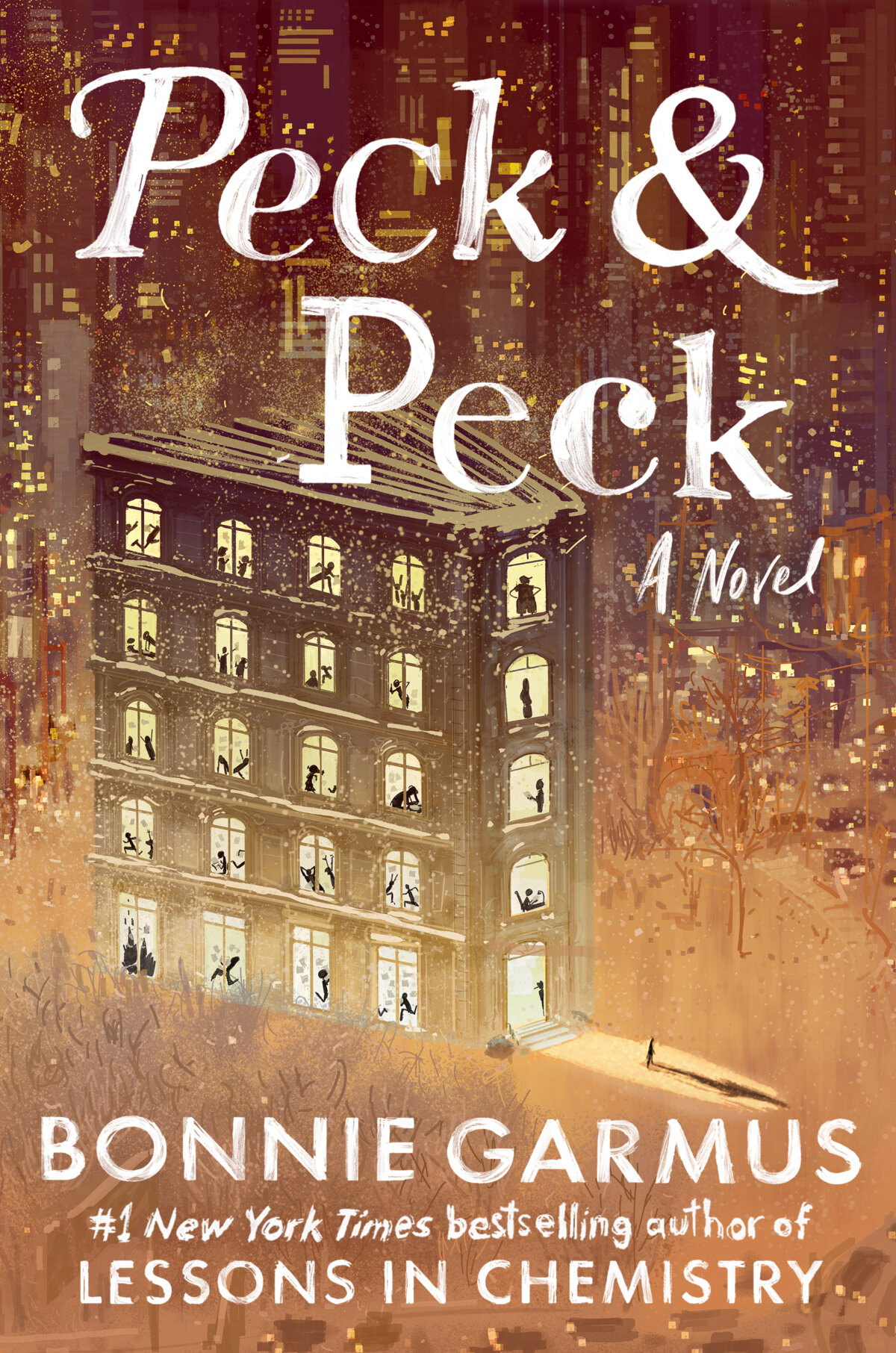
The headquarters is a character in itself: a thin, five-story building on a triangular lot topped by glass domes, with topiary letters spelling out poems along its balconies. It includes the Editorial Aviary, which is a meeting room lined with thousands of bird eggs, and a different wall color for each floor.
Batter gets assigned the decrepit bomb shelter as his office, and most of his co-workers are surprised to find anyone there, much less him.
Soapy Fun
Garmus’s writing style leans toward the vlog: slightly rambling and impulsive at times. For the most part, however, she holds the reins tight and doesn’t let her characters’ whimsical natures gallop away from her. Batter’s poetic inner voice and his perspectives on life drive the story, and Garmus smartly keeps him from taking himself too seriously.
Initially presenting Batter as a semi-serious criminal is a mild case of false promises, and Garmus doesn’t explain it until almost the end. However, her charming writing quickly makes you forget this oversight.
About halfway through the book, readers drive headlong into daytime soap opera territory. There are subplots about who loves whom, mysterious strangers, surprise lineage reveals, personal conspiracies, strange messages in the aviaries, and betrayals.
It gets a bit convoluted, and some readers might find that there are a few too many shocking twists. Nevertheless, others will gleefully gobble this up.
Later on, the DEI box gets checked with a secret gay relationship subplot that’s paired with related 1980s issues. Arguably, there’s a trope and historical precedence of gay people in the arts, but it still feels like it’s shoehorned in for political points. It seems Garmus hasn’t fully left her activism impulses behind.
Though somewhat overlong and too reliant on personal intrigues, many readers will find “Peck & Peck” to be a lot of fun.
Garmus herself seems to be having a blast here, and—despite its problems—the joie de vivre she instills in this quirky world of poets and poetic misfits is infectious.
‘Peck & Peck’
By Bonnie Garmus
Scribner: Oct. 13, 2026
Hardcover, 432 pages
What arts and culture topics would you like us to cover? Please email ideas or feedback to features@epochtimes.nyc