SEARCH


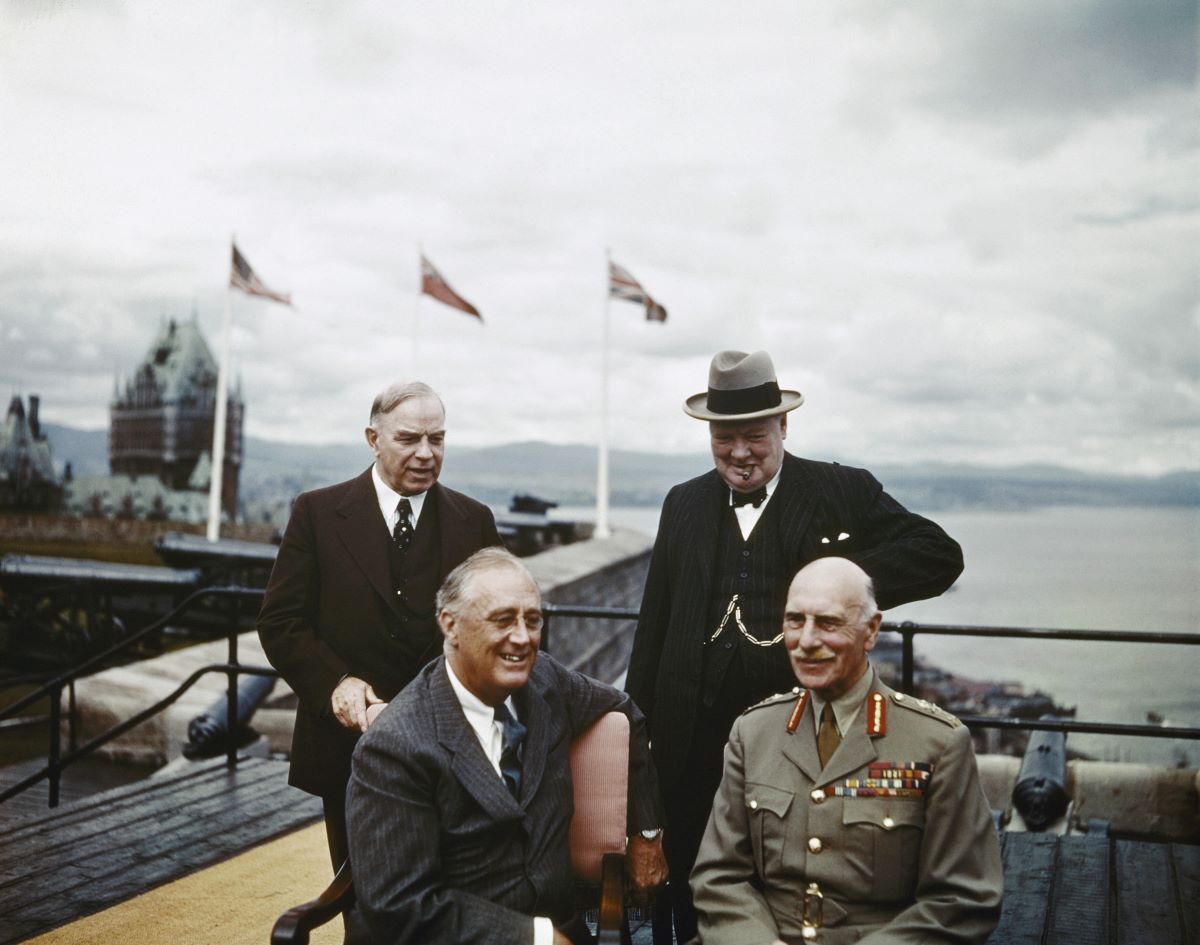
When Canadian Prime Minister William Lyon Mackenzie King learned that President Franklin D. Roosevelt would be reviewing American troops in Ogdensburg, New York, he chose to visit him. King’s decision was a secret, and he arrived with only a few people knowing he was coming. Even his minister of defense, James Layton Ralston, knew nothing of the visit. The secret meeting could only remain secret for so long. That evening, on Aug. 17, 1940, newspapers published reports about the two leaders meeting in Ogdensburg and their discussions aboard a train car.
Canada entered World War II in September 1939, shortly after Great Britain declared war on Nazi Germany, prompted by its invasion of Poland. A year later, America had maintained its neutrality. Its national defense against a seemingly unstoppable German war machine, however, became a high priority.
When King and Roosevelt met on Aug. 17, the two discussed the necessity of protecting the Western Hemisphere, specifically, North America. What became known as the Ogdensburg Declaration established a Joint Board on Defense, which studied possible threats by sea, land, and air, and ultimately paved the way for future defense agreements and cooperation between the two countries.
Early Warnings
Although WWII ended in 1945 with the defeat of Nazi Germany and the Axis Powers, the threat to the Western Hemisphere remained as the Soviet Union expanded and the Cold War began. August 1945 had witnessed the Americans using nuclear arms. By 1949, the Soviets successfully tested their first nuclear weapon. The year before this test, the Soviets produced its first long-range bomber, the Tupolev 4, which was built through reverse engineering the American B-29 bomber. As the 1940s gave way to the 1950s, America and the Soviet Union began a long standoff called the Arms Race, in which they consistently developed faster, stealthier, and more powerful weapons.
For mutual protection, America and Canada began building radar stations to monitor the northern half of their hemisphere. They placed these stations along the Pinetree Line, which saddled much of the U.S.-Canadian border; the Mid-Canada Line, which stretched across most of Canada’s 55th Parallel; and in the Arctic Region across what was termed the DEW Line, which stood for Distant Early Warning Line. Indeed, the hope was in the DEW Line’s name.
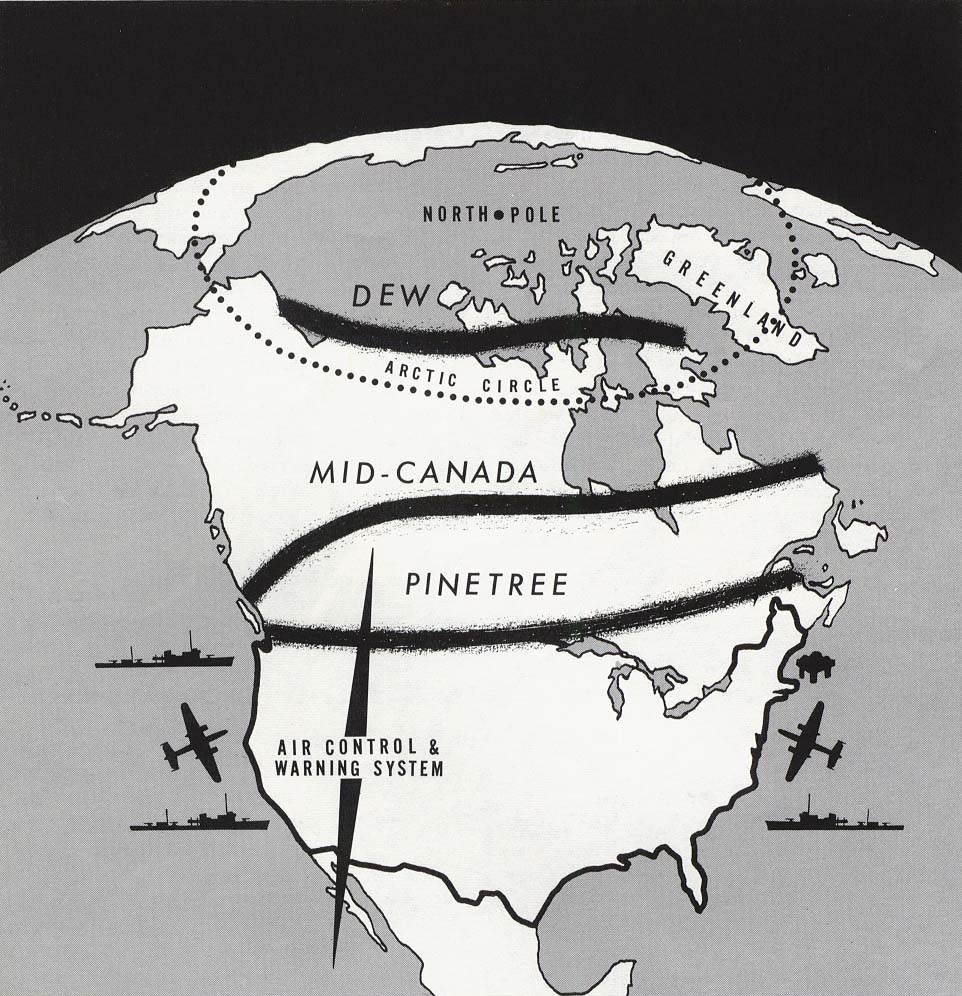
This network of radar stations became part of the North American Air Defense Command (NORAD), which was established to be the cutting edge of an early alert system in the case of an attack. NORAD was officially established on May 12, 1958, though it had been implemented at Ent Air Force Base (AFB) in Colorado Springs on Sept. 12, 1957.
Building to NORAD
NORAD, in a sense, had been a decade-long project. In 1946, the War Department established Air Defense Command (ADC), but it was practically toothless, because the Truman Administration had extensively demobilized the military. As the Soviet threat became clearer with the development of the Tupolev 4, the detonation of its atomic bomb, and the start of the Korean War, the administration reversed course. It made more resources available to ADC, which was reconstituted at Ent AFB in 1951. In 1954, the year after the Korean War ended, a unified command called the Continental Air Defense Command (CONAD), composed of units from the Navy, Army, and Air Force, was established.
The idea behind CONAD directly influenced the binational defense agreement of NORAD. When NORAD was set up, Earl Patridge, who commanded ADC and CONAD, became commander of NORAD, joined by his Canadian counterpart, Roy Slemon, who was installed as deputy commander.
As the Cold War continued and the Arms Race progressed, NORAD worked to keep up by building off-shore radar stations, expanding its Air Force squadrons, creating the Space Detection and Tracking System, implementing antiballistic missiles, and updating operating systems and complexes, including the creation of the Cheyenne Mountain Complex Operations Center in Colorado Springs.
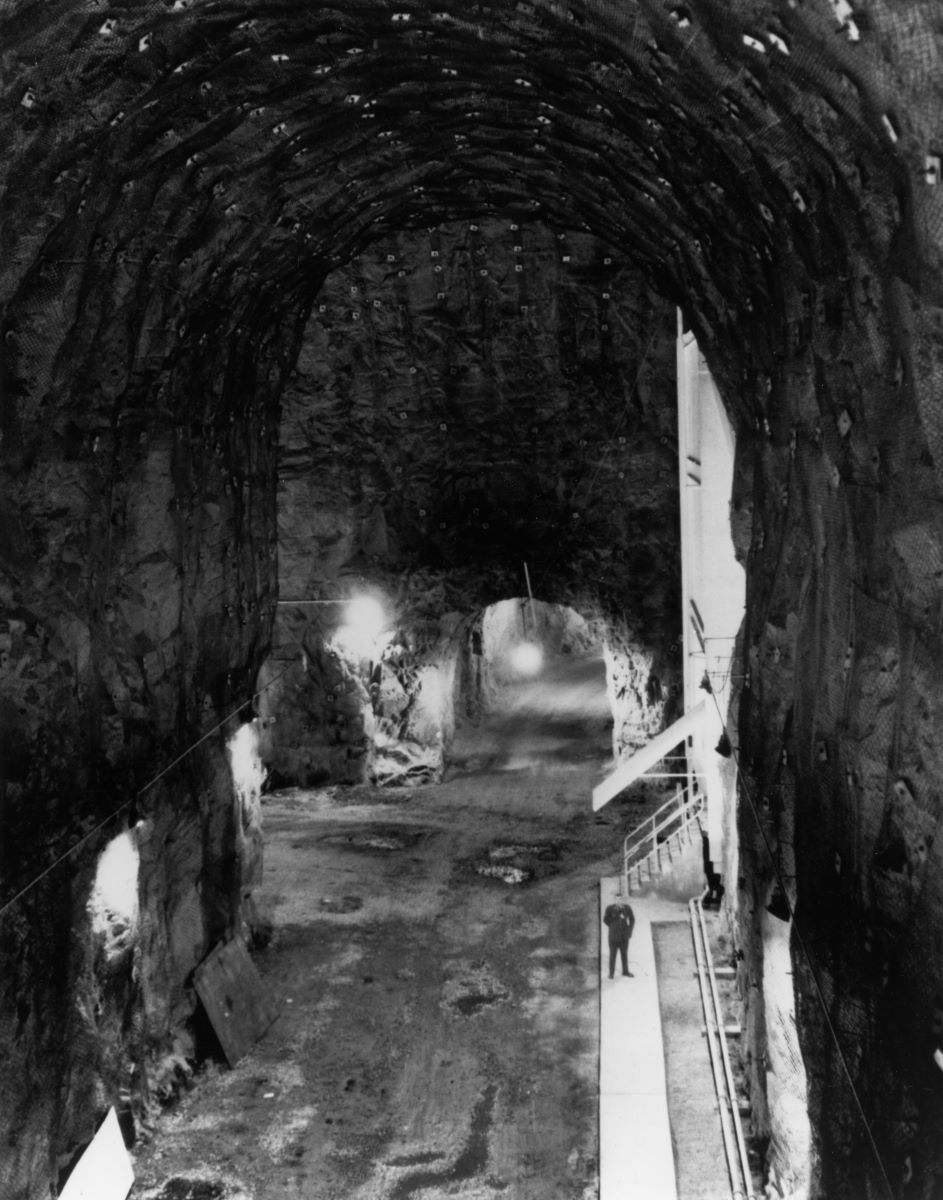
The Arms Race, with its continual development of intercontinental ballistic missiles (ICBM), and the Space Race, with its increasingly sophisticated satellites and spacecraft, made the objective of keeping North America safe from aerial attack more and more difficult. By the end of the 1970s, defense advancements and initiatives had become increasingly elaborate. Indeed, they had become so elaborate that they nearly led to nuclear annihilation.
Six Horrifying Minutes
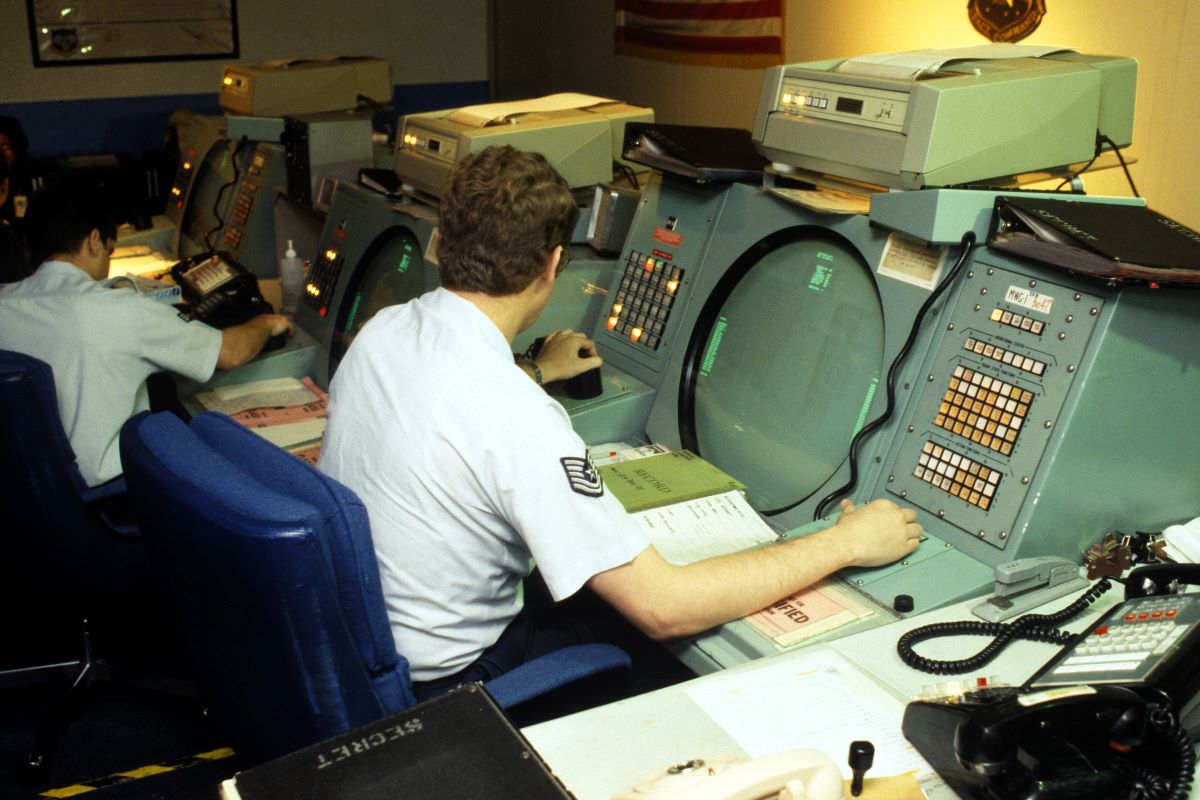
In 1979, at the Cheyenne Mountain Complex Operations Center, the 427M early warning computer system became fully operational. It was the latest technological advancement. There was one major glitch, and it was one that often plagues any technology: human error.
It was during this week in history, on Nov. 9, 1979, at approximately 9 a.m. EST that the 427M system alerted NORAD to a massive Soviet missile attack. All of the NORAD Command Centers located in the United States., Canada, and Great Britain, were alerted. Immediately, a Threat Assessment Conference was convened. It appeared to be an “end of world” scenario as 1,400 ICBMs were bearing down on the continent. NORAD’s interceptor force was placed on alert and approximately 10 fighter jets were scrambled. The President’s doomsday plane was also launched, though without President Jimmy Carter aboard.
For nearly six minutes, it was believed that a preemptive attack had been orchestrated by the Soviet Union. After those horrifying minutes were over, it was discovered that someone had accidentally transmitted a war game video tape through the 427M computer system.
A Complacent Response
In a Nov. 20 memorandum to President Carter, Secretary of Defense Harold Brown explained the error, and that, although unfortunate, the assessment procedures put in place were properly followed, ensuring “the threat was clearly, correctly, and conclusively evaluated as spurious in less than six minutes of the first alarm.”
Secretary of State Cyrus Vance echoed those sentiments to the U.S. Mission at NATO, stating “the system was again shown to be responsive, to have safeguards against hasty action, and to have a design which assures that human judgment can override inadvertent malfunctions.”
Not everyone was soothed by the calm rhetoric. The press released information about the incident two days after it occurred. Soviet General Secretary Leonid Brezhnev expressed his “extreme anxiety,” stating, “I think you will agree with me that there should be no errors in such matters.”
Considering the longheld tension between the two states, the Carter Administration issued Brezhnev a dismissive response, which was not well received. Marshall Shulman, an adviser to Vance and a scholar on Soviet affairs, was alarmed by the entire episode; he noted the false alarms were “not a rare occurrence.” Furthermore, he believed the United States was complacent in addressing the problem.
Secretary Brown informed the president that “we must be prepared for the possibility that another, unrelated malfunction may someday generate another false alert.” Indeed, two such malfunctions took place on June 3 and 6, 1980.
On June 7, Zbigniew Brzezinski, assistant for National Security Affairs, made it clear that “this latest erroneous attack warning by the NORAD–SAC computer system is creating not only operational problems for us but also public perception and political problems.”
The problems of the 427M system were eventually resolved by the implementation of upgraded systems in the 1980s during the Ronald Reagan Administration. The Nov. 9, 1979, incident, however, became immortalized by the 1983 film “WarGames.”
NORAD continues its vision “to outpace global competitors, deter adversaries, deny and defeat threats through all-domain awareness, information dominance, decision superiority, and global integration.”
Never miss a This Week in History story! Sign up for the American History newsletter here.
What arts and culture topics would you like us to cover? Please email ideas or feedback to features@epochtimes.nyc.