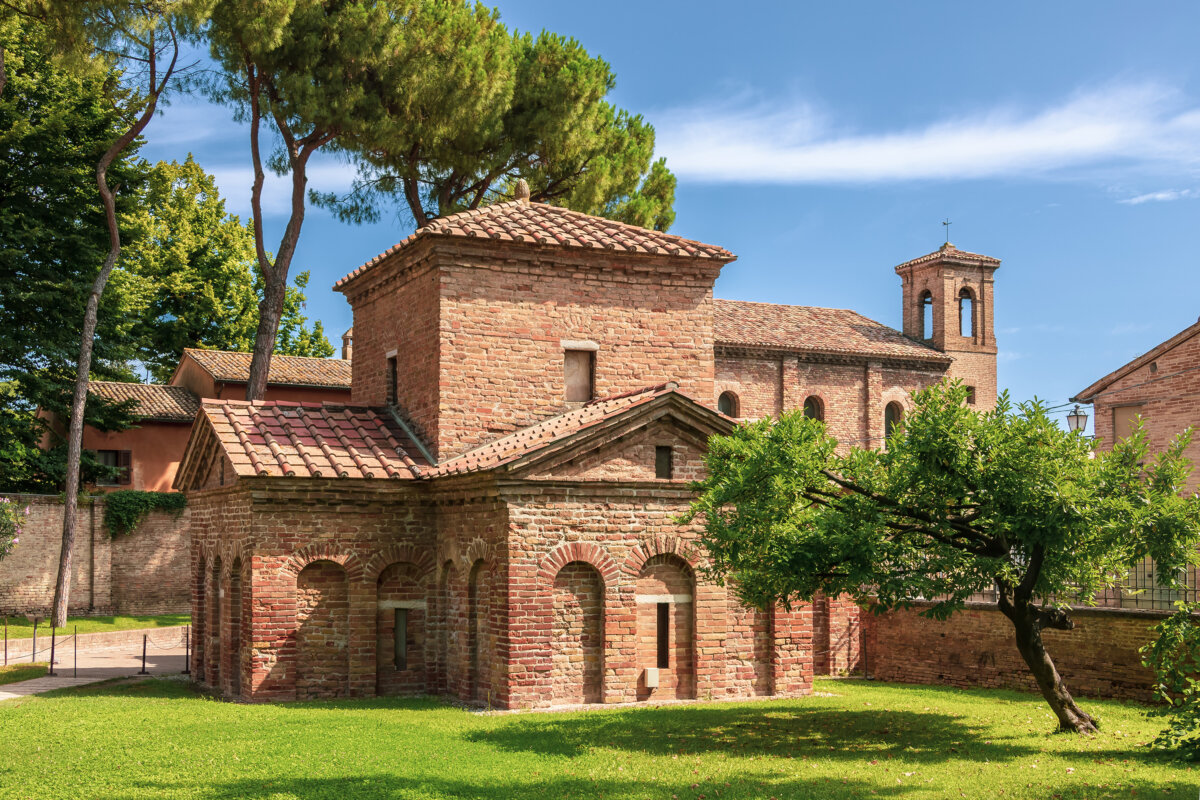
Designed as a cruciform, meaning the floor plan has sections that extend on each side in the shape of a cross, the mausoleum has a central square tower that is actually a dome on the inside. Besides the architectural arches and pediments, the only adornments on the mausoleum’s exterior are the alabaster crossheads over the small windows. (MaxMaximovPhotography/Shutterstock)
Ravenna, located in the northern part of Italy’s “boot,” became the capital of the Western Roman Empire in the 5th century. Its ruler, Galla Placidia, daughter of Theodosius, oversaw the construction of many historic buildings in the city, including the mausoleum that bears her name. Originally attached to a church, the small but significant structure was intended as Placidia’s final resting place. However, she died in A.D. 450 while visiting Rome and was buried there.
Constructed of ancient, reused Roman bricks, the mausoleum has a staid exterior, with the only architectural interests being symmetrical brick arches and pediments as well as a central, low tower. Yet, its interior has been the awe-inspiring draw for centuries. Original, elaborate mosaics made of stone and glass are intact and remarkable.
Some of the motifs conveyed in the mosaics are acanthus leaves, grapevines, flowers, doves, and waves. Either decorative images or biblical scenes cover every square inch of the deep-set alcove arches, which sit atop a marble wall. Mosaics also cover the tower’s interior dome.
A UNESCO World Heritage monument since 1996, the Mausoleum of Galla Placidia is not only one of the oldest buildings in Ravenna but its most revered.
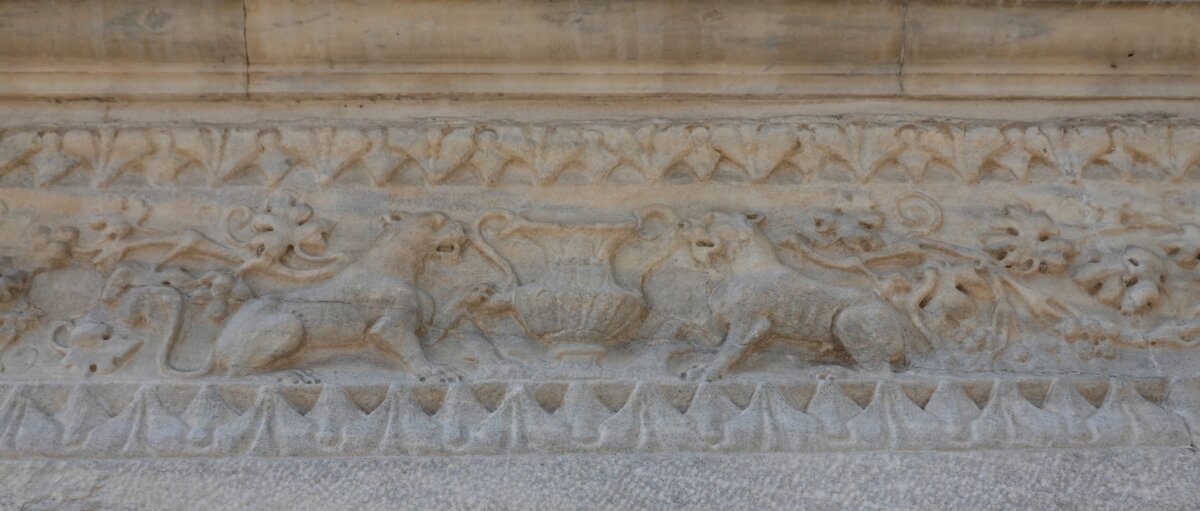
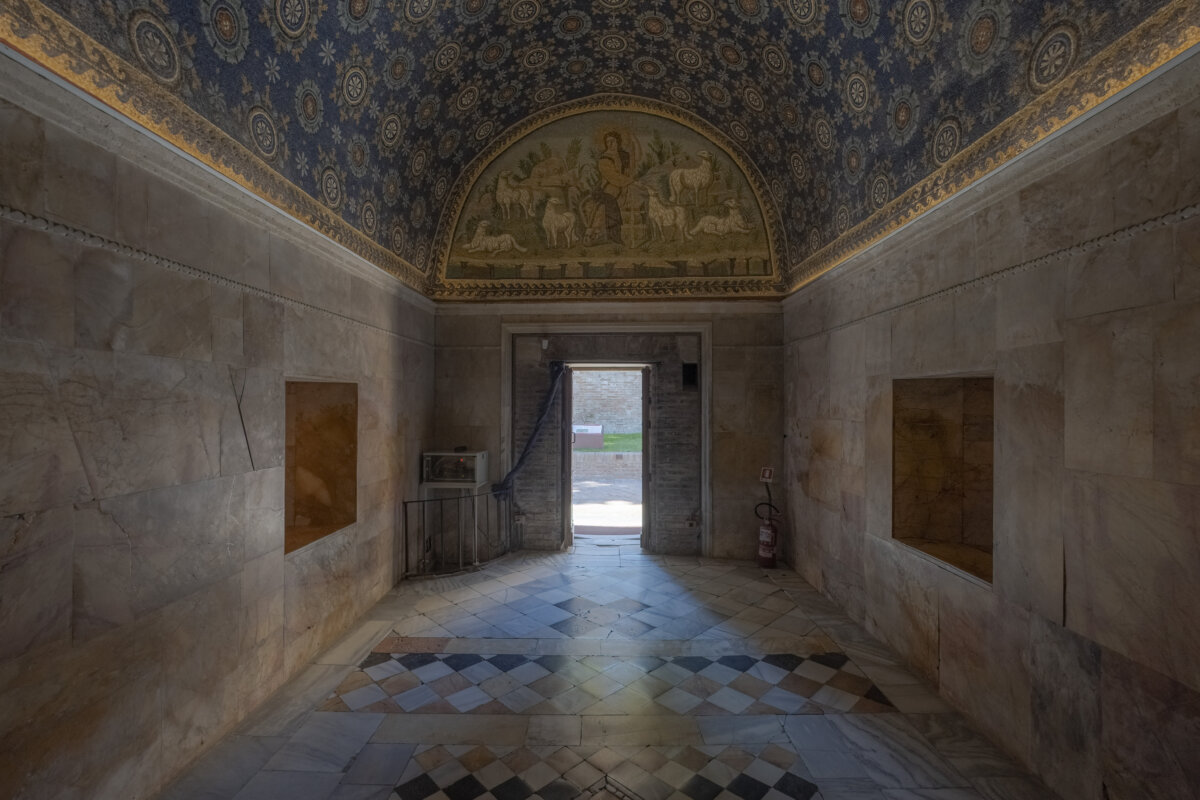
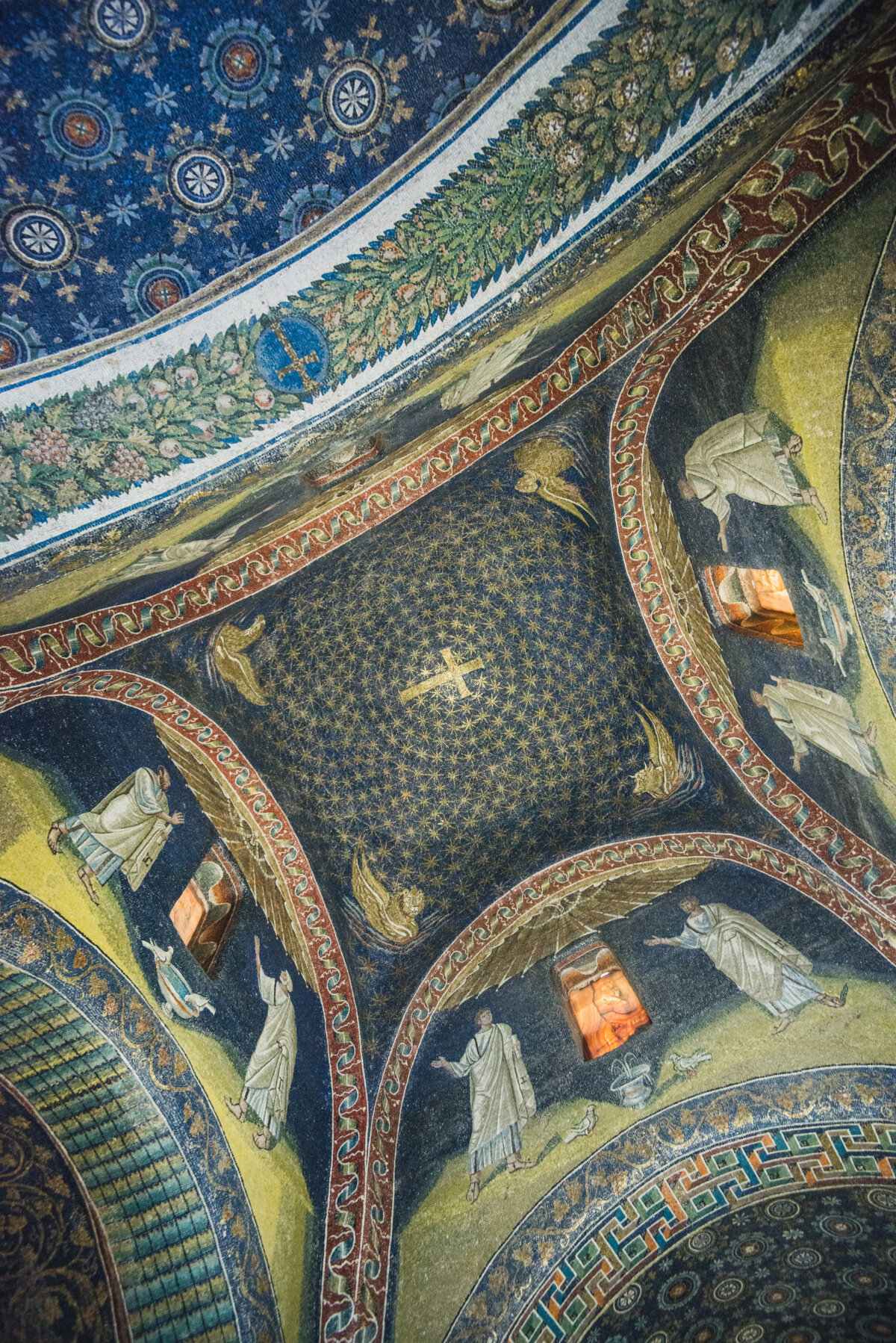
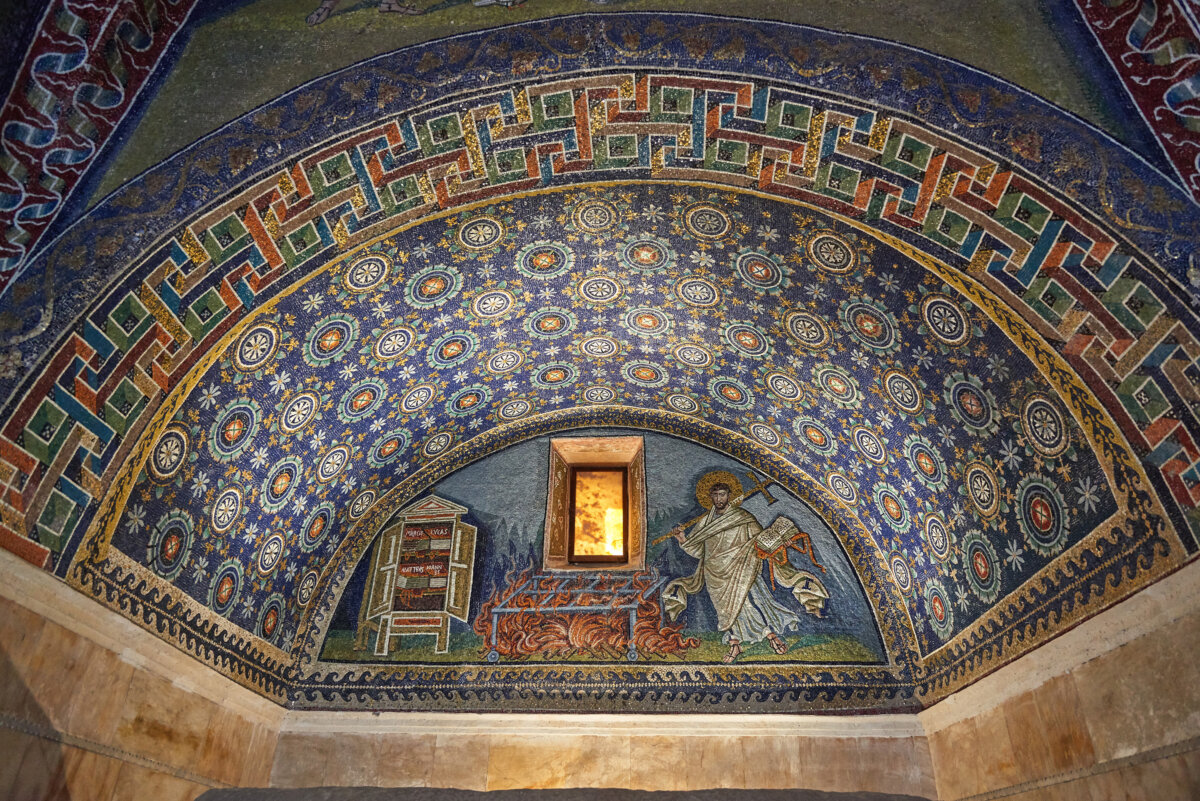
Supposedly once covered in marble, the surviving embellishment over the mausoleum’s entryway is a stone lintel featuring a carved frieze. Two lions, ancient Roman symbols of courage, flank a large urn. Urns were often used to hold the ashes of the deceased; thus, the symbolic lions guard those who were buried in the mausoleum. The carved grapevines on either side of the lions signify a connection with God. (Richard Mortel/CC-BY-2.0) Over the mausoleum’s interior entrance door is a lunette, or half-moon art space, featuring a complex mosaic of Christ as the good shepherd surrounded by sheep. Gilded tiles depict Christ’s clothing and halo. Palm fronds in the scene are also flecked with gold. The lunette is enclosed by a barrel-vault ceiling covered in a floral mosaic pattern. Earth-toned marble walls and a marble-pattern floor contrast with the ornate mosaic arrangements in the ceiling and lunette. (Filippo Maria Bianchi/Getty Images) The interior dome sits on a pendentive, which is a triangular-shaped base typically within an exterior square tower. The dome’s center is bedecked with a starry sky scene with a cross as its centerpiece. The four creatures of the Apocalypse are represented surrounding the night sky. Regal gold, red, and blue make up the dominant mosaic color palette throughout the mausoleum’s interior. (red-feniks/Shutterstock) Another significant mosaic lunette inside the mausoleum is located on the structure’s back wall. It depicts what has historically been presumed to be a saint holding a book—most likely the bible—and a cross. The saint appears to be running toward a fire flickering out of a grill. Many historians believe the saint is St. Lawrence, who was martyred by fire. (JIPEN/Shutterstock) One of the main stone sarcophagi in the mausoleum lies beneath the lunette of the saint. Also, painstakingly depicted in the intricate mosaic tilework is an open cabinet featuring the four Gospels, Matthew, Mark, Luke, and John, labeled in Latin. Hundreds to thousands of white tiles also depict the saint and other figures in the room, in layers of robes, as if they were ancient Romans. (Carole Raddato/CC-BY-SA-2.0) All three sarcophagi inside the Mausoleum of Gallo Placidia are empty. Shaped like a trunk, this sarcophagus is also carved of stone. It is located under one of the smaller deep-set alcove arches. The lunette scene surrounding a small window showcases a mosaic of deer drinking from a baptismal font. The carving on the sarcophagus depicts a lamb, representing Christ, standing under a column-supported pediment. On either side of the lamb, carved crosses appear within arches atop Solomonic columns. The left-side arch includes a shell design, while the right side has a fanlight design. (Carole Raddato/CC-BY-SA-2.0)
What arts and culture topics would you like us to cover? Please email ideas or feedback to features@epochtimes.nyc.
A 30-plus-year writer-journalist, Deena C. Bouknight works from her Western North Carolina mountain cottage and has contributed articles on food culture, travel, people, and more to local, regional, national, and international publications. She has written three novels, including the only historical fiction about the East Coast’s worst earthquake. Her website is DeenaBouknightWriting.com
 SEARCH