SEARCH


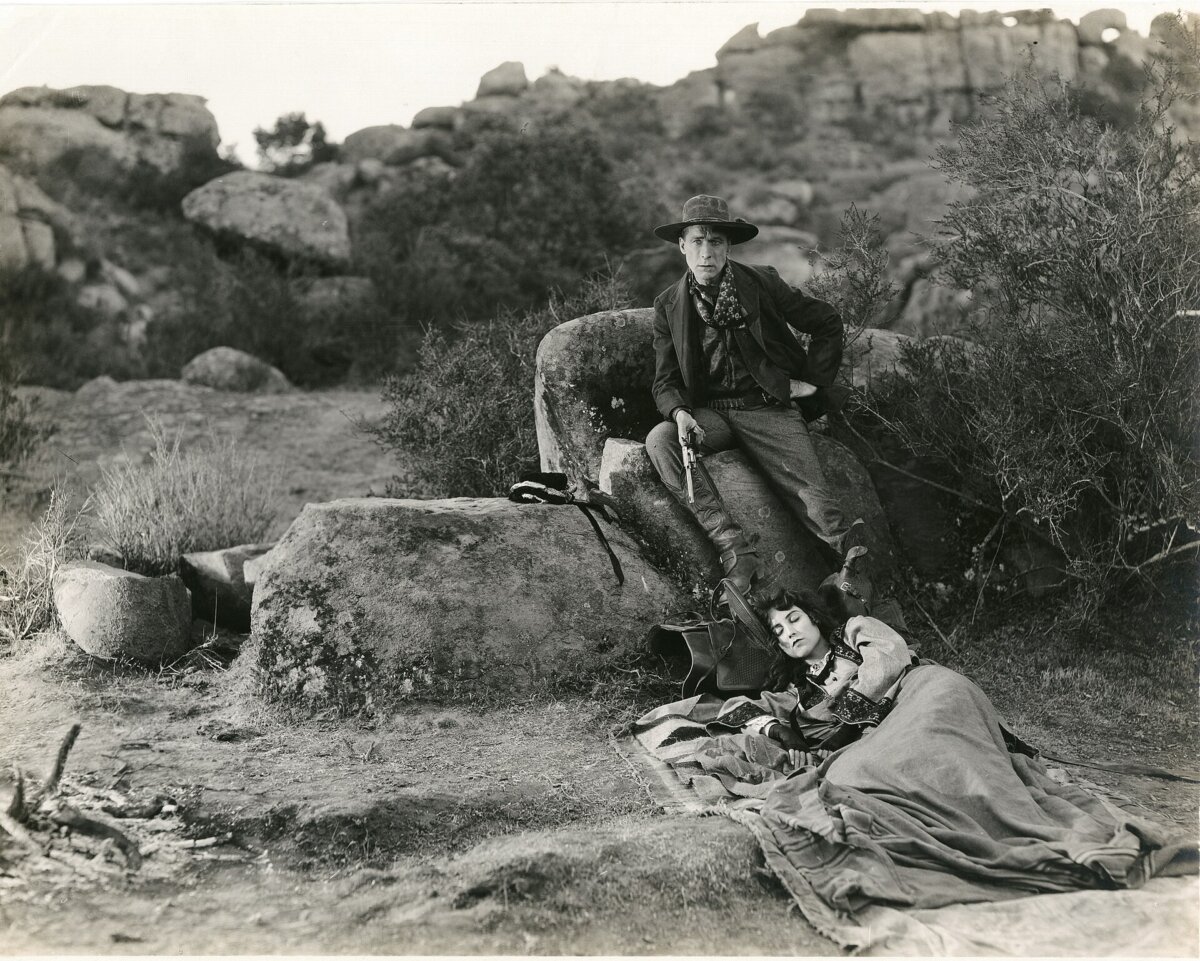
In 1923, the French film critic Louis Delluc praised actor William S. Hart as “the first real figure established by the cinema.” As the star of more than 70 Westerns produced between 1914 and 1925, Hart replaced the happy-go-lucky heroic cowboy stock figure with a morally ambiguous character whose motives were as rough and complex as his surrounding landscapes.
Hart’s influence can be seen in successive generations of Western stars including John Wayne, Randolph Scott, and Clint Eastwood. Even contemporary Westerns such as “Yellowstone” owe much to Hart’s multilayered characters.
“William S. Hart was the first in the template for the reserved, quiet, laconic, classic Western hero that we’ve had throughout cinema history,” said Steve Latshaw, historian and archivist at the Museum of Western Film History in Lone Pine, California. “He was also the first … actor in a modern style.”
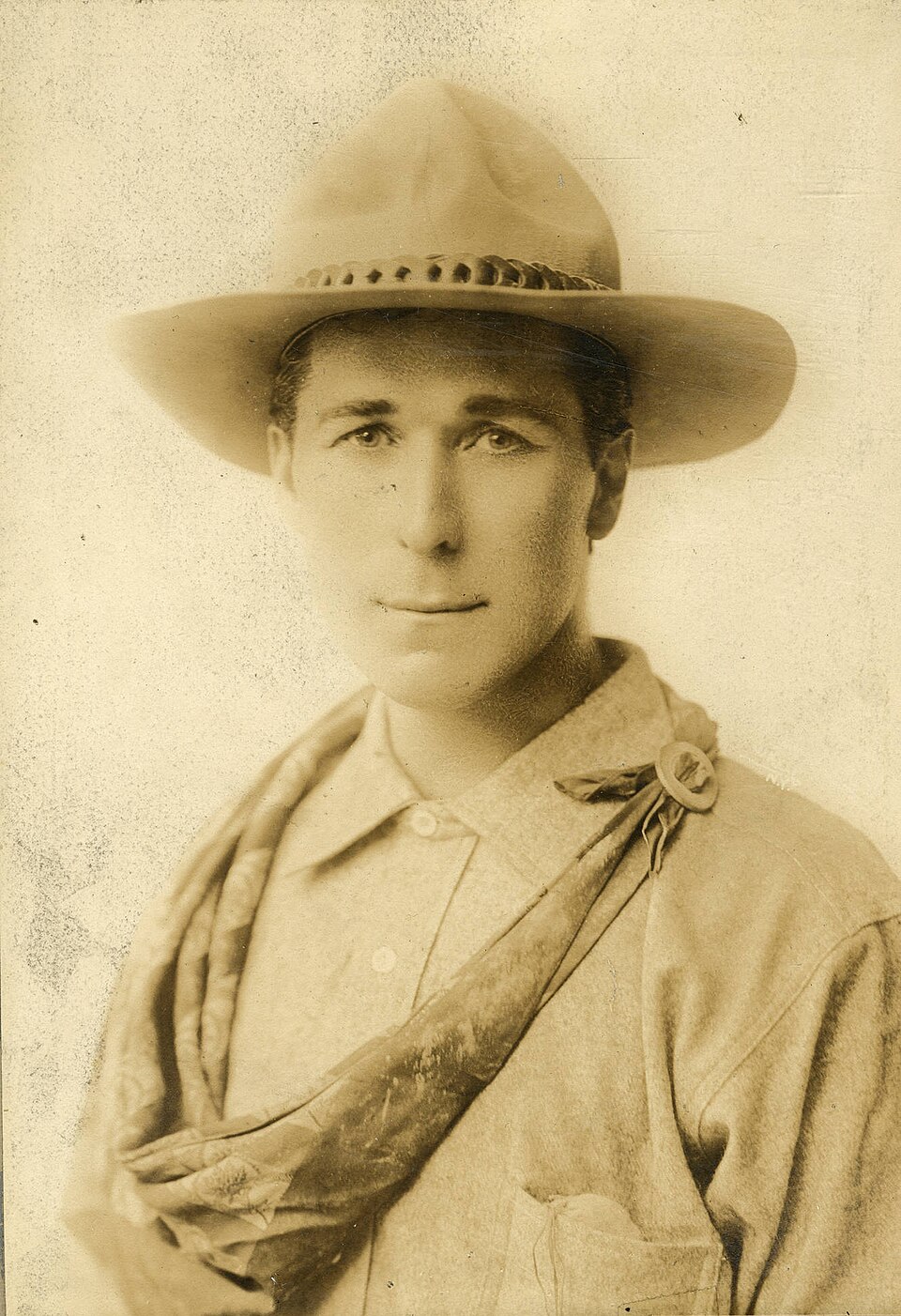 William S. Hart in 1908. Hart was a stage actor before he joined the silent screen. (Public Domain)
A Western Influence
William Surrey Hart was born on Dec. 6, 1864, in Newburgh, New York. When he was a child, his family moved to the Dakota Territory. He learned to speak the Sioux language and worked as a plowboy and ranch hand.
Hart returned East with his family when he was 15, and pursued an acting career as a young adult. He gained fame for Shakespearean roles and as the Roman officer Messala in a popular 1899 production of “Ben Hur,” recreating the role in a 1907 silent film.
Hart gravitated to Western-themed plays and used his childhood experiences to advise playwrights and producers on adding authenticity to their work. When silent film producer Thomas H. Ince recruited him to appear in Westerns, he wanted to depict the real West and not the current movie versions, which he felt were being made “in almost a burlesque manner.”
Geno Cuddy, a film historian and co-host of “Hart to Hart: The William S. Hart Podcast,” credits Hart’s starring debut in the 1914 production “The Bargain” as a foundational work for both the actor and Westerns as a whole.
“It had the classic formula of the bad man who turns good because of a beautiful woman,” Cuddy said. “It’s also one of the few films at the time that showed the law as not probably being the best—the sheriff in that film is quite inept and he calls upon Hart, the man he’s arresting, to save the day.”
The sturdy, six-foot-two, unsmiling, steely eyed Hart looked every inch the part of a bad hombre. Cuddy noted “The Bargain” premiered shortly before Hart’s 50th birthday, adding that the star’s age worked to his advantage.
“If he had entered motion pictures as a younger man, I’m not exactly sure how audiences would have taken him,” Cuddy observed. “It’s was great to see an older, more grizzled veteran cowboy at the helm of a Western adventure picture.”
 William S. Hart and Margery Wilson in “The Desert Man.” (Public Domain)
A Western Star
Hart followed “The Bargain” with a series of Westerns, some that he produced and directed. His insistence on realism in his films was so strong that he recruited supporting and bit players from the last frontiers in Arizona and the Yukon for background characters.
Hart reached a career peak with the 1916 release of “Hell’s Hinges.” Hart is Blaze Tracy, a religion-hating cowboy who falls in love with Faith (Clara Williams), the sister of a reverend at a new church in a frontier town. When a treacherous saloon owner tries to halt the church’s evangelical mission by driving the reverend into alcoholic ruin and agitating the townspeople to burn down the church, Blaze takes vengeance by killing the saloon owner, torching the entire town that sought to destroy the church, and riding off into the sunset with Faith.
“I like the fact that he could just switch on a dime like that,” Cuddy said. “He basically goes from not wanting law or religion to come to the town, to getting on the side of the church when he meets the pastor’s beautiful sister. More often than not, it was either religion or a beautiful woman or both that would turn William’s heart from bad to good.”
Cuddy added the film “made him a box office phenomenon” while Steve Latshaw saw the film as a forerunner of modern revenge Western classics.
“Hart’s screen persona is more in touch with latter day heroes today,” said Latshaw. “He had a major influence on Clint Eastwood. Eastwood’s film ‘High Plains Drifter’ [1973] can be tied into ‘Hell’s Hinges.’ So there’s a more modern Western hero in Hart that people recognize, even if they’ve never seen a silent film before.”
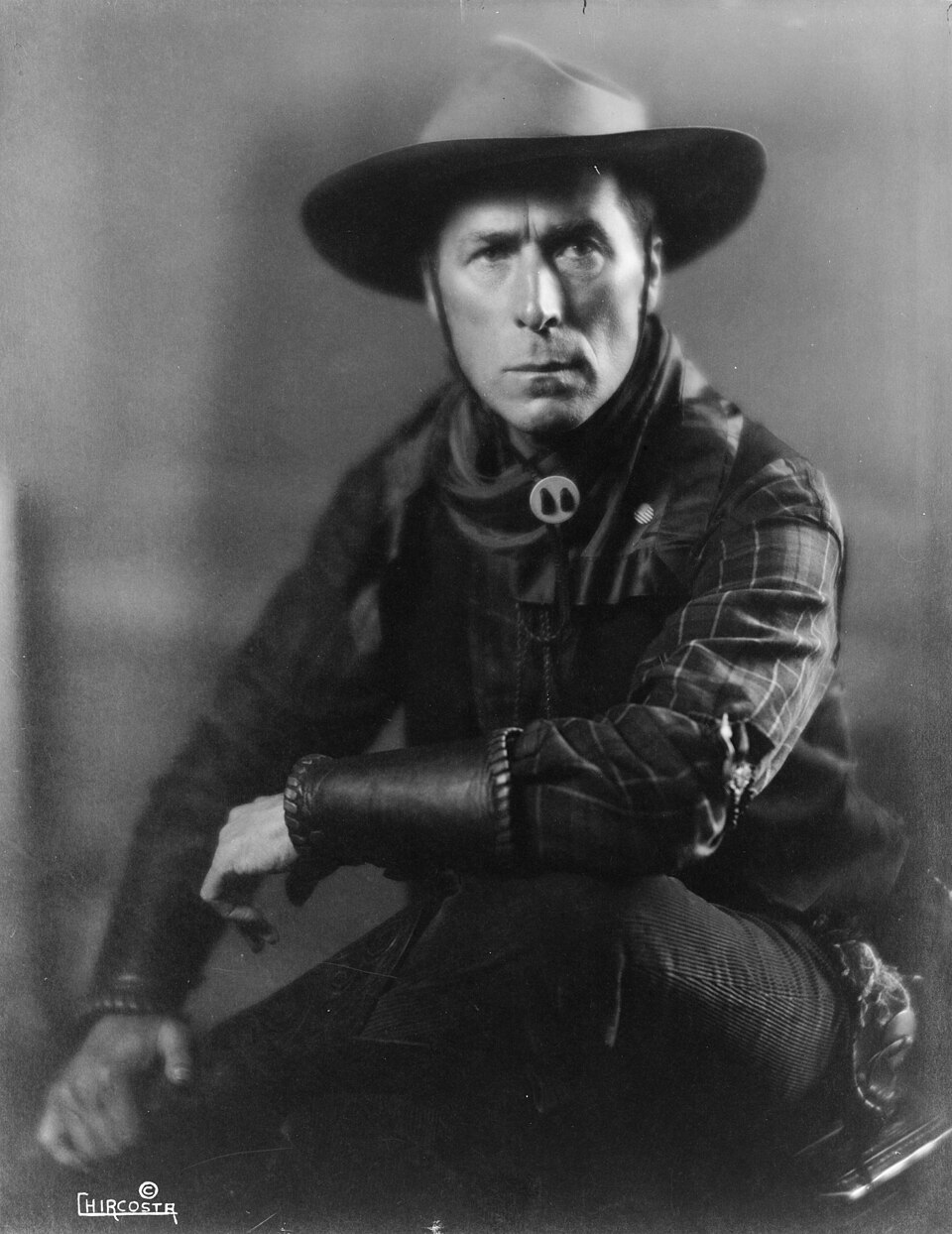 Hart’s older face and lanky figure made him a convincing cowboy in over 70 films. (Public Domain)
Riding off Screen
Hart continued to create these distinctive Westerns throughout the 1910s, but in the early 1920s audiences began favoring Westerns with more adventure and less complexity. They also made stars of younger cowboy actors including Tom Mix and Ken Maynard.
But while Hart’s appeal waned, he did not deviate from his formula. In 1925, he financed what is widely considered his finest work: “Tumbleweeds,” an epic inspired by the 1893 Cherokee Strip land rush in the Oklahoma Territory. With a mix of action, romance, comedy, and some surprisingly progressive depictions of blacks and Native Americans, “Tumbleweeds” culminates in the epic recreation of the land rush that still stuns audiences for its scope and ferocity.
The title refers to the nickname given to cattle ranchers facing the end of their livelihood, as their region was going to be permanently altered by a rush of homesteaders. For the 61-year-old Hart, “Tumbleweeds” mirrored a personal end of an era. Outside of a gag appearance in the 1928 Marion Davies comedy “Show People,” he retired from the screen with this film.
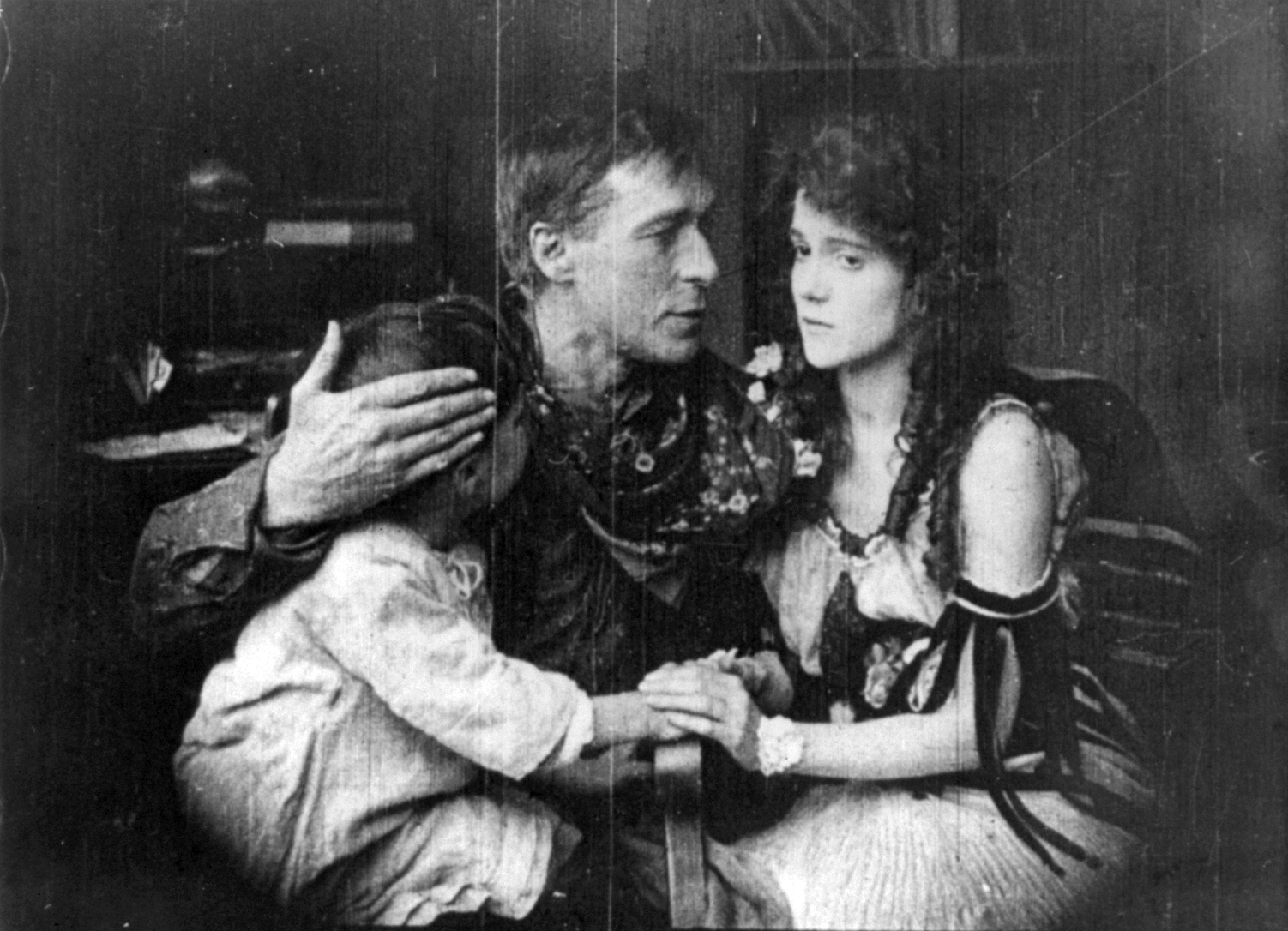
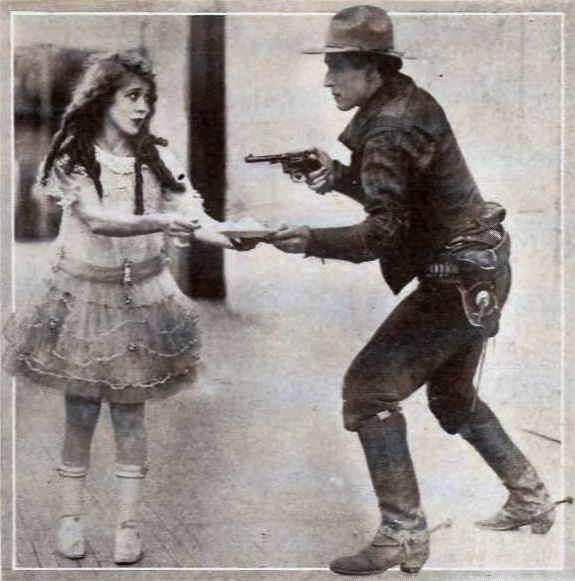 William Hart threatens to shoot Mary Pickford while stealing her ice cream in this still from the 1917 film “The Bad Man.” (Public Domain)
In 1939, when silent films were mostly a distant memory, “Tumbleweeds” had a theatrical re-release with a synchronized music score and sound effects. The 74-year-old Hart came out of retirement to shoot a new prologue, marking his only sound film appearance. While his heavily dramatic declamations harkened back to his roots in late 19th century theater, it was a touching farewell from the actor to his fans.
“Tumbleweeds” is the focus of a digital restoration effort being coordinated by film preservationist Eric Grayson in coordination with Cuddy. This version will feature a new music score by Robert Israel and roughly a dozen minutes of footage missing from most circulating prints. Cuddy is also restoring “The Saga of William S. Hart,” a 1959 documentary that includes footage of Hart films now considered lost.
Hart passed away at 81 on June 23, 1946. As an act of gratitude, he bequeathed his ranch in Newhall, California, to the county of Los Angeles. It became a permanent park and museum.
“When I was making pictures, the people gave me their nickels, dimes, and quarters,” he said. “When I am gone, I want them to have my home.”
What arts and culture topics would you like us to cover? Please email ideas or feedback to features@epochtimes.nyc.