SEARCH


On June 6, 1944, the USS Quincy was stationed along the Normandy border, helping to bombard the coast before thousands of Allied troops stormed the beaches. The 13,600-ton Baltimore class heavy cruiser was built for action. By the beginning of 1945, however, it would be known for diplomacy.
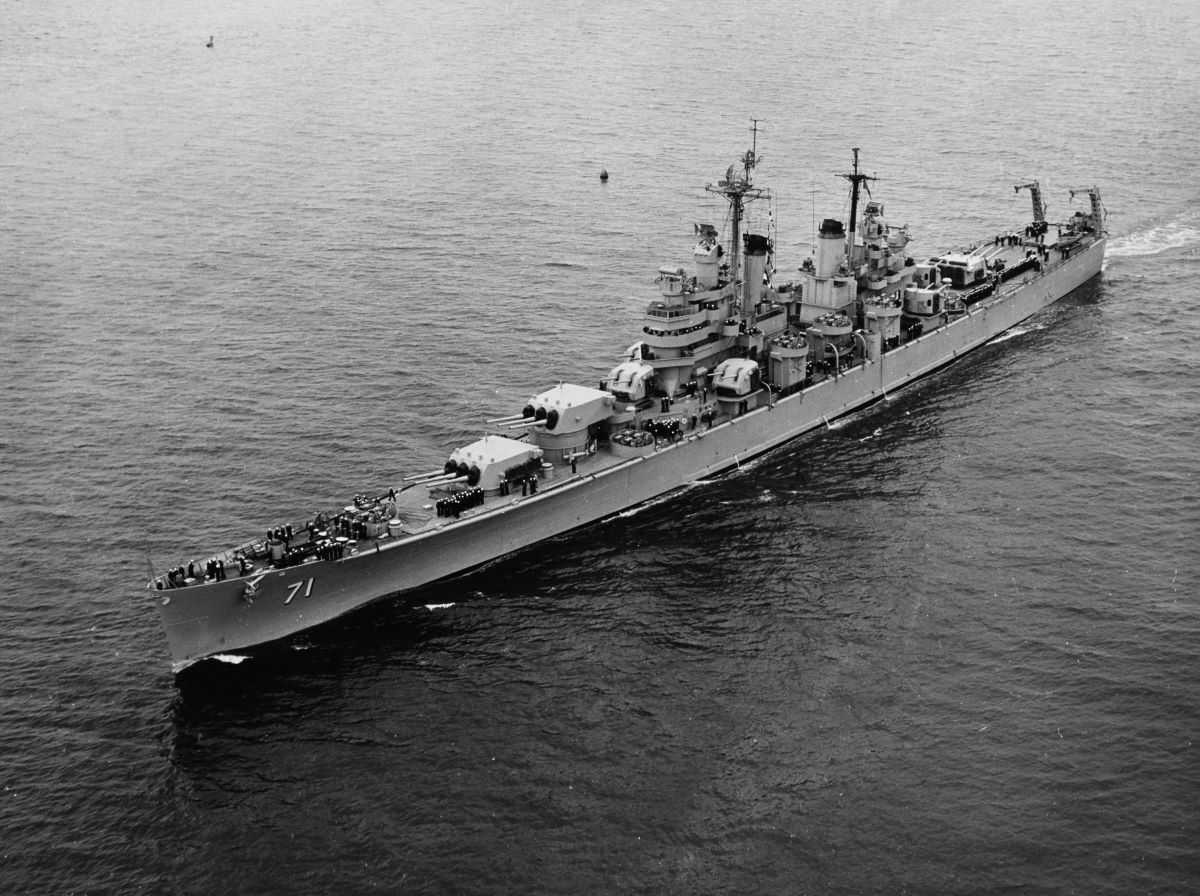
In early 1945, USS Quincy was stationed back in America. Placed aboard the ship was the most important cargo it would ever transport: the president of the United States. President Franklin D. Roosevelt was joined by a cadre of military personnel and diplomats destined for a port city located on the Crimean Peninsula. Roosevelt would be meeting with British Prime Minister Winston Churchill and Soviet leader Joseph Stalin for the Yalta Conference.
The conference, held in its namesake, took place from Feb. 4 to Feb. 11, resulting in some of the most important decisions of the war, which would have direct consequences on the postwar world. The war in Europe was reaching its end. By the time the Allied leaders met in Yalta, the Western Allies of Americans, British, Canadians and others, were closing in on the Rhine River, the natural border of Western Germany. The Soviets had already begun crossing over the Oder River, the natural border in northeastern Germany.
The Yalta Conference

The end of World War II was in sight and, with it, the end of Nazi Germany’s Third Reich. The future of Germany, specifically, and Europe, generally, were discussed at the conference with the three Allies agreeing to split Germany into four zones of occupation (the fourth would belong to the French, and the Four Powers would be known as the Allied Control Council); Germany would pay reparations; a global organization called the United Nations would host its first meeting in the coming months; and those European nations, which had been under the yoke of Nazism, would be free to choose their own governments.
“Nazi Germany is doomed,” stated President Roosevelt, reading the three leaders’ joint statement. “The German people will only make the cost of their defeat heavier to themselves by attempting to continue a hopeless resistance.”
The prediction of Germany’s doom, orchestrated by the Allies, would prove deadly accurate. But that was about the only prediction that proved accurate. In less than a year after the fall of Germany, the Allies’ threads of unity became frayed and soon snapped. When the Americans decided to include West Germany into the Marshall Plan, which would establish a new and stable Germany currency, the Soviets, wishing to keep Germany weak, bolted the Council (though maintaining its occupation zone of East Germany) and established the Berlin Blockade.
Prior to this blockade, the Western Allies quickly learned that those aforementioned European countries would fall under the Soviet sphere of influence, and would replace the yoke of Nazism for the yoke of Communism. The Iron Curtain, as coined by Churchill in a 1946 speech in America, had fallen across Europe, and the hot war was replaced with the Cold War.
Of course, at the time of the joint statement, which took place during this week in history, on Feb. 11, 1945, these things had yet to transpire. Churchill, who had been far more pessimistic of Stalin (and rightfully so), was somewhat countered by a more hopeful Roosevelt, who believed in his personal charm and ability to win over others through personal diplomacy. In the coming weeks, Roosevelt would come to grips with the fact that Stalin was an immovable dictator.
But not all dictators were of the same stripe as Stalin, who was arguably one of the most severe of the 20th century (or any century). Roosevelt planned to meet with another dictator in the coming days in hopes of establishing a long-term and mutually beneficial national relationship.
The House of Saud
At the end of the Yalta Conference, the USS Quincy awaited Roosevelt’s arrival. Two days after the Conference, President Roosevelt hosted two Middle Eastern leaders on Feb. 13. He first met with the young monarch, King Farouk of Egypt, and then Haile Selassie, the emperor of Ethiopia. But it was the meeting he would have the following day that would have the greatest impact on long-term American-Middle Eastern relations.
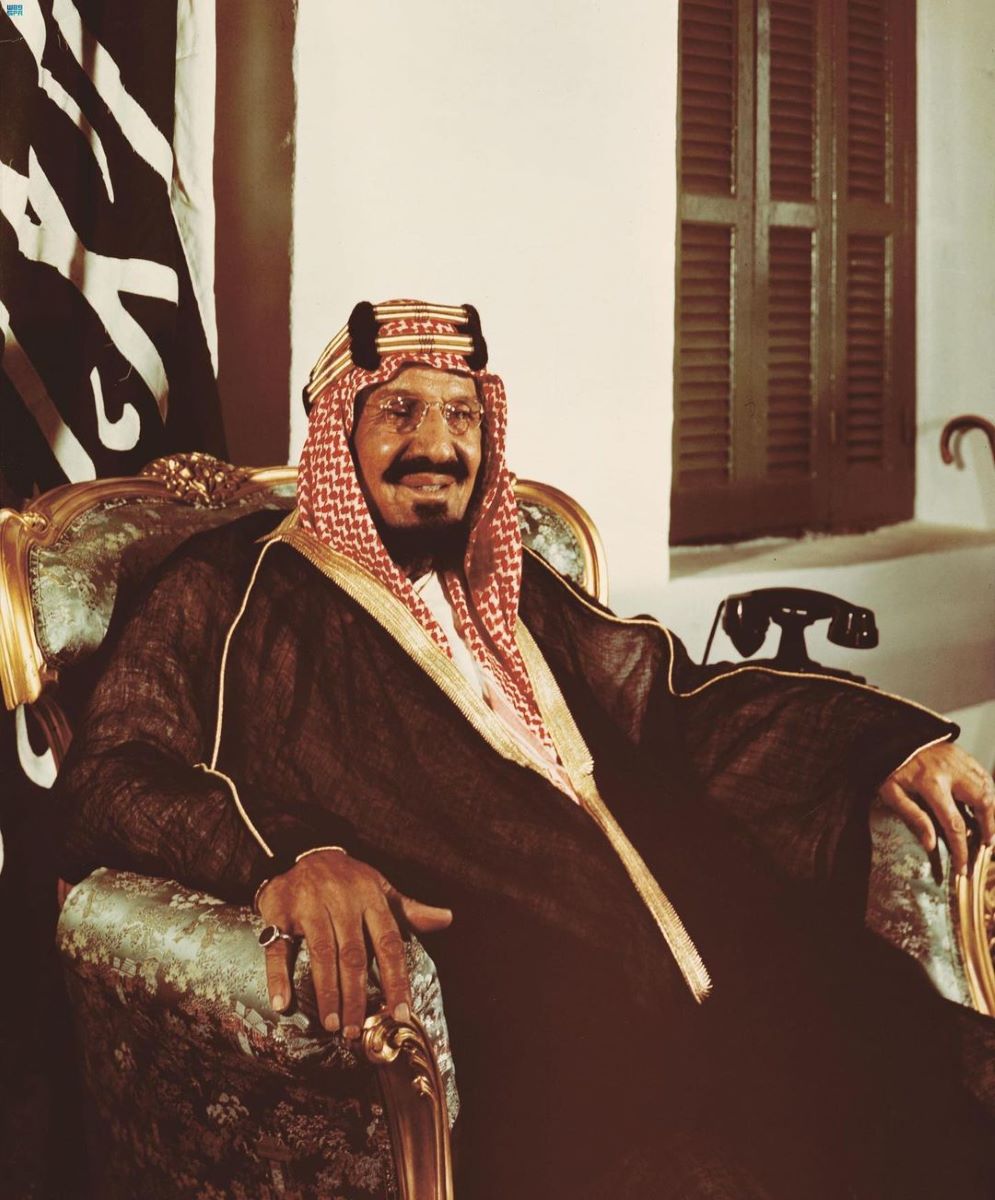
King Abdul Aziz Al Saud (more famously known in the West as Ibn Saud) had performed the nearly impossible. During what is known as the Interwar Years, the Bedouin tribes experienced a struggle for dominance in the Arabian region. It was a struggle that Saud won. A man of great size and strength, with a fierce determination, he was known throughout the region as a great warrior and leader. The warring had concluded by the end of the 1920s, and the Kingdom of Saudi Arabia was established in 1932. Islam’s holiest land—the home of both Mecca and Medina—were now under his authority.
Saud had come to power by leading the radical and powerful desert warriors known as the Ikhwan. Saud, like the Ikhwan warriors, was a believer in the reformed version of Islam called Wahhabism. As a testament of Saud’s leadership, he was able to slightly tamper down the strict Wahhabism in order to modernize the new nation.
American Tech, Arabian Oil
The British, who had long held a presence in the Middle East, had convinced the king to allow foreigners to purchase rights in Saudi Arabia in order to boost its economy. In 1933, the American company, Standard Oil Company of California (Socal) obtained a 60-year concession to explore Saudi Arabia in search of oil.
Socal then formed and consigned the concessionaire agreement to California-Arabian Standard Oil Company (CASOC). With no success over the following years, Texaco purchased a 50 percent share in CASOC in 1936. This joint venture between the two American companies became known as CalTex. Two years later, oil was found in the eastern province of Saudi Arabia called Dammam, very close to the island country of Bahrain (where oil had been discovered in 1932). In 1939, CASOC exported its first tanker shipment of oil. Five years later, at the start of 1944, CASOC changed its name to Arabian American Oil Company (Aramco).
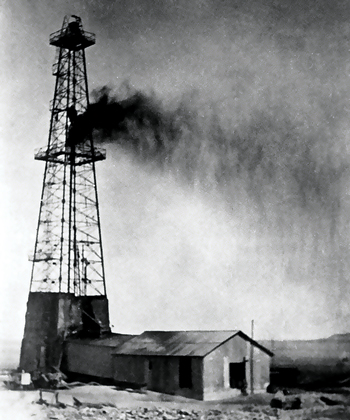
It had become clear to Roosevelt that even if the war in Europe ended soon, there was still the Pacific Theater. This theater of war was ship-centric, and therefore relied heavily on oil production. Japan relied on America for 90 percent of its oil imports, and when Roosevelt issued an oil embargo in the summer of 1941, this act contributed to the attack on Pearl Harbor. Saudi Arabia’s oil production was now an issue of national security.
A Memorable Gift for the King
Maintaining a good relationship with King Ibn Saud was a top priority for Roosevelt. It was during this week in history, on Feb. 14, 1945, that the president hosted the king aboard the USS Quincy. The ship was anchored in the Great Bitter Lake located along the Suez Canal.
The two leaders discussed numerous topics during their several hours together, including the continued use of Arab oil and the Jewish-Palestinian question. Saud predicted that following through with the 1917 Balfour Declaration, which promised the Jews a return to their ancient homeland in Palestine, would cause immense chaos that would never end. Roosevelt promised that he would never make any decision without full cooperation and consultation of the Jewish and Arab people.
At the start of their meeting, the king presented numerous gifts to Roosevelt, including a gem-encrusted saber, perfumes, and fine Arabian clothing. The gift Roosevelt presented to Saud was actually given by mere happenstance.
Roosevelt, who suffered from polio and was therefore crippled, was in a wheelchair. Saud commented that he and the president were “twins” because they were both heads of state, farmers at heart, were the same age (though not quite), and they both suffered from physical infirmities—Saud had been severely wounded in his legs, making mobility difficult.
“You are luckier than I because you can still walk on your legs and I have to be wheeled wherever I go,” Roosevelt said.
“No, my friend,” Saud replied, “you are the more fortunate. Your chair will take you wherever you want to go and you know you will get there. My legs are less reliable and are getting weaker every day.”
Roosevelt had, for lack of a better term, stumbled upon the perfect gift. “If you think so highly of this chair,” the president said, “I will give you the twin of this chair as I have two on board,”
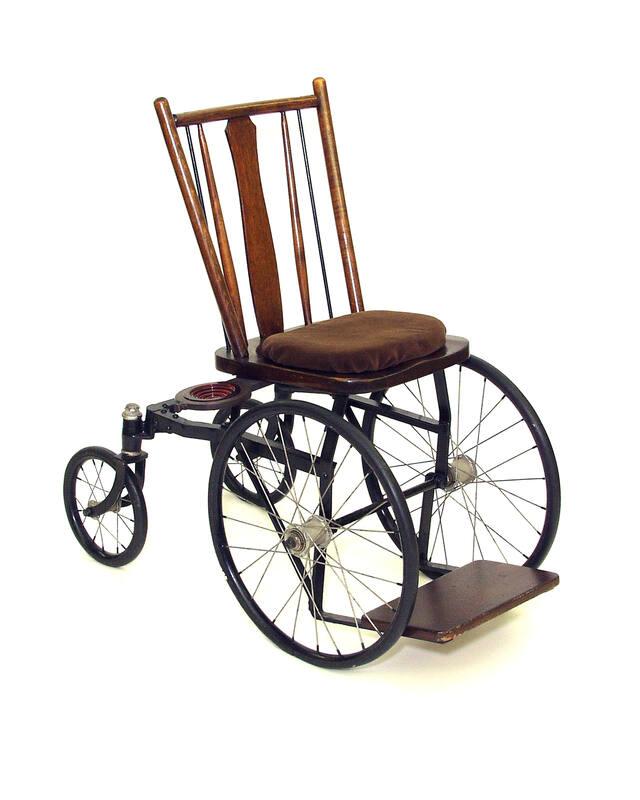
The president also gifted the king a DC-3 passenger airplane. But it was the wheelchair that meant the most to him. According to Col. William Eddy, the first U.S. minister plenipotentiary to the Kingdom of Saudi Arabia, Saud never used the wheelchair, but kept it in a special place in his private apartment at the palace in Riyadh. He kept the White House tag on the wheelchair and would always comment to guests, “This chair is my most precious possession. It is the gift of my great and good friend, President Roosevelt, on whom Allah has had mercy.”
Although the similarities between Roosevelt and Saud actually paled in comparison to their differences, this meeting cemented a long standing diplomatic relationship between the two countries. The wheelchair became a symbol of that relationship, even more so since the initial one was too small for the king, so Roosevelt had a larger one sent to him. Furthermore, it was noted that, as a sign of respect, Roosevelt chose not to smoke or drink in front of Saud (he actually smoked two cigarettes while they rode the ship’s separate elevators), which left an impression on Saud, especially when he compared his visit to Churchill’s, who drank and smoked during their meeting a few days after the USS Quincy departed.
According to Eddy, King Saud expressed his views of Roosevelt after the meeting, stating, “The president seeks understanding in conversations; his effort is to make the two minds meet, to dispel darkness and shed light upon the issue.’ The king concluded: ‘I have never met the equal of the president in character, wisdom and gentility.‘”
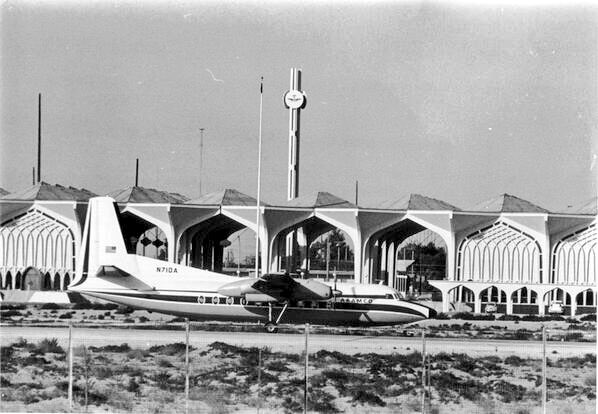
Although President Roosevelt died a mere two months after this meeting, the diplomatic connection enabled President Harry S. Truman and following presidents to build upon that trust, leading to the construction of the U.S. military’s Dhahran Airfield, which remains in operation, though the Americans stopped using it in 1962. America’s oil connection between the two countries, despite witnessing relational ebbs and flows, has remained mutually beneficial.
Never miss a This Week in History story! Sign up for the American History newsletter here.
What arts and culture topics would you like us to cover? Please email ideas or feedback to features@epochtimes.nyc