SEARCH


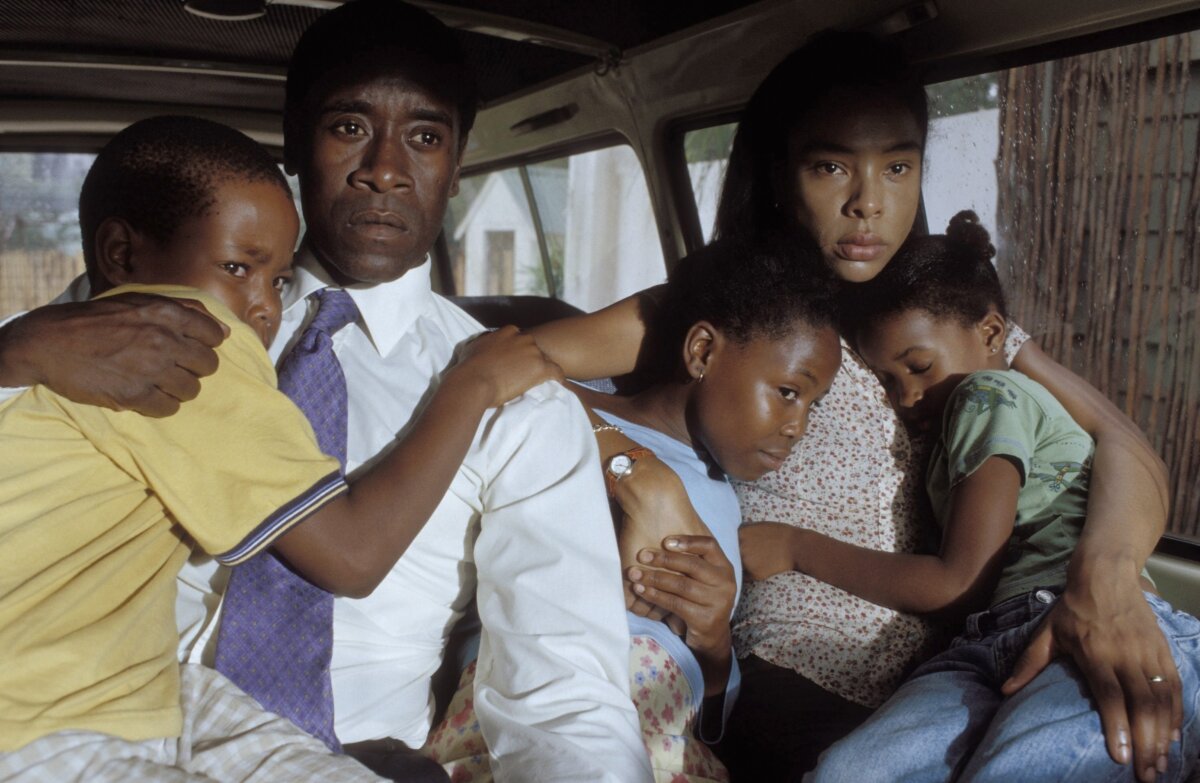
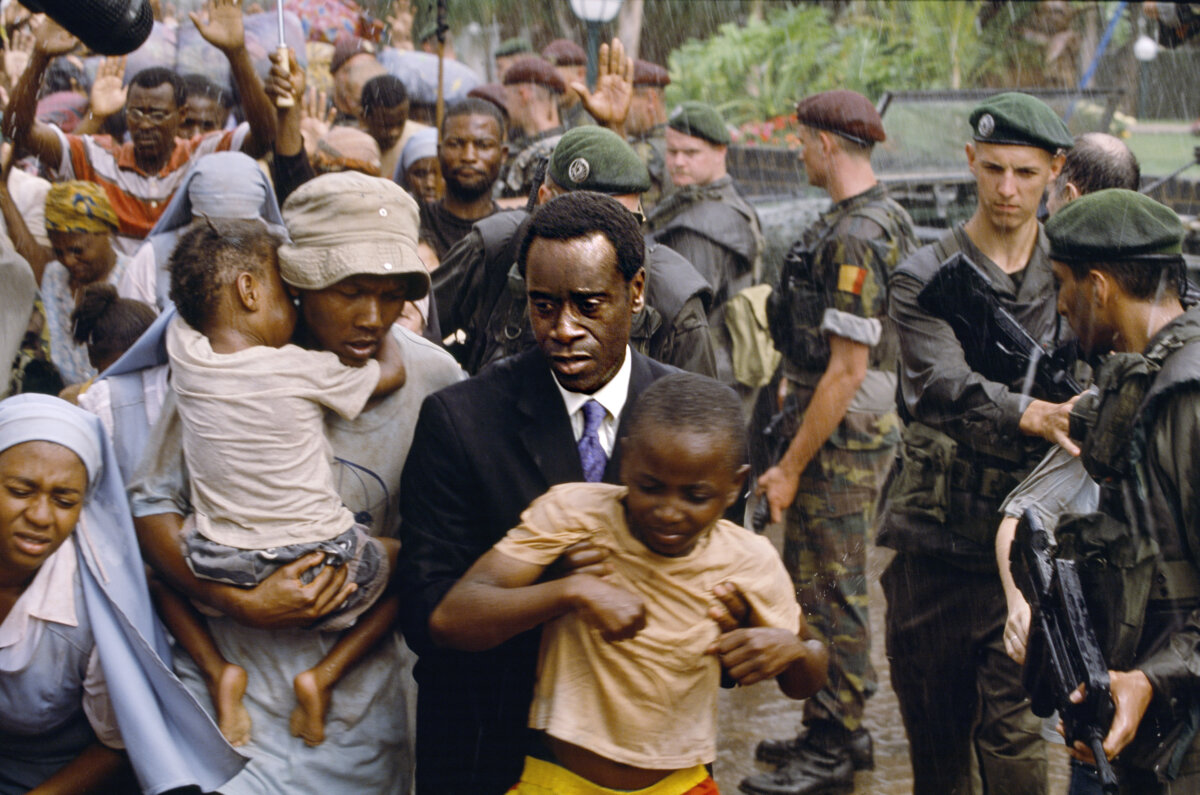
Africa in 1994 is the setting for “Hotel Rwanda,” a biographical drama depicting how interethnic clashes gripped the nation of Rwanda. In this film, Paul Rusesabagina (Don Cheadle) manages the Belgian-owned Hôtel des Mille Collines, which hosts European and African tourists.
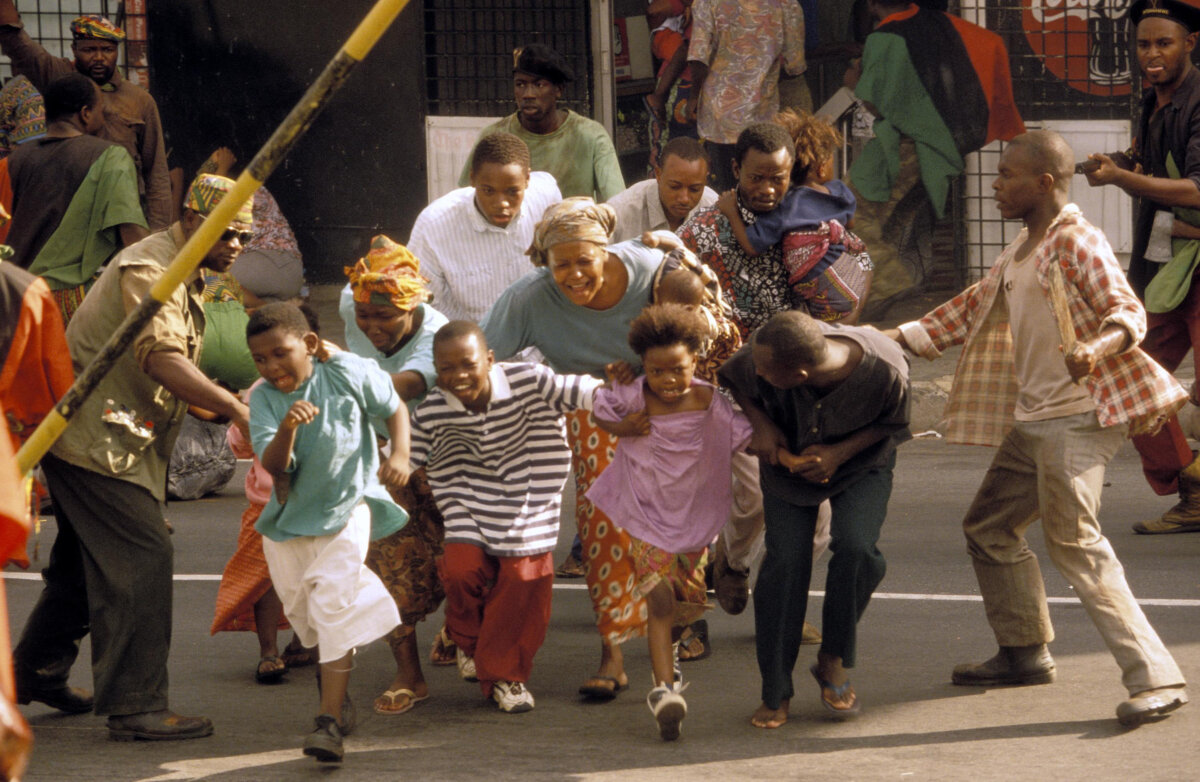
Suddenly, the majority Hutu clan triggers a genocide to wipe out the minority Tutsi clan. Against terrifying odds, Paul, who’s a Hutu with friends in both ethnic groups, manages to shelter over 1,500 refugees, both African and European, in the besieged hotel.
An acquaintance of Paul’s, a Hutu trader named Georges Rutaganda (Hakeem Kae-Kazim), is separately fueling hatred via his ruthless Interahamwe Hutu militia. When the militia plans to target the hotel, European embassies evacuate their countries’ citizens.
Among the remaining African refugees, Paul’s protection doesn’t discriminate between ethnic groups. After all, among them are his Tutsi wife, Tatiana (Sophie Okonedo), and their children of mixed heritage. To Paul, everyone’s human. Not everyone, though, shares his idea of human dignity.
In recent years, the flippancy of social media exchanges and the epidemic of AI-powered misinformation have distorted the word “genocide” beyond recognition. “Hotel Rwanda” is a sobering, if chilling, reminder of its true meaning.
Not all retaliatory or preemptive protective violence, which involves sizeable rival losses, is genocide. If that were the case, we’d be in the absurd position of clarifying why the American Civil War doesn’t qualify.
To those who know and respect their history, genocide isn’t only about large-scale killing of a rival group. It’s a mass-murder campaign. Importantly, the scale (and success) of genocide is marked by millions fleeing under fear of torture or execution. In short, it’s an exodus.
Those who reject history or, worse, invent their own version of it imply that even relatively modest losses in one group indicate the other’s genocidal intent. To people of this mindset, genocide occurs even while the stated rival population keeps growing for years; the population is thriving, not just surviving.
This film disagrees with such trivialization. It memorializes the massacre of some 800,000 Rwandans. The killings took place over just 100 days; that comes to roughly 8,000 a day, over 300 each hour. As many as two million Rwandans fled.
The intent to exterminate and erase an entire people is genocide.
Thankfully, this film eschews onscreen morbidity. Instead, through its protagonist, Paul, it commends the compassion and courage required to combat genocide’s bigotry and brutality.
Is Paul saintly? Far from it. Initially, he’s cowardly. He hides when a neighbor is assaulted at night. However, he soon realizes that by saving innocents he’s saving himself. He’s preserving his humanity when others would have him pervert it.
‘Hutu Power Radio’
Hatred doesn’t spread by itself; it requires amplification. In this film, Hutu bigots broadcast their hatred through “Hutu Power Radio.” Through little radios in cars, lounges, and homes, bigotry seeps into the public consciousness, making the majority feel like more of a majority and the minority like an even smaller minority. That’s how Rutaganda makes a merciless militia out of average men.
Bigots lie by appealing to the truth. Here, the Hutu radio host justifies hatred. Smugly, he says, “Read our history.” He faults Tutsi ancestors for stealing land that belonged to Hutus and for coalescing with Belgian colonists to oppress Hutus. Now, he reasons, it’s payback time.
What sets Paul apart? Is it his skill for pleading, bluffing, or stalling? Is it his steely resolve? Perhaps, but others, like Paul’s mercenary African colleague Gregoire (Tony Kgoroge), use those same skills and attitudes to do harm. What ultimately matters are Paul’s values, which differ markedly from those of many other Europeans and Africans around him.
Caring for All
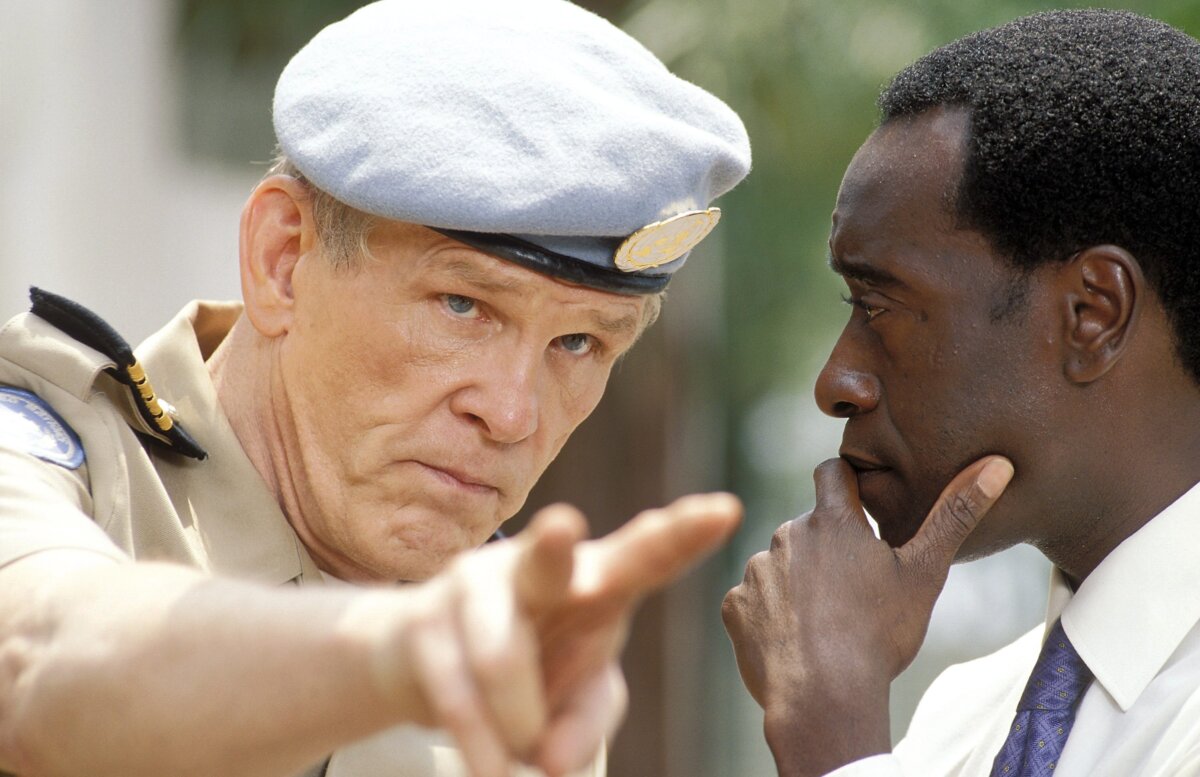
Paul cares for people, white or black, Hutu or Tutsi. So does the UN peacekeeping corps chief, Canadian Col. Oliver (Nick Nolte). That makes them human; they are color-blind but somehow also supersighted. What of those like Rutaganda, who are unmoved by Paul’s cajoling? They render themselves subhuman and worse than utterly blind.
Who is it who so unflinchingly tells this story of racism and interracial bigotry? Irish screenwriter and director Terry George and Chinese American coproducer A. Kitman Ho are the minds behind this movie. This deeply introspective coproduction of the United States, the UK, South Africa, and Italy shows prejudice not just among Africans but also against them by Europeans.
Prejudice isn’t just about white supremacy, misogyny, elitism, or antisemitism. It’s also about a lack of humanity. It can infect any class, age, sex, race, or nationality. Everyone should be wary of having his or her emotions weaponized against another group merely for who they are.
Here, one European aid worker recalls rescuing orphaned children targeted by Hutu terrorists. Movingly, she remembers one little girl screaming: “Please don’t let them kill me. I promise I won’t be Tutsi anymore.”
Check the Internet Movie Database website for plot summary, cast, reviews, and ratings. You can watch “Hotel Rwanda” on Prime Video, Kanopy and Hoopla.
These reflective articles may interest parents, caretakers, or educators of young adults, seeking great movies to watch together or recommend. They’re about films that, when viewed thoughtfully, nudge young people to be better versions of themselves.
What arts and culture topics would you like us to cover? Please email ideas or feedback to features@epochtimes.nyc.