SEARCH


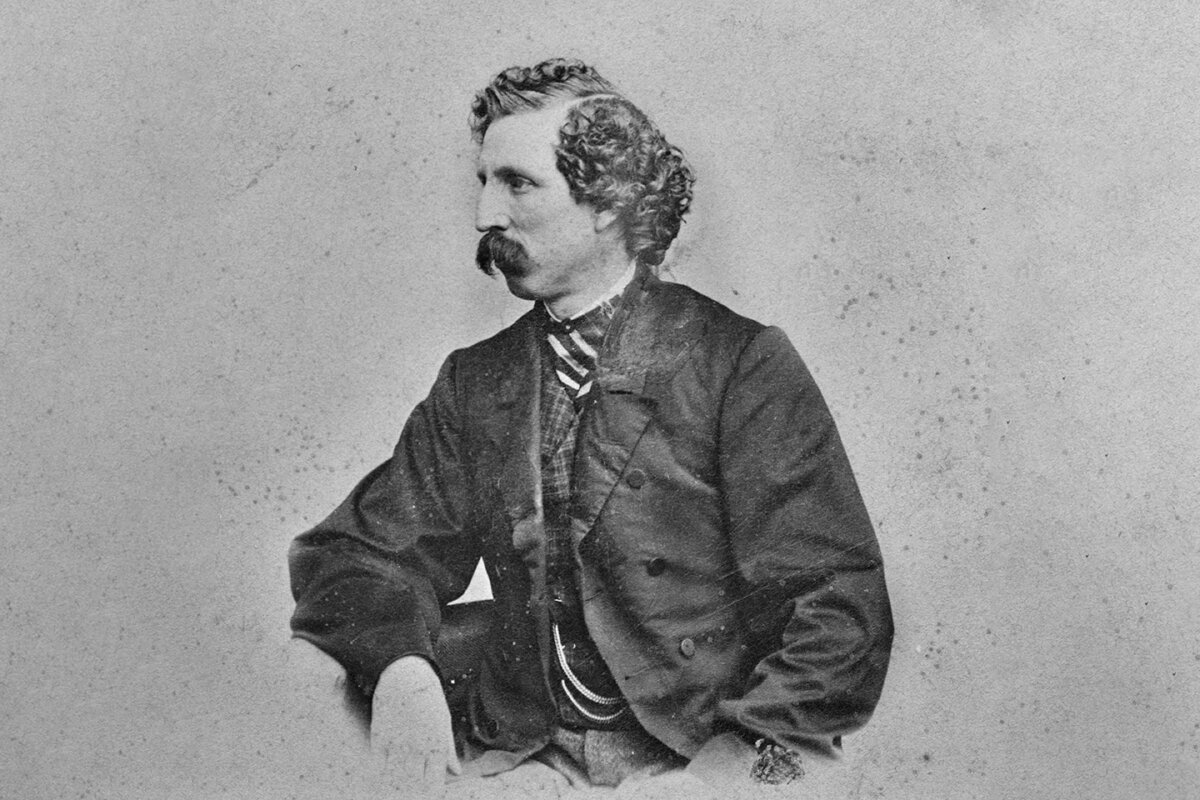
Charles Farrar Browne (1834–1867) grew up with a humorous streak a mile long. Known for pranks and rambunctiousness, his over-the-top efforts to make people laugh remained his guiding principle.
Born in Waterford, Maine, Browne claimed to be a descendant of the Puritans. When asked from where the lineage of the Brownes originated, he answered in his typical humorous fashion, “I think we came from Jerusalem, for my father’s name was Levi and we had a Moses and a Nathan in the family, but my poor brother’s name was Cyrus; so, perhaps, that makes us Persians.”
The Printer’s Devil
His father, Levi, was a surveyor and also a justice of the peace. Browne’s life, however, took a dreadful turn at the age of 13 when his father died. He was ushered off to Lancaster, New Hampshire, to learn the printing trade. He became a printer’s apprentice, also known as a printer’s devil, for the Weekly Democrat. It was obvious that despite hard times, he had not lost his sense of humor. After about a year at the Lancaster paper, he and several other printer’s devils had become too unruly and were sent back home.
Upon returning home, he moved to Norway, a village near Waterford, and continued learning the printing trade at his brother Cyrus’s newspaper, the Norway Advertiser. After the demise of that publication, he moved on to the Skowhegan Clarion, a job he hated so much he snuck away and, by 1851, was working at The Carpet-Bag humor magazine in Boston.
Browne remained in Boston for three years, and it was here that he began writing humorous articles, often creating delightful rural characters for his sketches. In order to get his work published, at least at first, Browne wrote a piece, slipped it into the editorial box under a pseudonym, and the editor published it. It was the first of Browne’s many humorous published works.
Big Break in Ohio
Wishing to shed the eastern corner of the country, Browne ventured to Ohio where his career as a writer gained momentum. He became a reporter and a printer’s assistant in Tiffin, Ohio, then an editor in Toledo for The Commercial, and by October 1857, was hired as a columnist for the Cleveland Plain Dealer.
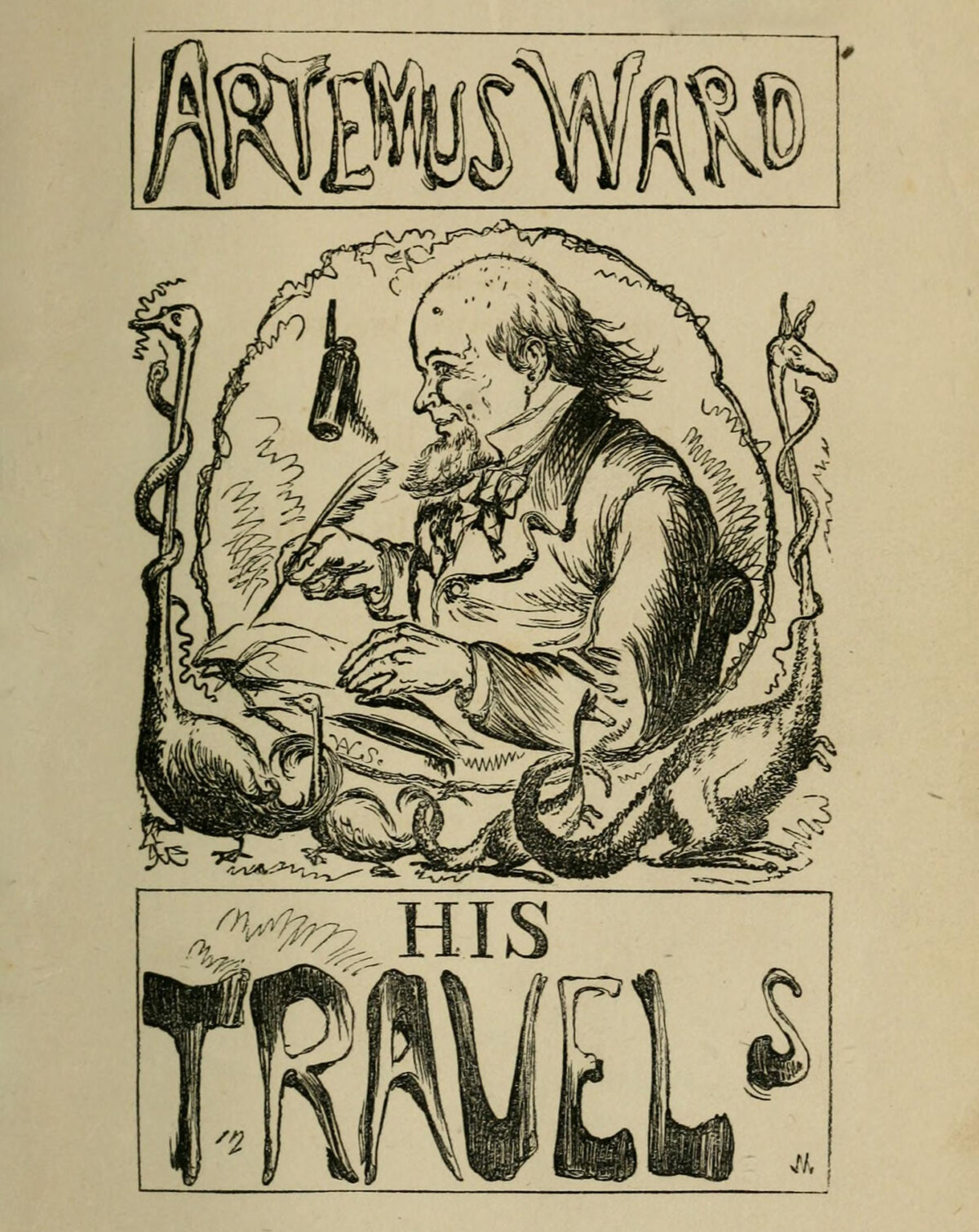
Browne’s work at the Plain Dealer paved his road to stardom. He began developing a character for his columns, who was a traveling showman. This rather naive, yet inquisitive rural character discussed his many adventures and experiences. Using rural phonetic vernacular, Browne misspelled his way to the hearts of readers by utilizing his comedic sensibilities. On Jan. 30, 1858, his famous persona, Artemus Ward, published his first article.
Browne’s article was addressed to the editor of the Plain Dealer and signed “Respectively yures, A. Ward.” The fictional Ward claimed to have a show ready for the local populace and requested information about “the show bizniss in your place.” With three “Bares” (bears), a kangaroo, a “snaik” (snake), and “wax figgers of G. Washington Gen. Tayler John Bunyan Capt Kidd and Dr. Webster in the act of killin Dr. Parkman, besides several miscellanyus moral wax statoots of celebrated piruts & murderers,” Ward expressed his readiness to entertain.
Ward indeed entertained. Hundreds of other papers printed the humorous Ward letter, and within days, Browne (or Ward) was instantaneously famous. It was sometime during the rise of his fame that Browne decided to add an “e” at the end of his last name (Brown).
The Lecture Circuit
The hilariously entertaining Ward was suddenly in great demand. By November 1860, Browne’s Ward was a national sensation. Having already been submitting Ward pieces to the new New York City humor magazine, Vanity Fair, much to the chagrin of The Plain Dealer’s editor, Browne decided to leave Cleveland and join the New York magazine.
Before long, Ward had become the magazine’s editor, but his stint with the publication was short-lived. Indeed, the publication itself only lasted from 1859 to 1863.
Browne soon concocted a groundbreaking idea. He would take his literary character on the road and perform on stage. The lecture circuit, typically used for scientific, religious, political, or educational purposes, would never be the same. Browne would become America’s, if not the world’s, first stand-up comedian.
A Legacy of Laughter
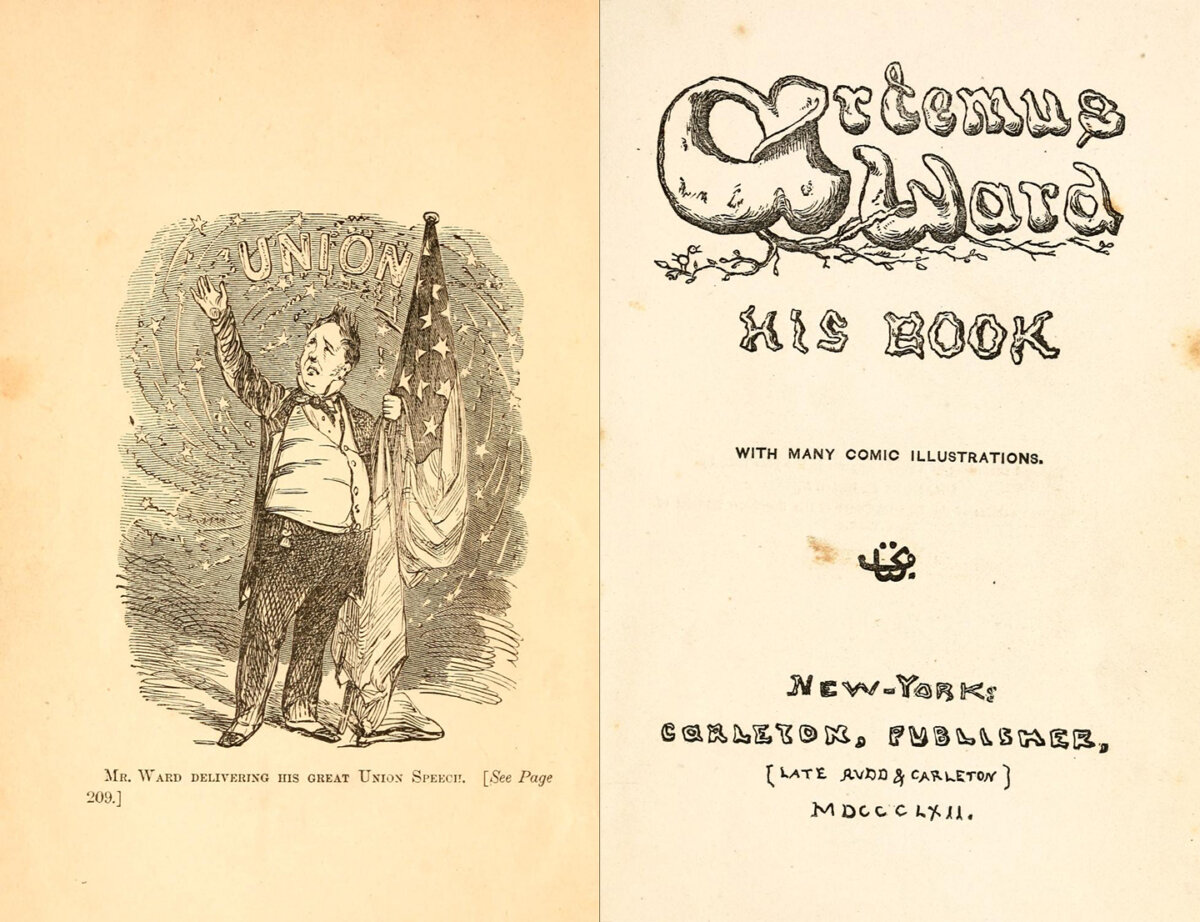
His fame reached such a level and his writings such an amount that he published his first book entitled “Artemus Ward: His Book.” Ward traveled across the nation, performing to large crowds, who adored his fictional character. One of his fans was President Abraham Lincoln whose famous connection to Browne’s writing was when he read Ward’s “High-Handed Outrage in Utica” story to his cabinet shortly before presenting to them his Emancipation Proclamation.
According to the late critic historian, James C. Austin, Browne had become the “unofficial national jester of the Civil War period.” Among the many writers and future lecturers that Browne influenced was Samuel Clemens (pseudonym: Mark Twain). In fact, Browne helped get Twain’s first short story, “The Celebrated Jumping Frog of Calaveras County,” published.
Having conquered America, Browne decided to venture to London to perform his lecture tour called “The Babes in the Wood.” He was met with possibly even more enthusiasm by the British. Tragically, while in England, Browne developed tuberculosis, and on March 6, 1867, he died.
In just a few short years, Browne had completely revolutionized writing, indeed, practically created a new industry in humor. The Americans and British mourned the loss of this great source of laughter and entertainment. It was not just the fictional persona who would be missed, but the man himself—for the two were apparently one and the same. As journalist Junius Henri Browne recalled, “[Browne] was a pure Bohemian, thoroughly good-natured, incapable of malice toward any one, with a capacity for gentleness and tenderness, like a woman’s, open-handed, imprudent, seeing everything at a queer angle, and always wondering at his own success.”
Shortly after his death, Twain wrote a tribute poem entitled “Artemus Ward” for the man who helped pioneer his own career:
He came with a heart full of gladness,
From the glad-hearted world of the West,
Won our laughter, but not with mere madness,
Spake and joked with us, not in mere jest;
For the pain in our heart lingered after,
When the merriment died from our ears,
And those that were loudest in laughter
Are silent in tears.
What arts and culture topics would you like us to cover? Please email ideas or feedback to features@epochtimes.nyc