SEARCH


One of the strangest, funniest, and, ultimately, most disturbing stories in the Old Testament concerns a man who can see what others cannot see—and an animal that can see what he cannot. The man is Balaam, a famous diviner or seer. The animal is his donkey. The story occurs in the Book of Numbers, Chapter 22, as the Israelites approach the Promised Land after their long wanderings in the wilderness.
Balak, king of Moab, is terrified. He has heard what Israel has done to other peoples and fears that his own kingdom will be overwhelmed. Military strength seems insufficient, so he resorts to spiritual weaponry.
He sends for Balaam and offers to reward him handsomely if he will curse Israel. Balaam, however, has a problem. God tells him that Israel is blessed and must not be cursed. After further approaches from Balak’s increasingly distinguished messengers, Balaam eventually sets out for Moab, having been warned that he must speak only the words God gives him.
And then the comedy begins: Balaam is riding his donkey when an angel of the Lord stands in the road with a drawn sword. Balaam sees nothing, but his donkey does; the animal turns aside into a field. Balaam beats it.
The angel then stands where the path narrows between two vineyard walls. The donkey, desperately trying to avoid the angel, presses against the wall and crushes Balaam’s foot. Balaam beats it again.
Finally, the angel blocks a place so narrow that there is no possibility of escape. The donkey does the only thing left to it: It lies down. Balaam is furious and beats the animal for a third time.
We have here one of the great reversals in biblical literature. Balaam is the professional visionary, the man whom kings consult because of his supposedly exceptional spiritual perception. Yet he cannot perceive the supernatural reality directly in front of him. The donkey can. Who, then, is the jackass?
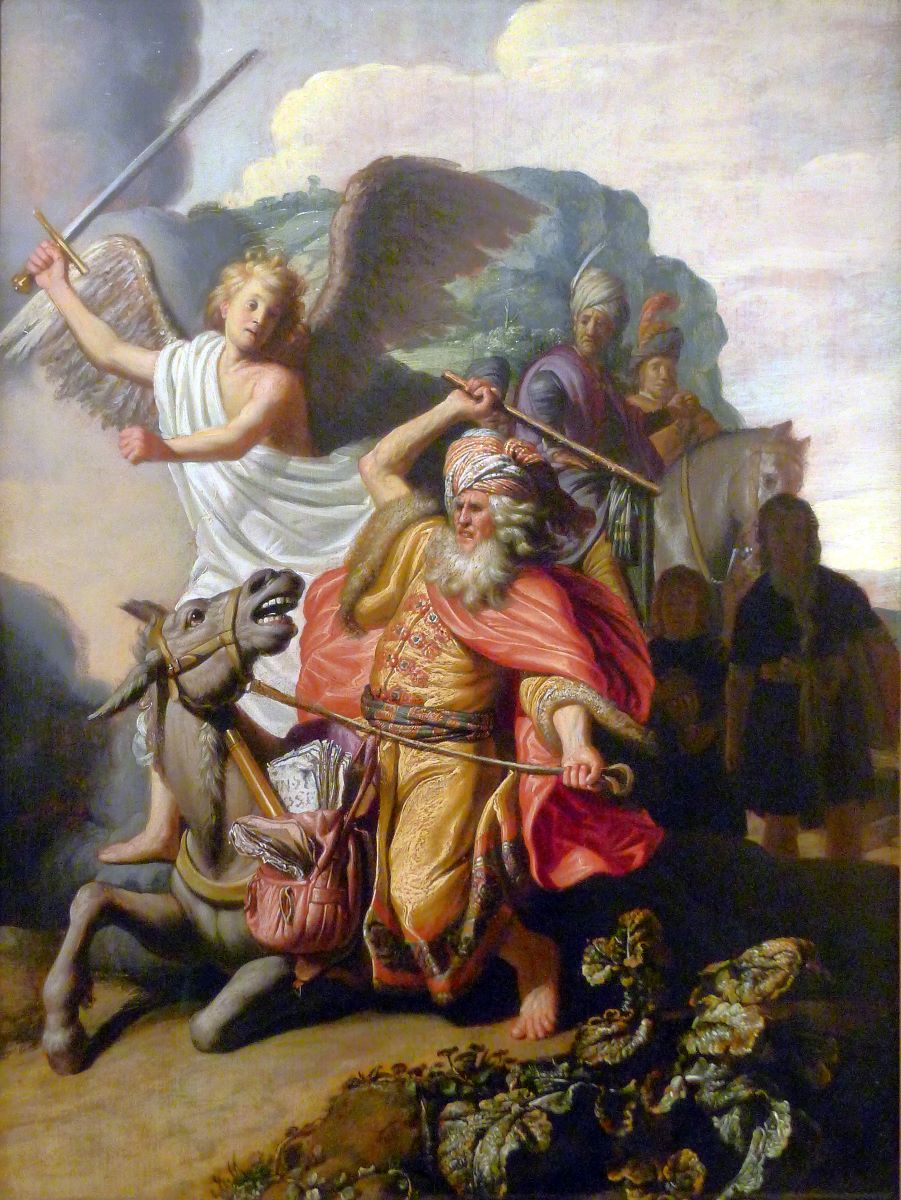
The joke becomes even more extraordinary when God “opened the mouth of the ass” (Numbers 22:28), as the King James Bible memorably puts it, and the animal asks Balaam why he has beaten it three times.
Indeed, there is only one other occasion in the Old Testament when an animal speaks: the serpent in the Garden of Eden, described as “more subtil than any beast of the field” (Genesis 3:1). There, the speaking animal facilitates humanity’s fall; here, the speaking animal is trying to save a man from destruction. Surprisingly, comically, Balaam does not seem especially perturbed that his donkey has started talking! Instead, he argues with it.
“Because thou hast mocked me,” he replies. If only he had a sword, he says, he would kill the creature. There is wonderful irony here. Balaam complains that he does not have a sword while, unknown to him, an angel holding a drawn sword is standing directly in his path.
The donkey then asks a devastatingly simple question. Has it ever behaved like this before? Balaam has to admit that it has not. And this is where the comedy begins to acquire a darker edge. Balaam knows this animal. He has ridden it for years. Its behavior is completely uncharacteristic, but instead of asking why his normally dependable donkey has suddenly become obstinate, he responds with violence. He assumes that the obstacle the donkey has created is the problem.
How often do we do the same?
Something blocks our progress. A plan goes wrong. Somebody says no. A door that ought to open remains stubbornly closed. Our first reaction may be frustration or anger. We push harder. We blame the obstruction. But what if the obstruction is protecting us? What if what appears to frustrate us is, in fact, providential? Balaam thinks his donkey is preventing him from getting where he wants to go. In reality, the donkey is preventing him from being killed.
Only then—after he has opened the mouth of the donkey—does God open Balaam’s eyes and allow him to see the angel. The hierarchy has been completely inverted: The prophet is blind; the beast sees. The master behaves irrationally; the animal behaves rationally. The man who claims access to supernatural knowledge cannot interpret the ordinary behavior of the creature beneath him. And the supposedly dumb animal has to speak before the supposedly wise man can begin to understand.
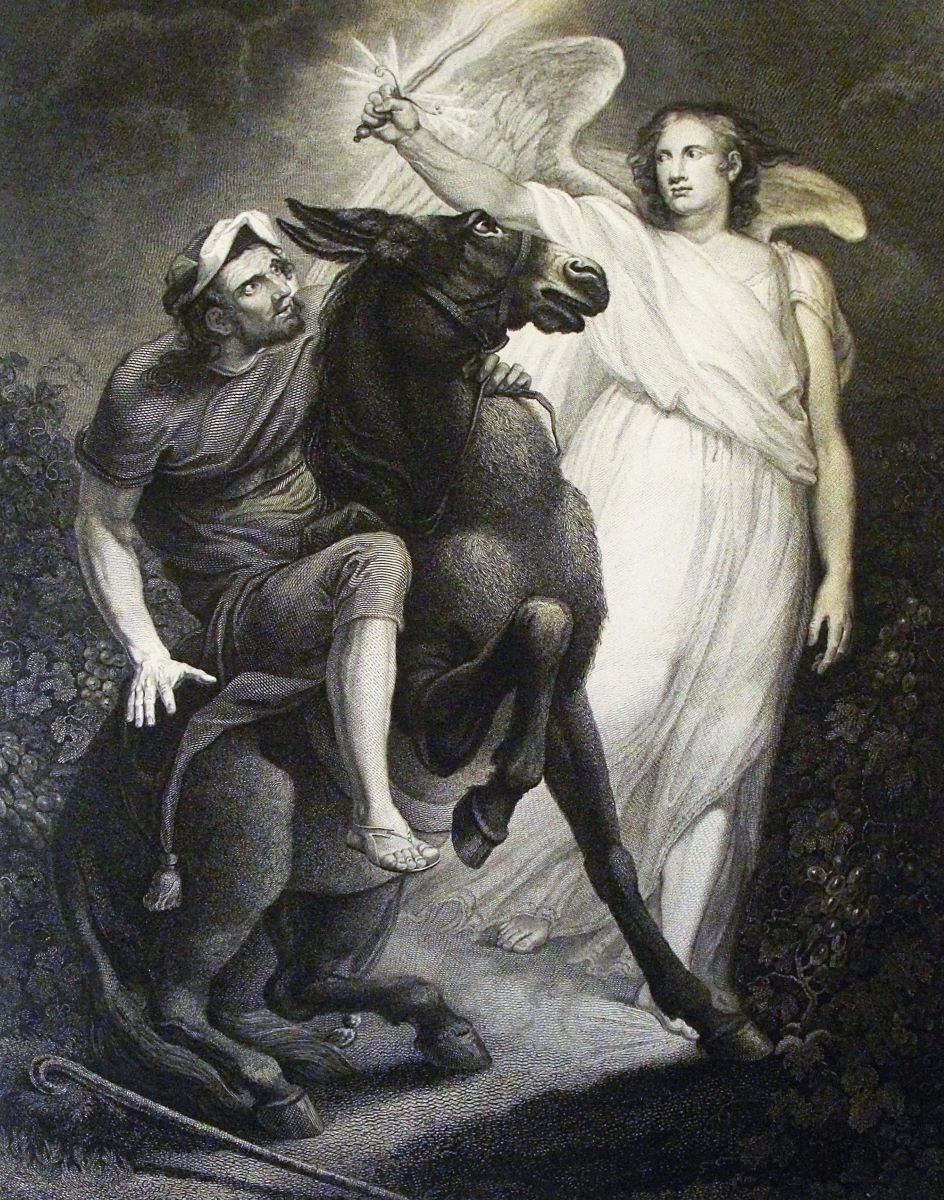
Which raises an intriguing question: What is the greater miracle in this story—that a donkey speaks, or that a celebrated seer who receives words from God has become incapable of seeing? This feeds into a much larger biblical theme. From Proverbs and Job through Isaiah and Jeremiah, and, later, in the teachings of Christ and Paul, Scripture repeatedly warns us that intelligence, status, expertise, and even spiritual gifts do not guarantee wisdom. “Be not wise in thine own eyes,” Proverbs cautions, while Isaiah cries: “Woe unto them that are wise in their own eyes.”
Indeed, our supposed wisdom can itself become an impediment to seeing clearly, because the more certain we are that we understand reality, the less likely we are to notice when reality is telling us otherwise. Ah, yes: noticing when reality is telling us otherwise. We become complacent; we assume we know.
And here, archaeology intriguingly touches literature. In 1967, a Dutch archaeological expedition led by H.J. Franken discovered at Deir ‘Alla in Jordan fragments of an ancient inscription referring to “Balaam son of Beor”—suggesting that the biblical Balaam may have been based on a real historical figure.
Perhaps, then, we are invited to approach reality rather more like Sherlock Holmes. While everyone else is busy selecting the “facts” that fit their comfortable theories, Holmes notices the small anomaly—the awkward detail that does not fit—and follows it wherever it leads. Balaam’s donkey is just such an anomaly: the thing that ought to make Balaam stop, look again, and question what he thinks he knows.
Balaam’s problem is not that he lacks spiritual gifts. His subsequent prophecies demonstrate that he possesses them. His problem is deeper: Possessing a gift is not the same thing as possessing moral clarity. We can be clever and foolish, educated and blind, gifted and misguided. We can even say true things while our own motivations remain dangerously confused.
The Bible’s view of wisdom is rarely reducible to intelligence. Wisdom requires something more: humility, attentiveness, and a willingness to recognize reality when it contradicts what we want. Our trouble, in short, is that when the facts don’t fit our theory, we are tempted to correct the facts rather than the theory.
And perhaps there is another lesson in the donkey itself: Modern civilization has often treated animals as creatures far beneath us, possessing instinct but not reason. Certainly, the Bible gives human beings a unique status. But that does not mean that the rest of creation has nothing to teach us.
The donkey responds immediately to what it perceives. Balaam, by contrast, is imprisoned within his own intention. He wants to proceed. Therefore, anything that prevents him from proceeding must be wrong. We might call this confirmation bias today, but the biblical story dramatizes it far more memorably. Balaam sees only what his desire permits him to see.
There is a further moral sting. Spiritual blindness easily becomes cruelty. Because Balaam cannot understand what is happening, he attacks the innocent creature that is actually saving him. How often in human affairs do those who perceive a danger first suffer precisely because others cannot—or will not—see what they see?
Eventually, Balaam recognizes his error. He bows before the angel and confesses: “I have sinned; for I knew not that thou stoodest in the way against me.”
“I knew not.” Those may be among the most important words that any supposedly knowledgeable person can utter. They are certainly Socratic, for Socrates’s peculiar claim to wisdom rested precisely upon his awareness of what he did not know. As Plato has him say in the “Apology”: “I do not think I know what I do not know.”
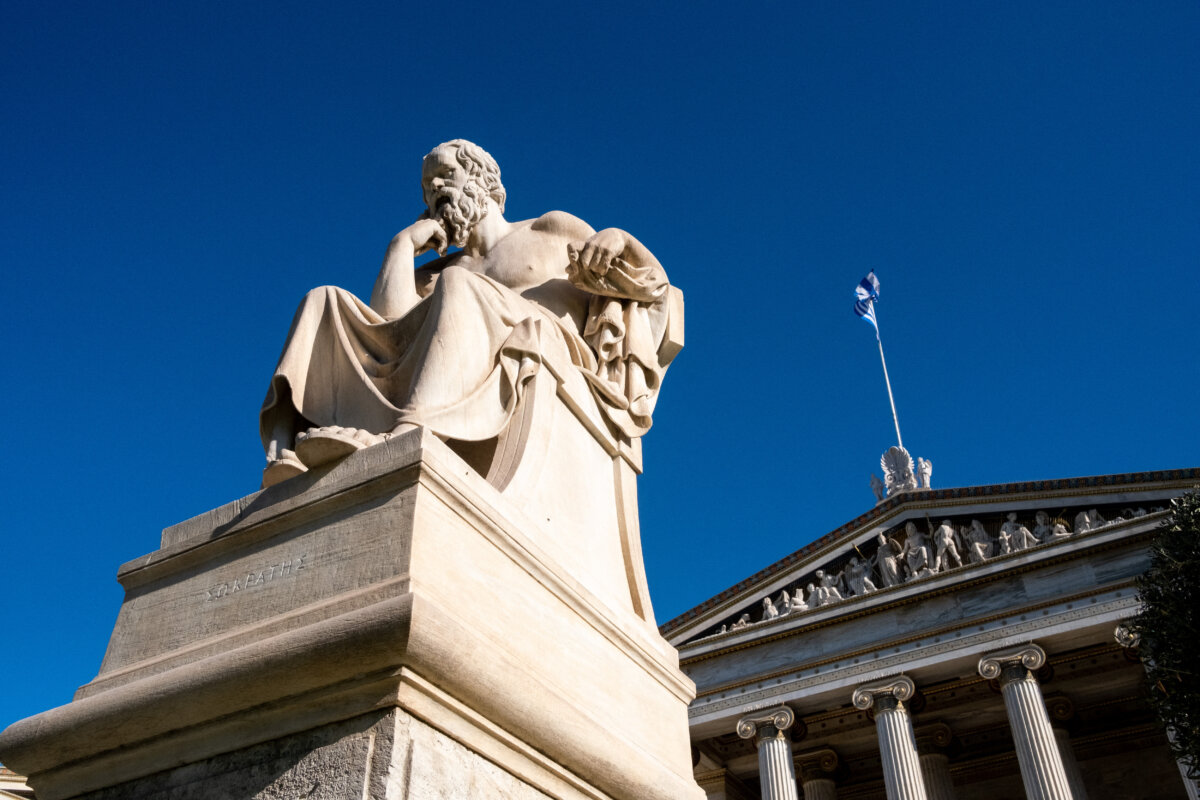
True wisdom, then, begins not with the accumulation of certainty, but with the humility to recognize the limits of our own perception. Balaam’s eyes are opened only when he discovers that the great seer has failed to see.
The story of Balaam’s donkey is comical because the reversal is so complete. Yet its comedy exposes something serious about us. We imagine that wisdom means seeing farther than everyone else; sometimes, it begins much closer to home, with noticing what is actually in front of us. And when reality repeatedly refuses to behave as we think it should, perhaps our first response should not be to beat the donkey.
But the Bible gives Balaam’s story a darker and more tragic ending. He has encountered God, truly received God’s word, and proclaimed what Balak desperately does not want to hear: Israel is blessed and cannot simply be cursed at a king’s command.
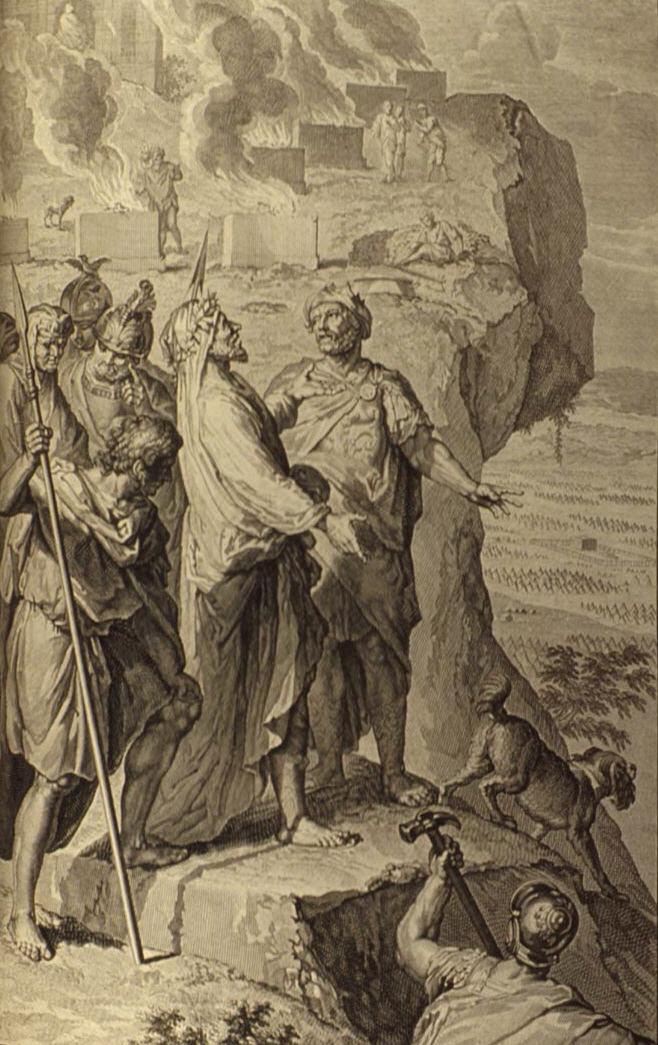
Yet Balaam’s moment of illumination does not transform him. Later biblical tradition associates him with the disastrous corruption of Israel at Peor; and when Israel goes to war against Midian, “Balaam also the son of Beor they slew with the sword.” The man who once could not see the angel’s drawn sword eventually meets the sword himself.
That final irony should make us pause. Balaam’s tragedy is not simply that he was blind, for all of us are blind to something. It is that having once had his eyes opened, he apparently failed to live according to what he had seen. Perhaps, then, the question the story leaves us with is not merely whether we can see, but whether we are prepared to change when reality contradicts our comfortable assumptions. Before we blame the obstacle, strike out at the innocent, or insist that our way must be right, we might ask one humbling question: What can the donkey see that we cannot?
The quotations from the Bible are from the King James Version.
What arts and culture topics would you like us to cover? Please email ideas or feedback to features@epochtimes.nyc.