SEARCH


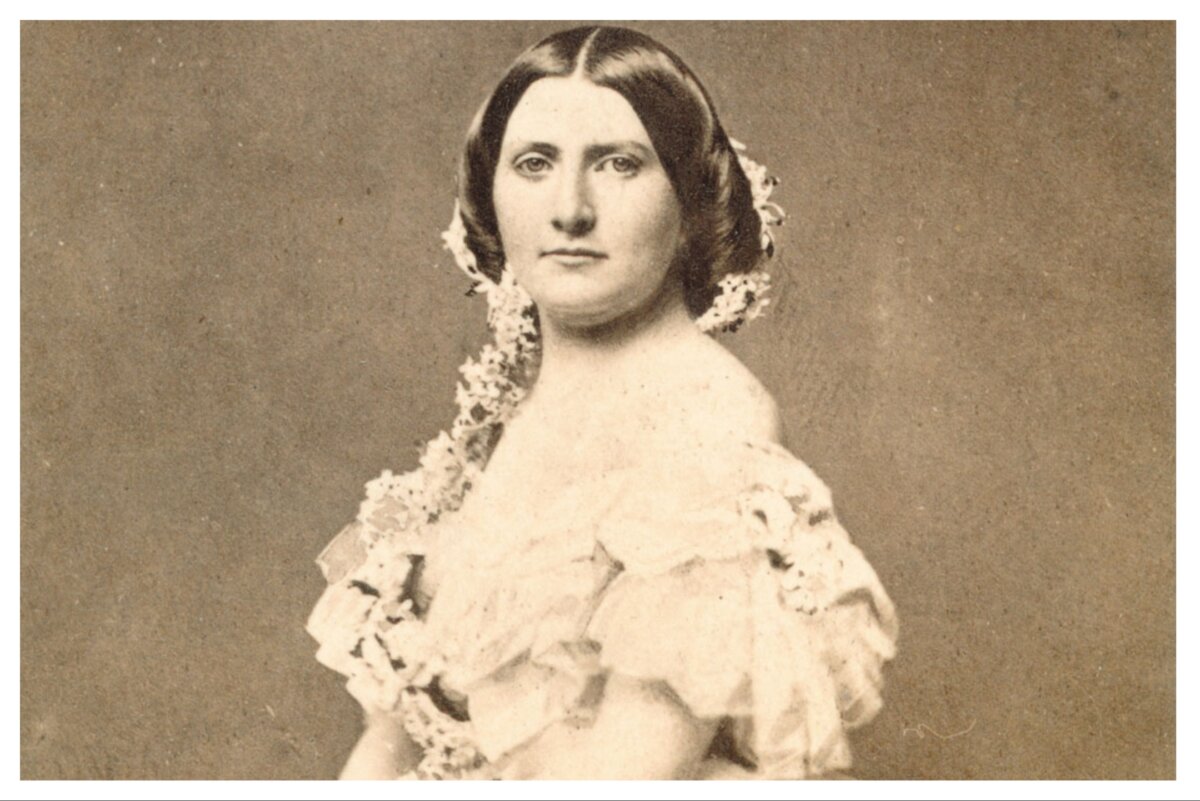
Harriet Lane, a young attractive orphan, found herself in a most unusual position. She had arrived in London the year prior in 1854 at the request of her uncle, a U.S. ambassador, and was now seated among European royalty. Around the large dinner table sat the emperor and empress of France, Napoleon III and Eugenie; Albert, the Prince of Wales; and Queen Victoria. Inside the nearly 800-year-old Windsor Castle, Lane recalled that “it was a little like fairyland in its magnificence.”
As magnificent as the experience was, it was not her most significant. That would come soon after, when some would view her as royalty, calling her the nation’s “Democratic Queen.”
Early Tragedies
Harriet Lane (1830–1903) was born in Mercersburg, Pennsylvania, to Elliot and Jane Lane, and was the second youngest of seven children. The Lanes were a well-to-do and leading family in the modest-sized town. Elliott Lane, a successful merchant, had been instrumental in convincing the German Reformed Church in York to come to Mercersburg and build Marshall College (now Mercersburg Academy). Once a charter was approved, Elliott Lane became a trustee for the building project.
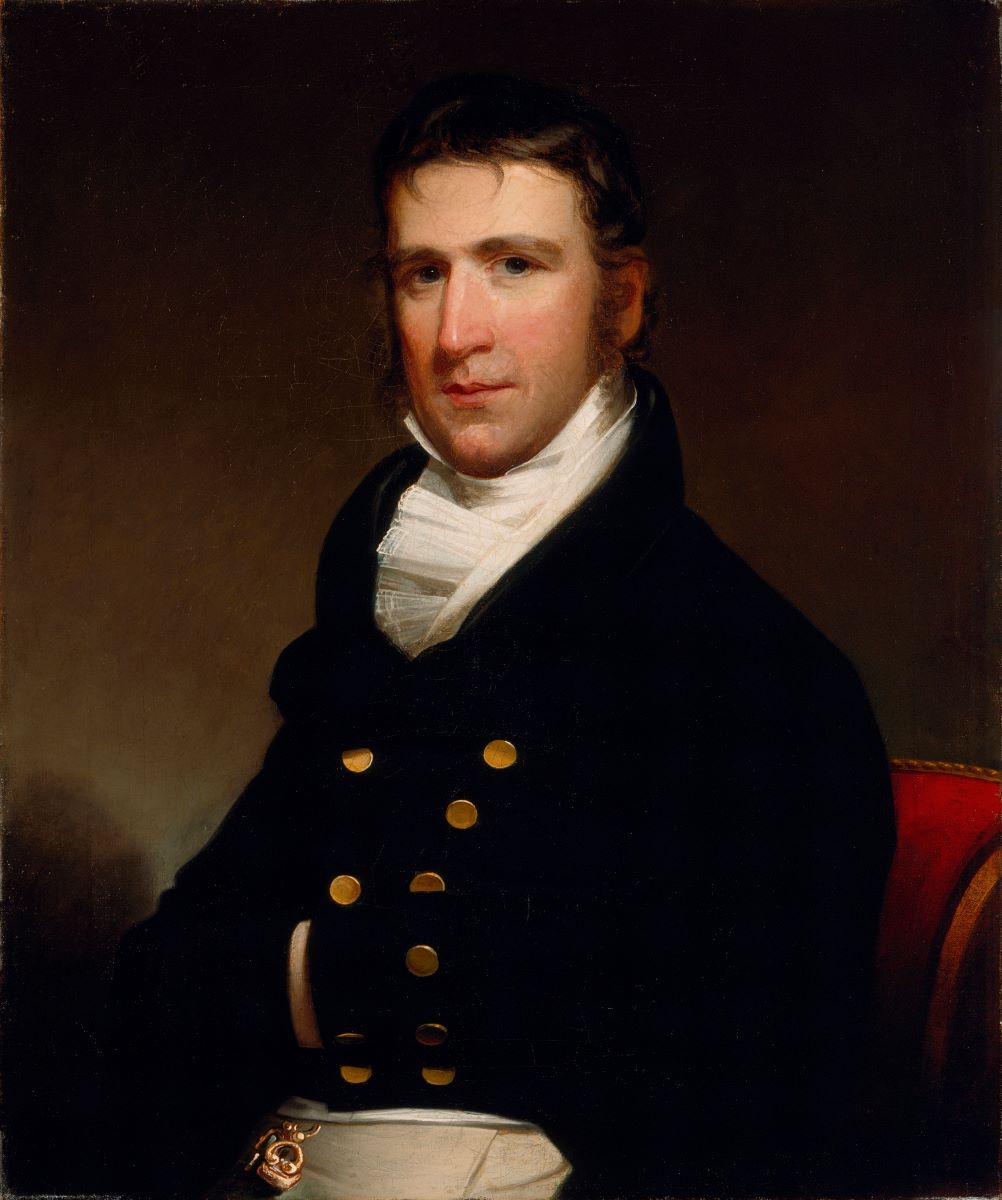
Prosperous and respected in the community, the Lanes, however, endured immense tragedy and loss. By the time Harriet Lane was 10 years old, tuberculosis had taken the lives of three of her brothers (one before her birth), her mother, and then her father.
The Familial Connection
At 11, she was adopted by her politically successful uncle, James Buchanan, a bachelor, who was a senator at the time. Buchanan took great interest in the young girl’s education and social stature.
She was known as a “merry, mischievous girl, never so happy as when ringleader of schoolgirl pranks,” which was a fact Buchanan was well aware of, noting her as a “mischievous romp of a niece.” This forced Buchanan to send her to a stricter school run by two sisters. The discipline helped with her studies.
It was around this time that Lane and Buchanan began a lifelong correspondence. The high-ranking U.S. diplomat’s letters often addressed her education and development into a lady of society, but were also often full of humor and familial affection.
Around 1846, Lane was sent to the all-girls’ Catholic school, Georgetown Visitation Seminary, where she received an excellent education. During her two years there, she spent one weekend each month with her uncle in Washington, rubbing shoulders with some of the country’s most important people.
Attracting Suitors
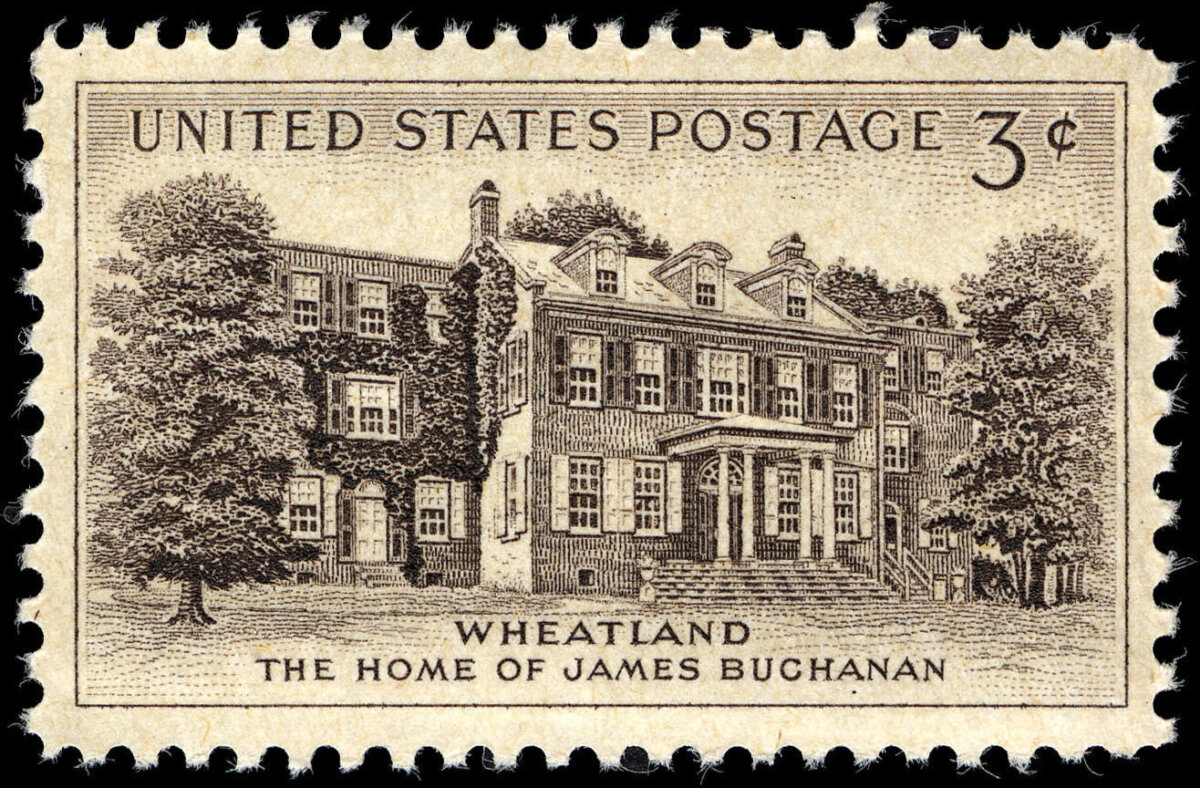
Lane graduated in 1848, and joined her uncle at his Wheatland Estate in Lancaster the following year. She lived at Wheatland for the next six years.
In 1853, President Franklin Pierce tabbed Buchanan to be minister to Great Britain, a position he held until 1856. Buchanan aimed to be a fashionably unassuming diplomat in the Court of St. James, but in his letters to Lane he recommended that she approach her visit differently. Lane, anticipating her visit to London, was by no means eager to downplay her opportunity.
In April 1854, Harriet Lane boarded a ship from New York and sailed for Liverpool. After she arrived, it did not take long for the young and attractive ambassador’s niece to make friends and attract suitors.
“I have made another conquest, who comes in true American style every day,” Lane wrote to her sister, Mary. “He is rich and keeps a yacht, which costs him two thousand pounds a year. Beaux are pleasant, but dreadfully troublesome.”
Despite her many suitors in London (not to mention those she had in America), she appeared to lean toward a life like that of her uncle. Buchanan often worried that she would marry without proper consideration. “You ought never to marry any man to whom you are not attached, but you ought never to marry any person who is not able to afford you a decent and immediate support,” he once wrote to her. “Look ahead and consider the future and act wisely in this particular.”
Dining With Royalty
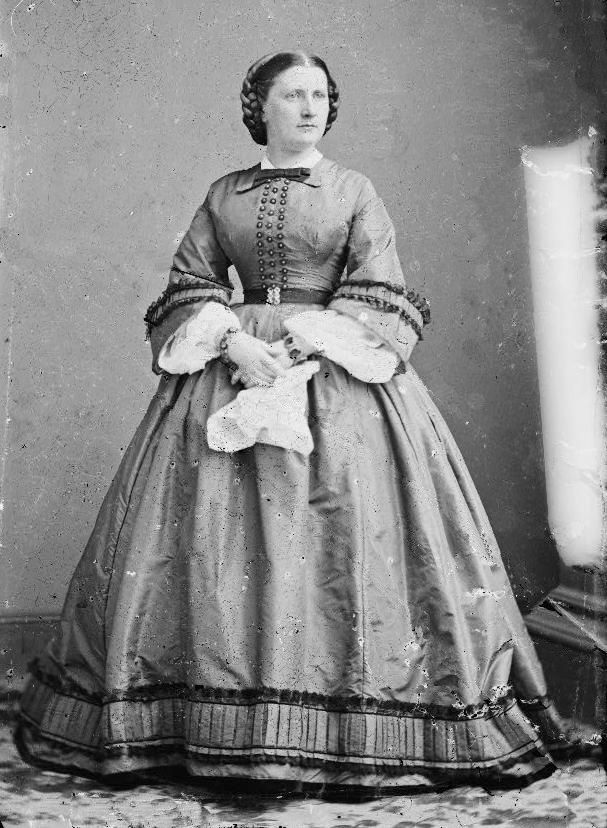
As far as leaving positive impressions, the most important were those she left on European royalty. Queen Victoria called her “dear Miss Lane” and, although unmarried, bestowed upon her the rank of an ambassador’s wife.
After less than a year in London, Lane found herself inside Windsor Castle for a formal dinner with royal members of the British and French court. The experience understandably left a lasting impression on her.
“We have dined with the Queen. The Queen was most gracious and talked a great deal to me. Uncle sat on her right hand, and Prince Albert was talkative, and altogether we passed a charming evening,” she again wrote to her sister. “Everything, of course, was magnificent … It was a little like fairyland in its magnificence.”
The lasting impression worked both ways. After Lane returned to America later that year, Buchanan wrote her, “Every person I meet has something kind to say of you. You have left a good name behind and that is something; but not more than you deserve.”
The Bachelor’s First Lady
When James Buchanan was elected president the following year in 1856, he did so without a wife. He did not, however, enter without a first lady. Acknowledging her political and social decorum, not to mention her attractiveness and pleasing personality, the new president chose his niece to be the first lady.
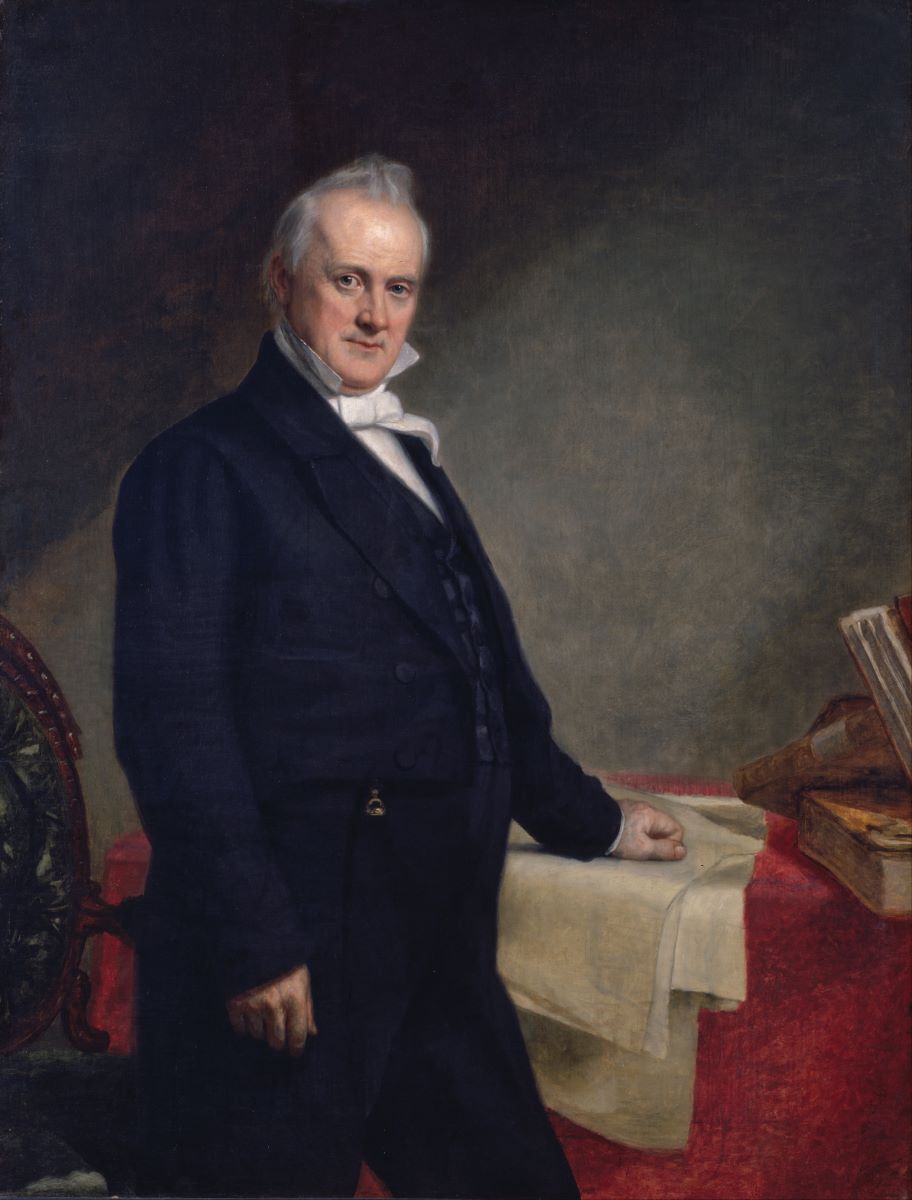
Buchanan and Lane entered the White House at a turbulent time in American history. Political factionalism and regional sectionalism was rising between members of the Northern and Southern states. She, nonetheless, hosted regular dinners and social gatherings at the White House. Her charming personality set people at ease. Furthermore, her foresight for organizing those dinners and social gatherings kept the peace, at least within the White House. She not only knew where to place people of a certain rank and stature at the dinner table, but also in a way that would distance them from a political enemy.
Her success as Buchanan’s first lady and her support for social causes led to the press calling her “the Democratic Queen.” In fact, it was in reference to Lane that Frank Leslie’s Illustrated Newspaper became the first print media to use the term “First Lady.”
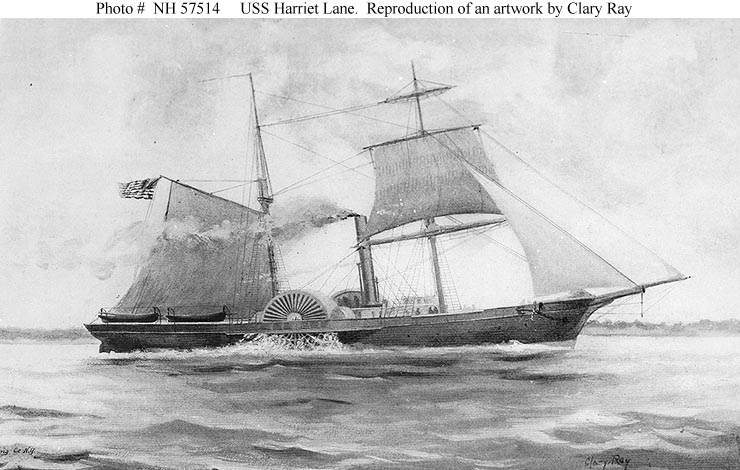
In 1857, the Treasury Department ordered the construction of a revenue cutter which was named the USS Harriet Lane. It was commissioned in 1858. In 1860, it was fittingly used to accommodate Prince Albert for his visit to the United States. Shortly after Buchanan left office, the ship was transferred to the Navy and was sent to resupply the troops at Fort Sumter in April 1861—a provocation that led to the start of the Civil War.
Love, Tragedy, and Legacy
After Buchanan left office, he and Lane returned to Wheatland Estate. In 1866, a year after the Civil War ended, Lane married Henry Elliot Johnston, a successful banker and lawyer. The Johnstons had two boys. Considering Buchanan died in 1868, the marriage was well-timed.
Sadly, the end of Lane’s life was similar to the beginning: full of tragedy. Both of her sons died within a year of each other from rheumatic fever. Heartbroken, she nonetheless looked for ways to help families with sick children, specifically those with limited finances. On Christmas Eve 1883, the Harriet Lane Home for Invalid Children was incorporated. In 1912, the Harriet Lane Home became associated with Johns Hopkins University, the first of its kind to be associated with a medical school. It is now known as Johns Hopkins Children’s Center. Additionally, Johns Hopkins Hospital has published the “Harriet Lane Handbook,” considered the “#1 source of pediatric point-of-care clinical information.”
When her husband died in 1884, just two years after the death of their second son, she dedicated most of her time, energy, and money to philanthropy.
The American orphan turned socialite and the first unmarried first lady not only bequeathed a large partition of her estate to help fund the construction of the National Cathedral and St. Alban’s School in Washington, she also had her and her husband’s extensive art collection donated to “a national gallery of art.” The donation helped found the Smithsonian American Art Museum, and led to her moniker of “First Lady of the National Collection of Fine Arts.”
Harriet Lane Johnston died in 1903, leaving behind a multifaceted and memorable legacy across the nation and in Europe.
What arts and culture topics would you like us to cover? Please email ideas or feedback to features@epochtimes.nyc.