SEARCH


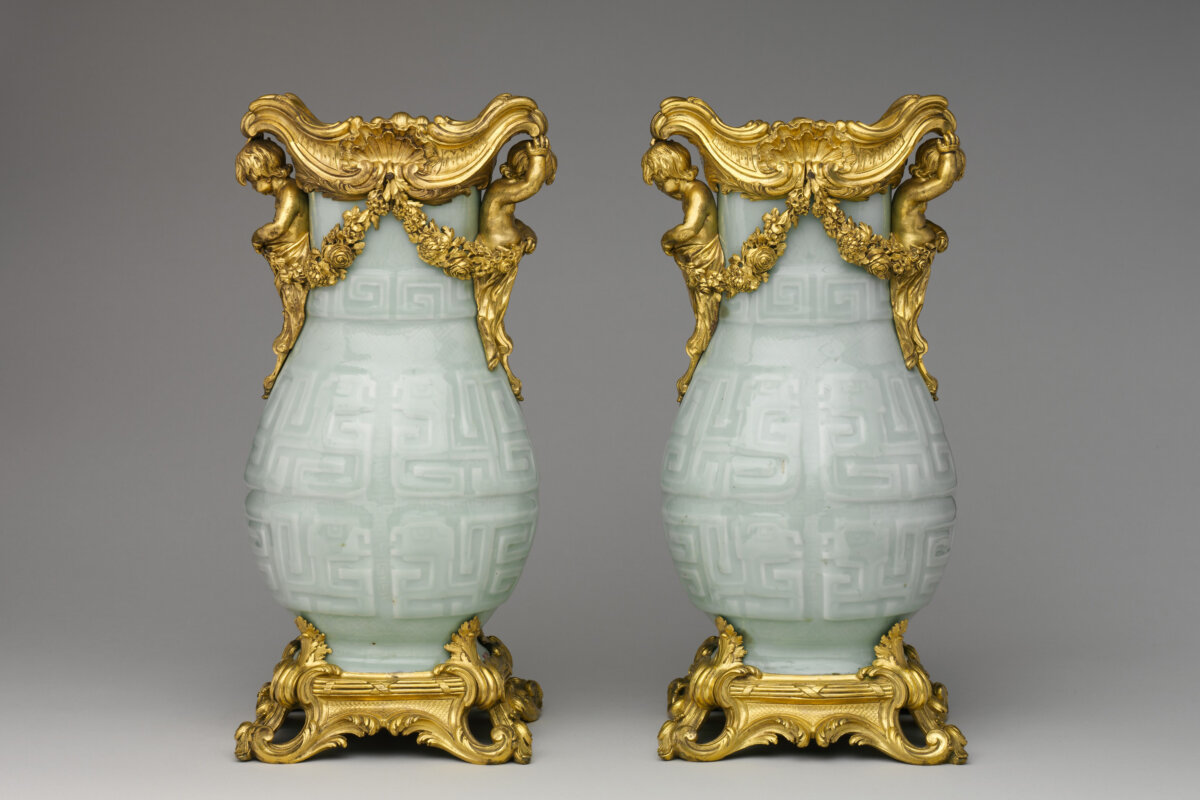
In the 18th and 19th centuries, European artisans found a way to give decorative objects the glow of gold without the cost of solid gold. The technique, called ormolu, involved gilding bronze, and it became a hallmark of luxurious interiors. Even so, ormolu was never cheap. Producing it demanded the combined skills of modelers, founders, chasers, and gilders, and it remained a luxury material, commissioned mostly by aristocrats, collectors, and Europe’s royal courts.
Strictly speaking, ormolu is the gilding technique itself: a thin layer of gold applied over bronze. The name comes from the French “or moulu,” meaning “ground gold,” a reference to the powdered gold used in the traditional process. In everyday use, ormolu also refers to the finished object, though the more precise terms are gilt bronze or “bronze doré” in French.
As Good as Gold
Making ormolu involved a collaboration among specialists at different stages. To begin, a modeler would sculpt the design in wax, clay, or plaster, often working from a designer’s drawings. Founders then turned the model into bronze, most often by the lost-wax method, in which a mold is formed around the wax, the wax is melted out, and molten metal is poured into the cavity. Once the bronze had cooled and hardened, the rough casting was cut and filed to remove seams and flaws. Larger mounts, the decorative metal fittings attached to furniture, clocks, or porcelain, were cast in sections and then assembled and fitted.
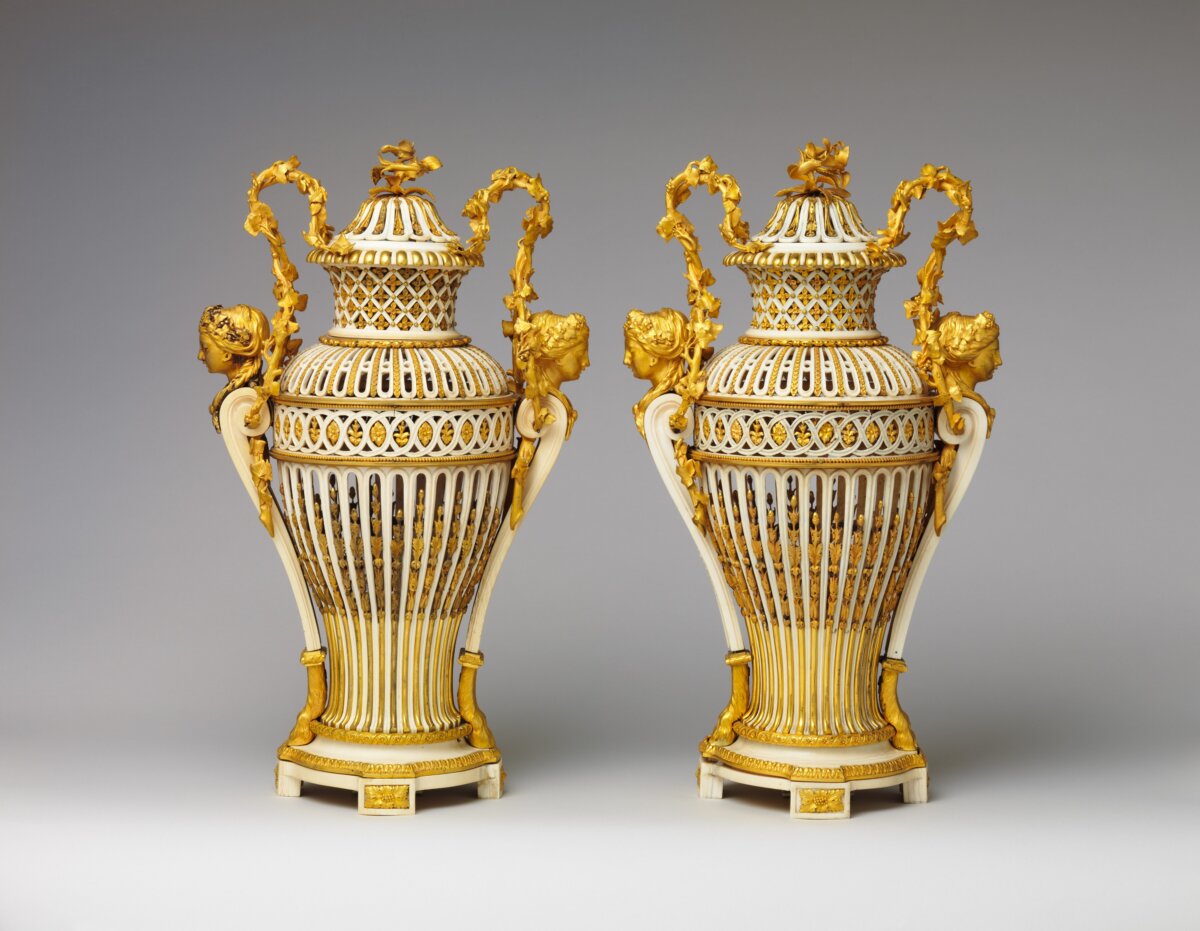
The most skilled step in shaping the metal came next. Chasers used chisels, punches, and hammers to add crisp details, each as the veins of a leaf or the edges of a ribbon. Gilding, the application of a thin layer of gold, could not hide weak workmanship, so the chaser stage separated great pieces from ordinary ones.
Because gold will not stick to dirty or tarnished bronze (the dull surface that forms when metal reacts with air), the piece was heated and scoured with acid until it was perfectly clean. Meanwhile, the gilder ground gold into fine particles and mixed it with mercury, a metal that is liquid at room temperature and dissolves gold into a paste called an amalgam. The traditional ratio was roughly eight parts mercury to one part gold. The mixture was squeezed through soft chamois to remove excess mercury, then brushed onto the bronze. The piece was heated over a furnace until the remaining mercury vaporized, leaving a dull, durable film of gold. This method, known as mercury or fire gilding, was hazardous, and many gilders suffered lasting health damage. As a result, France began restricting the practice in the 19th century.
The final step was burnishing, in which gilders polished selected areas with agate or hematite tools to a mirror-like shine, leaving others matte so that light played across the different surfaces. They could also adjust the tone, from pale lemon to deep reddish gold, by applying and heating coloring mixes. Since the gold layer was so thin, wear on antique ormolu often reveals the bronze beneath.
Centers of Production
Paris was the center of ormolu production, and its leading patron was King Louis XV, known as Louis the Beloved, who was passionate about the arts and sciences and filled his residences with elaborate decorative objects. His court’s tastes influenced what Paris’s craftsmen produced, and the broader market followed suit. The mantel clocks favored at court, particularly those featuring animals, reflected the period’s fascination with both the natural world and chinoiserie, the European style that imitated and reinterpreted East Asian art.
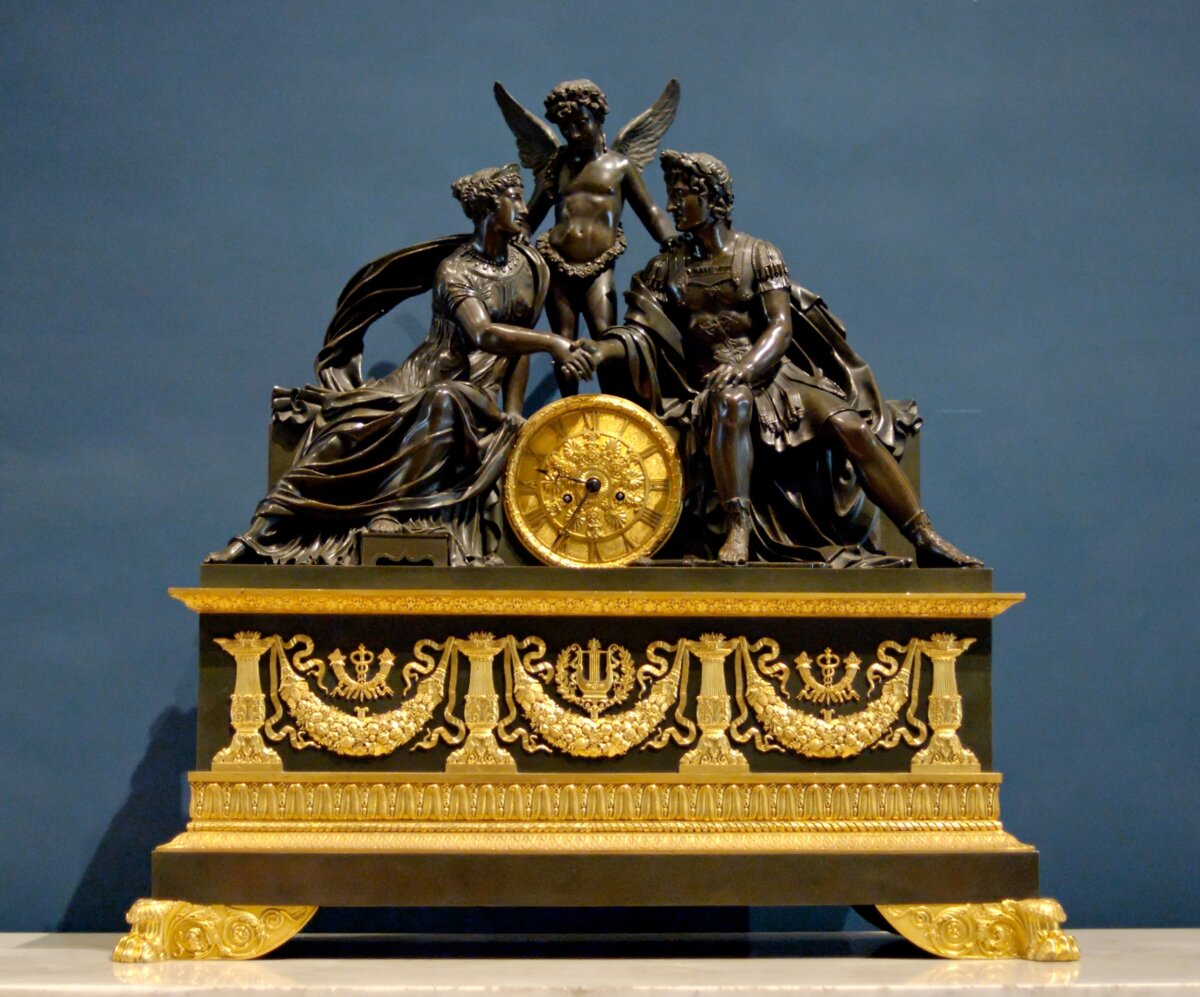
One of the most sought-after artists of this kind was Jean-Joseph de Saint-Germain, whose skill in bronze casting, intricate detailing, and life-like animal forms earned him commissions from leading Parisian clockmakers. He was joined by other acclaimed artisans, including Jacques Caffieri and Pierre Gouthière, who also worked for the French court. Later, Pierre-Philippe Thomire gave the First French Empire its signature look in ormolu. His elegant neoclassical mounts and handles graced famed Sèvres porcelain vases, and at the peak of his success, his workshops employed as many as 600 to 700 people.
The warm, lustrous finish of ormolu appealed to wealthy patrons and craftsmen alike, and its versatility made it a favorite across many media, including clockmaking, sculpture, and furniture. Ormolu mounts also adorned porcelain, from East Asian wares to the celebrated porcelain of Sèvres. The craft was not limited to France: In England, Matthew Boulton of Birmingham began producing ormolu vases and clock cases in the late 1760s.
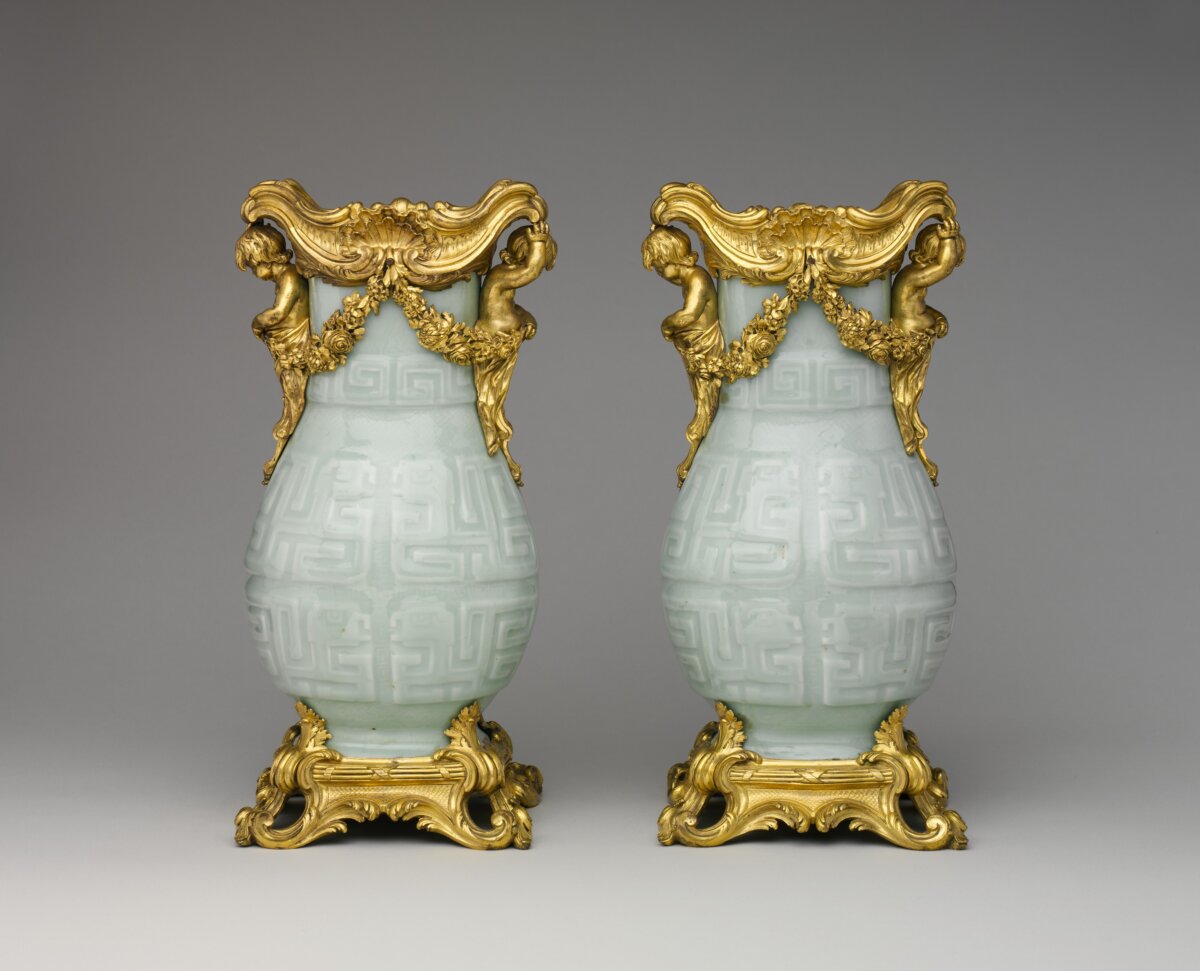
Eventually, electroplating replaced the hazardous mercury-gilding method, ending a process that cost many artisans their health. Surviving ormolu pieces, with their deep luster, still testify to the sculptors, founders, chasers, and gilders whose combined skills made bronze look like solid gold.
What arts and culture topics would you like us to cover? Please email ideas or feedback to features@epochtimes.nyc.