SEARCH


Some deemed him a prophet. Others thought he was a villain. His followers venerated him like a deity, while his critics envied him and called for his death. The same radical teachings that inspired his students to practice virtue infuriated others, who cast him as an enemy of the public good.
Pythagoras (circa 570 B.C.–circa 495 B.C.) was born on Samos, a Greek island on the eastern edge of the Aegean sea. His name lives on through the “Pythagorean theorem,” taught in classrooms around the world. Yet his contributions to humanity far surpass mathematics.
Who was this mysterious man, and what wisdom did he leave behind?
An Influential Life
Pythagoras’s life is shrouded in mystery. Like Socrates, the Buddha, and many other sages, he never wrote anything down. Writing, he thought, weakened memory.
His influence was so profound that many contemporary and later philosophers treated him like a deity. Among them was Porphyry of Tyre (circa 234 A.D.–circa 305 A.D.), a wide-ranging thinker and author of treatises on music, poetry, and theology, as well as biographies of seminal historical figures. In the “Life of Pythagoras,” Porphyry narrated the Samian’s life from birth to death.
Pythagoras was the son of Mnesarchus, a jeweler or gem-engraver. Mnesarchus’s business was successful. He traveled extensively, taking his young son with him around the Mediterranean.
Pythagoras’s mother was Pythais, a descendant of Ancaeus, who was believed to be Samos’s mythic founder. Some accounts identify Pythagoras as the offspring of Pythais and Apollo, the Greek god of light, music, and knowledge.
Extensive travel exposed Pythagoras to teachers and ideas. He spent his formative years between Samos and the Greek-speaking south of Italy. He also lived in Egypt and Phoenicia (modern-day Lebanon).
 “The School of Athens,” 1509–1511 by Raphael. Fresco, 16.4 ft by 25.2 ft. Stanze di Raffaello (Raphael Rooms), Apostolic Palace, Vatican City. (Public Domain)
Everywhere he went, Pythagoras learned quickly. According to Porphyry:
“He learned the mathematical sciences from the Egyptians, Chaldeans and Phoenicians; for of old the Egyptians excelled in geometry, the Phoenicians in numbers and proportions, and the Chaldeans of astronomical theorems, divine rites, and worship of the Gods, [becoming] the first to use frankincense in the worship of divinities.”
It was through his stays “among these foreigners that Pythagoras acquired the greater part of his wisdom.”
He observed. He assimilated. He shared all he learned, with a select few.
Pythagoras’s Cave
Midway through his life, the wisdom-seeker left Italy and returned to Samos, where he retreated into a cavern by the island’s southern shores, now dubbed the “Cave of Pythagoras.” He spent most of his waking hours in darkness, living as a hermit in his native land. He fasted, prayed, and meditated.
Most believe he lived this ascetic life for the best part of a decade. Yet he wasn’t always alone. As Porphyry noted, Pythagoras dwelled in the cave “day and night, discoursing with a few of his associates.” Little is known about his teaching. He was joined periodically by curious men to pray and meditate, but also to ponder music and mathematics, which Pythagoras deemed sacred subjects.
Over the years, Samos’s ruler became increasingly violent and inimical to free-ranging thinkers like Pythagoras. The cave-dweller recognized “that life in such a state was unsuitable for a philosopher.” He traveled back to Italy, where he had made many connections.
Pythagoras in Italy
Porphyry described Pythagoras’s arrival as the advent of a charismatic leader:
“His presence was that of a free man, tall, graceful in speech and gesture, and in all things else. … The arrival of this great traveler, endowed with all the advantages of nature, and prosperously guided by fortune, produced on the Crotonians so great an impression, that he won the esteem of the elder magistrates, by his many and excellent discourses. They ordered him to exhort the young men, and then to the boys who flocked out of the school to hear him; and lastly to the women, who came together on purpose.”
His eloquence and magnanimity earned him supporters all over southern Italy. His voice and singing were said to have magical powers, even over irrational animals.
Porphyry told an anecdote about a female Daunian bear, a local species in southern Italy. The bear had been eating local fauna and compromising people’s food supply. Pythagoras seized her. According to Porphyry, “after having patted her for awhile, and given her barley and fruits, he made her swear never again to touch a living creature, and then released her. She immediately hid herself in the woods and the hills, and from that time on never attacked.”
Despite his appreciation for the power of sound, Pythagoras required his followers to take vows of silence, both to encourage mindfulness and to avoid divulging his knowledge to the unready. His teachings are therefore unknown, except for general principles. As Porphyry noted, he taught that “certain specified periods, the same events occur again; that nothing was entirely new; that all animated beings were kin, and should be considered as belonging to one great family.”
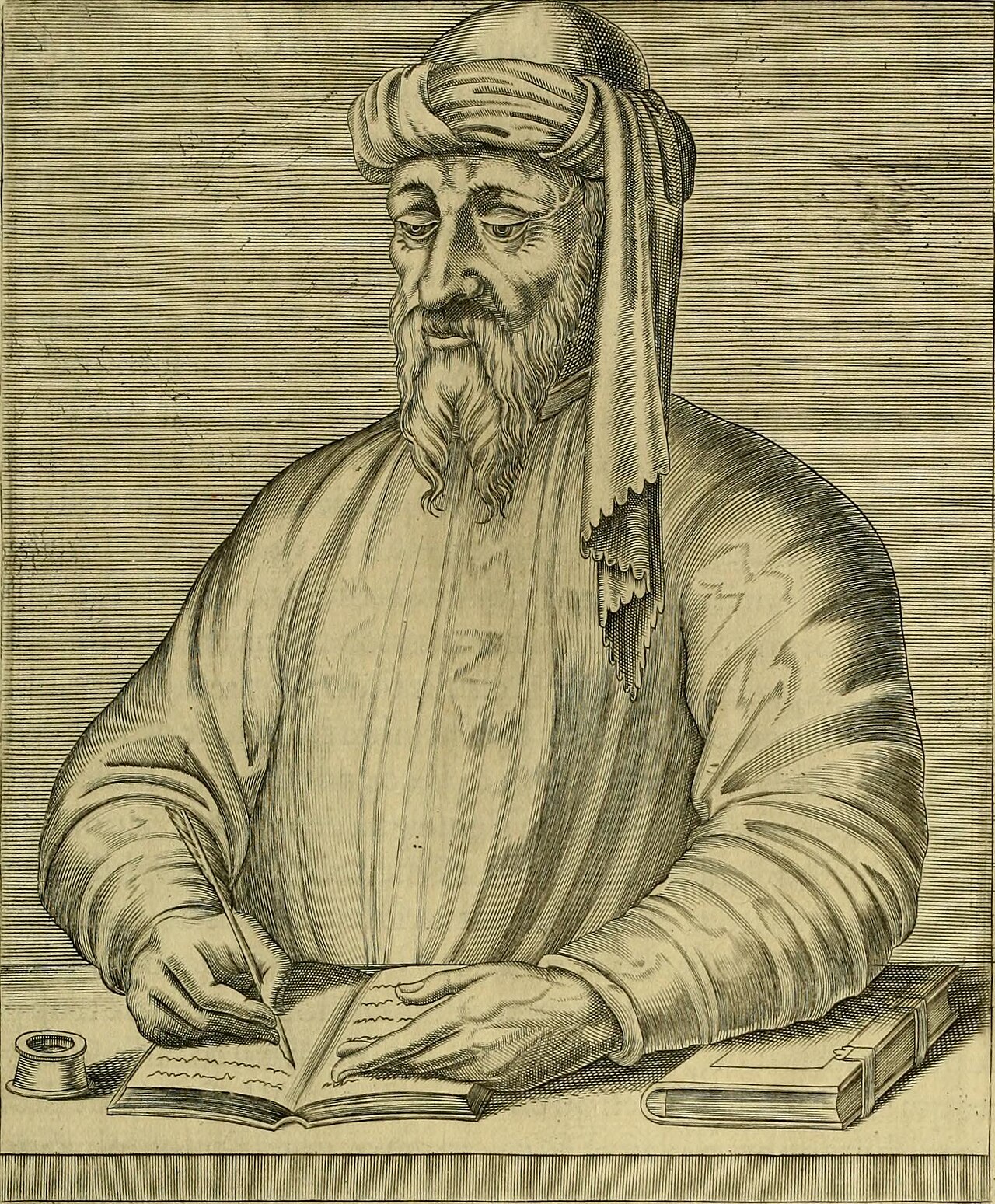 Porphyry of Tyre, 1584. (Public Domain)
Pythagoras’s ‘Golden Verses’
Although Pythagoras disavowed writing and demanded silence of his pupils, some followers eventually recorded his precepts.
The most complete Pythagorean text is titled “Golden Verses”: a collection of 71 ethical guidelines for ethical and spiritual flourishing thought to come from Pythagoras himself. The verses were written in poetic meter; Pythagoras’s pupils sung and recited them during group activities and solitary meditations.
As Porphyry explained, Pythagoras “himself could hear the harmony of the Universe, and understood the universal music of the spheres, and of the stars which move in concert with them.” His musical sensibilities endowed him with therapeutic powers. If his friends were healthy, he “always conversed with them; if they were sick, he nursed them; if they were afflicted in mind, he solaced them, some by incantations and magic charms, others by music.”
The “Golden Verses” were also used to soothe and direct one’s soul toward noble pursuits. In the opening, listeners are told to “First worship the immortal gods, as they are established and ordained by the law”—to make the divine a priority. They are then reminded to honor their parents and make friends only with the virtuous.
The verses encourage listeners and reciters to “reflect before every deed, so as not to act foolishly”—to master “gluttony, sloth lust, and anger,” to “show due measure in drink, food, and exercise,” and remember that death “is the destiny of all men.”
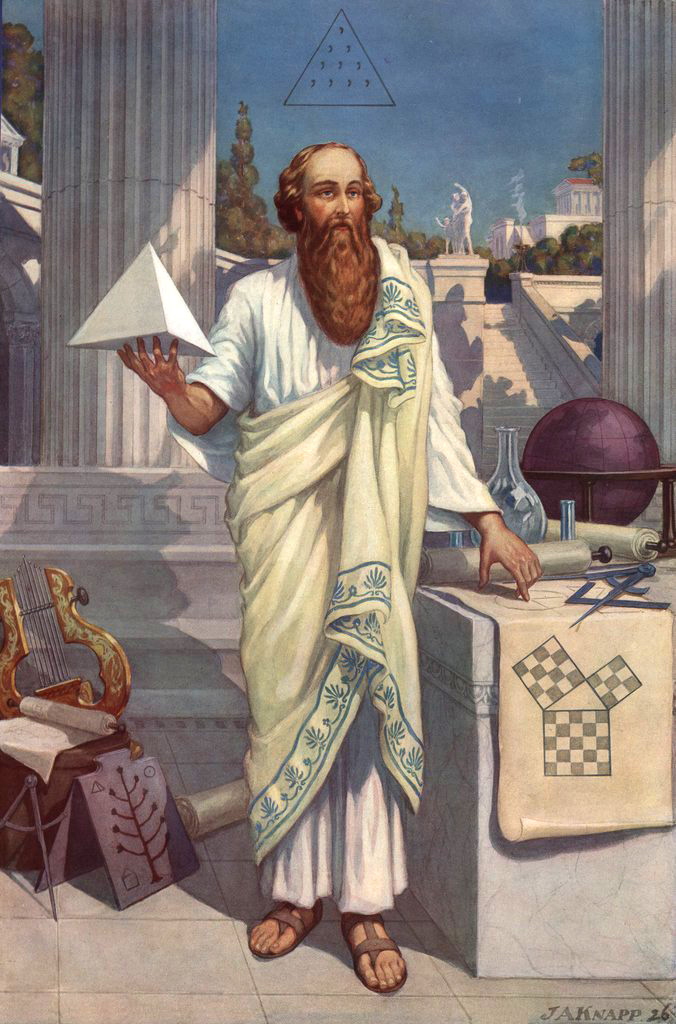 Pythagoras displayed with his mathematical tools and discoveries, by J. Augustus Knapp. (Public Domain)
The Immortal Soul
Though he took mortality seriously, Pythagoras believed in reincarnation. For him, the human soul didn’t die with the body. The body decays, withering with age until it passes away. But he suggested that something within each human being precedes the body and survives beyond it.
The Pythagoreans called reincarnation the “transmigration of souls.” A human soul wasn’t guaranteed to be reborn in a human body. For example, it could return to the material world via an animal. But whatever its new form, the Pythagoreans thought the soul endured in a perpetual cycle of regeneration.
This belief in the soul’s immortality partly explains Pythagoras’s dietary restrictions. He banned beans, which he thought disturbed the body, prevented it from attaining virtue, and therefore tainted its cycles of reincarnation. He also required followers to refrain from eating animal meat, and from injuring animals altogether.
An anecdote from the philosopher Xenophanes of Colophon (circa 570 B.C.–circa 478 B.C.) recalled an interaction between Pythagoras and a dog. As a man was beating the dog, Pythagoras implored him to stop, for he claimed to recognize a deceased friend’s soul from its cries.
The Pythagoreans’ belief in the eternal soul motivated their study of geometry and mathematics. As Porphyry put it, they viewed mathematical speculation as “intermediate between the physical and the incorporeal realm.” It was, for them, a source of stable, incorruptible truths, which, much like music, “rendered men truly happy.”
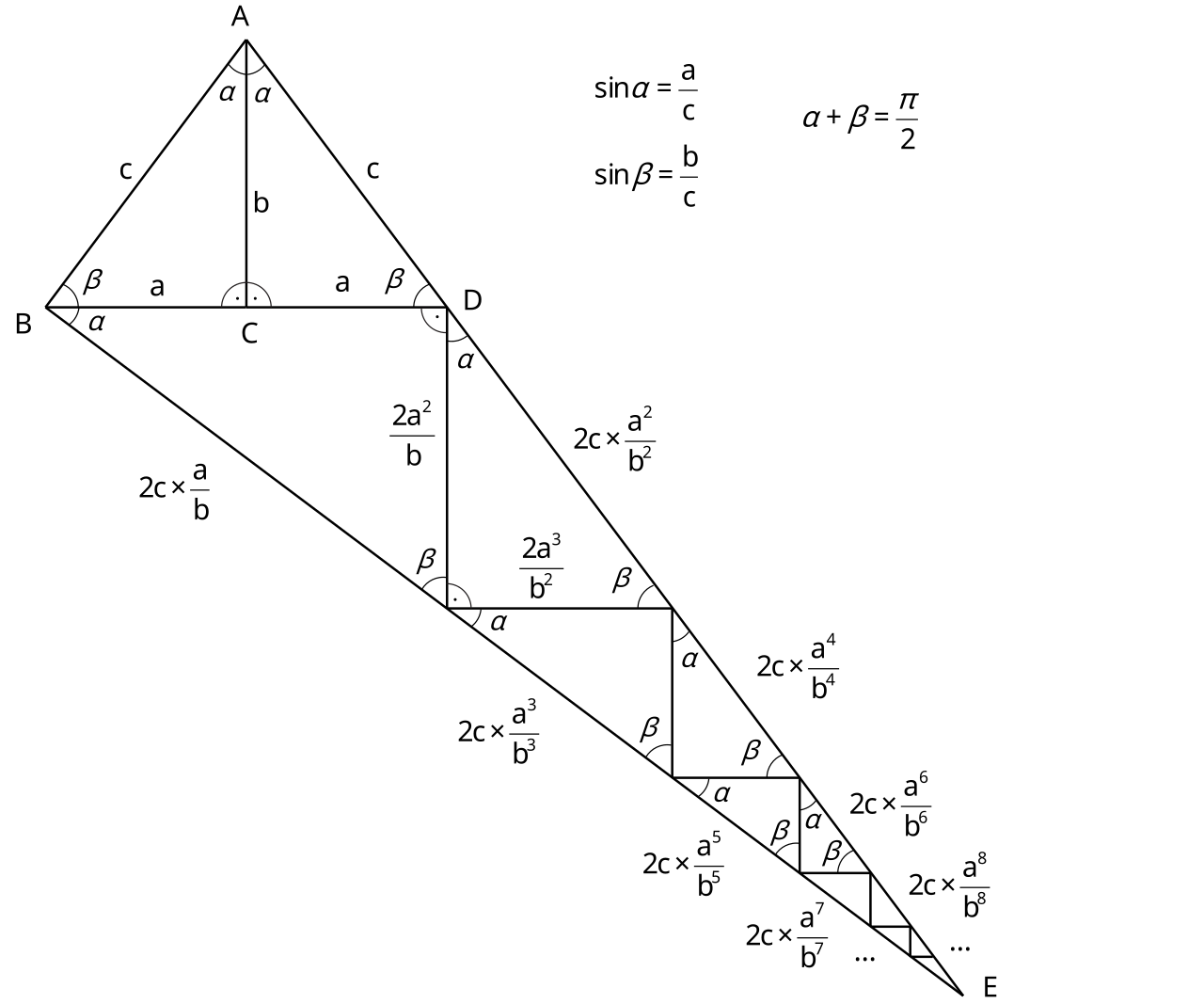 The trigonometric proof of the Pythagorean theorem, visualized by Calcea Johnson and Ne’Kiya Jackson in 2023. (Danko Georgiev/CC BY-SA 4.0)
A Tragic Death
Pythagoras was no aloof mouthpiece for impractical wisdom. He was also involved in politics. He toured Greek colonies across the Mediterranean, gaining followers among disenfranchised youth and vexed aristocrats alike.
People flocked to the Samian sage for advice on how to manage their communities. He obliged, very often with success. He resolved disagreements by exhorting all to “avoid, and even with fire and sword extirpate from the body, sickness; from the soul, ignorance; from the belly, luxury; from a city, sedition; from a family, discord; and from all things excess.”
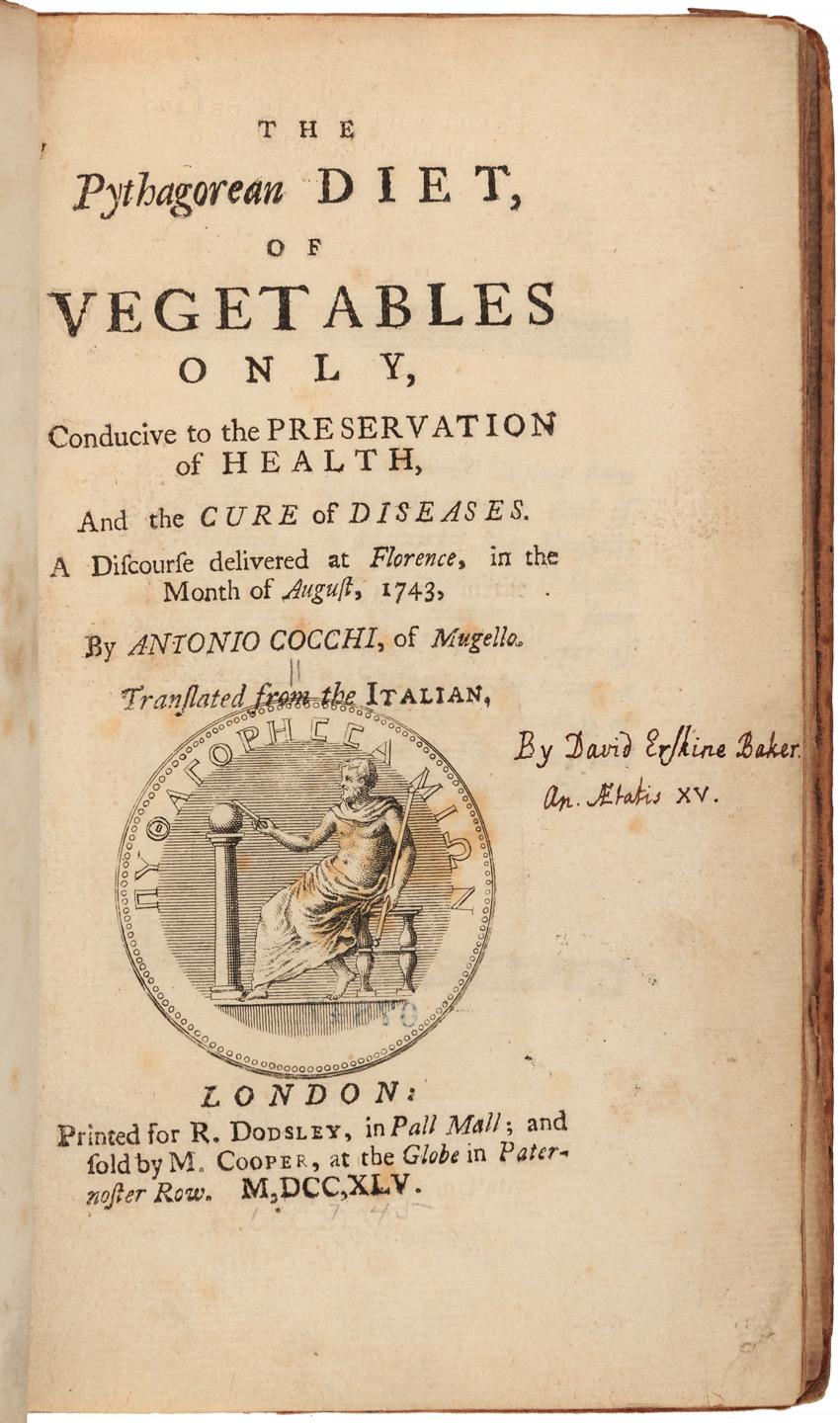 Pythagoras’s argument for a plant-based diet were popular well into the 1700s, as evident in this 1745 book. (Public Domain)
Yet not all supported or admired him. Some envied his fame and charisma. Among them was Cylon, a hostile nobleman from Croton who conspired against Pythagoras and his followers.
Porphyry reported the mysterious incident in passing: A few dozen Pythagoreans gathered at the house of Milo, one of the most formidable wrestlers in the ancient world. Cylon sent his henchmen, who set the house on fire. Pythagoras managed to escape.
The philosopher’s reputation, however, was tarnished forever. He sought shelter in neighboring regions, but no one welcomed him: “Everywhere arose great mobs against him.”
Pythagoras finally fled to a temple in Metapontum, near current-day Taranto, where he lived for 40 days without food, water, or friends, until he died. He likely starved. Or, as Porphyry suggested, he passed away from “grief at the loss of all his friends who, when the house in which they were gathered was burned, in order to make a way for their master, they threw themselves into the flames, to make a bridge of safety for him.”
Pythagoras’s Contributions
Pythagoras’s life and teachings have had innumerable consequences. His belief in the soul’s immortality underpins the writings of the Athenian philosopher Plato (circa 428 B.C.–347 B.C.), whose revolutionary ideas fueled world-shifting currents throughout history, from the rise and spread of Christianity to the formation of republics like the United States. His emphasis on the “music of the spheres” stimulated astronomers like Nicolaus Copernicus (1473–1543) and Johannes Kepler (1571–1630) to chart new maps of the cosmos. His zeal for mathematics spurred scientific investigations throughout the centuries, giving shape to technology as we know it.
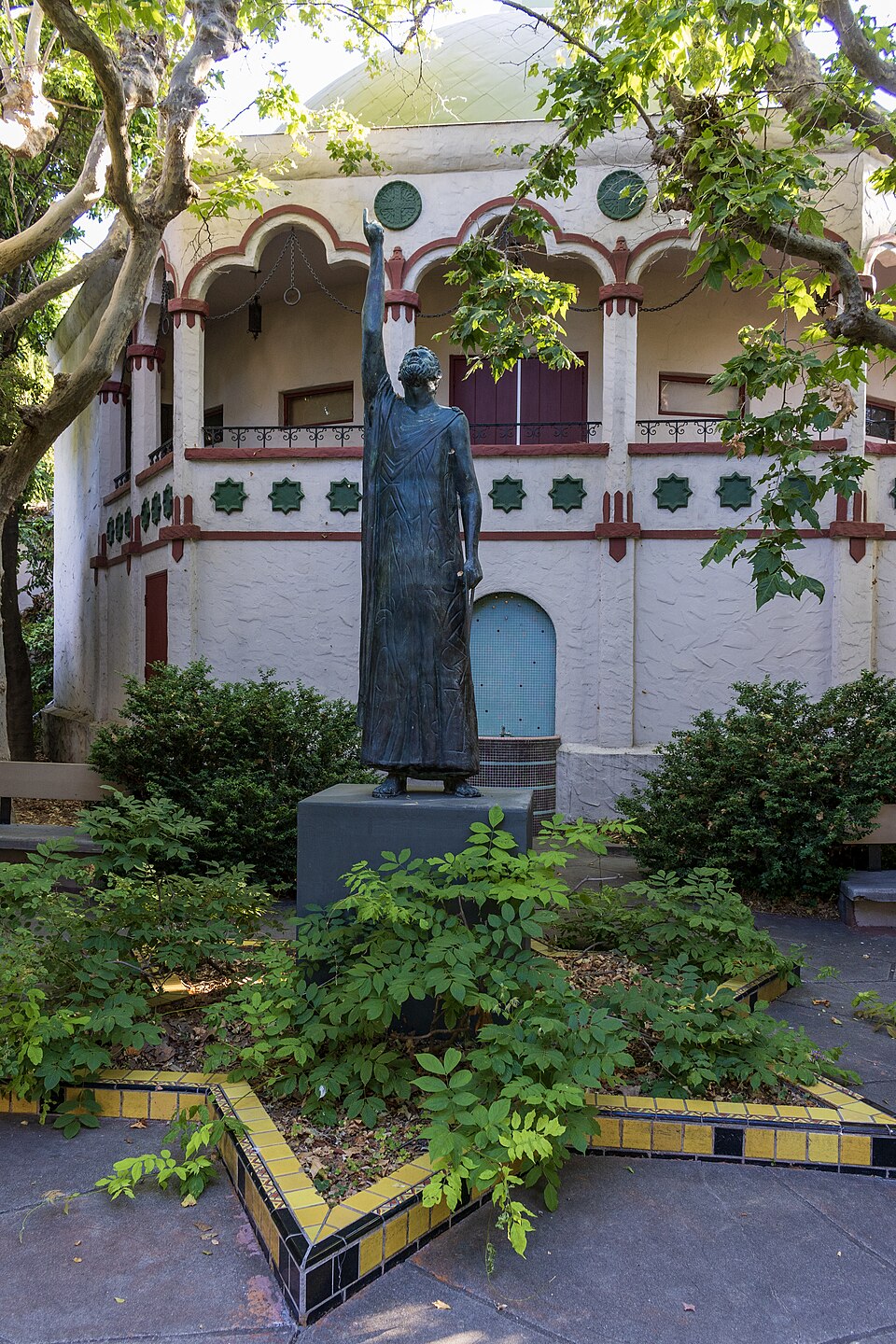 This modern statue of Pythagoras in Rosicrucian Park, San Jose, California, is a tribute to the philosopher, mathematician, and speaker. (The wub/CC BY-SA 4.0)
But above all, Pythagoras was a mystic. He retreated from the world’s cacophony to find enlightenment in silent caverns governed by the elements. He elected poetry and music as his primary language, seeking ways to employ sound for healing’s sake. And he believed in the power of memory and meditation, not only to recollect facts and dispense wisdom, but to remember our origins as creations of a graceful divine order.
What arts and culture topics would you like us to cover? Please email ideas or feedback to features@epochtimes.nyc.