SEARCH


Jules Bastien-Lepage (1848–1884) gave peasants the full dignity of academic painting, and the story begins in Damvillers, the small farming village in northeastern France where he was born.
His father, a vintner who painted in his spare time, nurtured the boy’s talent early, and at 19, Bastien-Lepage left for Paris to study at the Ecole des Beaux-Arts. There, he mastered traditional composition and figure painting, but his real passions were Realism and working outdoors. Rather than choose between them, he combined the two, bringing academic training to the rural world he never stopped calling home.
A Familiar Story, Seen Anew
Bastien-Lepage’s painting “The Annunciation to the Shepherds” (1875) carries his sympathy for working people into a New Testament scene. The Gospel of Luke describes an angel appearing to shepherds outside Bethlehem to announce the birth of Jesus. Earlier religious artists often played up the spectacle of the moment, with grand compositions, idealized figures, and dramatic lighting. Bastien-Lepage chose differently. He set the encounter in a believable outdoor landscape at twilight, keeping the shepherds clearly visible and letting the landscape remain part of the picture.

Bastien-Lepage also treated the shepherds as individuals, each reacting in his own way. The oldest kneels, his body lowered before the apparition, while the central figure stares in astonishment, mouth open and hands raised. Their rough clothing suits outdoor work, and Bastien-Lepage asked his parents to collect worn goat-fleece coats from local villagers so he could paint them accurately.
The painting was made for the 1875 Prix de Rome competition, in which 10 finalists had 90 days to complete their works under strict supervision. Bastien-Lepage was considered a leading contender, and “The Annunciation to the Shepherds” drew considerable public praise. Yet the jury awarded him the Premier Second Grand Prix, the runner-up prize, and the decision sparked controversy, with some speculating that his naturalistic portrayals had cost him first place.
The Poetry of the Autumn Harvest
As his career developed, Bastien-Lepage turned increasingly to the world he knew best. Unlike many artists of his time, he was not lured by Paris. To him, Damvillers was more than his birthplace: Its fields, wooded hills, and forests shaped his earliest experiences, and village life put him in daily contact with the farmers, laborers, and families who would later appear in his paintings. Even after moving to the capital, he kept returning to them.
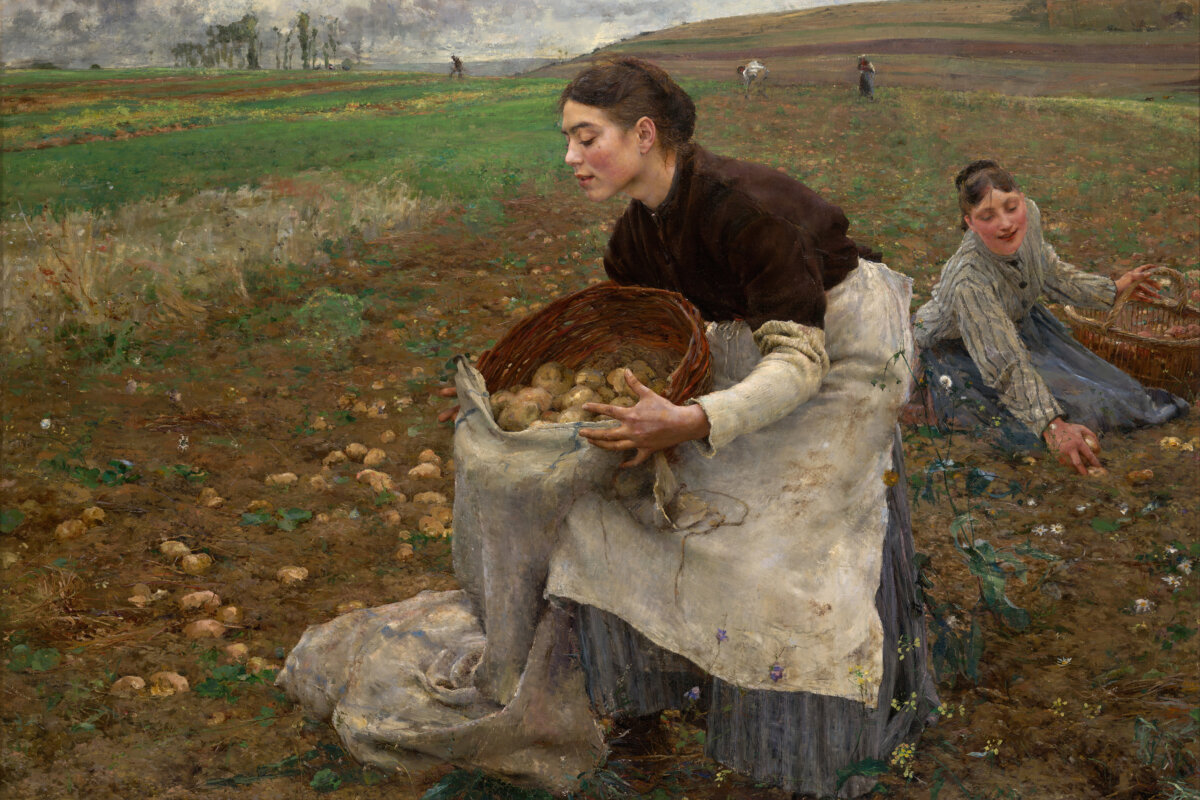
His first major success came in 1874 with a portrait of his grandfather in the garden. The painting earned a third-class medal at the Paris Salon and introduced audiences to his skill at conveying personality and atmosphere.
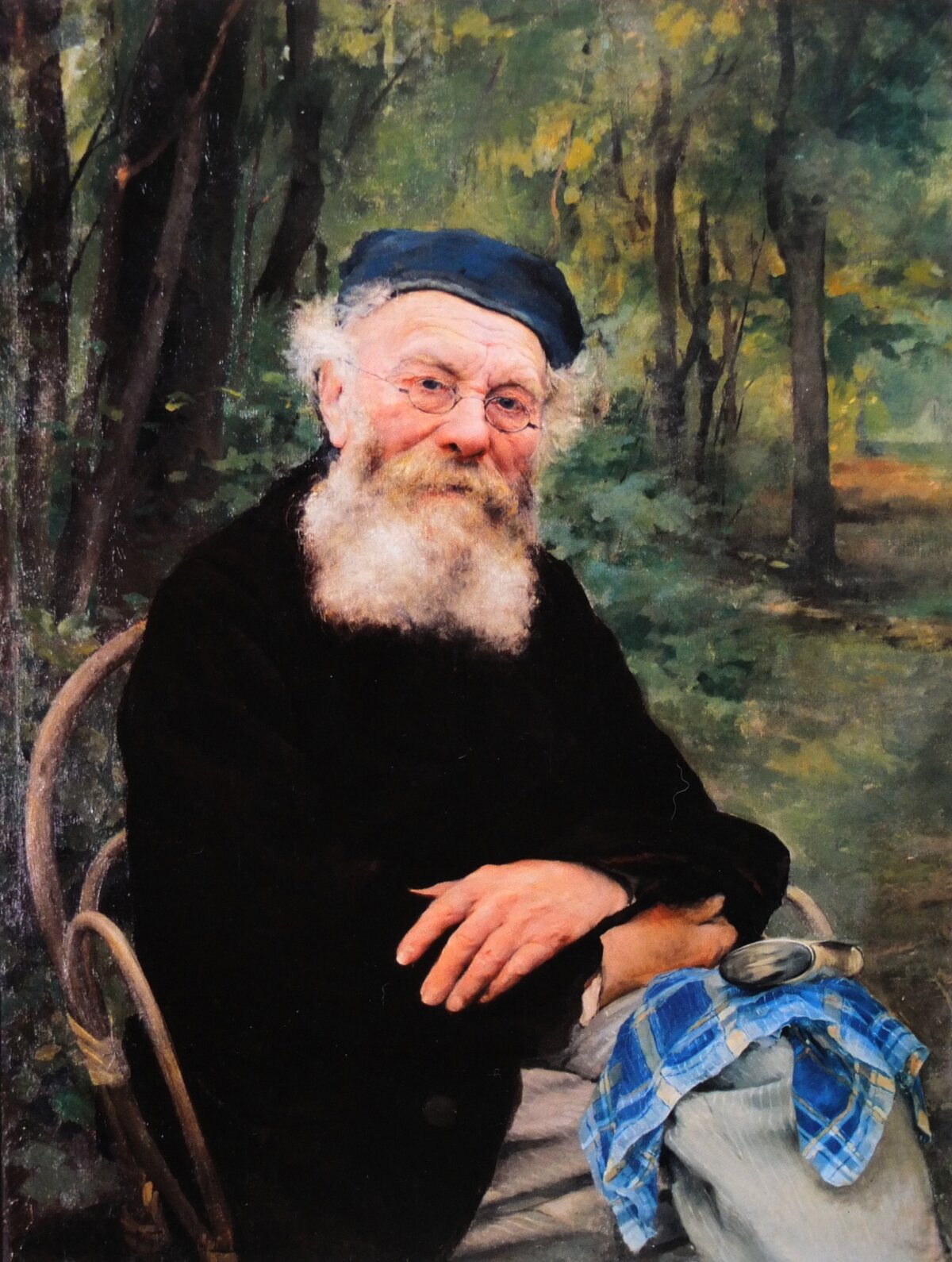
He built on this success with “October,” a work just as rich in atmosphere. Exhibited at the Salon in 1879, it established Bastien-Lepage’s reputation and earned him the Legion of Honour that year. Its success showed that rural subjects could rival historical, religious, and aristocratic themes. Measuring roughly 6 feet by 6.5 feet, the canvas gives an ordinary harvest a monumental presence.
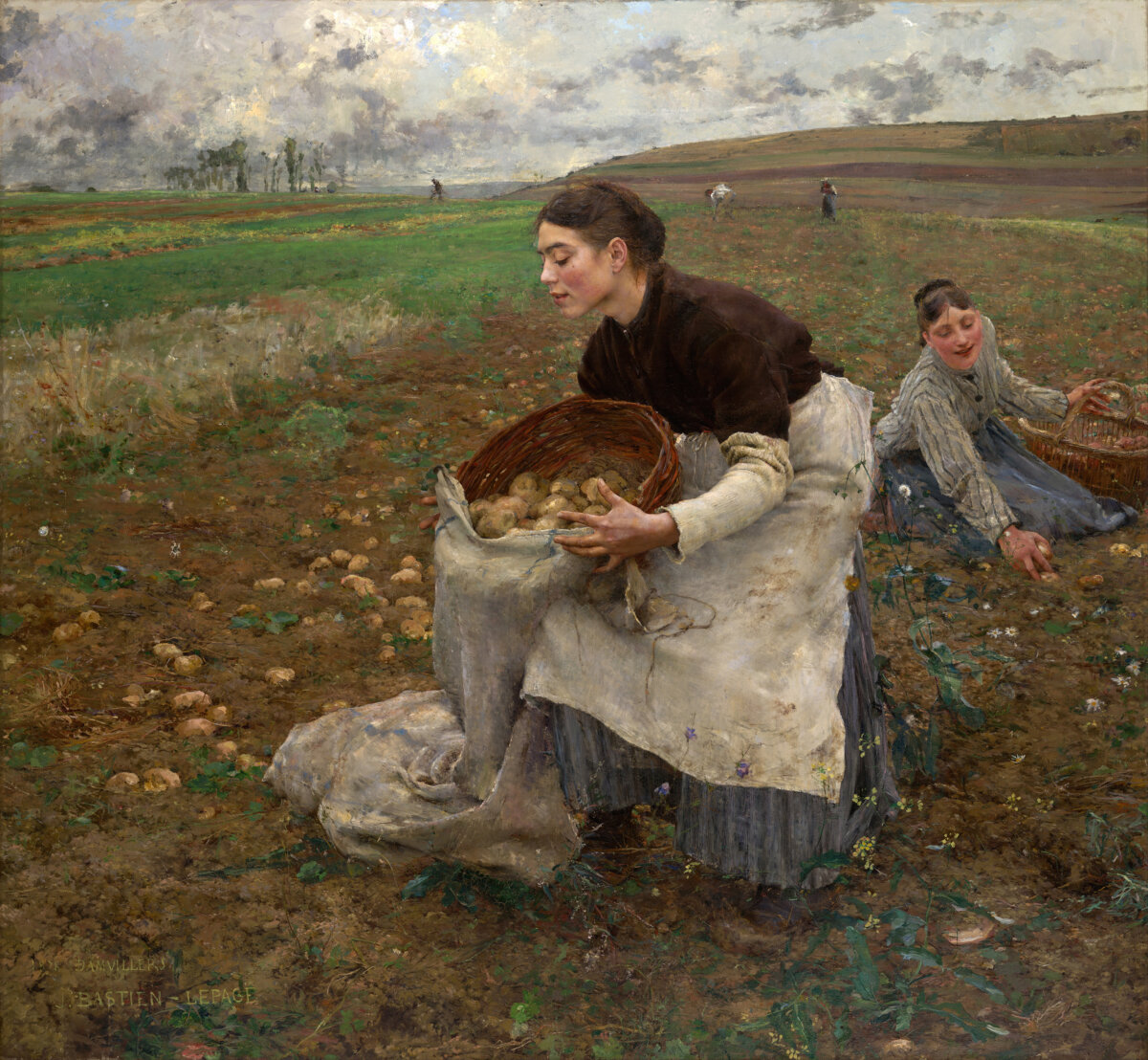
In the foreground, two women harvest potatoes. Bastien-Lepage’s cousin modeled for the woman (right) who is kneeling to pull a potato from the ground and gather it into a basket. In the background, other workers continue the harvest, their smaller figures extending the activity into the distance.
The composition has no single dramatic focal point; the eye moves between the foreground figures, the workers behind them, and the open countryside beyond. The women bend, turn, and reach in ways that suggest the repetitive motions of harvesting, making the scene feel observed rather than staged. Though they labor together on the same field, each remains absorbed in her own work.
A Moment of Courtship
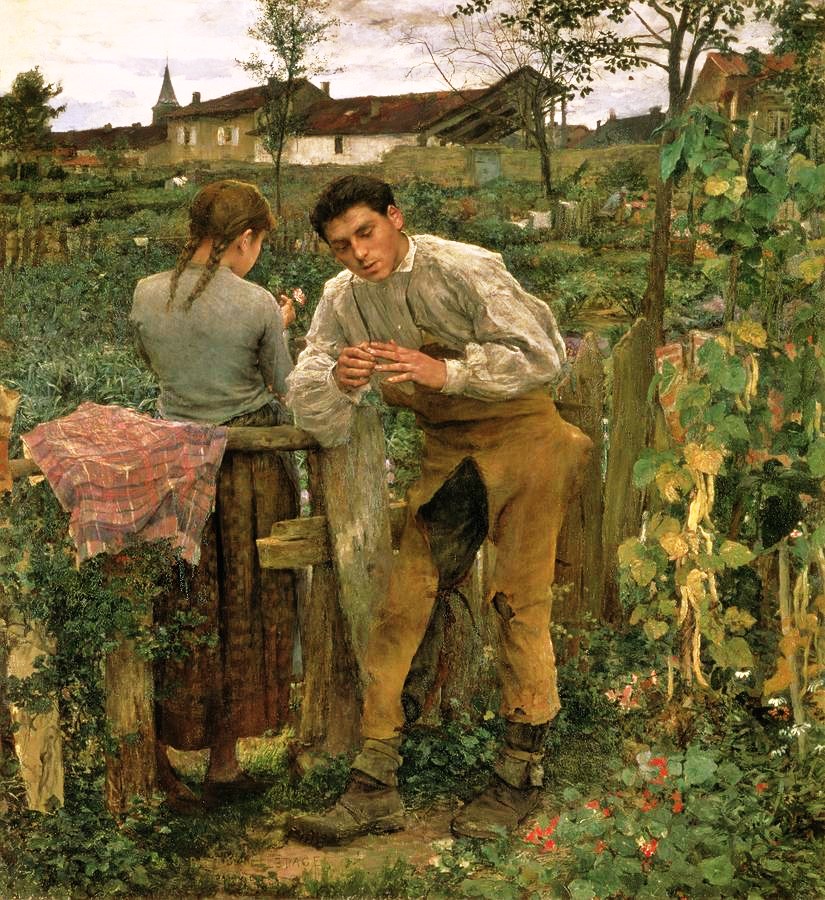
In “The Village Lovers” (1882), Bastien-Lepage shifts from the physical demands of farm work to the social life of a rural community, here an exchange between a young farmworker and a young woman talking beside a wooden fence. There is nothing dramatic about the scene; the pair are depicted simply, as if caught in a photograph. The young man leans against the fence in his working clothes, suggesting he has come straight from the fields. The young woman stands opposite him, turned partly away from the viewer, her expression attentive and her posture reserved. The couple stands in a village garden among fruit trees, much like those Bastien-Lepage had known since childhood in Damvillers. Exhibited at the Salon in 1883, Bastien-Lepage’s final showing there, “The Village Lovers” offered a different view of rural life from the harvest scenes that had won him widespread recognition.
From village gardens to sacred scenes, Bastien-Lepage treated the lives of ordinary people as worthy of serious, large-scale art. His early death in 1884 ended a career just beginning to show its range, yet his paintings still resonate for their careful attention to faith, labor, and love in the countryside.
What arts and culture topics would you like us to cover? Please email ideas or feedback to features@epochtimes.nyc.