SEARCH


The idea behind micro-investing apps is that they give you the ability to invest your spare change automatically.
Each time you use your debit card, the app rounds the purchase up to the next dollar and invests the difference. Some also let you buy fractional shares for a few dollars. Setup is simple, but holding on to what you earn is harder, because a flat monthly fee can take a bite out of a small balance. Others add game-like features to nudge you into trading more often.
Before you give an app access to your bank account, look at what the fees add up to and run a few simple checks first.
Quick Answer: Is Micro-Investing Worth It?
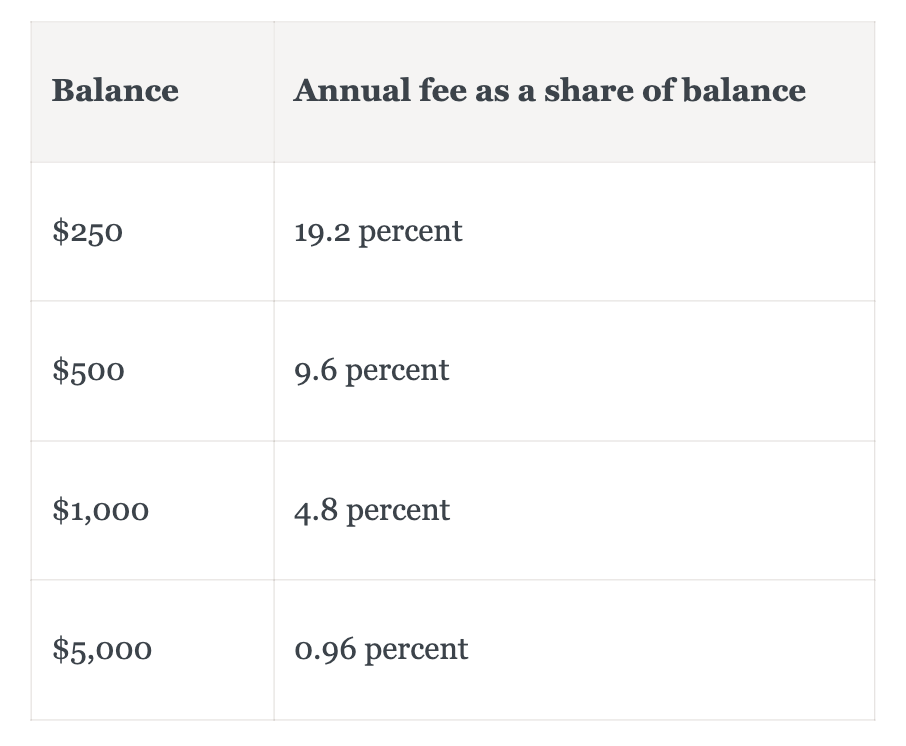
Yes, it can provide you with some extra cash, so long as the fee doesn’t eat your profits. A small, steady habit can add up over the years. However, a flat fee of a few dollars a month can erase a good year of gains on a balance of a few hundred dollars. The math improves as your balance grows. But while it’s on the small side, the fee will take a large share.
How Round-Ups and Fractional Shares Work
Say you pay $3.63 for a coffee with a linked debit card. The app rounds the purchase up to $4 and sets aside the 37 cents. Several apps wait until the accumulated round-ups from linked accounts reach $5 before investing them. The money often goes into a portfolio of fractional shares of exchange-traded funds (ETFs).
Fractional shares are slices of a stock or fund. You can usually order them by dollar amount, so $20 buys 0.1 share of a $200 stock.
Micro-Investing Fees on a Small Balance
A flat monthly fee factors much more heavily on a small balance than on a large one. Many round-up apps charge a flat fee of a few dollars a month. At $4 a month, or $48 a year, here’s what the fee takes out of different balances.
 An app’s own Form CRS (a short disclosure customers must receive) often says the fee may not suit people who invest small amounts infrequently, because it’s too large a percentage of what they invest.
The funds in the portfolio charge their own annual fees, called expense ratios, typically a fraction of 1 percent. Some apps charge a percentage of your assets instead of a flat fee, so check which kind you’d be paying.
Costs Beginners Tend to Miss
The subscription fee is the visible cost, but a small account can leak money in other ways.
Automatic debits can overdraw a thin checking account, and the bank’s fee, often $25 to $35, can be larger than what you invested. An inadequate balance in the funding account of some apps could trigger overdraft fees, so keep a cushion there with, ideally, an emergency fund behind it.
Funding with a credit card is risky: the average rate on cards that carry a balance was about 22 percent in August 2026, and no portfolio can be counted on to beat that, so paying down the card usually makes more sense first.
Keep in mind that fractional shares generally can’t be moved to another brokerage. The app sells them, and in a taxable account, that sale can trigger taxes and fees.
Checks to Run Before You Link a Bank Account
These free checks take about ten minutes.
Some apps, including robo-advisors, are registered as investment advisers rather than brokers, and some firms hold both registrations. Search the firm by name in the SEC’s Investment Adviser Public Disclosure database, choosing “firm.” Brokers that aren’t also advisers are redirected to FINRA’s BrokerCheck, which lists customer complaints and disciplinary history.
The firm should also appear on SIPC’s list of members, since SIPC protection applies only at member brokerages.
Cash waiting to be invested may sit at the brokerage or be sent to partner banks. Those partner banks might be outside SIPC, and FDIC insurance may apply instead. If the disclosures don’t specify, ask the support staff for an answer in writing.
Keeping Investing From Feeling Like a Game
Round-ups typically run in the background of your daily life, but many apps also invite you to trade. Details matter here.
U.S. securities regulators warn that game-like interfaces and stock notifications can encourage over-trading. Regulators also list games, reward streaks, points, badges, leaderboards, and notifications among the features that may influence how investors behave.
Two habits can keep apps from steering your decisions. One, turn off push notifications and price alerts—especially lists of the day’s biggest movers—cuts down on prompts to trade. Two, putting purchases on a schedule makes impulse trades less likely. For any manual trade, you can write down the reason and wait 24 hours.
FAQs: Micro-Investing
Can You Make Real Money With Round-Ups?
Probably less than you’d hope at first. Round-ups of $30 a month put in $360 a year, and a 10 percent gain on that is $36. A $4 monthly fee costs $48 over the same year, so the fee outweighs the gain. Investing a small, fixed amount on a regular schedule is called dollar-cost averaging, and the habit can matter more than the amount.
Is Micro-Investing Safe?
Any investment can lose value, and neither SIPC nor FDIC insurance covers market losses. Two protections cover other risks. SIPC steps in if a member brokerage fails, covering cash and securities up to $500,000, including $250,000 for cash. FDIC insurance covers deposits up to $250,000 per depositor, per insured bank, per ownership category, which can include cash a brokerage sweeps to a partner bank.
Do You Pay Taxes on Micro-Investing Gains?
In a regular brokerage account, yes. Dividends count as income, and selling for a profit triggers capital gains tax, which is higher on shares held a year or less than on shares held longer. The same applies to fractional shares an app sells when you leave the app. Gains inside an IRA follow retirement account rules instead, so the type of account matters.
Is There a Cheaper Way to Round Up Spare Change?
Often, yes. Many banks round up debit purchases into a savings account at no charge for the feature. If that account is a high-yield savings account, the money earns interest instead of market returns. At an FDIC-insured bank, the balance is also protected up to the deposit insurance limit. It won’t grow like stocks, but it doesn’t drop when stock prices do. That system could work well for building an emergency fund.
The Epoch Times copyright © 2026. The views and opinions expressed are those of the authors. They are meant for general informational purposes only and should not be construed or interpreted as a recommendation or solicitation. The Epoch Times does not provide investment, tax, legal, financial planning, estate planning, or any other personal finance advice. The Epoch Times holds no liability for the accuracy or timeliness of the information provided.