SEARCH


On a recent Sunday afternoon, Tamara Lightheart gathered with her husband and youngest son for a leisurely review of their family plan in the case of an emergency. One by one, they checked each other’s “bug-out bag”—the strategically packed accessory designed to see its owners through a societal collapse.
From the garage they hauled in bulging packs, and onto the kitchen floor they unloaded a startling array of survival swag: freeze-dried meals, night vision goggles, an NOAA emergency radio, Polysporin, and toilet paper, to name a few. Lightheart’s husband, Mike, saw it was time to make a few replacements for their growing 20-year-old son. They outfitted him with a larger hoodie, wool socks, and a new EMF reader, which can detect live wires of downed power lines or whether radio signals are transmitting. They sifted through lip balm, caffeine tablets, a slingshot, first aid kits, and so on.
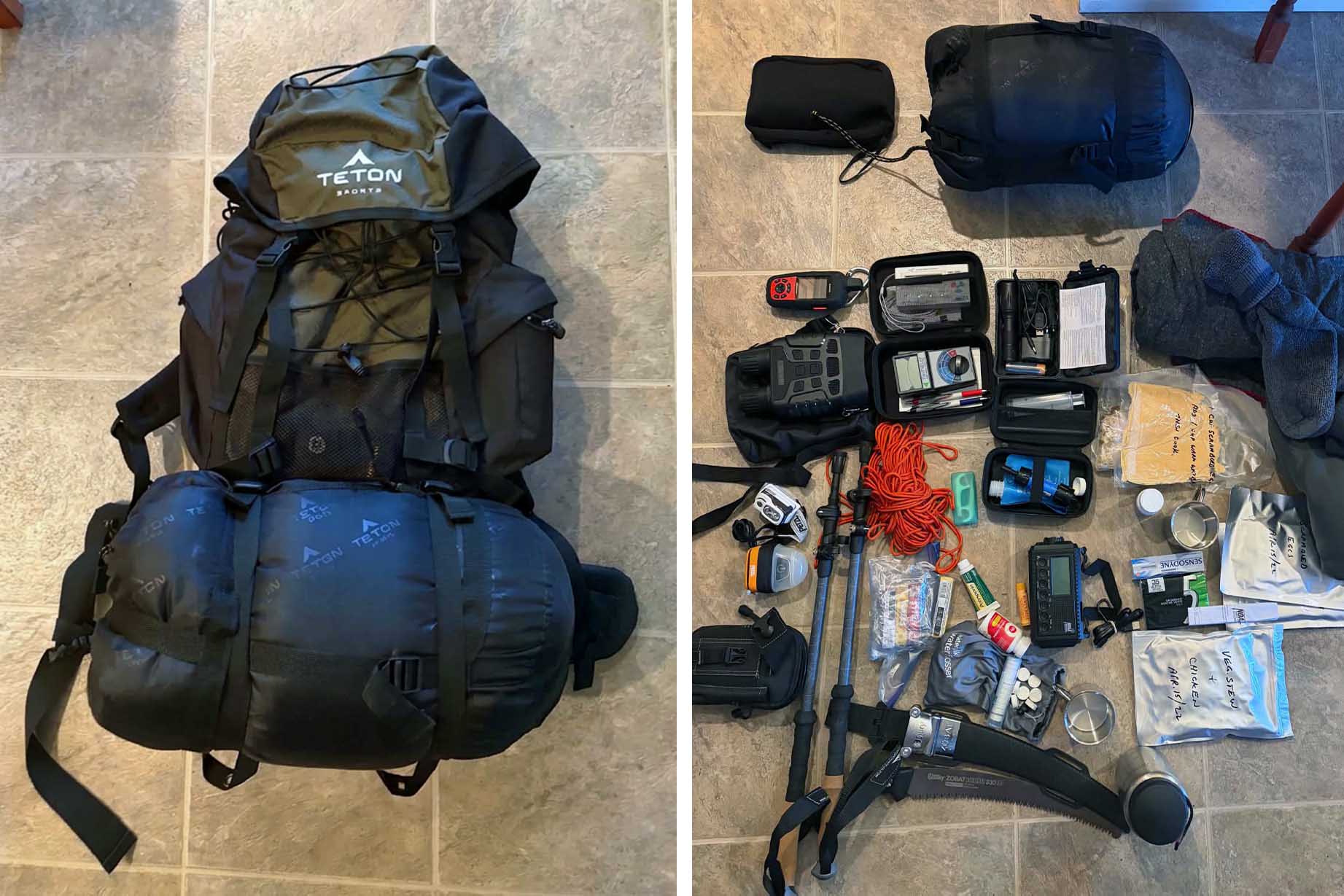 Tamara Lightheart’s son’s “bug-out bag.” (Courtesy of Tamara Lightheart)
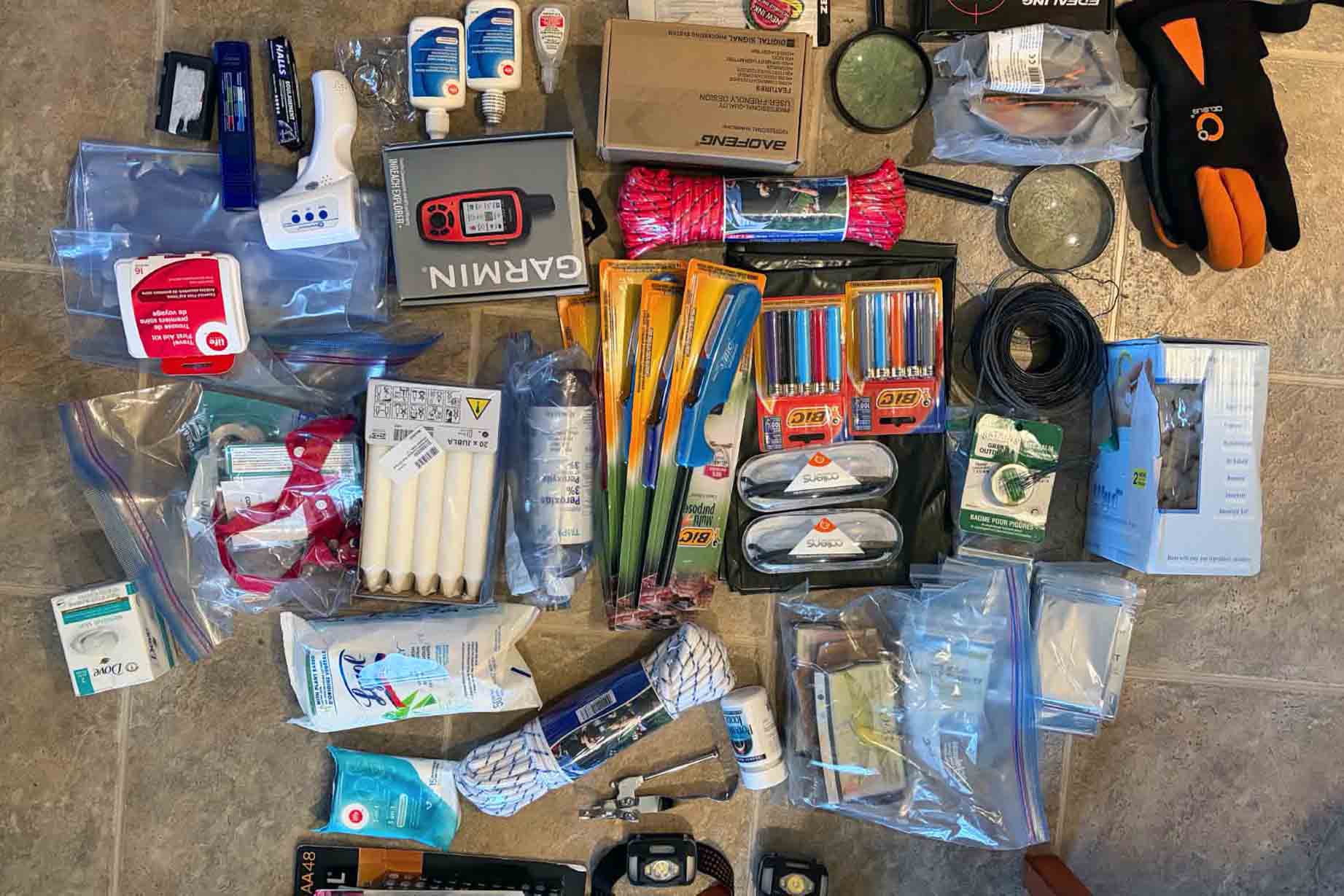 Additional survival gear. (Courtesy of Tamara Lightheart)
If a disaster ever struck their town, the Lighthearts’ home is where you would want to be. Inside, one finds stored drinking water, filtration systems, and medical supplies. Mike stocked firearms and ammunition, while adding equipment to protect from electromagnetic pulse (EMP) attacks that could short-circuit devices. The pantry brims with canned foods, as well as items like balsamic vinegar and pesto from their favorite Italian supermarket.
Lightheart, 56, loves cooking from scratch for her family, noting that familiar flavors comfort the home when times get tough.
“If things are difficult, I still want to make meals we enjoy,” she told The Epoch Times.
Over the years, the Lighthearts have shifted from being “lone wolf” preppers to community-minded educators. Together they founded the Prepping Communities network, a free online hub for regular folks looking to build practical self-reliance. As the preparedness mindset gained momentum during the pandemic, curious newcomers drove the site’s rapid expansion.
“Things I had always taken for granted were no longer available to us,” she said, speaking of the year 2020.
“It made me think much more seriously about how dependent we were on systems we had no control over. … I wanted us to have a plan instead of just hoping we’d be okay.”
Like Lightheart, many in the mainstream of society during the pandemic watched video recordings of bare grocery store shelves and widespread hoarding. Reports emerged of food shortages and depleted stocks of toilet paper and baby formula. Suddenly, people like Lightheart living integrated city lives became interested to learn survival skills.
Those like Lightheart became middle-of-the-road preppers, reshaping the bunker-dwelling, doomsday caricature of past decades.
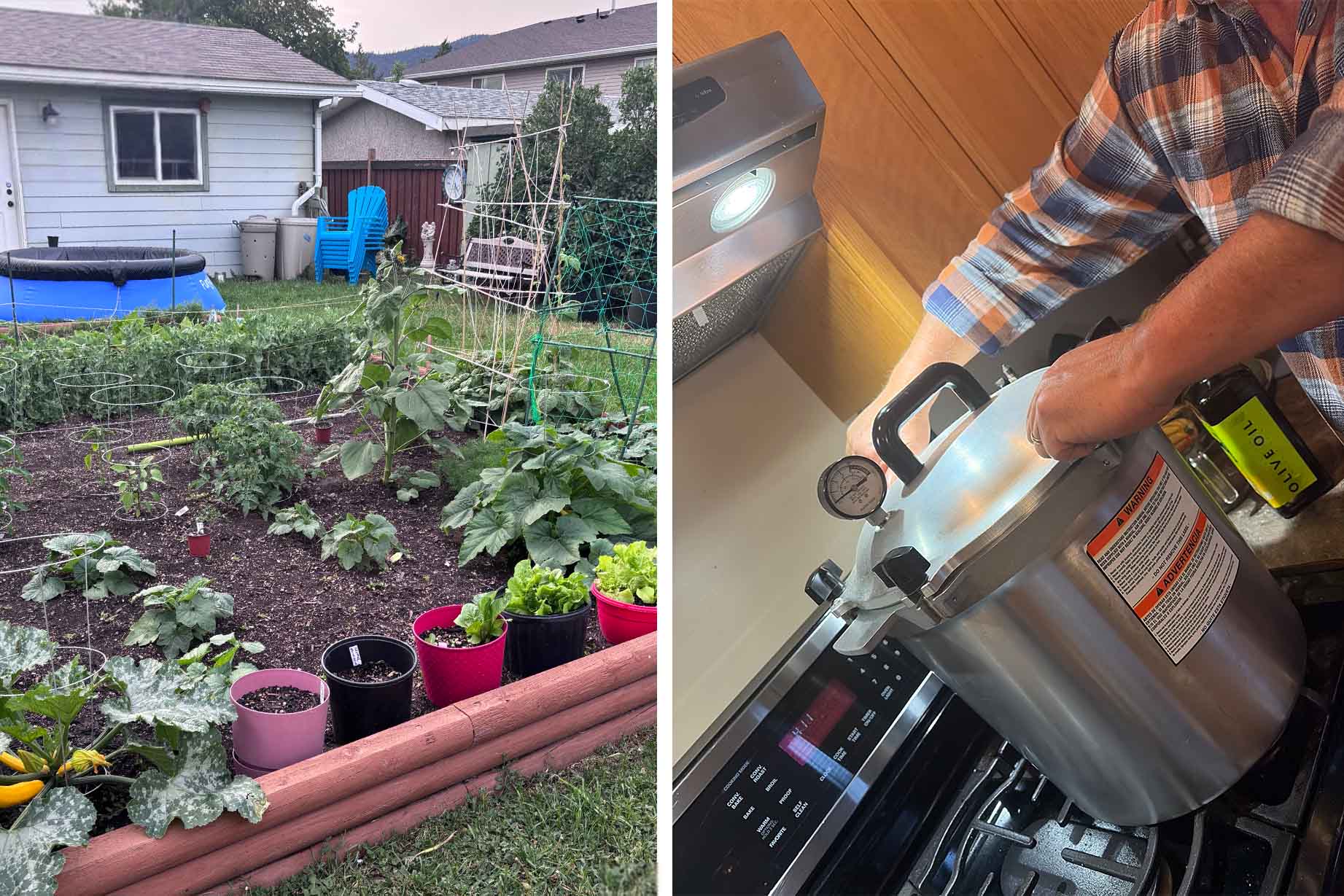 The garden and kitchen of the Lightheart family’s on-grid homestead. (Courtesy of Tamara Lightheart)
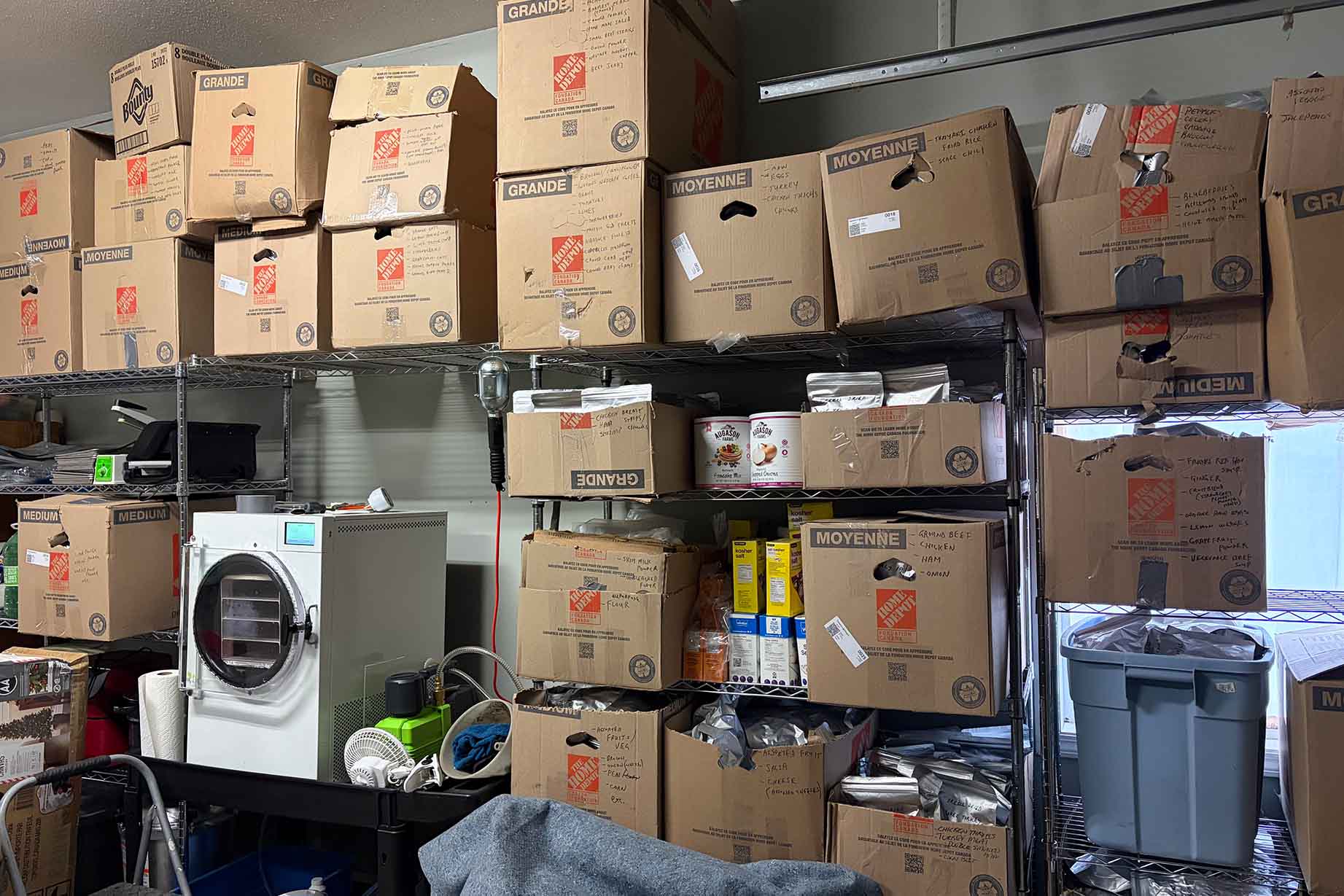 Survival gear in the Lighthearts’ garage. (Courtesy of Tamara Lightheart)
And the drumbeat of infrastructure shocks after COVID only entrenched the mindset of Lightheart and preppers like her. One by one, emergencies reared their heads: from the Rogers telecom blackout in 2022, to the CrowdStrike Global IT crash in 2024 that wiped the systems of 8.5 million computers. Last month, hackers attacked grocery store freezers across France and eight other European nations, spoiling tons of food.
Power Outage
For Lightheart, it was a power outage one sweltering summer day in 2022 that sold her on survivalism.
Not long before that, she had been shaking off her pre-COVID, city-girl mindset. For years she had been “living the life” as the co-owner of an agency in Vancouver, representing actors in film and television.
“My days were about work, meetings, coffees, dinners, and networking,” she says, recalling her former self. “I wasn’t questioning where my food came from or what would happen if I couldn’t use my bank card or turn on the power. Why would I? Those things had always worked.”
After she and Mike married in 1999, she sometimes joked about his own survivalist ideals stemming from his youth. For years he led a double life, working as a chief technical officer in a corporation by day while maintaining his alter ego—hunting, fishing, camping, and prepping—outdoors and at home. During COVID, she watched in amusement as he geared up with generators and gas masks.
“I honestly thought he was off his rocker,” Lightheart says.
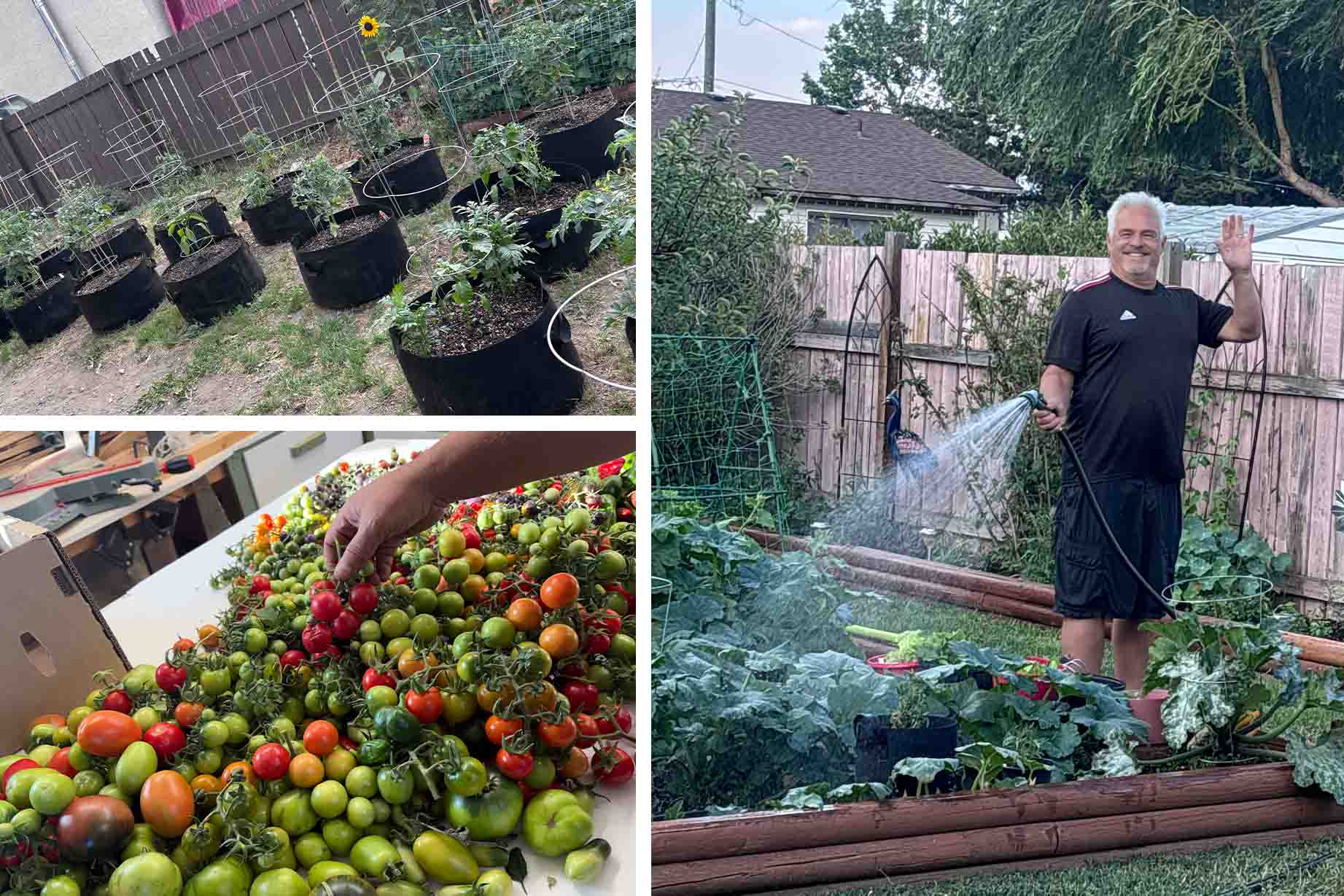 The garden where the Lighthearts grow an abundance of food. (Courtesy of Tamara Lightheart)
But in the summer of 2022, when their neighborhood lost power for several days and both freezers and the air conditioning quit, the generator came in very handy. “Okay, you win,” she told her husband. “I’m never making fun of your prepping again!”
Something like that appealingly ironic conversion has echoed across the country.
Bug-Out RV
In other words, the Lighthearts are a lot like Dean Nobes, a production coordinator and seasoned survivalist in rural Quebec. His journey toward self-sufficiency began during the big ice storm that hit Ontario and Quebec in January 1998, he says, which “made me think about how many ordinary things I took for granted.” He began thinking seriously about how people could get by if the services they count on every day went down for an extended period.
Once a solitary prepper, he founded the Canadian Preppers Network in 2008.
“I usually describe myself as a prepper who became a publisher and event organizer,” he told The Epoch Times.
Similar to the Lighthearts, Nobes has also been building a system to cope with emergencies—from hackers shutting down grocery store refrigerators to telecom blackouts. His includes not only bug-out bags but a whole bug-out RV, ready and stocked with food, water, bedding, and basic supplies.
“I’ve already decided what belongs in the RV, so there’s no last-minute debate in the garage about whether one more piece of gear will fit,” he says. The generator and basement stockpile stay home.
On an ordinary Saturday, Nobes and his family run through exercises.
“I’d run the 10-minute drill with the RV exactly as it’s normally parked. How long does it take to get everyone aboard and the rig ready to pull out?” he says. “Once everyone is accounted for, including the pets, the three things I’d grab are essential medication, boots, and warm clothing, and a small grab bag.”
That bag holds the core essentials: a headlamp, light rations, and paper documents.
“If there’s immediate danger,” he says, “we get clear on foot if we have to.”
At home, Nobes runs his generator in shifts to power the freezer while charging batteries at the same time. He always writes down important numbers and addresses and keeps a battery-powered AM/FM radio and off-grid ham radio on standby.
His philosophy when purchasing new gear is “buy for the system—not the gadget.”
Nobes is also handing down skills to rookies in the prepping community. At meetings, one of the biggest tips he offers is to start sleeping in the backyard.
“Try an overnight close to home with what you already own,” he says. “Pack for supper through breakfast and see how you get on. Every time you have to go back into the house for something, you’ve found a gap worth fixing.”
‘Breathing Room’
Back in her kitchen in British Columbia, Lightheart contemplates how far they’ve come. The couple makes coffee before heading to their offices, where Mike sits at his computer to ensure their website is operating smoothly. She reviews member reports, postings, and emails, knowing that teaching others to prepare for a glitch in the fragile system is their calling.
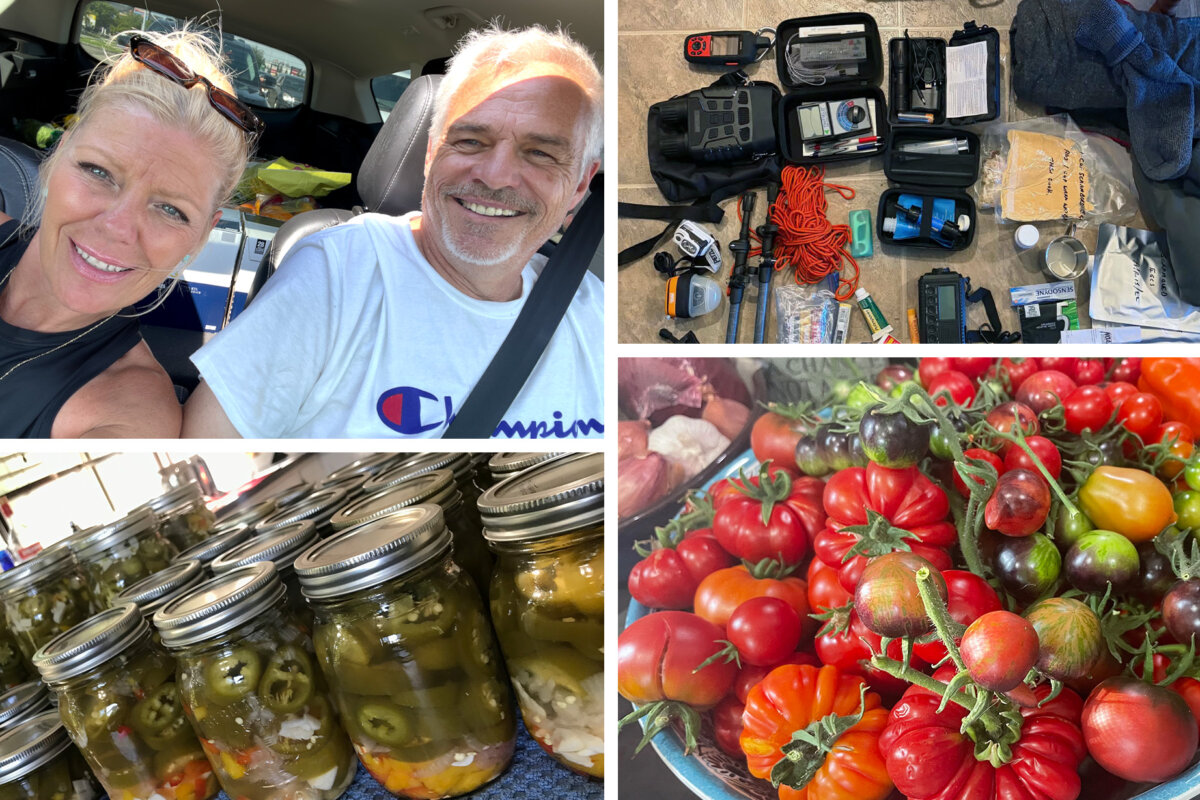
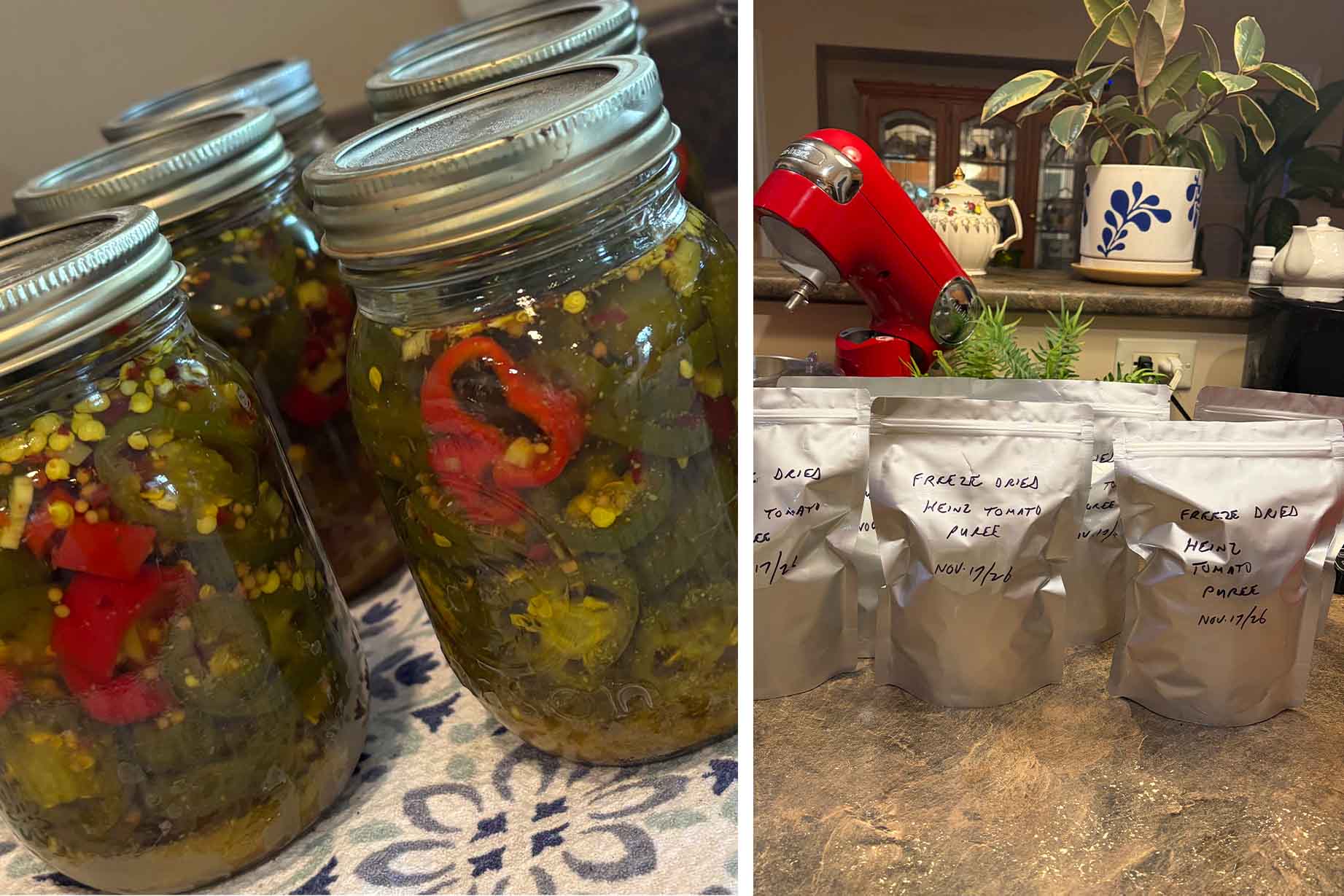 Canned and freeze-dried goods. (Courtesy of Tamara Lightheart)
“Helping people has always been our goal with Prepping Communities,” she says.
New members or curious individuals sometimes question her lifestyle. She shares a middle-of-the-road reply.
“I don’t think of our lifestyle as extreme. We grow food, preserve it, keep supplies, and have backup plans. A lot of that is what our grandparents did,” she says.
“It doesn’t have to mean nuclear fallout,” she adds. “It could be losing your job. Suddenly, you still have a family to feed, but your income is gone. Having food and necessities put aside could give you some breathing room. That’s preparedness, too.”