SEARCH


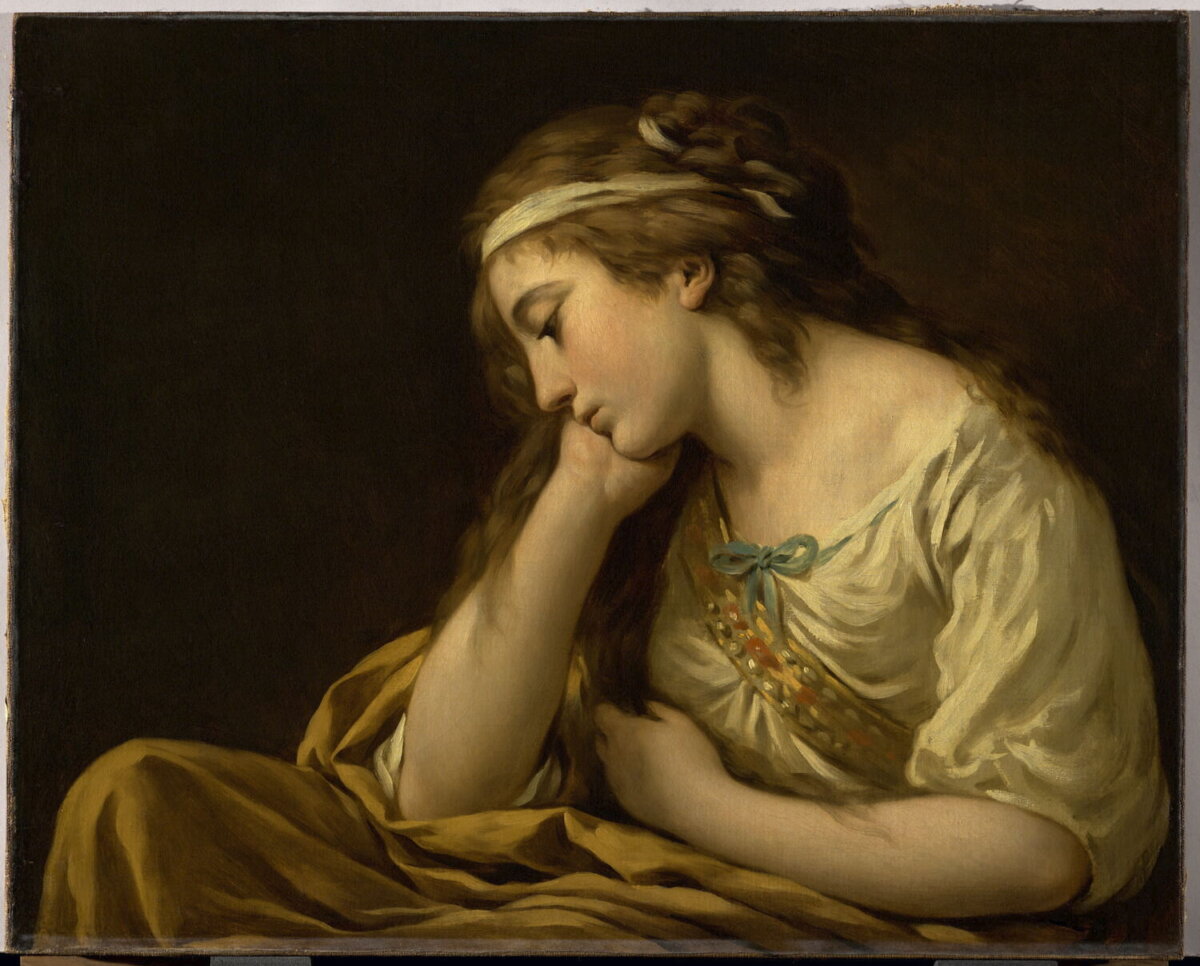
Throughout his body of work, Romantic poet John Keats (1795–1821) wrestled with the question of life’s transitoriness. Life was especially brief for him: He passed away from tuberculosis at the age of just 25, after having suffered more than his share of loss and disappointment.
But he left behind him some of the most haunting lyrics in the English language. And despite the sorrows of his life—and his acute sensitivity to them—his poetry reveals a heart that never turned bitter, that saw beauty even in suffering, that reached out searchingly through the shadows of life for the light.
His was a soul baffled, troubled, fascinated by tragedy, yet also vibrantly alive to the richness of experience, the exquisiteness of feeling, and the abundance of thrilling joys and dazzling beauties.
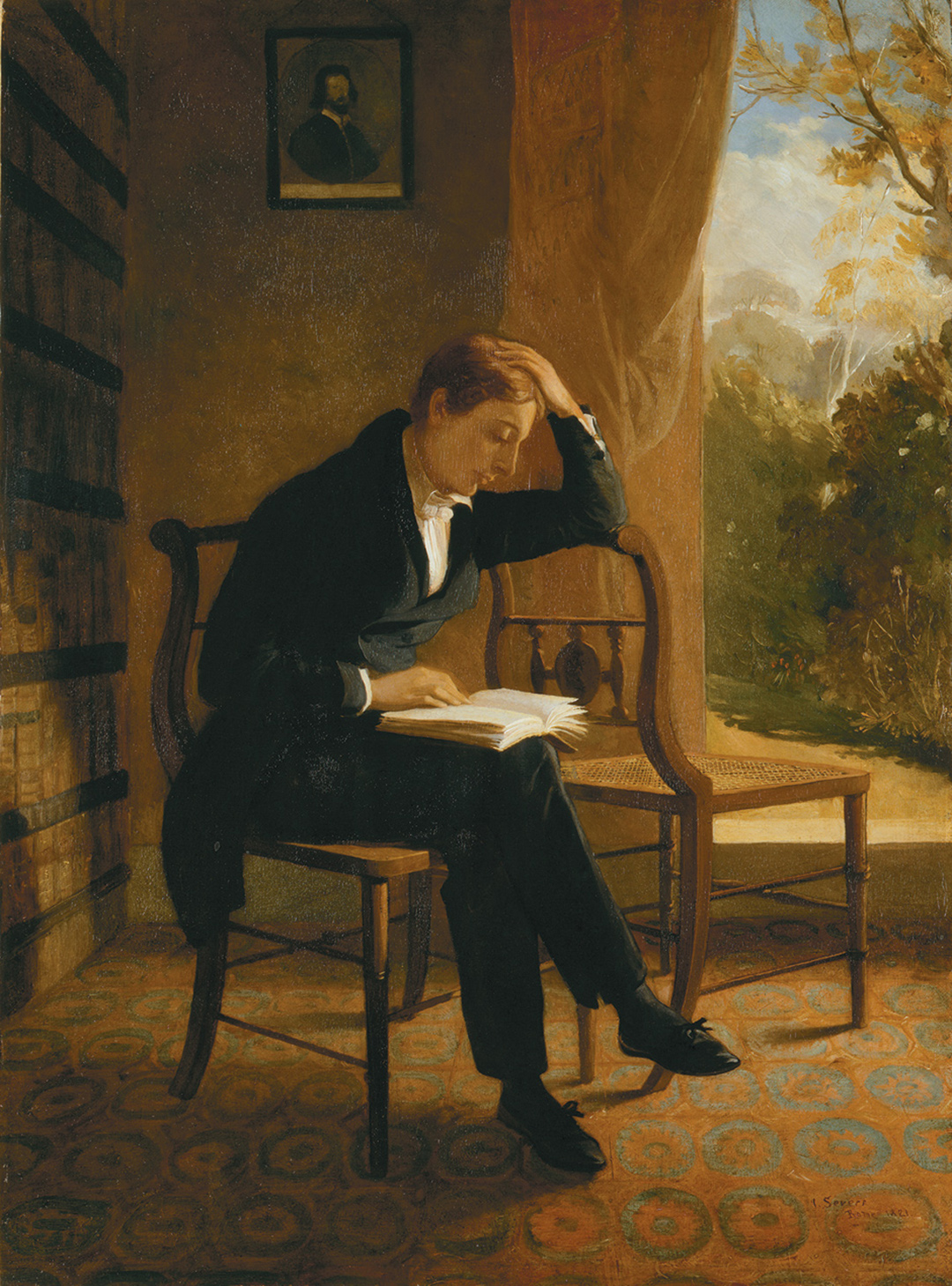
For Keats, these themes are often interwoven. The beauties and joys are all the more tantalizing because of their brevity, and a note of sadness always accompanies the happy songs of the heart because the music must fall silent eventually. At the same time, sorrow is sweetly tempered by the trappings of beauty in which it appears.
One of Keats’s poems directly addressed the question of the sorrow that accompanies knowledge of joy and beauty’s transience. In “Ode to Melancholy,” Keats framed his meditation on melancholy within two parallel conceits: a set of instructions for dealing with a melancholy mood, along with a set of directions for finding Melancholy herself, personified as a mythological deity.
The poem begins by telling the listener what not to do when experiencing a melancholic mood. It’s as if the speaker of the poem—presumably someone well-experienced in moodiness—tries to explain the best way to achieve a cathartic release for sad feelings. As though already in mid-conversation, and with heavy assonance that creates sounds almost like moaning (“Oh, oh, oh…”), the poet begins:
No, no, go not to Lethe, neither twist
Wolf’s-bane, tight-rooted, for its poisonous wine;
Nor suffer thy pale forehead to be kiss’d
By nightshade, ruby grape of Proserpine;
Make not your rosary of yew-berries,
Nor let the beetle, nor the death-moth be
Your mournful Psyche, nor the downy owl
A partner in your sorrow’s mysteries;
Lethe is the underworld’s river of forgetfulness in Greek mythology, while wolfsbane, nightshade, and yew-berries are poisons. The animals in the second part of the stanza—beetle, moth, owl—are associated with darkness and night.
Similarly, Proserpine is the ancient Greco-Roman goddess of the underworld, while Psyche (her name means “soul”) is another mythological character who had to travel to the underworld to meet Proserpine. All of which, taken together, has strong suggestions of death, or, as some have read it, drug use, or perhaps both.
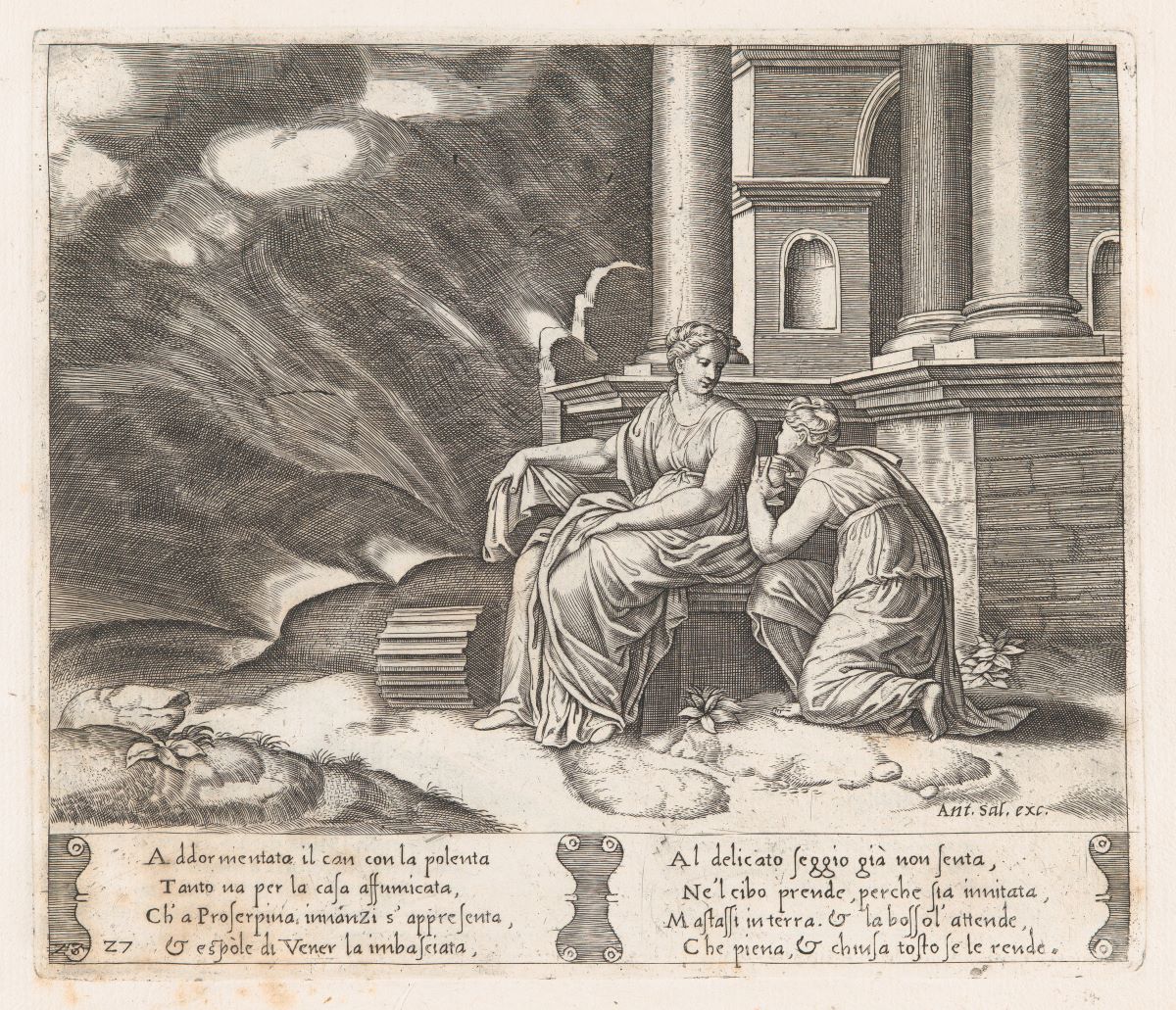
Whatever the case, this constellation of images and allusions points to seeking oblivion or unconsciousness as a response to the pain of melancholy. This is precisely what the poet says not to do, “For shade to shade will come too drowsily,/ And drown the wakeful anguish of the soul.”
As in another of Keats’s famous odes, “Ode to a Nightingale,” seeking death or intoxication isn’t the way out; the soul may be “anguished,” but at least it is “wakeful,” at least it is engaged. In “Nightingale,” the poet notes that if he succumbed to death, then he would no longer be able to appreciate the exquisite beauty of the Nightingale’s song. Here, by contrast, the poet observes that in death (or unconsciousness) he would not be able to experience true Melancholy.
Does this mean the poet takes some kind of perverse pleasure in being miserable? For certain temperaments, there can be a kind of pleasure in being sad. But I think there is more than mere moroseness here.
The poet recognizes that joy and sorrow are deeply intertwined in life. One must drink them from the same cup. To reject one is to reject the other; to seek escape from sorrow will inevitably lead to a loss of awareness of joy and beauty as well.
As Barbara Herrnstein Smith wrote in a 1966 analysis of the poem:
“In psychological terms, what produces true melancholy is a heightened consciousness of beauty and an intense participation in pleasure and joy. In terms of the conceptual metaphor, one discovers Melancholy by pursuing Beauty, for they ‘dwell’ together—in ‘the temple of delight.’”
This is the paradox of life, a paradox Keats seemed keenly aware of, and which lent his poetry much of its brilliance. “Melancholy is actually the response to a very different conjunction: that of shade and brightness, of mortality and beauty or joy,” Smith wrote.
Much of this link between joy and sorrow has to do with transience; whatever the poet’s eye rests upon that is beautiful, whatever his heart seeks that is lovely, it will eventually pass away. That awareness causes melancholy even as one experiences joy. That is why the poet writes in the third stanza:
She [meaning Melancholy] dwells with Beauty—Beauty that must die;
And Joy, whose hand is ever at his lips
Bidding adieu; and aching Pleasure nigh,
Turning to poison while the bee-mouth sips.
The line “She dwells with Beauty—Beauty that must die” makes brilliant use of punctuation to accentuate the tragic situation. The hyphen abruptly interrupts the line, just as death abruptly interrupts life and steals away beauty, like Pluto, the god of the Underworld, stealing away Proserpine to be his wife in that doleful realm of shadow.
So if one is not to seek a deadening of the senses in order to deal with sorrow, what is one to do? According to the poet, the answer is to lean more fully into this paradox of joy and sorrow, beauty and mortality.
Keats writes:
But when the melancholy fit shall fall
Sudden from heaven like a weeping cloud,
…
Then glut thy sorrow on a morning rose,
Or on the rainbow of the salt sand-wave,
Or on the wealth of globed peonies;
Or if thy mistress some rich anger shows,
Emprison her soft hand, and let her rave,
And feed deep, deep upon her peerless eyes.
In other words, the cathartic relief will come, perhaps counterintuitively, from focusing even more on lovely things—the transience of which is itself the primary source of the melancholy! We catch a glimpse of this cathartic relief through Keats’s use of sound and rhythm in the final line of the stanza. The repeated “ee” sound and the repeated word “deep” slow down the tempo and provide a soothing sound and calming effect.
The stormy emotions of the melancholic “fit” find a kind of peace here in the simple contemplation of beauty and its mysterious relationship to pain. So it is not hardening one’s sensitivity through intoxication but rather heightening it through poetic awareness that the poet advises.
Is This Indulgence?
Some have accused Keats of indulging himself in Romantic emotionalism here, surrendering to a kind of “pleasing woe” simply for the thrill of passionate and self-pitying feeling. In other words, these critics say, Keats is wallowing. He might not be totally above that charge in this poem. At the same time, to reduce the poem to just that would be an injustice.
For one thing, it should be noted that an earlier draft of the poem included an additional stanza at the beginning. This stanza paints a grisly, quasi-mythological picture of figures trying to find the personified “Melancholy,” and it again rejects this surrender to the dark or macabre as an answer to melancholy, instead directing the listener toward things of light.
In my reading, Keats’s response to sorrow has more to do with accepting and embracing the complex and mysterious relationship between joy and sorrow than it does indulging in moodiness. There’s a suggestion of the “seize the day” philosophy, here—because all these good things are transient, seek to love and welcome them while you can.
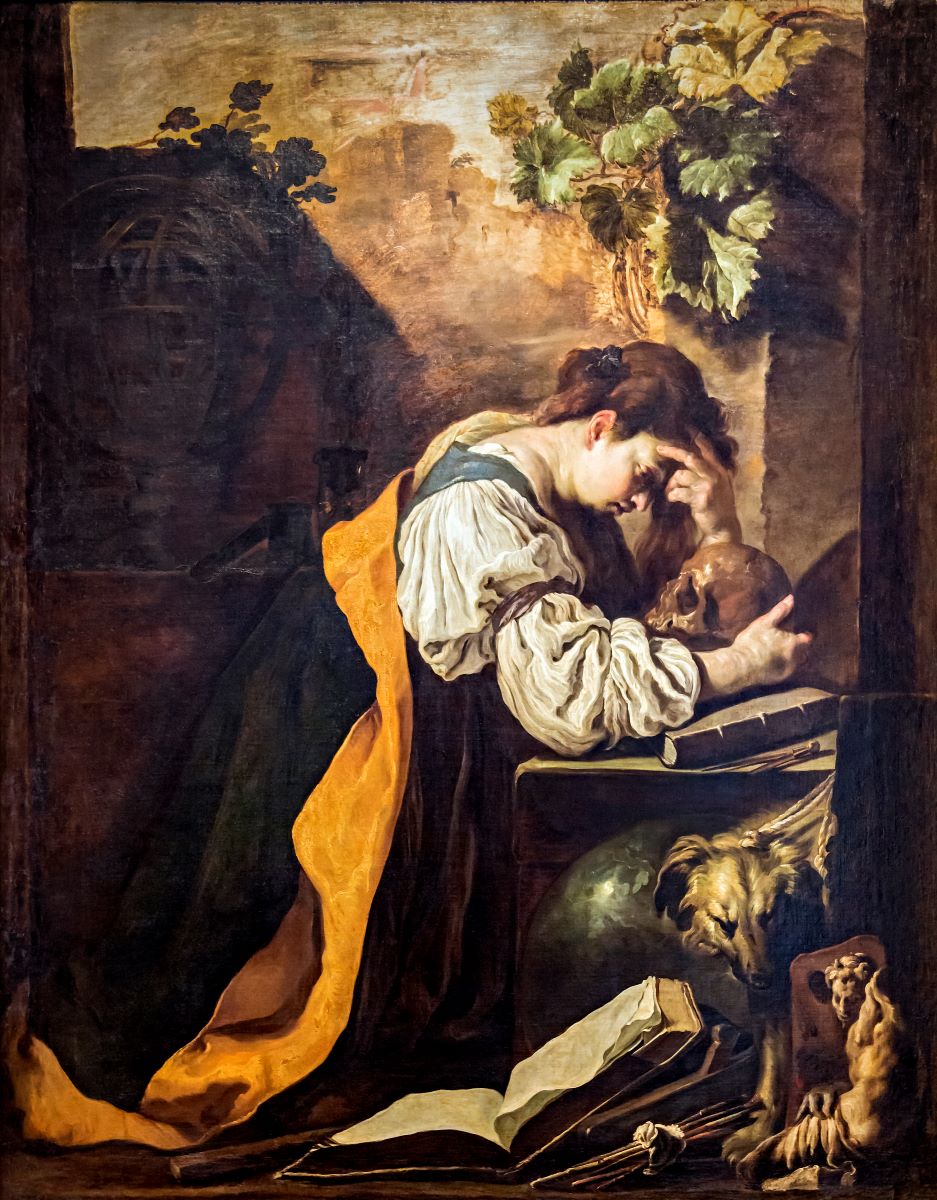
Literature professor Oliver Tearle articulates this nuance well, noting that the poem is an example of what has been called Keats’ Stoicism. In his words, “rather than seeking to lament the onset of this depressing emotion, Keats encourages us to ride it out, and to turn it to our advantage.” After all, when rightly used, melancholy may help us come to a deeper understanding of the mystery of life.
Keats exhorts us “to revel in melancholy’s contradictory and complex aspect, rather than seeing it as irredeemably negative, something to be swept aside as an inconvenience. … One should see it as an opportunity to remind oneself of the transience of all joys, and to embrace them all the more because they are transient.”
“Ode on Melancholy” is a challenging poem to reflect on for a number of reasons. For one thing, the poet’s attitude toward Melancholy is ambivalent, if not flat-out contradictory. For another, the mixture of mythological and psychological elements can make the poem difficult to understand. And the poem seems to lean more toward self-pitying, indulgent lamenting than other Keats’s poems. And yet these tensions are what give life and interest to the poem. Most fundamentally, they reflect the tensions present in life itself, especially the tension between the joy and sorrow that often simultaneously hover within the same experience.
What arts and culture topics would you like us to cover? Please email ideas or feedback to features@epochtimes.nyc.