SEARCH


In Part 1 of Samson’s story, we encountered him, the strangest of Israel’s judges, a man dedicated to God before his birth, possessed of extraordinary strength, yet seemingly incapable of governing his own appetites.
His name, associated with the Hebrew word for the sun, suggested light and power; but, already, we have glimpsed the darkness towards which his life was moving. For Samson’s tragedy is not that he lacks strength, but that he possesses so much of it without necessarily possessing the wisdom to direct it. And nowhere is this paradox more evident than in the events following his decision to marry a Philistine woman from Timnah.
The Lion and the Honey
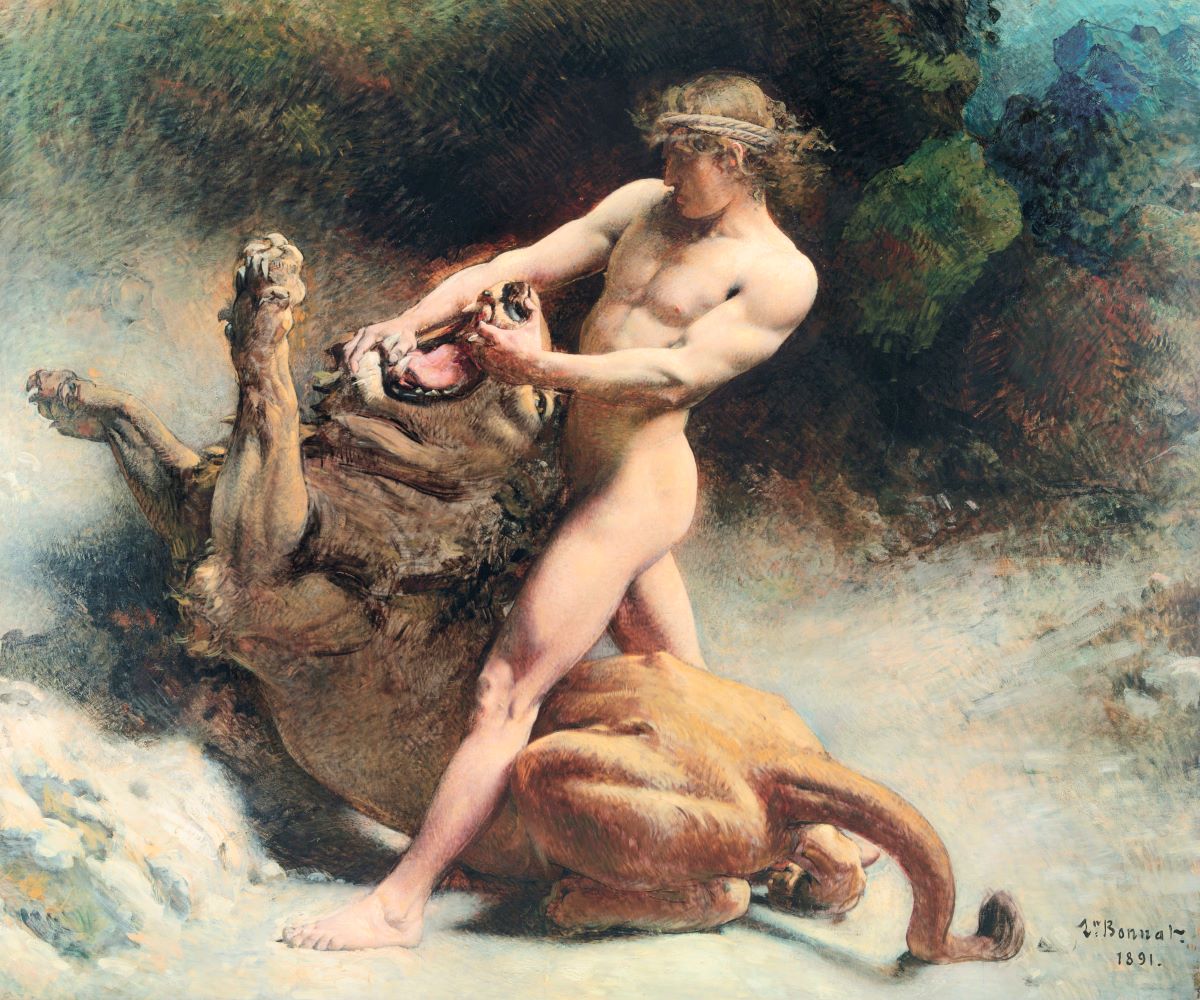
On his journey to Timnah, Samson encounters a young lion, which comes roaring against him. The Spirit of the Lord descends upon him, and he tears the animal apart with his bare hands, as easily, the biblical narrator tells us, as one might tear a young goat.
It is an astonishing feat, reminiscent of Herakles and his conquest of the Nemean lion; yet, whereas Herakles subsequently wears the lion’s skin as a trophy, Samson tells nobody, not even his parents, what he has done.
Some time later, returning along the same road, he discovers something extraordinary: A swarm of bees has made its home within the dead lion, producing honey, which Samson scoops out and eats. He even gives some to his parents, although he conceals its origin.
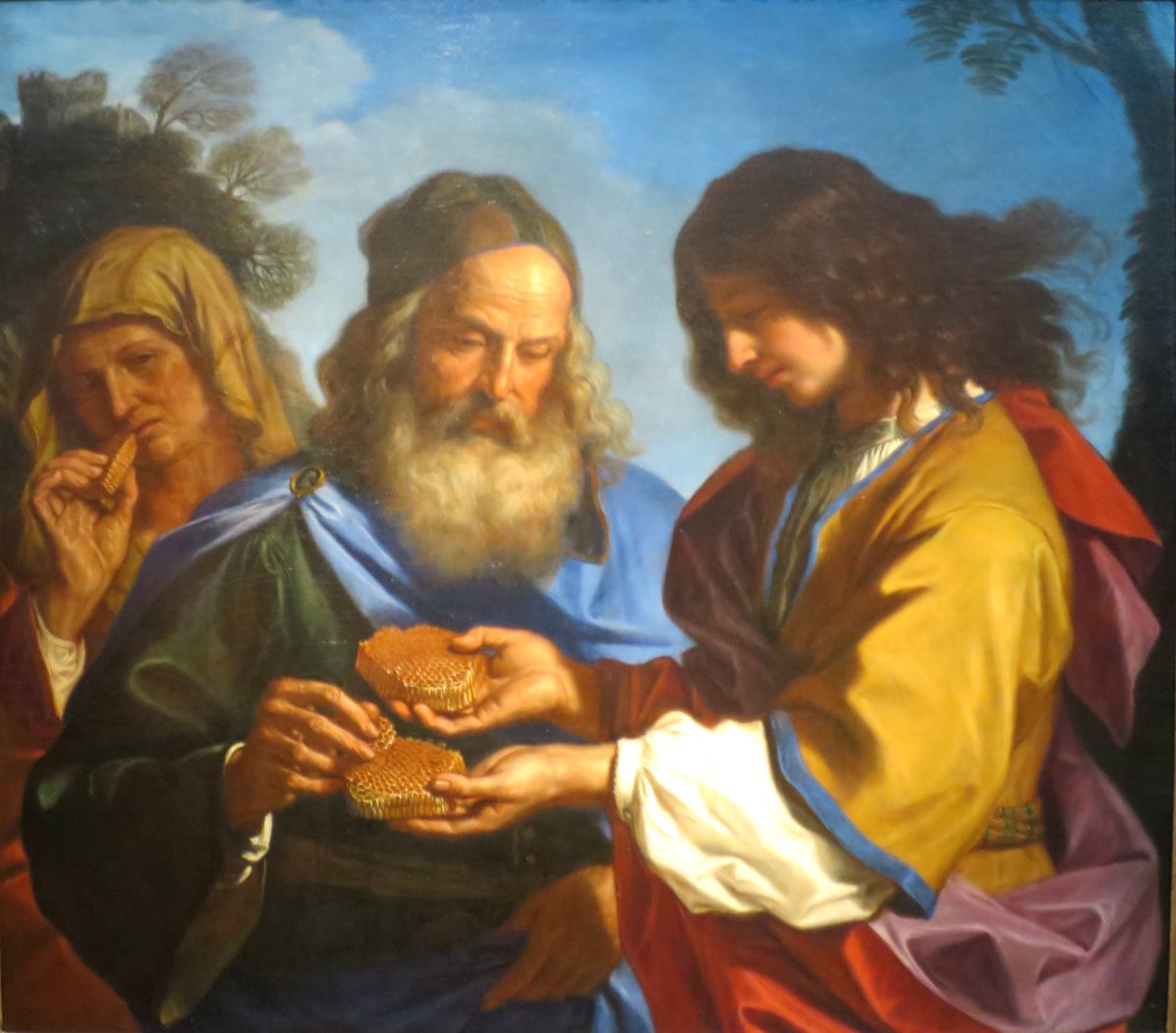
Here is one of the most arresting images in the Old Testament: sweetness emerging from corruption, nourishment from death, life apparently generating itself within destruction.
But there is a troubling dimension, too, since Samson, consecrated to God as a Nazirite, may have compromised his ritual purity by taking honey from a carcass. Whether the regulations governing ordinary Nazirites applied identically to his unusual lifelong calling is debatable, nevertheless, the episode suggests a man increasingly willing to treat sacred boundaries as inconveniences. And the honey will soon become the occasion for something far more bitter.
The Riddle That Destroyed a Marriage
At his wedding feast, Samson is provided with 30 Philistine companions to whom he proposes a wager: If they can solve his riddle, he will give them 30 linen garments and 30 changes of clothing; if they fail, they must provide the same to him.
The riddle is this: “Out of the eater came forth meat, and out of the strong came forth sweetness.” (Judges 14:14)
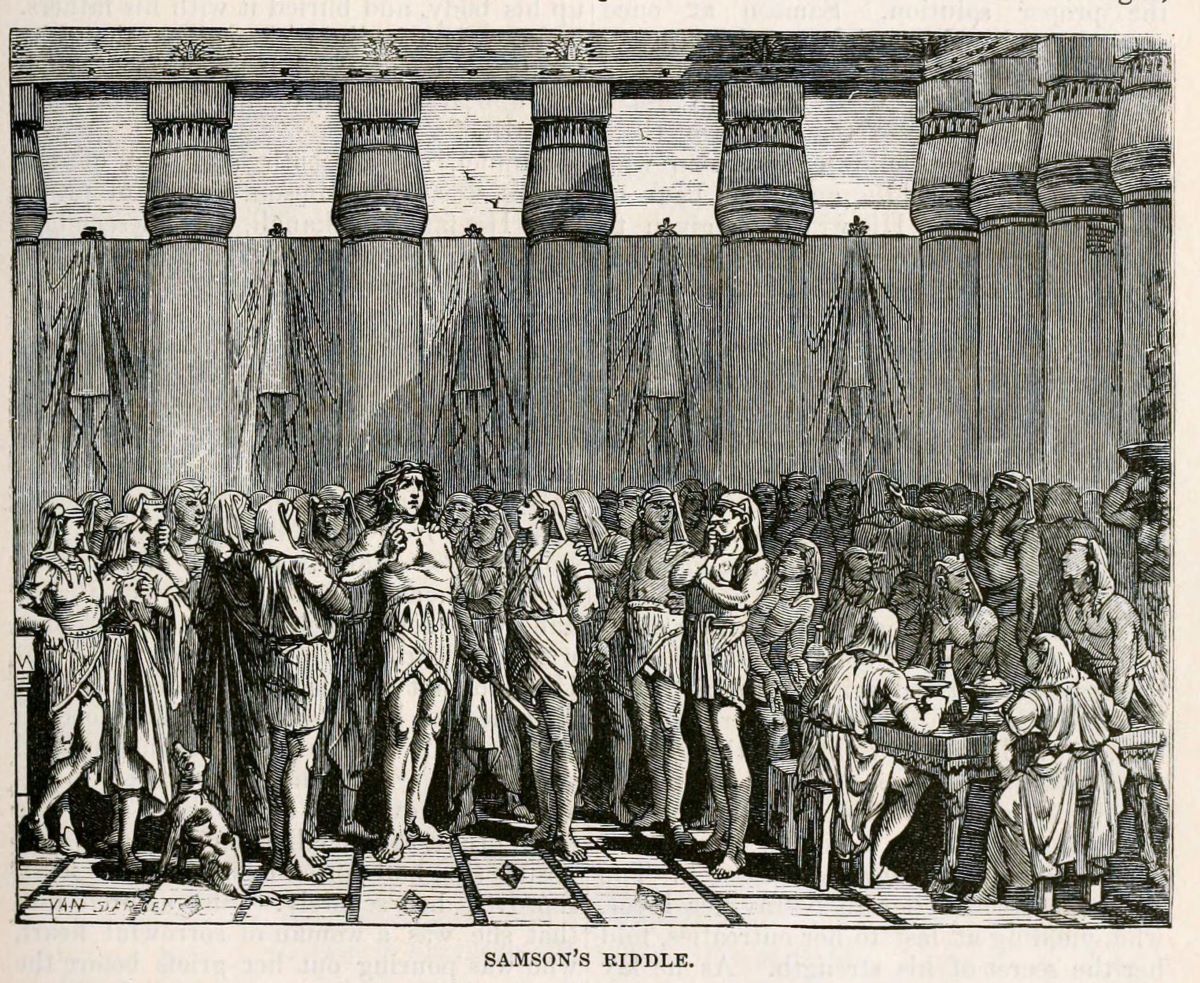
Of course, nobody can solve it, because nobody knows about the lion. The riddle is not really a test of intelligence but of privileged knowledge; Samson has arranged a contest in which he appears certain to win. His companions, however, threaten to burn his bride and her father’s household unless she discovers the answer. Under this appalling pressure, she pleads with Samson until, eventually, he reveals his secret.
The Philistines triumphantly supply the answer, but Samson immediately understands what has happened, accusing them of having obtained it by metaphorically plowing with his heifer. It is a brutal expression, revealing something of his attitude towards his wife; yet she has acted under threat of death, and Samson, instead of recognizing her danger, responds primarily to his own humiliation.
The Spirit of the Lord comes upon him, and he kills 30 men of Ashkelon to obtain the garments necessary to pay his debt. His anger drives him back to his father’s house, leaving his bride behind; subsequently, she is given to one of his companions. Thus, a wedding intended to unite two people produces 30 deaths, a broken marriage, and the beginnings of a vendetta.
The Foxes of Fire
When Samson discovers that his wife has been given to another man, his response is characteristically extravagant. He captures 300 foxes—or, possibly, jackals—ties them together in pairs by their tails, attaches burning torches between them, and releases them into the Philistines’ standing corn, vineyards, and olive groves. The resulting devastation is immense.
But notice the numerology: 30 wedding companions and now 300 foxes. First, we cannot help but associate the number 30, retrospectively, with that most notorious of biblical betrayals: Judas Iscariot’s treachery for 30 pieces of silver. Treachery seems endemic to Samson’s story, whether at his wedding or, as we shall see, with Delilah.
Second, the number has increased tenfold, as though suggesting that once these destructive emotions are unleashed—and, literally, so with the foxes—their consequences multiply almost geometrically, in an ever-escalating cycle of devastation.
David Grossman, in “Lion’s Honey: The Myth of Samson,” draws attention to the almost unbearable suffering of the animals, which, joined together and set alight, desperately struggle to escape one another. Each may experience its companion as the source of its torment; yet neither can escape, because the very bond between them has become an instrument of destruction.
What an extraordinary image for Samson’s own relationships! Again and again, those attached to him are drawn into violence, while the ties that should sustain human affection become the means by which suffering spreads.
The Philistines retaliate by burning Samson’s wife and her father, fulfilling the very threat that had compelled her to betray his riddle. Samson responds with further slaughter, and the cycle of vengeance accelerates.
Notice, too, the ingenuity of his methods. As Grossman observes, Samson’s weapons are frequently drawn from nature: the lion conquered by his bare hands, the foxes turned into instruments of fire, and, soon, the jawbone of an ass. He possesses no elaborate armory or military organization; his creativity is as extraordinary as his strength, although both are increasingly employed in personal retaliation.
Bound by His Own People
Eventually, the Philistines come against Judah, demanding that Samson be surrendered. Three thousand men of Judah descend upon him, asking why he has brought such trouble upon them. And notice how the numbers escalate: 30 wedding companions, 300 foxes, and, now, 3,000 men. Each represents a tenfold increase, as though the consequences of Samson’s actions were expanding inexorably, until what began as a private quarrel has become a national crisis.
Samson’s reply reveals the terrible simplicity of his moral reasoning: “As they did unto me, so have I done unto them.” (Judges 15:11)
Here is the logic of revenge reduced to its essentials: Every injury justifies another, every retaliation creates a fresh grievance, and nobody can remember where the original wrong began.
The men of Judah bind Samson with two new ropes and deliver him to the Philistines; but when his enemies approach, the Spirit of the Lord comes upon him, the ropes fall away as though burnt, and he seizes the fresh jawbone of an ass, with which he kills a thousand men.
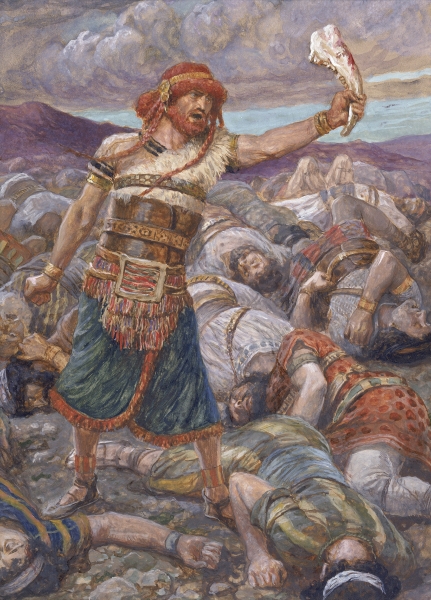
There is something almost grotesquely comic about the contrast between the weapon and the achievement: An army confronts him, and he defeats it with a discarded bone. Yet the deeper irony is that Samson can break every physical bond placed upon him while remaining powerless to escape the emotional bonds of resentment, wounded pride, and revenge.
Grossman finds in the recurring imagery of ropes, knots, and binding a psychological pattern extending throughout Samson’s life. The foxes are tied together; Samson is bound by his own people; later, Delilah will repeatedly experiment with binding him. But might these external bonds be manifestations of something deeper: the psychic knots in which Samson himself is entangled, knots formed by his frustrated desires, resentments and inability to establish enduring relationships?
For here is the supreme irony: A man who can snap the strongest ropes as though they were threads is powerless to undo the knots within his own soul; indeed, the more he struggles to assert his strength, the more inextricably bound he becomes.
The Strength That Cannot Save
After his victory, Samson becomes desperately thirsty and cries out to God, who provides water and restores him. It is a rare moment of acknowledged dependence, reminding us that the man capable of killing a thousand enemies cannot sustain his own life without divine assistance.
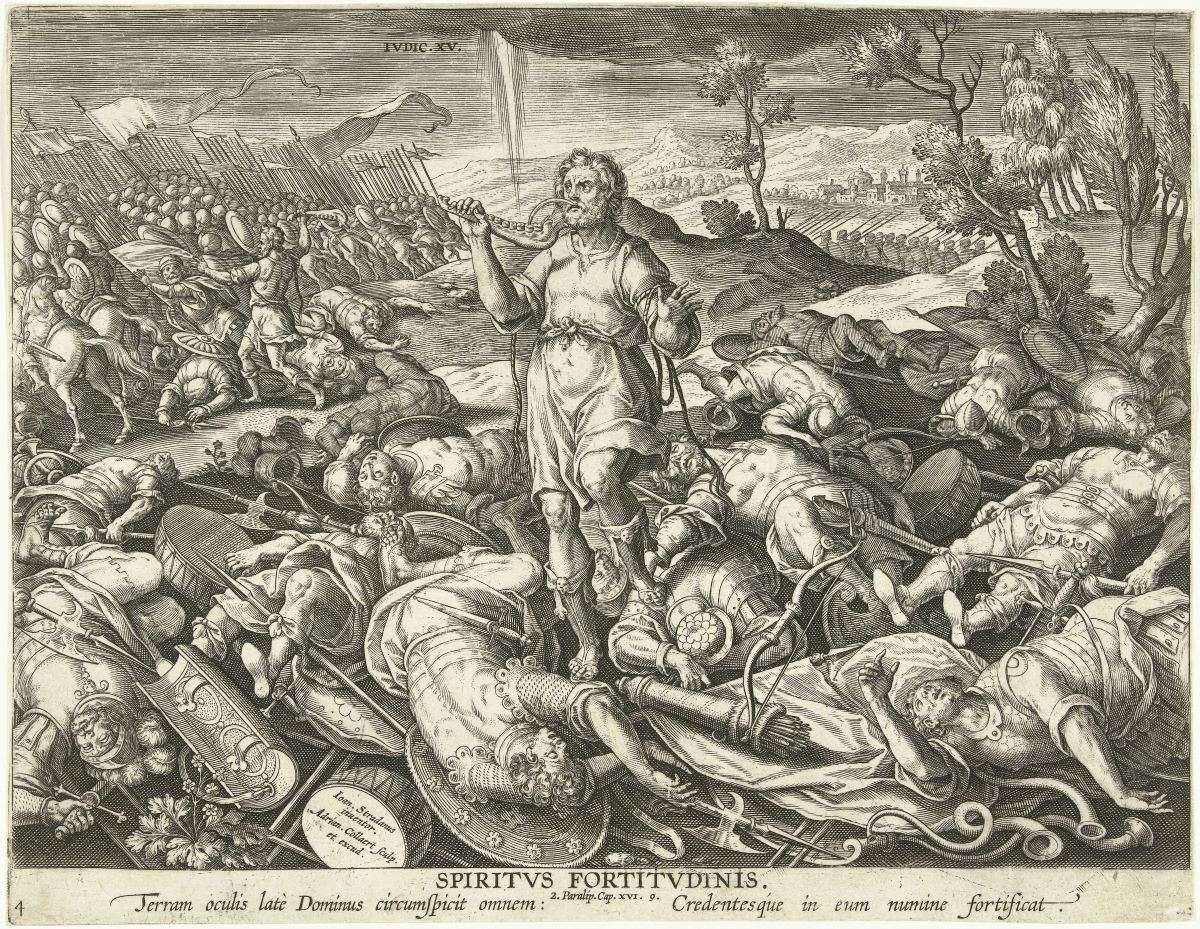
The biblical narrator tells us that Samson judged Israel for 20 years; yet, what sort of judge was he? He has no recorded court, no council, no army, and scarcely any visible relationship with the people he supposedly leads. His victories are astonishing, but his isolation remains almost absolute.
And perhaps this is the central paradox of his existence: Samson possesses the strength to defeat armies, but not the emotional maturity to sustain a marriage; he can tear apart a lion, but cannot disentangle himself from resentment; he can break the strongest ropes, yet remains bound by passions he neither understands nor controls.
There is a warning here for all of us, whether our particular strength lies in intelligence, wealth, influence, beauty, or physical power. Our greatest gifts can become instruments of destruction when they are not governed by wisdom and character.
For Samson’s story is not simply about a strong man who makes mistakes; it is about the terrifying possibility that the very power which enables us to triumph over others may conceal our inability to triumph over ourselves.
In this sense, his story finds a remarkable counterpart in that of the Greek Oedipus, renowned for his wisdom just as Samson was for his strength; for although Oedipus could solve the riddle of the Sphinx, he could not solve the riddle of his own existence. Oedipus solves a riddle; Samson sets one. Neither solves the riddle of himself. Both men possessed extraordinary gifts, yet neither could see the truth about himself until catastrophe had overtaken him; and, both, ultimately, were blinded.
And now, into this increasingly troubled life, another woman is about to enter. Her name is Delilah.

The quotations from the Bible are from the King James Version.
What arts and culture topics would you like us to cover? Please email ideas or feedback to features@epochtimes.nyc.