SEARCH


Everyone in America who knows a little of the country’s history knows that the Dec. 7, 1941 Japanese attack on Naval Station Pearl Harbor, Oahu, Hawaii, catapulted the United States into World War II. Immediately, the most catastrophic attack on America soil—until the 9/11 terrorist attack—was referred to simply as Pearl Harbor.
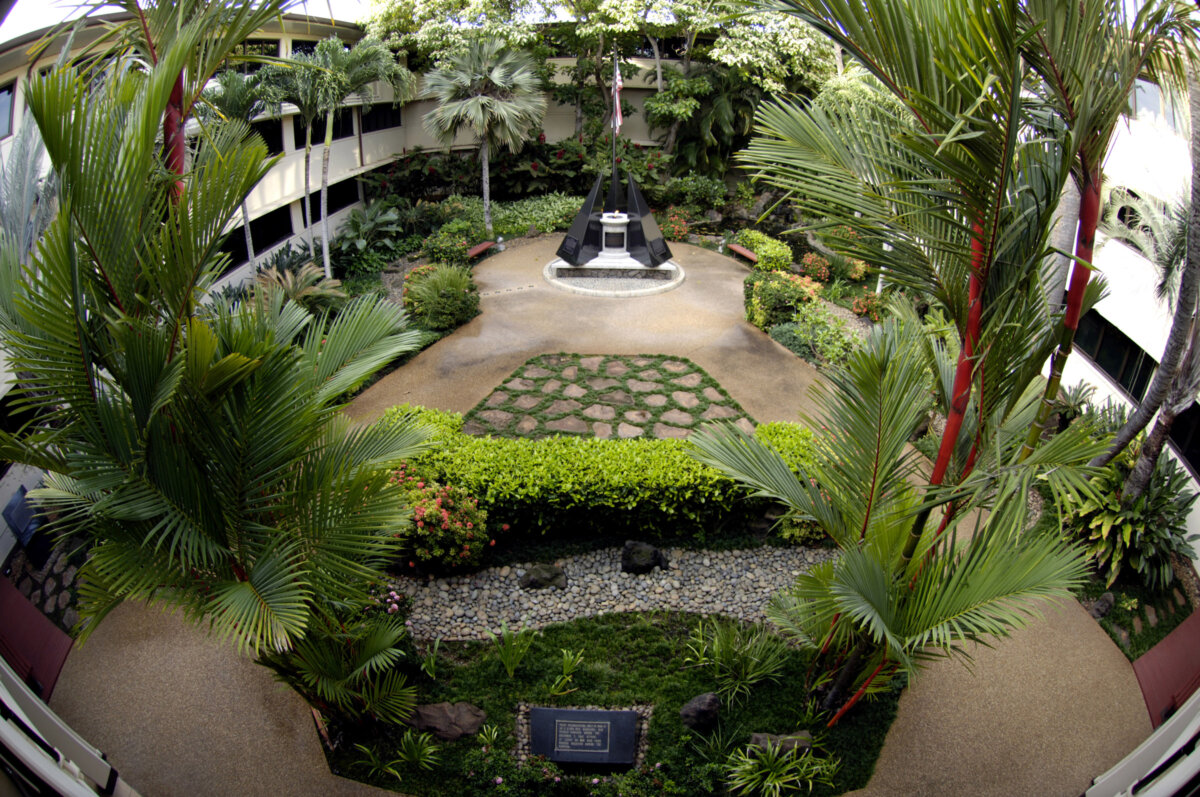
However, the adjacent Hickam Air Force Base also experienced surprise bombardments that early Sunday morning. The courtyard of one of the base’s main buildings is now a historic outdoor museum and memorial. It aims to remind future generations of what occurred there and commemorate the servicemen who lost their lives.
Referred to as the Courtyard of Heroes, it isn’t on the typical Honolulu tourist’s radar. The USS Arizona Memorial, partly sunken in actual Pearl Harbor, receives the most visitor attention.
While it isn’t as well-known or easily accessible, the Courtyard of Heroes, surrounded on every side by the PACAF (Pacific Air Forces) Headquarters building, is open to anyone securing a visitor pass onto what is now called Joint Base Pearl Harbor–Hickam. The two bases merged in 2010.
Tropical bird-of-paradise flowers, towering palms, a volcanic-rock waterfall pool with vibrant waterlilies, and the lively chirps of island parakeets belie what occurred in the lush courtyard 85 years ago. The barrage of bullet holes left in the building’s outer and inner walls is a sobering reminder.
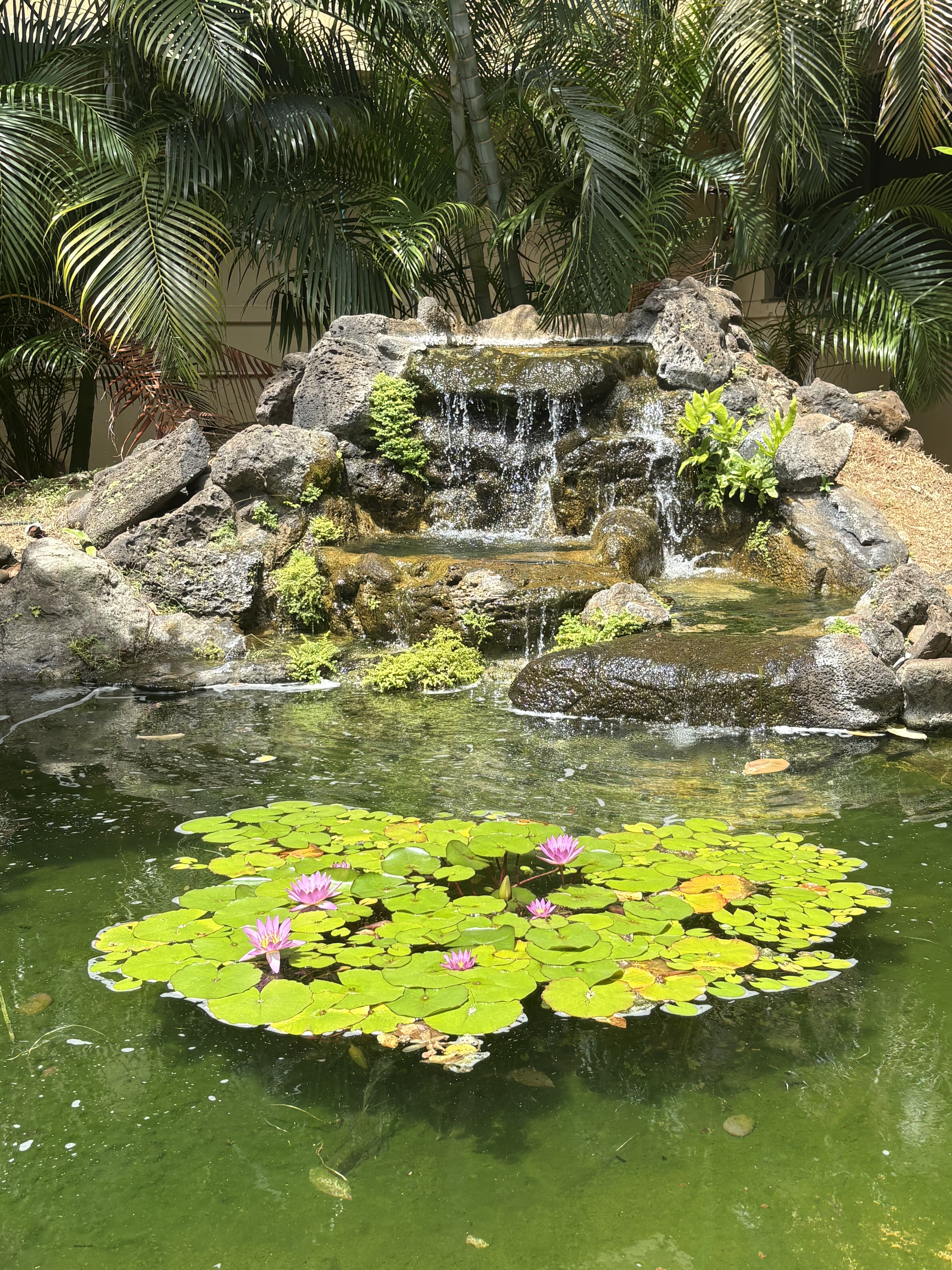 The peaceful atmosphere in this tropical courtyard belies its tragic WWII history. (Deena Bouknight)
Surprise Attack
It was a beautiful, clear, 71-degree Sunday morning on Dec. 7, 1941. The peace was shattered when 353 Japanese aircraft, launched from four carriers in the Pacific Ocean, began bombing and machine gun fire on Pearl Harbor and Hickam Bases. In 1941, the PACAF building was used as a 3,000-man barracks. Many servicemen were just waking up or readying themselves for church services or a day at the beach when bullets hit and penetrated the structure.
Others were already in the mess hall eating breakfast. Approximately 60 men inside the building were killed instantly or died later from wounds they received in the attack.
Approaching the entrances to the buildings, visitors can clearly see the bullet holes. Chunks of concrete are missing from several areas of the outer façade. But it is inside the now-peaceful courtyard where the reality of that fateful day is most chilling.
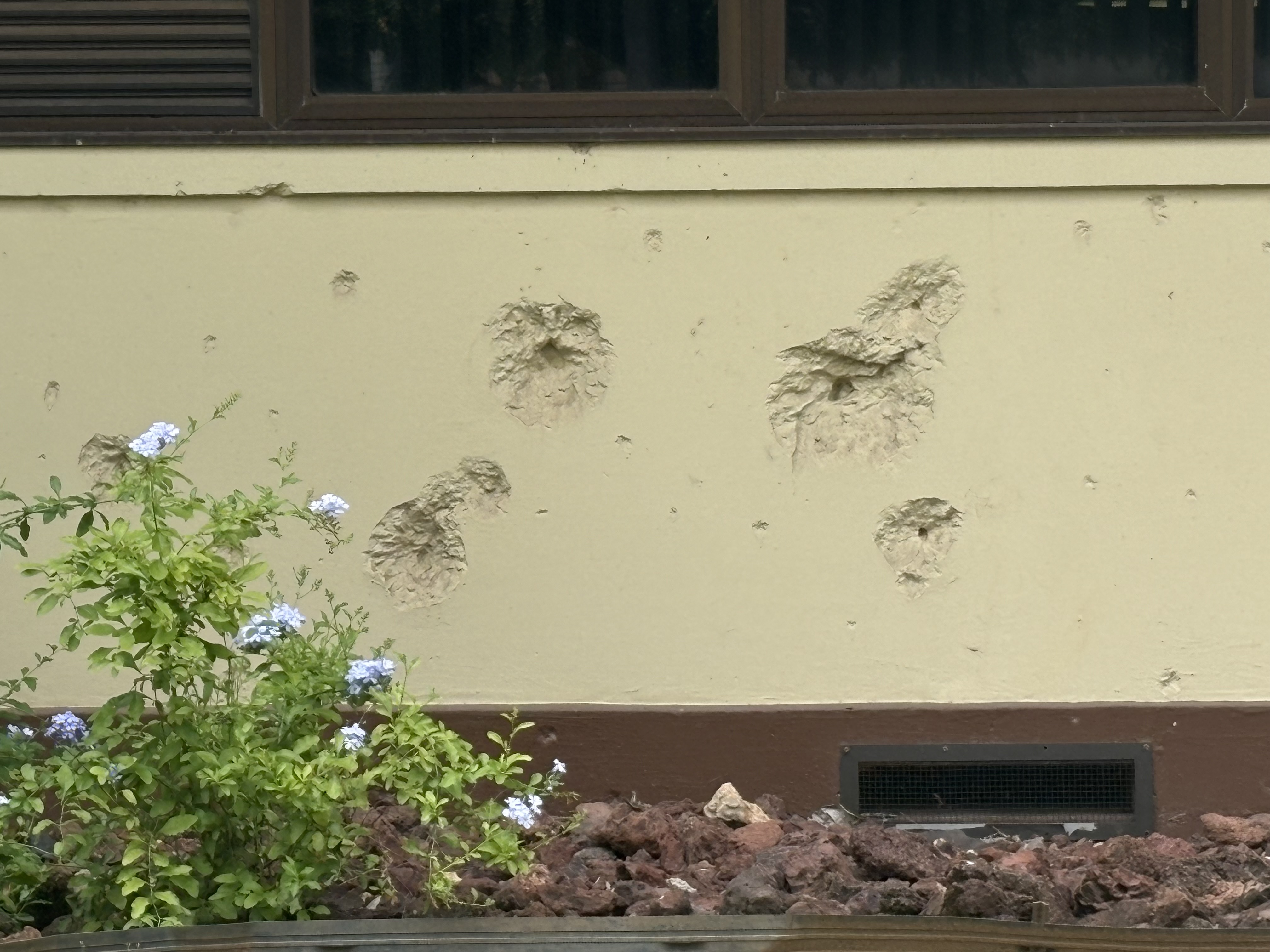 Visitors get a chilling reminder of the violence at the Hickam Air Force Base on Dec. 7, 1941. (Deena Bouknight)
Lessons and Life Stories on Display
Central in the Courtyard of Heroes is a pyramidal sculpture representing the United States’s three Pacific military involvements: WWII, Korea, and Southeast Asia. The memorial bears an eternal flame “as a constant reminder of the spirit of patriotism,” as the affixed bronze plaque reads.
According to Master Sgt. Emerson Nuñez, with PACAF Media Relations, the courtyard became an outdoor museum as part of the base’s historic district in September 1985. The Courtyard of Heroes serves as Hickam’s historical reminder and solemn memorial regarding ultimate sacrifices in service to America.
Besides a focus on that day’s events, the space highlights summary history lessons, memorable quotes, and historic photographs on bronze plaques and framed signs.
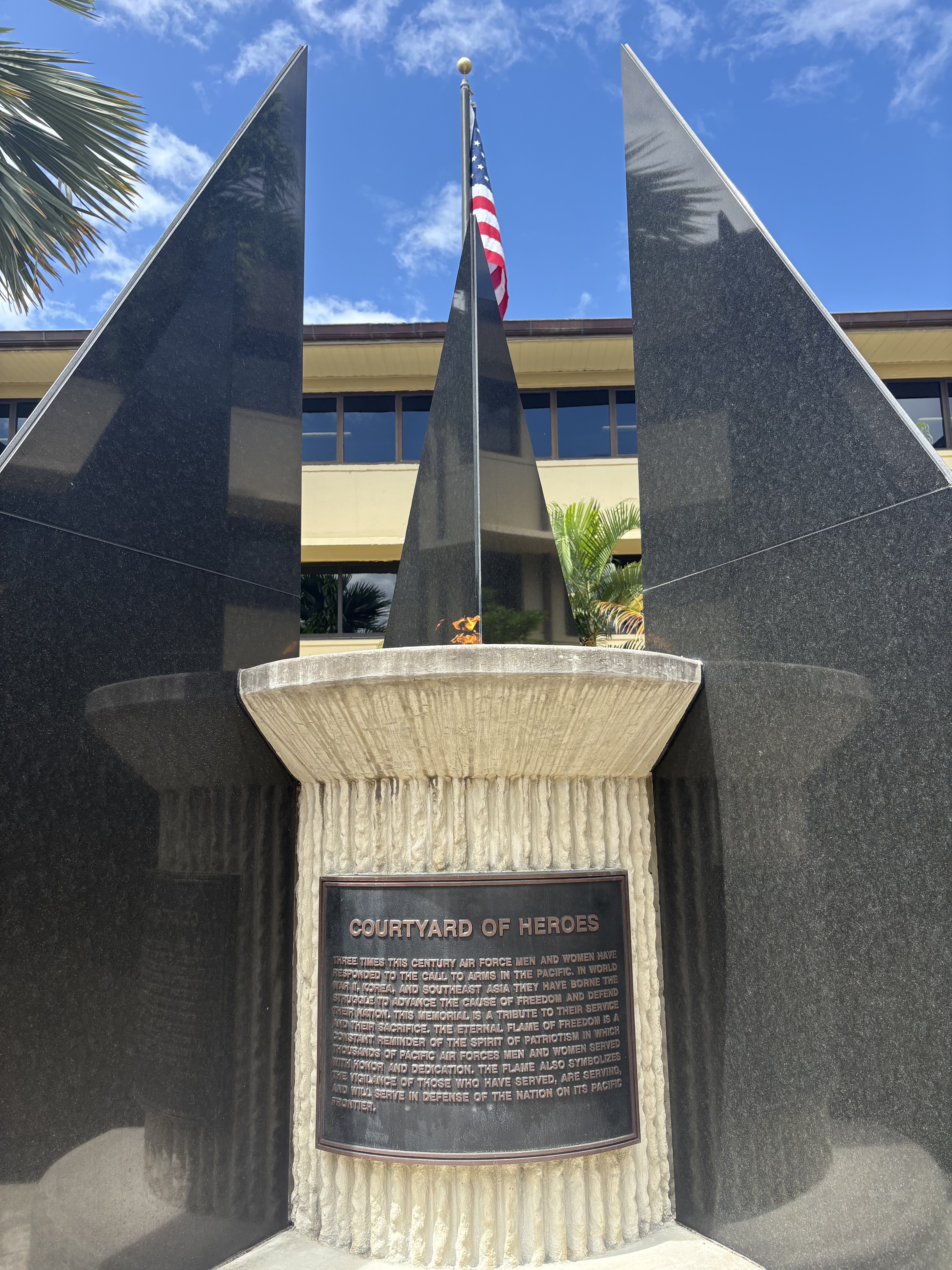 This pyramidal memorial remembers all those who lost their lives in the Dec. 7 attacks. (Deena Bouknight)
A plaque titled “World War II” offers details of fighting in the Pacific, from 1941 to 1945, as well as a famous quote from a Dec. 9, 1941 radio Fireside Chat by President Franklin D. Roosevelt. It reads: “We are now in the midst of a war, not for conquest, not for vengeance, but for a world in which this Nation, and all that this Nation represents, will be safe for our children.”
Another sign presents the Japanese planes’ Oahu attack route. A giant bronze plaque lists all the “Army, Army Air Forces, and Civilians Killed in Action on 7 December 1941.”
Quotes from soldiers in the building at the time of the attack are featured on one placard. Sgt. Robert Tanner shared how a torpedo exploded and threw him outside the building and onto the lawn. A black-and-white photograph shows what one of the barracks looked like after the attack. Under glass are letters from servicemen who wrote to family members about the experience.
Perhaps most poignant is the backwards-facing American flag in a large conservation-quality glass case. It was flying during the attack. Photographs of it flying and in the process of being taken down are displayed in the Courtyard of Heroes. Repair work was required to piece the flag’s material back together, and the flag is displayed backwards to avoid revealing the patches and mending.
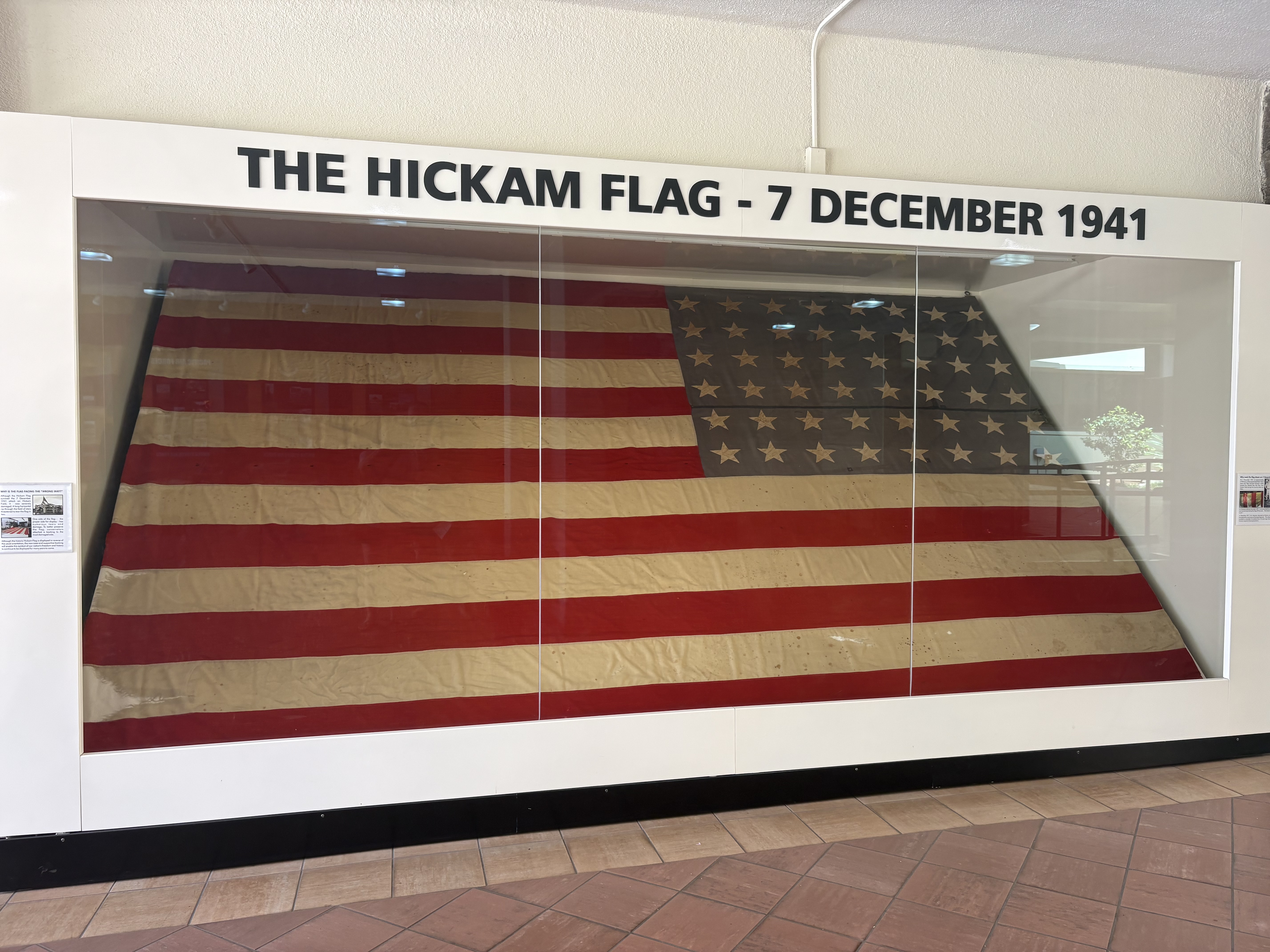 To showcase the repaired flag instead of the patches, the flag is displayed backwards. (Deena Bouknight)
“The flag epitomizes that damage was done on that day, but that the base and the American spirit was not destroyed,” said a lieutenant colonial who worked in the PACAF Headquarters earlier this year. “The bullet holes were left for everyone so we don’t forget our history.”
Nuñez shared that an annual commemoration for Dec. 7 is held at the Atterbury Circle across the street from the PACAF building.
What arts and culture topics would you like us to cover? Please email ideas or feedback to features@epochtimes.nyc